10 Movies That Will Make You Re-Evaluate Your Life

How happy is the blameless vestal's lot! The world forgetting, by the world forgot. Eternal sunshine of the spotless mind! Each pray'r accepted, and each wish resigned.

As a whole, entertainment media is some of the most influential content that the general public will ever have access to, and over the years film has had a substantial role in the way we view certain subjects and ideas. Contrary to popular belief, all movies have an innate ability to influence our lives, as well as the way we think. Yes, that is a generalization, but this time it's one we're going to defend. Movies can impact our minds both positively and negatively; the change might be so subtle that it could take you years to discover it, and there might be some instances where you never will. But whether you realize it or not, the movie that you probably spent half of your retirement fund to see has undoubtedly caused you to become a different person. Seeing a movie for the first time is essentially akin to flipping a coin; you're either going to exit the theater feeling satisfied or jaded. If you're reading this article, we can almost guarantee that you have seen more than a handful of films from both sides of the coin. The movies mentioned here are just a few of those that have inspired us to look deeper into our own thoughts and actions, and are sure to make you re-evaluate your life in ways both big and small.

10. The Secret Life Of Walter Mitty

"To see the world, things dangerous to come to, to see through walls, draw closer, to find each other, and to feel. That is the purpose of life." Of all the films mentioned here, The Secret Life of Walter Mitty may not be the first that comes to mind, but is perhaps the most surprising and delightful. Though unassuming at first glance, the film slowly progresses into a statement about life and the way it should be lived. Many films have attempted to address the issues of stagnancy and personal development, but the majority end up approaching these topics in ineffectual ways. For this reason, they are labeled as "pretentious", "haughty", and even "condescending" towards their viewers. There are a number of contributing factors to this unfortunate yet common trend, but the real problem lies in the characters; the writers of these movies are so concerned with making their characters as unique as possible that it becomes hard to translate the message into our every day lives. In this sense, The Secret Life of Walter Mitty has succeeded where so many others have failed. The title character isn't living life to the fullest from the and doesn't have a witty one-liner for every situation, but he is exactly the kind of character needed to illustrate the film's incredibly inspiring message. Over the course of the film, Walter Mitty goes from mild-mannered daydreamer to world explorer, all in the span of a couple of weeks. Though unrealistic, this change serves as a springboard for the development of the underlying message. On the surface this message is fairly straight forward; a fulfilling life is only as attainable as your attitude allows. While this is a wonderful lesson to communicate - and one we can certainly take away from this film - it is not necessarily the most powerful. The real message here speaks to the merit of normalcy. In the end, it isn't the change of lifestyle or attitude that is celebrated, but rather the embracing of those everyday actions that serve to better the lives of those around us. Such actions may go unnoticed, but that doesn't mean that they aren't important. The Secret Life of Walter Mitty is by no means the first film that aims to motivate its audience, and it certainly won't be the last. That being said, we can't help but praise the film for its unique way of handling ideas that are so often considered cliche.

9. Eternal Sunshine Of The Spotless Mind

"How happy is the blameless vestal's lot! The world forgetting, by the world forgot. Eternal sunshine of the spotless mind! Each pray'r accepted, and each wish resign'd." One of the rare films to feature Jim Carrey displaying a more serious range of emotion, Eternal Sunshine of the Spotless Mind offers us a glimpse into the way we handle our relationships. We've all had at least one person or experience that we couldn't help but want to erase from our minds entirely, and that's exactly what this film sets out to address. The story focuses on Joel and Clementine, the details of their messy relationship, and the aftermath of their subsequent breakup. While the first few minutes of the film prepare you for a fun, quaint romantic comedy with a couple of memorable quotes, the final result is far more profound. If anything, the film could be considered a study of one of the many facets of the human condition, and a prime example of the phrase "you don't know what you have until it's gone". The idea of erasing a period of your life may seem appealing, but Eternal Sunshine aims to prove to its audiences that even our worst memories can be worth holding on to. Humans often fail to remember how incredibly fragile relationships can be, and Eternal Sunshine is able to convey this message beautifully. This film allows us, as its viewers, to experience a bittersweet mixture of the pain of a dysfunctional relationship and the joy of rediscovering what first made the characters fall in love. Ultimately, it is a film that prompts us to decide what we would sacrifice in order to be happy again; not only does it perfectly capture our desire to forget, it outlines our inability to recognize that every moment is precious. But perhaps the film's crowning achievement is its lack of omniscience, which is shown in the form of an ambiguous final scene. Eternal Sunshine doesn't pretend to have all the answers in terms of relationships, and for this reason it is one of the most refreshing "love stories" we've had the pleasure of experiencing.

8. Inception

"Dreams feel real while we're in them. It's only after we wake up that we realize something was actually strange." In many respects, Christopher Nolan's Inception is one of the most revolutionary films of the 2000s; beautiful visuals coupled with an intriguing, cohesive plot placed the film in the top 100 highest grossing movies of all time, and caused it to become a household title. The story of Dominick Cobb and the idea of "inception" itself seemed to strike a chord with the general population, and it's not hard to see why. Not only is Inception a visually stunning masterpiece, it presents a fresh look at concepts that have been discussed for decades. Throughout the film, Inception touches on the ideas of loss, acceptance, and the effects that our actions can have in the lives of others. While these themes have equally great meaning, we believe the most prevalent idea that this film addresses is that of reality; how do we know what is real, and what does that reality mean to us? Cobb's refusal to come to terms with the death of his wife in the past causes him to overlook the things that really matter in the present; simply put, he appears to be content living in his own version of reality. The film serves as an example of how dreams can control our waking lives, making it hard to determine the difference between reality and fantasy. Even if we are able to differentiate between the two, many of us would rather spend our lives in a perfect artificial world than the one we already have. Inception shows us that such a mindset can hinder our personal and relational growth. With Inception we are given incredible insight into a number of significant subjects, and each has its own unique effect on the film's viewers. Thanks to the way it allows its audiences to consider and discuss just what this movie's message meant to them, it's one we won't be forgetting anytime soon.

7. Dead Poets Society

"That you are here - that life exists, and identity; that the powerful play goes on and you may contribute a verse. What will your verse be?" If you're looking for a film that will inspire you to take action and become the person you truly want to be, look no further than the Dead Poets Society. The film's emotional yet encouraging story still rings true today, and its continual relevance is a testament to just how important the message of progress really is. It is a story of both self discovery and self expression, motivating us to take a stand for the things that truly matter in our own lives, instead of repressing our passions as so many expect us to. Being reminded to allow ourselves to be excited about the things that make us passionate is something we all need once in a while, and Dead Poets Society is a film with the capability to do just that. As early as the first scene, we are presented with the idea that upholding tradition should be paramount. As a whole, Dead Poets Society is a film that exemplifies the necessity to break free of such traditions that might be preventing social or individual progress. Without those who are willing to make unpopular decisions in the name of progress, the world would certainly not be as advanced as it is today. The film also deals with the subject of serving as a proxy for another individual's fulfillment, and how such a situation can have a negative effect on everyone involved. This film can essentially be viewed as a call to arms; every path we choose should seek to further our development, as well as the world's.

6. The Breakfast Club

"You see us as you want to see us; in the simplest terms, in the most convenient definitions." Often mislabeled as another one of John Hughes' light 80's comedies, The Breakfast Club is really anything but. While humor is certainly prevalent in the film itself, it's used more as a plot device than just a way to make the audience laugh. At its core, The Breakfast Club is a movie about generalization, predisposition, and the idea that every individual has certain events unfolding within their own lives, regardless of whether or not we are aware. What made this film so special was that it managed to approach each character in a way that the audience could relate to; it didn't attempt to tell us anything about a character's life unless it was absolutely integral to the scene at hand. We didn't need to know their histories, much in the same way that we don't know every single detail about people we might meet in our day-to-day lives. As the audience, we were able to slowly learn about the five teenagers while they were learning about themselves and each other; the result was a film that captured the nuances of human interaction in a way that remains unique to this day. The way in which The Breakfast Club handled the reality of concepts like prejudice, peer pressure, and emotional/physical abuse is really what makes this film so incredibly relatable. Such issues are inherent in our society today, and yet we often only see what people want us to see; we assume that everyone operates under the same conditions, only rarely considering the fact that their experiences could be wildly different from ours. In this sense, The Breakfast Club should inspire us to get to know more about the people with whom we interact instead of merely taking them at face value. The real beauty of the film was that all five of the main characters were so vastly different in terms of upbringing, mindset, and values, and were able to connect with each other only after discovering the number of things they had in common. In the end, it isn't our differences that determine who we really are, but the ways in which we are similar to those around us. The Breakfast Club is a film that portrays this message like no other, and for this reason we believe that it is one of the most thought-provoking movies to grace the industry.

5. It's A Wonderful Life

Call us old fashioned, but we still firmly believe in the power of a classic Christmas film to inspire you to take a deeper look at the value of your own existence. Whether you're new to the story or a seasoned veteran, the message of It's A Wonderful Life is still one to make you think twice about just how much your life has affected others. If you were forced to sit through this movie every December when you were a child, it might have taken you a while to see how important the film's story really was, and we don't blame you. But it's hard to argue that few things will make you re-evaluate your life more than imagining a world where you never existed. George Bailey gets an eye-opening glimpse at this very concept, and it doesn't take him long to realize that every decision he's made - though seemingly insignificant at the time - has clearly changed the lives of those around him. It's easy to forget that our lives are series' of action-and-reaction scenarios, and that the things we do will always have a hand in developing the future. You may not ever get the chance to enter into a position of power or recognition, but as long as you are surrounded by other individuals, you can be sure that your actions are shaping their lives. It's an important fact to remember, if only to keep us from wondering where we fit in the grand scheme of things. It's A Wonderful Life serves as a reminder of the significance of our own existence, and to never question the value of someone else's. Its message of self-worth is what makes this 1940's film a timeless classic to this day, because no matter how many times we are told, we will always need something to remind us of just how much our lives really matter.

4. The Truman Show

"We accept the reality of the world with which we are presented." Surprise! We bet you didn't expect another off-the-wall Jim Carrey film. Although The Truman Show finds Carrey slipping back into his comedic element, the ideas that this movie presents are extremely thought-provoking and more than a little unnerving. The coupling of the upbeat feel of The Truman Show with the offbeat premise of its plot plays a large role in the development of the message itself; while things may seem perfectly normal on the outside, Truman's life slowly begins to unravel until all his preconceived notions about the world are turned inside out. As viewers, it's easy to find ourselves becoming more and more frustrated as the film continues, somehow being able to sympathize with Truman simply through a shared paranoia of suddenly discovering that you've been living a lie. While the concept of televising an individual's every waking moment from birth to adulthood seems ridiculous, we're sure nearly everyone has gone through a time in their life where they felt disconnected and betrayed by the people they trusted the most. Much to the horror of audiences everywhere, The Truman Show manages to take a perfectly rational fear and reconstruct it on a much larger scale. As far as life lessons go, there are plenty to be found within the film itself. Like Truman, we are given the choice between a life of free will and uncertainties, or a life of conformity and comfort. Such a decision requires us to examine how much we truly value individuality and independence, and whether or not we would trade those things for a hazard-free existence. The film also encourages us to take a deeper look at the things that are holding us back, and to determine whether or not they're based on valid observation rather than tainted experience. At the heart of the film is the concept of living a life less ordinary; the biggest question that The Truman Show presents is whether or not we are satisfied with the life we're currently living, and what we would do in order to break free from monotony. Despite The Truman's Show's somewhat cynical view towards society as a whole, the film is one that causes us to think about issues that we've probably never had the opportunity to address, and for this reason we applaud the ingenuity of both premise and provocation.

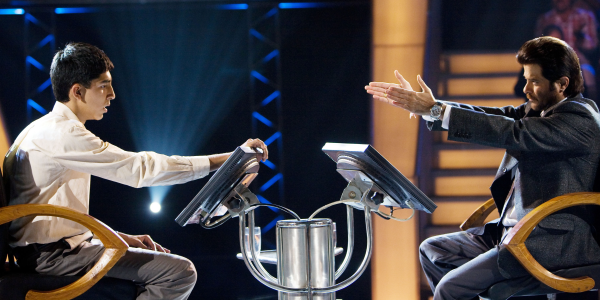
3. Slumdog Millionaire

"When someone asks me a question, I tell them the answer."

Based on an inspirational true story, Slumdog Millionaire tells of a young man's incredible optimism and will to overcome adversity. Centered around Jamal Malik, the movie leads us through his life journey that would eventually cause him to become a winner on India's version of "Who Wants to Be a Millionaire". While many films based on real events have the tendency to come across as overly sentimental or predictable, Slumdog Millionaire manages to convey its incredible message without compromise. Jamal's relentless perseverance to overcome any obstacle thrown in his path should inspire all of us to achieve our goals in life, no matter our circumstances.

Not only does this film encourage us to aspire to great things, it shows us the importance of learning from our past experiences instead of letting them control us. Everything in our life is constantly changing who we are, and attempting to bury our past behind us isn't always the healthiest attitude or the most productive use of our time. Instead, we should be mindful of the events that brought us to where we are today; not every negative experience has a negative outcome, regardless of how long it takes us to reach that realization. Slumdog Millionaire is a film that exemplifies the way we should view our misfortunes and disadvantages, and one that helps us remember that our ability to overcome obstacles is often delegated by our own outlook towards life.


2. The Matrix

"What you know you can't explain, but you feel it. You've felt it your entire life, that there's something wrong with the world. You don't know what it is, but it's there, like a splinter in your mind, driving you mad." If we're honest, The Matrix is really a combination of many of the ideas mentioned in the previous films. It tackles not only the uncertainty of reality, but the necessity to break free of restrictive molds. It addresses individuality, potential, and purpose; the film is essentially a melting pot of influential messages, and that's not necessarily a bad thing. The plot has been a catalyst for many philosophical discussions since the movie's release at the turn of the century, and that in and of itself makes it one of the most influential films in recent history. We're sure that more than a handful of people are convinced that we live in an elaborate virtual reality, and we probably have The Matrix to thank for that; the way we see it, the chance of that actually being the case is really 50/50, so it's only natural that the concept has been at the forefront of all of our minds for quite some time. In all seriousness, The Matrix is truly a thought-provoking film that focuses on a diverse number of issues, in a way so wonderfully executed that it is still considered one of the most popular movies of our current generation. We find ourselves sympathetic to Neo's plight much in the way that we were drawn to Truman Burbank's; here is an individual whose reality has been completely destroyed, and yet he still finds the drive to discover the truth, no matter the cost. Neo's perseverance is admirable, and is a trait that we as humans could serve to benefit from. We can credit several things to the influence of The Matrix, and its message is certainly not the least of them.

1. Fight Club

"We buy things we don't need, with money we don't have, to impress people we don't like."

Although somewhat of a deviation from the rest of the films on this list, Fight Club is certainly one of the most influential. With brilliant performances from Brad Pitt, Edward Norton, and Helena Bonham Carter, it's no surprise as to why this film has become one of the most popular cult classics to date. However, even with such a presence in the film community, Fight Club still manages to be one of the most complex and subjective movies that audiences have had the pleasure of experiencing. With the utilization of several underlying themes, it is able to cater to a diverse group of people, and allow them to apply to their lives what they find most relevant. But admittedly, the overarching message that we can take from the film is that of the realization that we don't need someone else's validation in order to be happy.

Through the example of The Narrator's obsession with purchasing the things he felt would define him as a person, we are shown a reality that hits close to home. It's a well known fact that we often turn to material things in order to make us feel important. In the end, Fight Club not only pushed the message of anti-consumerism, but the entire concept of not letting insignificant details prevent us from reaching our full potential. This means that materialism isn't necessarily the biggest threat to our personal progress; many times we are impeded by worrying about what other people might think, or by the possibility of not living up to another's expectations. Ultimately, if we have a goal in mind, we can't afford to be preoccupied by the fear of social ostracism.

If we continue to let others dictate the way we should be living, purely based off of their own ideals and practices, then we are not fulfilling our own capabilities to break free and become someone great. Fight Club shows us the importance of individuality, and encourages us to steer clear of our overwhelming tendencies to allow others to control the way we think, the things we do, and the life to which we aspire.

Choosing the films on this list was no easy task, as there are hundreds of inspiring titles to choose from. Do you have a favorite life-changing film that didn't make it onto the list? Don't hesitate to mention it in a comment below!


Contributor
Contributor

Currently living in Orlando, Florida, Riley is a 19 year old Journalism major with her sights set on film and television review.