10 Movies With Annoyingly Abrupt Endings
Uh, where's the rest of the film?
As movie-goers, we've been conditioned to believe that films can be broken down into a beginning, a middle and an end; we sit down to a film and instinctively feel the natural rhythms of the story as it unfolds, anticipating the end credits to arrive at a point when events on-screen appear to be winding down.
There are lots of movies which don't quite know when to end, of course - they go on and on, piling unnecessary scene upon unnecessary scene, desperately searching for the right place at which to finish the story. In the process of doing so, though, the overall narrative ends up feeling flabby.
Even worse than that, though, is when a movie ends in a totally abrupt manner at a seemingly crucial moment in the story; right when, having glanced at your watch, you presumably just told yourself there were at least 30 minutes to go.
Nope: it's at this point that the screen cuts to black and you're ushered out of the theatre in a state of total confusion, wondering what happened to the final reel or why the heck the filmmakers were in such a rush to wrap things up...
10. "Au Revoir" - Inside Llewyn Davis

The Coen Brothers are renowned for their abrupt endings: sometimes they work, as in the case of No Country for Old Men and A Serious Man, and sometimes they don't - a point made evident by their otherwise excellent film Inside Llewyn Davis.
Llewyn Davis is a movie about a pretty good musician who unsuccessfully navigates the American folk music scene in the 1960s (also: there's a cat). The film ultimately ends with Llewyn (Oscar Isaac) being beaten up in an alley for heckling a guy's wife the night previously during a gig, who proceeds to kick the sh*t out of him before jumping in a taxi cab and disappearing into the night. "Au revoir," he tells Llewyn, disappearing into the night.
The problem with this, however, is that instead of ending at even a remotely satisfying mark, Inside Llewyn Davis just stops. That the Coens implemented this abrupt finale on purpose goes without saying; it's supposed to signal the fact that Llewyn will never progress in his attempts to make it big, ending exactly where he started. He's destined to be kicked into the gutter, time and time again.
This doesn't make it any less frustrating or abrupt, however. Some films require fuller resolutions in order for them to work as a whole, and in spite of the deeper meaning but this one, Inside Llewyn Davis's ending still needed more.
9. Reunion - War Of The Worlds
Steven Spielberg's adaptation of War of the Worlds is quite possibly the most brilliant and most frustrating blockbuster ever made; it's crammed with both great moments and questionable moments in equal measure. And so whilst the first half of this alien invasion yarn is near-on perfect, the ending is an awkwardly abrupt affair.
After battling the invaders to protect his children, then, it looks like it's all over for single dad Ray Ferrier (Tom Cruise) when he comes up against a tripod. But then the alien inside turns out to be dying, for some reason: phew. Cut to a brief scene of Ray delivering his daughter, played by an insufferable Dakota Fanning, to her mother, grandparents and brother who have holed up in Boston ("Thank you," sobs the mother), and that's kind of it.
Turns out that bacteria has destroyed the aliens because they haven't adapted to our environment over millions of years, the silly chaps - information relayed to us via the voice of Morgan Freeman. Spielberg got his ending from the original book, of course, and that's fine: it's the way he delivers it to the audiences that jars, though, like it's a mere afterthought. There had to have been a way to divulge this with a bit more skill, surely?
8. The Tunnel - North By Northwest

This ending comes at you so fast, it's entirely possible that - had you chosen to blink as it occurred - you missed it actually happening and wound up wondering at which point Alfred Hitchcock opted to end his classic film.
During the iconic fight that takes place on Mount Rushmore, the movie cleverly cuts from Roger Thornhill (Cary Grant) reaching for Eve Kendall (Eva Marie Saint) as she dangles over the edge of the famous monument, to him pulling her into the bed on a train carriage and addressing her as "Mrs. Thornhill." You can't fault Hitch for his ability to rely a ton of information in one cut: we learn they both survived and they're married just like that.
At this point, the two begin to kiss and there's a very unsubtle shot of a train going into a tunnel (they're having sex, get it?) as "The End" appears on the screen. And that's it. From the moment that Thornhill is grabbing for Eve Kendall atop Mount Rushmore to the moment the film actually ends, there are just twenty seconds.
There are genuine reports of people rewinding the movie at this point, as a result of things happening so damn quickly. North by Northwest is an otherwise leisurely-paced film, after all, so this sudden ending has always felt oddly out of place.
7. The Army Arrives - Jurassic Park III
Jurassic Park III is just about the most generic blockbuster ever made; there's nothing wrong with it, exactly, but it does nothing to "push the boat out," as it were. It just exists for 90 minutes, going through the motions, and then - bam! - it's over before you've had a real chance to properly settle into the story.
Because Jurassic Park III's ending is about as abrupt an ending as you'll ever find in a blockbuster film. Whilst most blockbusters take their time in wrapping things up, over-explaining every little thing, this particular sequel outright refuses to bother.
After crash landing on another dinosaur-invested island and escaping from a series of different species, one by one, Dr. Alan Grant reaches the beach, gets into a helicopter (because the army have arrived?) and takes off. It's at this point that you're thinking "what next?" The Lost World had that stuff with the T-Rex going mental in San Diego, after all, what has this one got to offer up?
The answer is "nothing." Jurassic Park III ends with Grant going off in the helicopter and looking out the window, just like in the original movie - almost as if Spielberg himself had just walked into the theatre and slapped you in the face.
6. Coming Home - Anomalisa
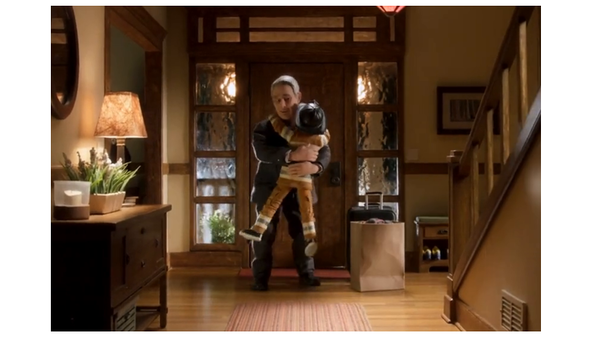
Charlie Kaufman's recent stop-motion film about a lowly and depressed man who checks into a hotel in Cincinnati is near-on perfect from beginning to end. And yet it ends at such an abrupt point in the narrative - with so many things left to resolve and so many avenues to explore - that it feels largely incomplete as a filmic experience.
The main character, one Michael Stone, is having a mid-life crisis when Anomalisa begins, but his world is suddenly transformed when he meets Lisa. The pair bond, and Michael is temporarily lifted from his depression... soon enough, though, his sadness begins to seep back in and they go their separate ways. Michael returns home to his wife and child, and has an embarrassing outburst in front of his friends and associates.
Just when the film seems to be coming to a point, though, it ends: the film leaves Michael in his state of ennui, sitting on the staircase in his house wondering what went wrong, suggesting that he and Lisa never met again. That's it. Story over. All done.
It's a terribly jarring way to end an otherwise great movie that genuinely seemed to be building towards something... anything.
5. The Unfinished Fight - The 36th Chamber Of Shaolin
Often regarded as one of the greatest martial arts films ever made (and one of Quentin Tarantino's biggest inspirations for his Kill Bill movies), The 36th Chamber of Shaolin chronicles the adventures of a young man named San Te (Gordon Liu) who flees to a Shaolin Monastery after his family are murdered in order to learn kung-fu.
The film is essentially made up of dozens of training sequences (the titular "chambers"), which consist of dangerous or complex tasks that one must complete in order to move onto the next. After spending five years completing the chambers, San Te becomes the best student ever and so seeks revenge on the guy who killed his dad.
Up to this point, the film is pretty much flawlessly paced... that is, until the final battle, which sees San Te taking on the Manchu Governor responsible for ruining his life.
Their battle is initially thrilling, but it doesn't have an ending: there's a brief shot of San Te head-butting the Governor, which randomly freeze frames. The film cuts back to the Shaolin Temple, where San Te is training new recruits and then it abruptly ends. What happened with the fight, though? Were we just supposed to assume the outcome?
4. The Crossroads - Broken Flowers

Jim Jarmusch's Broken Flowers stars Bill Murray as a very Bill Murray-type character named Don Jon who one day receives a letter from an anonymous ex-girlfriend claiming he has a nineteen-year-old son he's never met. And so begins a cross country round trip, as Don visits a selection of his old girlfriends in an attempt to find out who the mother is.
As such, Broken Flowers is a film that essentially exists as a series of vignettes: Murray's character tracks down an old flame, awkward stuff happens, and he moves on to the next one in service of his mission. So far, so good.
At the end of the film, Don meets a young man who he randomly believes to be his son. When he raises the subject, though, the guy runs away, leaving Don to pursue - which he does, to - of all places - a crossroads. As Don looks about confused, a car drives by with another young man in it. And then Broken Flowers ends. On that note. Just like that.
We never find out who sent the letter or who the son is; the film just finishes at a point where it genuinely feels as though there's at least 40 minutes to go. Clearly Jarmusch was going for something here, but it doesn't pay off. It's just an annoying note to end on.
3. The Police Arrive - Monty Python And The Holy Grail
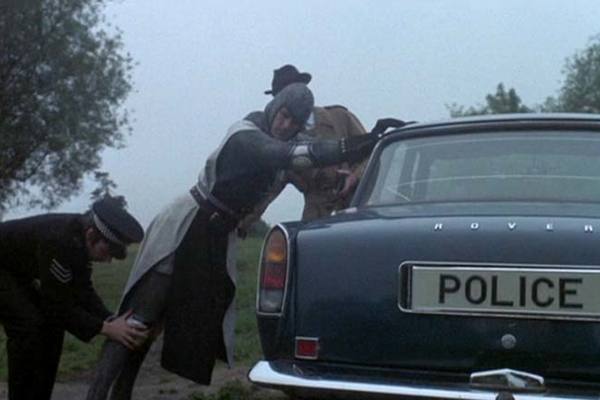
Monty Python and the Holy Grail, which chronicles a group of hapless knights who set out to attain the precious cup of the title, is one of the best comedy movies ever made.
It also ends halfway through telling its story in an outrageously abrupt fashion: as our heroes, led by King Arthur, prepare to ambush a castle, the modern day police - well, the modern day police of the '70s - crash onto the scene to arrest everybody. They're all piled into a van, and the movie cuts to black as a policeman puts his hand over the camera.
Hilarious? Yes. Kind of annoying at the same time? Most definitely!
The difference between this and the rest of the endings featured on this list is that this one, at least, is the sum of a joke: movie-goers were supposed to leave the theatre in a state of total shock and bewilderment, because that's what the Python gang set out to achieve when they ended things on this bum note. They wanted to troll audiences
That said, the fact that it's an amusing gag doesn't stop it from being a rather irksome inclusion every time you sit down to watch Monty Python and the Holy Grail, does it? You're invested in the story by this point, and then it just finishes halfway through.
2. No Resolution - The Castle
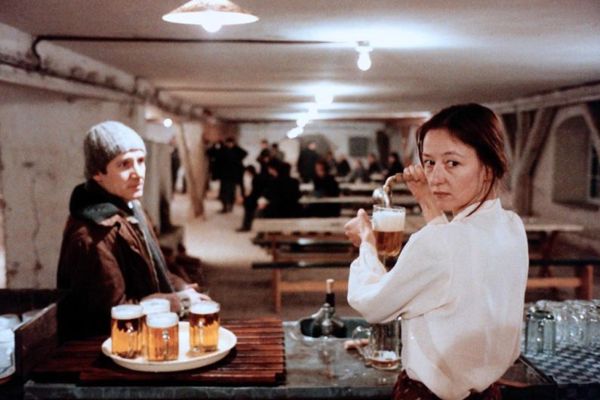
Based on the novel of the same name by Franz Kafka, The Castle is a movie written and directed by Austrian provocateur Michael Haneke (which means its inclusion on this list is nothing short of surprising). The story concerns a man known only as "K," who arrives at a unnamed village and comes up against its troubling bureaucracy.
Watching this, anyone already familiar with Kafka's novel would have probably been able to predict what the ending of this movie had in store, but for the uninitiated The Castle must have made for a rather irritating viewing experience. Kafka's novel is famous for ending halfway through the story, you see, because he died before he could finish it.
Haneke adapts the story faithfully (because of course he does) which means that, yes, the film just ends. The main character, K., walks through the snow as the narration is cut off mid-sentence, followed by a brief line of text explaining that Kafka didn't write any more.
There's a sense that with this film, Haneke mounted the entire project because it gave him a legitimate reason to abruptly cut to black at an unexpected point, as if to say: "Ha! How does that feel, viewer? What does that teach you about audience expectations? Doesn't it just irk the hell out of you that the narrative just stopped at a random place?"
Yes, Michael. Yes, it does.
1. "For More Information..." - The Devil Inside
There is probably no ending quite as annoying - or as insulting - in cinema history as the one that comes during the final moments of The Devil Inside, a found footage horror film so redundant that it shouldn't have been all that surprising that its ending was abysmal.
The story concerns a woman named Isabella who makes a documentary about exorcisms, but there's no real plot to speak of: every scene is more unbearable than the last as characters it's impossible to care about go from one insufferable scenario to another.
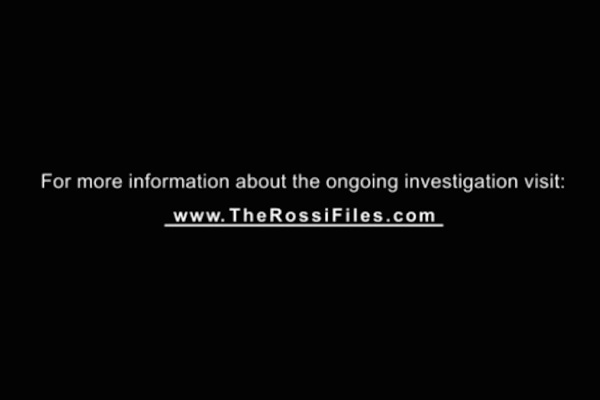
During the final scene, Isabella becomes possessed, though, and attacks her friend, causing a car crash. At this point, the film abruptly cuts to black and a message appears: "For more information about the ongoing investigation visit: www.TheRossiFiles.com."
That's right: The Devil Inside had the cheek to actually redirect you to a website in order to find out what happened in a movie you'd already paid to see. Were the filmmakers going for some J.J. Abrams-level viral marketing, only to forget that Abrams usually employs this tactic before the release of a movie? Or did the production simply run out of money, forcing the crew to come up with a cop-out ending? Unforgivable, this one.
Like this article? What did you make of these endings? Do you agree, or were the filmmakers right to cut to black when they did? Let us know in the comments section.