10 Movies With Surprising Real World Consequences
The butterfly effect gone mad.

"Movies don't actually achieve anything," said the concerned parent of every child who's just expressed a desire to go to film school.
"Why don't you go out and get a real job?" they say, whilst secretly hiding the fact that they were denied a career as a ballerina and forced to work in marketing instead.
Projecting? What's projecting?
The point we're trying to make is that, to a lot of people, films are just an excuse to pop the kettle on and check out of life for two hours. Whilst that's an important cause in and of itself, many assume that a movie's impact starts and ends with its audience.
Not the case. Not the case at all.
The following ten motion pictures all had consequences far more impactful than any director, actor, or critic could have possibly imagined. Some inspired people to make huge decisions, some ended up appearing in lawsuits, and some even nearly got people killed.
So, next time someone tells you that movies don't matter, please feel free to direct them to this list and then kindly inform them where they can shove it.
10. Giving People Traumatic Flashbacks - Saving Private Ryan

Directed by Steven Spielberg and starring Tom Hanks, 1998's Saving Private Ryan started the much-loved trend of people spending inordinate amounts of money attempting to rescue Matt Damon.
Along with its gripping story and likeable roster of characters, the movie was praised for its ultra-realistic depiction of the horrors of World War II. Right from the get go, the film pulls no punches in depicting the conflict as Hell on Earth with its remarkable recreation of the D-Day landings.
Well, it was praised by some. For others, it brought back a whole host of unwanted memories.
Some real veterans of the battle on Omaha beach who saw the film reported that they were unable to finish it, as the sequence brought on traumatic flashbacks. In fact, the United States Department for Veteran Affairs created an entire hotline dedicated to those affected by the movie.
In the end, it's probably for the best that these horrors were shown as accurately as possible. Fear is a powerful deterrent, and it would have been a greater insult to those who fought in the war to try and dumb it down for a more sensitive audience.
9. The Bambi Effect - Bambi

Walt Disney did plenty of dubious things in his life, but the most unforgiveable of all was traumatising several generations of children with the death of Bambi's mother.
In the 1942 animated movie, young Bambi has his life changed forever when an evil hunter guns down his beloved mum in cold blood. This sets the deer on a path of vengeance, as he trains in martial arts with the sole ambition of enacting his violent revenge!
Okay, that didn't happen, but what a movie that would be.
Apart from scarring kids for life, the movie spawned a phenomenon known as The Bambi Effect.
Commentators posit that, because of the scene with Bambi's mum, people are turned off the idea of the hunting or killing of animals that are conventionally cute. However, when it comes to ugly animals, they can all die!
Whether this is a good thing or a bad thing is up in the air, but it shows that even a kids movie can have a long-lasting effect on society at large.
The Bambi Effect is also a slang term used for certain bisexual men, but that's a story for another time.
8. Reopening An Assassination Investigation - JFK

Director Oliver Stone has never been one to shy away from controversy, so it's not a surprise that he chose to make a movie about the killing of John F. Kennedy.
With 1991's JFK, Stone explored the idea that Lee Harvey Oswald was not the only party involved in the shooting and stars Kevin Costner as a government agent tasked with finding "the truth".
The movie was loved and hated in equal measure; some praised its performances and cinematography, whilst others lambasted its lack of historical accuracy.
Its subtitle was "The Story That Won't Go Away", which is ironic because the files on JFK's assassination were actually reopened as a result of this film.
JFK's popularity sparked a resurgence in interest in the popular leader's untimely death. As a result, the US government passed the JFK Assassination Records Collection Act, which allowed for the files on the President to be made public in 2017.
Without this film causing such a furore, those files would still be under lock and key today.
Are we any closer to finding out what actually happened that fateful day in Dallas? Well, no, but at least we've got something else to read.
7. A Massive Parade - Spectre

Enough time has passed now that we can officially call the 2015 James Bond film Spectre a big pile of dog doo.
The narrative was convoluted, the side characters were completely forgettable, and Blofeld as Bond's brother? Get out of town!
One of the lone high points of the movie comes right at the start, when Daniel Craig's Bond chases down a member of the titular organisation in Mexico City. The action is fast and furious, thanks in part to the elaborate Day of the Dead parade going on around the two men.
The celebration looked so good that it actually inspired an uptake in people visiting the city around Day of the Dead time. There was just one problem - this parade didn't actually exist.
It had been entirely fabricated as a set piece for Spectre, leaving the Mexican government in quite a pickle.
Rather than send all the tourists (and their money) away, they decided the easiest thing to do would be to make the fictional festival a reality!
And so, in October 2016, Mexico City hosted its first ever Day of the Dead parade.
Mission accomplished, Mr. Bond.
6. Anti-Nuclear Activism - The China Syndrome

On March 16th 1979, a film called The China Syndrome came out. In it, Jane Fonda played a journalist investigating a nuclear power plant when, suddenly, the facility goes into meltdown.
There's a line in the movie that says this could "render an area the size of Pennsylvania permanently uninhabitable”.
Why is that important? Because, on the 28th March 1979, the Three Mile Island nuclear power plant actually went into meltdown.
Where was Three Mile Island? Pennsylvania!
You couldn't make it up.
The film already had an anti-nuclear agenda before the incident; star Jane Fonda was firmly and famously opposed to the idea. However, its proximity to a real-life disaster led many others to change their stance on the subject.
Co-star Michael Douglas described his revelation as "a religious awakening", whilst The China Syndrome also made believers out of prominent campaigner Tom Hayden and media mogul Ted Turner.
Few could have expected the immediate impact The China Syndrome would have on the world. It actually seems too good to be true... maybe it is?
Has anyone looked into what Fonda was up to on the 28th? Was she in Pennsylvania by any chance?
5. Inspiring Freedom Fighters - Rambo

The 2008 film just called Rambo is honestly one of the better instalments in the blood-soaked franchise.
Although that isn't saying much, considering that Last Blood exists.
Sylvester Stallone returned as the titular veteran to rescue a bunch of missionaries who have become tangled up in the Saffron Revolution in Burma.
Burma was what it was called at the time - the country's name is now officially Myanmar.
Whilst the movie was a fairly standard action affair with Stallone going "ARGHHHH!" as often as humanly possible, it had some rather unintended consequences in the actual country it was set in.
The Saffron Revolution was a very real conflict in Myanmar against the ruling military government. One of the groups involved in challenging their authority was the Karen Nation Liberation Army (KNLA).
Karen is an ethnic group of people, not those women who want to speak to the manager.
The KNLA saw the film as an endorsement of their struggles and were given a huge morale boost off the back of it. They even adopted lines from the movie into their rallying cries.
Not bad for a cash cow, eh?
4. Being Used As A Legal Defence - 2001: A Space Odyssey

2001: A Space Odyssey is one of the absolute granddaddies of sci-fi.
Stanley Kubrick's surrealist voyage is one of the most important and influential films of all time, as well as home to one of the most chilling baddies ever captured on film.
Sentient supercomputer HAL 9000 is the most famous piece of technology in the film, which is littered with futuristic looks at how the world might turn out.
Well, futuristic for 1968.
Kubrick's interpretation of Arthur C. Clarke's work was actually more accurate than you might think, as one major company attempted to demonstrate.
Samsung got themselves into legal hot water over the attempted release of their Galaxy Tab 10.1 tablet computer. Apple, who felt the design infringed on their own iPad, attempted to block the sale of the device. Samsung countered by claiming that they didn't invent the tablet - this movie did.
As part of their actual legal defence, Samsung attached a screenshot from the film displaying astronauts using what appear to be tablets. They claimed that this was proof that Apple couldn't own the rights to the design and that they should be free to sell theirs.
It didn't work, but you can't blame them for trying.
3. Catching A Murderer - The Passion Of The Christ

Mel Gibson - nothing else to add, just Mel Gibson.
If you don't know about his various transgressions over the years, then please kindly return to the rock you have been living under until you've learned your lesson.
One of his more famous crazy ideas was making the biblical epic The Passion of the Christ in 2004, a film depicting the final twelve hours of Jesus' life.
Yeah, that seems like a safe bet for a man who has a history of religious controversies...
Anyway, the film got made and it was, of course, controversial. However, there was at least one good thing to come from it - it helped solve a murder case.
In early 2004, 19-year-old Ashley Nicole Wilson was found dead in her apartment in Texas. She had apparently hanged herself after coming off anti-depression medication, but in reality, her boyfriend Dan R. Leach had killed her and staged it to look like a suicide.
He was going to get away with the crime, until a viewing of The Passion of the Christ caused him to have an epiphany and turn himself in.
Maybe Gibson isn't so bad after all... nah, he is.
2. Defecting From North Korea - Titanic

Titanic has got everything you could want from a movie.
Romance, drama, tragedy, Irish dancing, naughty times in an old-timey car. It really is the full cinematic experience. But is it powerful enough to inspire someone to escape one of the most isolated and repressive nations on the planet? As it turns out, yes it is.
In 2007, Park Yeon-mi and her family fled North Korea in an attempt to lead a better life. Although she was just a teenager, Park already knew that her homeland was a dangerous place to live and that there was a whole other world outside of its borders.
A reason for this knowledge? James Cameron's Titanic.
Banned foreign films offered many North Koreans a previously-unseen look at the outside world and, for Park, Titanic was the best of the bunch. She said that watching the film made her realise something was wrong with her country and that was the catalyst for her life of activism.
Stories like this are a reminder of the power cinema has to inspire people around the world. It's also proof that Leonardo DiCaprio's face is the most powerful force on Earth.
What a hunk.
1. Almost Getting A President Killed - Taxi Driver
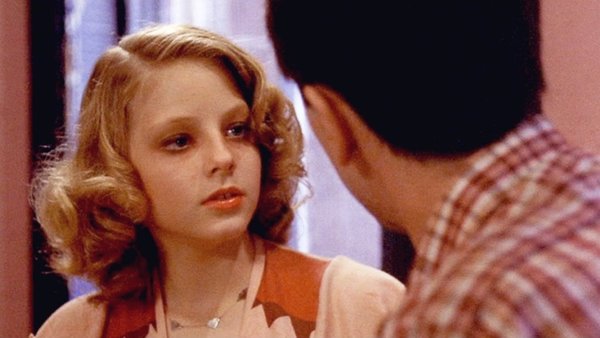
An unhinged cabbie from New York City, Robert De Niro's portrayal of Travis Bickle in Taxi Driver is just one of the reasons he is rightly recognised as a legend.
But it's not his role in the film we're talking about today.
At just 12 years old, Jodie Foster was cast in the movie as a child prostitute. We said this film was good, we never said it wasn't without its problems.
Speaking of problematic, John Hinckley Jr. became obsessed with Foster after first seeing her in this film. He moved house to be closer to where she was studying and would bombard her with love letters and poetry.
Again, it's worth remembering that Foster was an actual child when Hinckley first saw her.
In his deteriorating mental state, Hinckley decided that the best thing he could do to win Foster's favour was shoot the President of the United States. And so he did - in 1981, he shot and wounded President Ronald Reagan, all to impress the actress.
It's one of the maddest stories of all time, and one that almost certainly did not come up in the pitch meeting for Taxi Driver.