10 Must See Movies Of The Spanish Horror Renaissance
 Labouring under an oppressive fascist dictatorship for much of the 20th century, Spanish cinema took a while to flourish. During the dying days of General Franco's far right government a series of interesting horror pictures, such as zombie classic The Living Dead at Manchester Morgue, were produced, primarily for the English market. After the regime fell, though, a wave of young directors, including Pedro Almodovar and Bigas Luna, revelled in their newfound freedom of expression to produce films that were exuberantly brash, camp, anything goes affairs. Bad taste and boundary pushing may have been the order of the day, but it was not in service of making scary movies. The creepy and disturbing have always had a place in Spanish cinema, though. You need only look at the eyeball slicing early collaborations between Luis Bunuel and Salvador Dali to see that. A more mature Spanish film industry has returned to horror in a big way in the 21st century. Over the last decade and a bit it's been to Spain that discerning fans of sophisticated, smart scares have looked. For anyone tired of the formulaic pattern of mainstream English language horror, these ten modern Spanish scarers should be enough to keep you awake at night. Note: There have been a number of excellent horrors produced outside of Spain with Spanish talent behind the camera, films like The Others or 28 Weeks Later. For the purposes of this list, though, "Spanish" refers to films for which credits list "Spain" as the country of origin. These are films made in Spain by, mostly, Spanish studios and Spanish crews, regardless of the language of the film or nationality of the director or cast members.
10. Julia's Eyes
 Original Title: Los Ojos de Julia Nobody has been more responsible for the international popularity of modern Spanish horror than Mexican writer-director-producer Guillermo del Toro. Del Toro's name attached to a film is seen as a sign of something worth seeing, a mark of quality. That's why his name is bigger than any other on the poster to this, Guillem Morales' blindness themed stalker movie, which he produced. The real star of the show, though, is Belen Rueda as the eponymous Julia, a woman losing her sight through a genetic degenerative eye disorder as she investigates the mystery of the death of her twin sister who had the same condition. Rueda conveys real fear, whilst also seeming more of a rounded character than a simple woman in peril. The film's stalker mystery is pure hokum, but there's genuine tension in both the likelihood of sudden blindness at the worst possible moment and the contrast between the sighted and the sightless. In fact, the film's creepiest scene comes when the still sighted Julia tries to listen in on a group of blind women in a locker room. As the women literally smell her out they notice, sightlessly, that she didn't come in alone. It's a great moment and one that, unfortunately, the climax of the film fails to match. See this if you liked: The tension of a blind woman threatened by sighted criminals was also utilised to good effect in the classic Audrey Hepburn thriller Wait Until Dark. On the trashier end of the spectrum, slasher See No Evil saw a blind Mia Farrow stalked by a maniac killer.
9. The Machinist
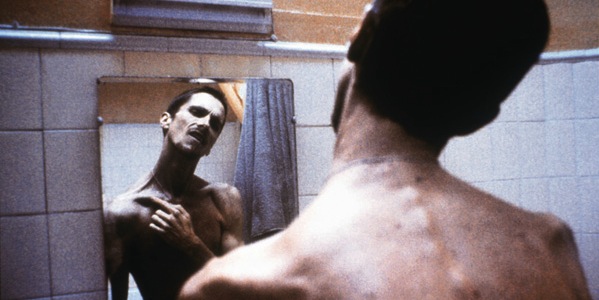 Original Title: El Maquinista The only film on this list to have both a director and star who aren't Spanish, Barcelona shot thriller The Machinist is best known as the film Christian Bale made right before he took on the role of Batman and became a massive star. Existing on a diet of just a tin of tuna and an apple a day, Bale lost 28kg (a third of his body weight) to play emaciated paranoid insomniac Trevor Reznik. He would repeat the same pattern of becoming scarily skinny for Rescue Dawn and The Fighter before beefing up again for each of the Batman sequels respectively. Director Brad Anderson was coming off the back of creepy asylum set horror Session 9 and has done good work on TV shows Masters of Horror and Fringe. Here he does an admirable job of creating an unreliable, off-kilter world to show his guilt-ridden protagonist's increasingly poor grip on his sanity, but the film really belongs to Bale. More than just a stunt, the extent of Bale's weightloss is extremely disturbing, giving him the appearance of a concentration camp victim. Obviously completely committed to the role, Bale dials his usual intensity up to 11, all wide eyed stares and slurring speech, to give a performance that's as compelling as it is disturbing. See this if you liked: The Machinist liberally borrows from some of the better high concept psychological thrillers of recent years sharing elements of Memento and Fight Club's style and plot beats. Although it may not seem massively original after seeing those, it's a fair bet that fans of dark thrillers about identity will also enjoy this one too.
8. Thesis
 Original Title: Tesis Perhaps the movie that kicked off the whole Spanish horror boom, university set snuff movie thriller Thesis allowed Alejandro Amenabar to emerge as the first of a new generation of Iberian directors. Amenabar followed Thesis up with weird psychological sci-fi Open Your Eyes (Abre Los Ojos), remade with Tom Cruise as Vanilla Sky, and atmospheric wartime ghost story The Others to establish himself as one of Spanish film's most exciting talents. Although recently he has left horror behind for drama films like The Sea Inside (Mar Adentro) and Agora, his successors have been happy to embrace the horror themes he laid out. Thesis serves as a bridge between classic and modern Spanish cinema in casting now grown up 70s child actor Ana Torrent alongside rising stars like Eduardo Noriega, who would go on to play the lead in Open Your Eyes. Torrent plays a student whose thesis focuses on violence in movies. When her professor dies watching a video that turns out to be a snuff film, Torrent's Angela has to figure out whether she can trust the geeky Chema (Fele Martinez), a student obsessed with violent movies, or good looking Bosco (Noriega), whose former girlfriend is the one killed in the film. The plot may follow a predictable course, but Amenabar's low budget horror sets out his stall as a director of obvious talent, capable of managing to build tension in just the right places. Watching this, it's easy to see how the director moved on to making significant main stream Hollywood horror just two films later. See this if you liked: The subject of screen violence, it's possible influences, a horror movie geek and a killer on campus were all central to postmodern slasher sequel Scream 2, which did, however, approach the subject in a more lighthearted way than Thesis.
7. The Skin I Live In
 Original Title: La Piel que Habito Pedro Almodovar is probably the most important and unique Spanish filmmaker that there has been. During the 90s and 00s, Almodovar made a string of standout classic films that saw international audiences really embrace Spanish cinema, winning two Oscars and a stack of other awards. Almodovar loves trashy film genres and it is clear that this includes a love of horror B-pictures from numerous references in the film-within-a-film segments of Tie Me Up! Tie Me Down! (Atame!) and Broken Embraces (Los Abrazos Rotos). Yet for all that the plot of the former, in particular, in which Antonio Banderas' psychiatric patient kidnaps a porn star to make her love him, has the makings of a dark and disturbing horror, in Almodovar's hands these stories are generally told with warmth and affection. It is the freaks and weirdos with whom the flamboyant director likes to identify. When he reunited with Banderas over 20 years after Tie Me Up! Tie Me Down!, though, it was for something genuinely dark, albeit shot through with the same off-beat sensibilities as the director's other films. A bizarre melodrama thriller of revenge, surgery and several very damaged individuals struggling at playing out anything that resembles healthy human relationships, The Skin I Live In defies description and categorisation. Almodovar directs with his usual visual flare and the film is stunning to look at, most of its best and most disturbing scenes play out in dialogue free visual sequences. Banderas, meanwhile, is no longer the callow naif of his earlier Almodovar collaborations. Indeed, he plays completely against the fun, charming type he has adopted in Hollywood as well, to give a career high performance as the dark, disturbed doctor. See this if you liked: The Skin I Live In is truly one of a kind, but that's not to say that there aren't certain visual or thematic influences on Almodovar's work. The most obvious equivalent is the image of the masked woman from classic 1960s French horror Eyes Without a Face.
6. Buried
 Original Title: Enterrado Another example of a Spanish film made with a Hollywood star for an international market, Buried provided an even greater contrast for star Ryan Reynolds with his follow-up Green Lantern than Christian Bale's switch from The Machinist to Batman. Like Bale's insomniac thriller, Buried was made in Barcelona, although given that the film takes place entirely in a wooden coffin it really could have been filmed anywhere. Reynolds, playing a civilian truck driver in Iraq trapped in the coffin with just a phone, lighter, knife and pen, is on screen constantly with his only dialogue scenes coming on the end of the phone and his movement severely restricted by the tiny confines of the set. Stripped of any way to hide behind big effects or revert to smug type, Reynolds gives a compelling performance as a man in a dire situation trying to figure out any possible way out of it. Director Rodrigo Cortes finds as many ways as possible to ramp up the tension, keeping both the audience and Reynolds on their toes as his camera finds every possible position and angle in the tiny space. Buried is a thriller as taught and focused as they come, a punchy 90 minute run time meaning that there are very few wasted moments. See this if you liked: The similarly claustrophobic 127 Hours came out at around the same time and Danny Boyle's much more mainstream hit would make a perfect double bill with Buried of lone man trapped in a confined space movies. As with Reynolds in Buried, 127 Hours' James Franco is better than ever when faced with acting only against himself, but, if anything, Buried demonstrates an even greater commitment to the subject as 127 Hours has moments, in reality and fantasy, outside its confinement. Buried never leaves the coffin.
5. The Orphanage
 Original Title: El Orfanato Another film from the Guillermo del Toro Presents... school of sophisticated scariness, The Orphanage is Julia's Eyes star Belen Rueda's finest hour. Here Rueda plays Laura, an orphan returning as an adult to the abandoned orphanage where she was raised, seeking to turn it into a home for disabled children along with her own adopted son Simon. When Simon develops an imaginary friendship with a boy in a sack mask and disappears shortly afterwards, things start to get really creepy. Already a success in Spain thanks to her acclaimed and award winning role in The Sea Inside, Rueda here, as in Julia's Eyes, is at the heart of every moment on screen. She excels as a woman cracking up, unsure of the truth of what she's seeing as she tries to find out what happened to her child and instead discovers the orphanage's dark secret. Director J.A. Bayona manages to provide Rueda with plenty of scares whether the suggestive slow burning creep of summoning ghosts through a children's game or the sudden shock of a woman run down by a car just before we get some answers. It all builds to a climax that's both tragically heartbreaking and strangely cathartic. Made for a budget of around $4 million, The Orphanage went on to earn almost $80 million at the box office, allowing Bayona to make one of the biggest Spanish films of all time: $45 million tsunami disaster picture The Impossible (Lo Imposible). Bayona is currently working with Skyfall and American Beauty's Sam Mendes on Gothic TV series Penny Dreadful. See this if you liked: A mix of subtle ghostly scares, lonely, isolated children and tragic maternal guilt, The Orphanage is perfect for anyone who found The Others one of the most expert and chilling ghost stories in years, while its sympathetic yet scary child ghosts recall producer del Toro's The Devil's Backbone. The Spanish obviously have a knack for this kind of thing.
4.
 Original Title: Found footage has been the dominant new mode of horror in American films of the 21st century. It has been in Europe, though, a region less devoted to using found footage films all the time, that the technique has been used to best effect. The standout examples of European found footage films have been Norwegian fantasy feature Troll Hunter (Trolljegeren) and this Catalan zombie picture. stars Manuela Velasco, previously best known as the child actress playing the daughter of a transsexual in Almodovar's 1980s melodrama The Law of Desire, as a TV presenter filming a documentary in which she follows a Barcelona fire crew for the night. When the firemen are called to an apartment block to free a woman from her apartment and she starts attacking and biting them, everyone gets sealed in the building by the military with the film crew there to capture every moment. The confined setting of the apartment block (albeit not quite so confined as Buried) gives a strong focus. Directors Jaume Balaguero and Paco Plaza make great use of the somewhat Gothic style and big wrought iron central staircases of an old Barcelona apartment building, which Balaguero had also put to good use in To Let (Para Entrar a Vivir), part of the anthology series Films to Keep You Awake (Peliculas Para No Dormir). This anthology was a follow-up to the classic TV series Stories to Keep You Awake (Historias Para No Dormir), which was produced by famous horror director Chicho Ibanez Serrador, the man behind creepy 70s classic Who Can Kill a Child (also known as Island of the Damned). Plaza directed the series' Christmas film and the whole set is well worth checking out for fans of the current generation of Spanish horror filmmakers. 's huge success has resulted in the inevitable American remake and a series of sequels. The original star and directors returned for the solidly decent 2, set, Halloween 2-style, directly after the first part, before the directors split to make parts three and four separately. Plaza's wedding set 3: Genesis is silly and disposable, while Balaguero's 4: Apocalypse is more of a normal sequel, following up the first two, and due for release next year. See this if you liked: That US remake, Quarantine, is one of the most closely faithful remakes of any foreign film, so if you liked that it's probably worth going back to the source, albeit a little pointless as you already know what's going to happen. A better American found footage take on the zombie movie is genre godfather George A. Romero's return to the living dead with Diary of the Dead, a film that goes unappreciated next to his classic work. Diary... succeeds by using a variety of styles of footage to build a modern view of the zombie apocalypse as seen through online videos and handheld cameras.
3. The Devil's Backbone
 Original Title: El Espinazo del Diablo Cinema has allowed the Spanish to examine the darkness in their recent past and, hopefully, helps them to come to terms with it. Elegant, emotionally satisfying and sophisticatedly chilling ghost story The Devil's Backbone is Mexican del Toro's take on Spain's bleakest hour, the brutal Civil War of the 1930s. Fernando Tielve plays Carlos, a child arriving at an isolated orphanage in the middle of nowhere where an unexploded bomb in the courtyard is the main distinguishing feature. As the war rages outside, Carlos is increasingly creeped out by the tragic yet scary ghost of a child named Santi. The adult cast includes high class experienced actors like Federico Luppi (the star of del Toro's feature debut, vampire pic Cronos) as the orphanage doctor, frequent Almodovar collaborator Marisa Paredes as the false legged orphanage administrator, and Thesis' Eduardo Noriega as unpleasant orphanage caretaker Jacinto. However, it is the child cast that really excels. Del Toro has often done his best work in stories of innocent children surrounded by darkness and in Tielve he once again uncovered an engaging child lead. The orphanage is a hiding place for Republican gold and it is only a matter of time before the war comes right to them, but in many ways it is already here. The violent Jacinto, who displays a masculine virility in a world of children, the elderly and disabled, suppressing characters of greater intellectual or emotional ability through physical force, is an obvious analogue for the fascists in the outside world. Del Toro's film handles the subject of the destructive power of violence with sensitivity, while remaining a genuinely atmospheric horror. Before "From Guillermo del Toro" was a recognisable brand, this film was produced by Almodovar and it was sold on the basis of his name as Spain's best known filmmaker. After The Devil's Backbone became a success, del Toro passed this useful support from a bigger name director on, producing movies himself for younger directors. The long term result of Almodovar backing del Toro, then, is the likes of The Orphanage, Julia's Eyes or Mama. See this if you liked: Once again, Amenabar's The Others, which arrived in screens at a similar time to The Devil's Backbone, is the closest equivalent English language picture, with its wartime setting, isolated home and creepy children. Del Toro's later Spanish classic Pan's Labyrinth is also something of a thematic sequel.
2. Timecrimes
 Original Title: Los Cronoscrimenes Most high profile Hollywood time travel films struggle with all kinds of paradoxes and tie themselves in knots trying to make sense of timelines as they cross over themselves. Those selfsame knots, though, are the basis of tightly plotted sci-fi thriller Timecrimes, where the inevitability of being trapped in a series of events already predestined because they have already happened is the story that drives the movie. Made for a tiny budget and set in the Spanish countryside, Timecrimes has a cast of five, a handful of locations and barely any special effects, but engages its audience in its time looping narrative in a way that much more expensive movies can only dream of. Nacho Vigalonda writes, directs and appears as the scientist who has developed an experimental time travel device. His story and direction are simple and immediate, giving the movie a sense of focus and urgency. Timecrimes begins like an offbeat slasher film as protagonist Hector finds himself bafflingly stalked and stabbed by a sinister man whose whole face is covered in pink bandages. Fleeing from his voiceless pursuer, Hector breaks into the scientist's home and the scientist offers him a hiding place in his strange machine. Emerging hours earlier, a panicked Hector gets a completely different perspective on the earlier events. The seemingly simple narrative becomes more complex from there, but the small scale and cast mean that Vigalonda has the ability to keep everything coherent even while new time streams are introduced. Smartly plotted in a way that efficiently creates crises and solutions constantly, Timecrimes is one of the few time travel movies really to run with the idea of a coherent and complete time loop. See this if you liked: Ultra low budget time travel formed the basis of US indie headscratcher Primer, a film made with more love of physics than narrative and therefore a bit of a love it or hate it experience. However, the closest recent equivalent to Timecrimes' horror of being trapped in an inevitable time loop is Triangle, the underrated British ocean going haunting story from Severance and Black Death director Christopher Smith.
1. Pan's Labyrinth
 Original Title: El Laberinto del Fauno Guillermo del Toro has featured repeatedly on this list, so it should come as no surprise to see dark fairy tale Pan's Labyrinth, the director's masterpiece, at number one. A Spanish-Mexican co-production, Pan's Labyrinth is a kind of spiritual sequel to The Devil's Backbone. Between that film and this, though, del Toro had made his name in Hollywood with comic book monster fantasies Blade 2 and Hellboy and brings a greater imagination and confidence to the table here. Once again the fantastical horror elements serve as an allegory and as a mirror to the truly disturbing real world of Fascist Spain. Here Franco has won the Civil War but there are still pockets of guerrilla resistance in the form of the Spanish Maquis. The fantasy world, therefore, represents a sort of escape for fatherless child protagonist Ofelia, a superb performance from Ivana Baquero, but one whose dark heart soon comes to reflect the real world events around her. Del Toro reportedly turned down the chance to direct the Narnia film to make this and his faun (never actually identified as the Pan of Greek myth in the film or the original title) is a much stranger, less welcoming one that Mr. Tumnus. Del Toro's notebooks and concept art show how boundless his imagination and capacity for design that is both stunning and disturbing can be. Here he is at his very best, the film's fantasy sequences giving us everything from a grotesque giant toad, to the tragically humanoid mandrake root, to the truly horrific fairy-eating pale man, one of the scariest screen monsters in years. For all that Ofelia's fantasy world is strange and threatening, it is nothing compared to the harshness of the real world and her wicked stepfather Captain Vidal. Expertly played Sergi Lopez, a usually comic actor best known as weirdo Harry in French dark comedy thriller Harry, He's Here to Help (Harry, Un Ami Qui Vous Veut du Bien), Vidal is a study in total sadistic evil and presents a far more immediate threat than that of the fantasy monsters Ofelia is brave enough to stand up against. The film's beautiful look and design won it three Academy Awards: for Cinematography, Art Direction and Makeup. No Spanish film had ever won more than one Oscar before and Pan's Labyrinth was also nominated for three more: Screenplay, Score, and Foreign Language Film. Given horror and fantasy, as well as foreign language films, often get overlooked at the Oscars, this is as strong an indication as any that Pan's Labyrinth is Spanish horror's ultimate crossover success. See this if you liked: The dark fairytale imagination is an ongoing thread throughout del Toro's work, so Pan's Labyrinth would be a recommendation for anyone who's enjoyed anything else that he's done. The superficial similarities between this and lighthearted comic book blockbuster Hellboy may not be obvious, but the style, design and emotion behind the fairy worlds in the second Hellboy, The Golden Army, are hugely reminiscent of Pan's Labyrinth. In particular, regular collaborator Doug Jones, the Faun and Pale Man in Pan's... gives Golden Army's Angel of Death the same inhuman elegant creepiness. --> -->