10 'Next Big Thing' Movies That Completely Flopped
Tell Peter Jackson and Ang Lee that high frame rates are NEVER gonna catch on.
It isn't easy to do something original in Hollywood. Hell, there's a reason why most of the biggest movies are sequels to successful franchises, reboots of successful franchises, or adapted from a franchise that's proven successful in a different medium.
However, while it is often safer (but never a sure-fire bet) to capitalise on a trend that's already up and running or to copy the formula of another studio, the big money comes from reinventing the wheel, and giving audiences something they haven't seen before or - in a lot of cases - something they didn't even know they wanted.
Obviously, that's easier said than done, as creating something original is hard enough, but creating something new that sparks a movie goer's imagination and gets them to buy a ticket is virtually impossible. The MCU makes it look easy, but there have been so many movies that have fallen on their own swords.
10. The Mummy

Pour one out for the Dark Universe. We hardly knew you.
As mentioned in the introduction, Marvel's MCU is one of the few 'next big thing' cinematic enterprises that actually worked, and when other studios caught wind of how much money was to be gained from creating an interconnected universe of franchises, they tripped over themselves trying to push their own out the door.
Universal Pictures was one of the boldest producers on this front, getting out before a single reel of film had been recorded to reveal their plans for a Dark Universe, which would unite their classic horror icons like The Mummy, Dr Jekyll (and Mr Hyde), Frankenstein and the Invisible Man in one shared universe, played by some top-tier talent as well.
Tom Cruise's The Mummy was the franchise's debut, and killed the entire thing before it even had a chance. More of a big-budget superhero movie (which makes sense considering the MCU's success) than a horror-leaning adventure, this trainwreck lacked any real identity, bombed at the box-office, and forced Universal to completely shift gears.
At least DC gave their superhero universe a fair shake before jumping ship.
9. Beowulf

As detailed in this excellent video essay, Robert Zemeckis had a very weird stint in the 2000s. After spending the previous couple of decades defining cinema with movies like Forrest Gump and Back to the Future, the director traded all that in to prove that CGI motion-capture was the future of the medium, making flicks like The Polar Express and A Christmas Carol to prove it.
To convince everyone that the tech wasn't only useful for making extravagant cartoons for kids though, Zemeckis took on an adaptation of literary classic Beowulf, and again filmed it entirely using motion capture. Though it wasn't an R-rated movie, it was still a very mature tale, boasting plenty of violence and starring respected actors like Ray Winstone, Anthony Hopkins, Angelina Jolie and Brendan Gleeson.
Despite netting close to $200 million at the box office, the adaptation didn't make enough of a profit, and critics weren't sold that the technology was up to snuff. Shockingly, the rest of the industry didn't push forward with similar, entirely CG movies after this.
8. Mortal Engines
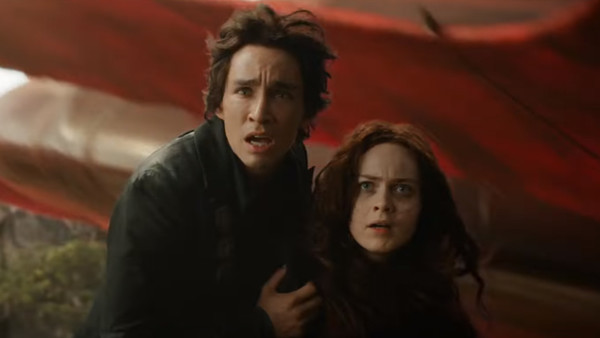
Before superheroes well and truly took over the cinematic landscape, one of the most reliable sources of box-office success Hollywood constantly returned to was the realm of book adaptations. Twilight and The Hunger Games proved that young adult novels - and the fanbase attached to them - were practically an excuse to print money, and a whole bunch of these were put into production to... varying degrees of success.
In the mid 2010s these mostly went away and the major hitters wrapped up their stories, but Mortal Engines was an attempt to tap back into that luxurious well. With Peter Jackson on board as a producer and $150 million ready to be spent, Universal had high hopes for this would-be franchise, but things soured when the reviews hit.
After receiving a kicking from critics, Mortal Engines went on to become one of the biggest box-office bombs of the 2010s, dashing the studio's franchise plans and proving that the age of big-budget young adult adaptations might be well and truly over.
7. Mr. Payback: An Interactive Movie
Now, there is probably no reality in which Mr. Payback: An Interactive Movie was going to be an Avengers-level success, but it's here as the face of every movie that ever tried to make viewers an active part of the experience, or create a choose-your-own-adventure film.
With Mr. Payback, a select few theatres were actually retrofitted with joysticks, and audience members (or I guess 'players') could choose how they wanted the titular character to get payback on the movie's villains.
It sounds dumb, but that's only one example of cinema's long pursuit to cash in on interactive gimmicks. Examples like this are less subtle, but others, such as Clue shipping to cinemas with a bunch of different alternate endings that would show depending on the screening, looked like they could have a chance of changing how we watch films.
However, it's probably for the best that pretty much every single one of these trends has failed to catch on.
6. Tron: Legacy

A lot of films on this list deserved to fail, but Tron: Legacy is not one of them. In 2020, Disney's strange sequel/reboot holds up surprisingly well, bolstered by committed performances, spellbinding visuals and a killer soundtrack.
In a lot of ways though, it failed because it was too ahead of its time.
This was a franchise revival that built on the past while also introducing a brand new set of characters for modern audiences, long before the likes of Independence Day and Star Wars tried the same thing. Likewise, this was one of the first major blockbusters to pull the trigger on de-ageing technology, and it was pretty damn impressive at the time.
Sadly, audiences weren't as convinced, and were put off by a lot of the experimental elements that made it so special. Who knows, had it released a few years later, maybe it could have been the trailblazer it deserved to be.
5. King Arthur: Legend Of The Sword

Hollywood, for whatever reason, has this misguided belief that if it makes a film about a character you've heard of, you'll automatically show up to see it. The big wigs literally think all they need to do to make a bankable hit is to get audiences to say "I understood that reference" when they see the name of a film.
That's how we ended up with a bunch of Robin Hood movies nobody wanted, and the focal point of this list, Guy Ritchie's King Arthur: Legend of the Sword. Warners had been trying to get this movie off the ground since at least 2004, and by the 2010s had switched plans from not just one King Arthur movie, but an 'Arthurian cinematic universe' comprised of at least six films.
Shockingly, it turned out that audiences didn't have the appetite for even one movie based on this property let alone six, and the strange blend of Guy Ritchie's cockney gangster style and Lord of the Rings-level scale made the first instalment in this enterprise a total head-scratcher, as well as a box office disaster that halted Warner Bros.' plans.
4. Fast And Furious (D-Box)

Now, don't get me wrong, the Fast and Furious movies are some of the most successful films of the past couple of decades, and nobody in their right mind would call any of them (well, except maybe 2 Fast 2 Furious) a failure. That said, Fast and Furious (which is unfathomably the fourth entry) did not usher in the D-Box revolution like it no doubt wanted to.
In the ever-changing nature of cinemas introducing new gimmicks as an excuse to hike up the ticket price, D-box seats were supposed to put you in the Fast and Furious experience with seats that shook and a whole bunch of other sensory tricks to make you throw up all that popcorn you just ate.
I have to explain it, because there's a good chance you've never actually tried this cinemagoing experience yourself. That's because, while it is still used today, it didn't have the same surge that 3D did after Avatar, and I have no idea why you'd want to see a new film for the first time in this format.
3. John Carter

You can complain about how Disney play it completely safe these days, relying on sequels to staple franchises like Star Wars and the MCU and pumping out 'live-action' remakes of classic animated pictures to break box-office records, but that approach only came after a bunch of failed attempts to start new franchises.
The movie that made the Mouse House switch gears was undoubtedly John Carter, an adaptation of the A Princess of Mars book, which movie executives had tried and failed to make since 1931. The project switched hands numerous times, but it eventually made its way back to Disney, who got to work planning a trilogy of John Carter movies.
With a ballooning budget that soared up to the $300 million mark - still one of the biggest ever - Disney needed this first film to be a mega hit. However, a combination of a first-time live-action director, wonky marketing, few stars and a pretty uninspired name resulted in it bombing, and the follow ups were all cancelled.
John Carter was certainly a game-changer for Disney, but not in the way the company expected.
2. Solo: A Star Wars Story

When Disney bought Star Wars, there was the expectation that no new movie could fail. Sure, spinning the series off away from the main episodes to individual stories set in a galaxy far, far away was a risk, but when Rogue One made over a billion dollars at the box office, it didn't feel like one.
It came as a surprise, then, when the next movie in this Stars Wars Story spin-off franchise made less than $400 million and was seen as a total disaster by Disney and Lucasfilm. In fact, it tanked so hard that it killed the whole idea of future spin-offs focussing on individual characters. The allegedly in-development Boba Fett and Obi Wan Kenobi flicks were both canned, and Disney shifted gears entirely to focus on a new slate of movies and their TV offerings.
Solo single-handedly changed the course of Star Wars history, which is all it'll be remembered for in the future.
1. Gemini Man

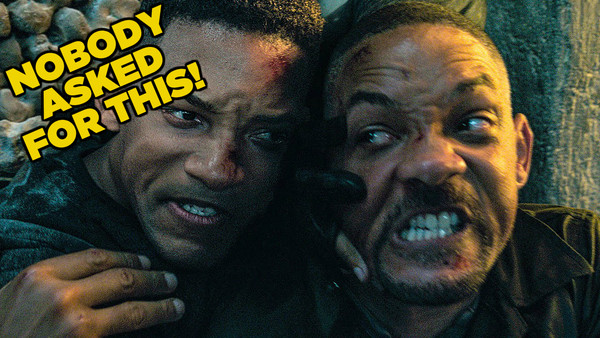
Will Smith is one of the few actors working today that still has some semblance of star power left. Consequently, with bona-fide star draw in short supply, it makes sense for a studio to come to the conclusion that two Will Smiths would be an easy home run. Why cast someone else opposite him, when with the advent of CG technology he could play himself?
Gemini Man was the film that made that idea a reality, but it didn't stop there. Director Ang Lee wanted this film to boast the cutting edge of cinema technology, and filmed the project in 120 frames per second - something no other movie had done before. Peter Jackson's The Hobbit trilogy experimented with higher frame rates, but only bumped it up to 48fps, because most cinema chains can't even display the format correctly.
To maximise the experience (and ticket sales), Gemini Man was released in a bunch of different formats, including regular 2D, IMAX, Dolby Cinema and HFR 3D+. No amount of gimmicks could help it make a profit though, and Lee's experiment proved that even two Will Smiths isn't enough to make a higher frame rate for movies an appealing prospect.