10 Oddly Specific Trends In 2014 Movies

What do these films all have in common?

It's the end of the year and, on top of having yet another return to Middle-Earth and a barrage of Christmas movies trying to be hip, it's the time when everyone gets a little recollective. Best, worst and most-disappointing lists are rife, but there's more to reviewing the year than just ranking its standout entries. Looking back over the movies of 2014 there's a lot of oddly specific traits that more than a few share. You'd naturally expect there to be some vague similarities between movies produced around the same time, although maybe not to this extent. Part of this is to do with the fact that movies aren't made in isolation - unless a director goes full-Mike Leigh and locks away his actors for months, real world events are going to have an impact on the film-making process, while knowledge of what other studios are up to can greatly influence a production - but some of these ten shared themes have strangely come about by simple coincidence. There's obviously a lot of trends that permeate modern cinema in general, but this list will look at those specific to the past twelve months; overarching themes that have either sprung up, or gained a whole new level of prominence, this year. Prepare to see originality busted open.

Honourable Mention - Scientific Accuracy

The Movies: Interstellar, Guardians Of The Galaxy, Jurassic World Trailer Are you making a sci-fi movie that's in some way related to the real world? Then you better make sure your science is 100% accurate, otherwise Neil deGrasse Tyson and anyone who f**cking loves science on Facebook are going to come down on you hard in the vague belief that it matters. This doesn't make the list proper because it's a stupid current trend of nit-picking that has no bearing on a movie's quality. People may harp on and on about the science of black holes, but whether Interstellar was accurate to reality or not had no real bearing on an individual's enjoyment of the film. The whole hoo-ha about Jurassic World's dinosaurs not having feathers may indeed be scientifically accurate, but it misses one big steaming pile of fact - they knew that back with the first one. The first thing Dr. Grant says in Jurassic Park is that dinosaurs are the ancestors of birds, but Spielberg chose the traditional reptile look because it's cooler on screen. God forbid a director do something in a film because it looks good.

10. Acclaimed Movies Have Divisive Final Minutes

The Movies: Interstellar, Gone Girl, Boyhood, Guardians Of The Galaxy 2014 has brought spectacular new movies from some of the best directors working today; Spike Jonze gave the world Her, Wes Anderson delivered his most Wes Anderson movie, The Grand Budapest Hotel, and Bryan Singer returned to the not too distant future for the best X-Men movie yet. Not all of the movies from proven masters were greeted with overwhelming plaudits, however. Both David Fincher and Christopher Nolan released films whose general reaction can be summed up in the same manner; "not the director's best, but still an incredible piece of (flawed) cinema." The similarities are particularly stark when looking at their endings. Gone Girl not giving Amy any punishment for her manipulation, ending on something of an anti-climax, and Interstellar showing Matthew McConaughey realising that love was the key to the universe (or whatever) both received raised eyebrows, becoming the most divisive elements of their respective movies. Even Boyhood, Richard Linklater's seminal meditation on childhood that essentially closes the book on the whole coming-of-age genre, wasn't exempt from this, with its final ten minutes of desert-trekking irritating some viewers who were already emotioned-out after Patricia Arquette's goodbye. The same goes for Guardians Of The Galaxy, which marked yet another Marvel movie to succumb to the CGI-explosion finale syndrome.

9. Blatant Self-Awareness

The Movies: The Lego Movie, 22 Jump Street, Muppets Most Wanted, Horrible Bosses 2 One of the highlights of 2014 as a whole was the brilliant closing credits sequence for 22 Jump Street, where the future of the franchise was mapped out, through more sequels, recastings, toys and children's cartoons. This may have lost some of its power with the subsequent announcement there actually will be a 23 Jump Street, but overall it served as the cherry on a cake so self aware it had already digested itself; pretty much every memorable joke in the movie came from the fact the movie knew the ridiculousness of its own existence. The same trick of playing with self-awareness was played in The Lego Movie, also directed by Phil Lord and Christopher Miller, but this year it was also trotted out for sequels to big, but decidedly stand-alone hits. And, sadly, out of the Lord-Miller power-house's control, it didn't really work too well. Muppets Most Wanted started with a humorous songs about the vapidity of sequels, but then just assumed that allowed them to turn in a clearly sub-standard product. Even worse was Horrible Bosses 2, which kinda, sorta, half-tried to appear self-aware (ish), but ended up just looking like a confused attempt to sequel something that didn't need a sequel; only a tacked on outtakes reel on the credits revealed they were trying to be in on the joke.

8. Thinking We Care About Supporting Characters
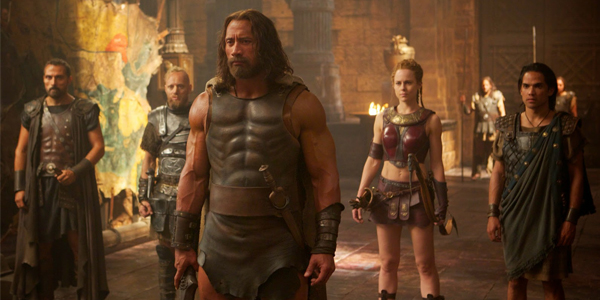
The Movies: Hercules, Dracula Untold, The Hobbit: The Battle Of The Five Armies Ensemble casts are in vogue. And not just because Marvel are really good at them (both their 2014 releases were built on a rag-tag group having to come together). They're an easy way to give a film variety while still keeping a consistent tone and tight focus. Having a large supporting cast work, however, does require a bit of leg-work. You can't just have a team turn up cold and expect the audience to get on side with them. This is something that a few 2014 movies failed to do, most notably Hercules and Dracula Untold. Both were essentially built on the same central idea - take a classic story, keep the setting, but make inexplicably modern - and both misread part of that as "throw in a cast of supporting characters and pretend they're important without giving any inclination why they are". The titular heroes came with a Fellowship ensemble of supporting characters that get no introduction beyond their cliché being highlighted (the best friend, the fighter, the woman), making all of their subsequent appearances rather flat. Maybe it's a little premature to include The Battle Of The Five Armies in this entry, but what are the odds that the thirteen dwarves are suddenly going to get recognisably distinct personalities in the final part of The Hobbit Trilogy?

7. Friend-Of-A-Friend Directors

The Movies: Into The Storm, Nightcrawler, Transcendence Wannabe directors take note: if you're wanting to break into movie-making, it seems like the best way to do it (if 2014's anything to go by at least) is to do something else, make pals with a famous director, then piggy-back on them to get into the folding chair. Transcendence was essentially marketing as a Nolan movie to fill the void before Interstellar, featuring some of the director's beloved recurring cast and helmed by his regular Director of Photography Wally Pfister. Sadly, it transpires that while Pfister can frame a shot like a master and come up with an idea that sounds cool when condensed to a couple of sentences, he can't actually construct a full movie - the Johnny Depp thriller tanked in every manner imaginable. An even worse movie from an even more contrived director was Into The Storm - Steven Quale's entire career is contrived off the fact he helped James Cameron a couple of times. It's not all bad news, however. Dan Gilroy, who had collaborated with brother Tony on his previous movies, made his directorial debut this year with Nightcrawler, which just so happens to be one of the year's best films. You win some, you lose some.

6. Out-Of-Context Pop Culture Quoting

The Movies: TMNT, 22 Jump Street, Horrible Bosses 2 You know what studios think is really funny? Jokes in movies that reference things from other movies. It's like the movie is in the real world and the characters are aware of other movies. Of course, not only has this brand of humour been done to death already (ever heard of The Simpsons, Hollywood?) more often than not it simply comes across as desperate. By far the worst culprit was Teenage Mutant Ninja Turtles, which has Michelangelo (when not hitting on Megan Fox) spout line after line name-checking any popular movie he can think of in a bid to be funny. Yes, Christian Bale's Batman has a deep voice, but unless you're adding any insight you're no different to a YouTube commenter regurgitating that five year old observation. Other films did it too, ranging from the cringeworthy (Horrible Bosses 2's "he's fight clubbing" felt painfully forced) to the bearable (the ever-enjoyable 22 Jump Street), but none as unashamedly as TMNT. It looks like quoting pop culture is to the 2010s what talking about fast food was to the 1990s. It'd be fine if it was all as delightful as Bill's dissection of superheroes, but just pointing something out doesn't make a joke.

5. Famous People Were Dicks

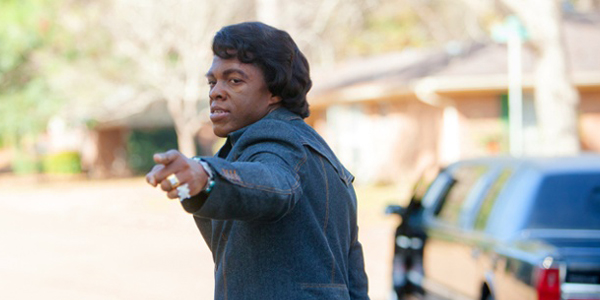
The Movies: Get On Up, Mr Turner If you were under any illusions that famous people aren't perfect, then cinema in 2014 has worked hard to right your beliefs. While both tried inordinately hard to highlight their subject's artistic greatness, Get On Up and Mr Turner were more than happy to show James Brown and J. M. W. Turner as a selfish wife-beater and sex-addled abuser respectively. This is really only to be expected given how the biopic has developed. Although you'd think a film highlighting a famous person's life would be pretty similar regardless of the era in which its produced, no matter how hard a director tries it will reflect the present times (or end up feeling antiquated, like last year's Mandela: A Long Walk To Freedom). And with culture keen to highlight celebrities as real people, much of the entertainment now comes from just how flawed they really were. In fact, the one biopic that jumps to mind that didn't follow this track was The Imitation Game, which played things a lot more conventionally, giving a more traditional movie (and attack-less take on Alan Turing).

4. Totally Unreal €œReal World€ Stories

The Movies: What If, The Fault In Our Stars (500) Days Of Summer may have been one of the most delightfully fresh romantic comedies (with an emphasis on the latter part of the term) of recent years, but boy did it ruin the genre in the process. A story of boy meets girl that wasn't a love story, it challenged the effect movies have on our perceptions on romance and the idea of a typically "good" guy. Not the most original concept, but executed to perfection. Sadly its imitators haven't quite been able to live up to it. If you're going to state rather explicitly that your movie is set in the real world, then there needs to be at least some passing commitment to that concept. This year that went out the window, with calling a story truthful treated like an obligatory statement, as if a movie not being 100% accurate is a heinous crime. In What If, the "realistic" Daniel Radcliffe rom-com about a guy who falls in love with a girl in a relationship, the guy ends up getting the girl and although The Fault In Our Stars doesn't let idealism cure cancer, it does still give its characters a saccharinely unbelievable love story, with a kiss in the room where Anne Frank was captured by Nazi's getting a round of applause. It's been proven to work before, but with so little care in making this suggested realism justified, it's coming across as a needless cliché.

3. The Cast Of The Riot Club In Everything
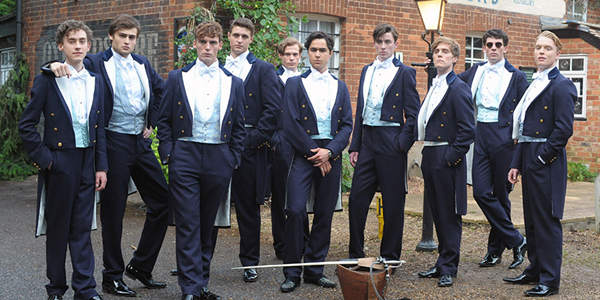
The Movies: Pride (x2), The Book Thief, The Railway Man, Belle, '71, Serena, Noah, The Hunger Games: Mockingjay - Part 1 (x2), Love Rosie The story of nine reprehensible Oxford students (and one, minorly-likeable, de facto protagonist), blinded by their inherited wealth, The Riot Club was an at times on-the-nose look at the British class divide that gets exacerbated by the university system. The film centres on one of the eponymous club's dinners, where they proceed to trash a country pub and beat its owner to a pulp, Bullingdon-style, because they "f**king hate poor people". It'd be easy to think these "actors" were little more than semi-self aware poshos keen to highlight their superiority, but thankfully it's become clear they were just acting; they've been busy showing a wide range of talents in what feels like every 2014 movie. Most notable are Sam Claflin (Finnick in The Hunger Games) and Douglas Booth (Noah), but most of the gang have popped up in a bizarrely high-number of films this year, particularly in the latter half. The Riot Club may not have received as much critical attention as Lone Scherfig's previous An Education, but it will certainly have a big impact. Just as the Oscar-nominated coming-of-age story catapulted Carey Mulligan to super-stardom, so it seems this adaptation of adored stage-play Posh has marked out the biggest English names to watch out for in the coming years.

2. Things Weren€™t As They Seemed

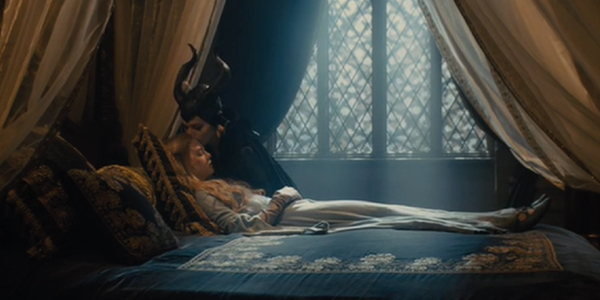
The Movies: Maleficent, Dracula Untold, Noah, Hercules (and Transformers: Age Of Extinction, X-Men: Days Of Future Past, Godzilla) Remember that movie/book/story you know so well? Well that's not had it really happened. That's the flawed conceit behind some of 2014's biggest mis-steps. Whereas The Dark Knight Trilogy just went with its gritty world, other takes on classic tales are keen to point out just how new this take is, as if a single idea offsets a lack of cinematic prowess. OK, Noah actually worked, but the other examples certainly didn't. Both Hercules and Maleficent were painfully overt in their execution of this, with a voice-over hammering home just how different this was from other versions. The latter was particularly odd, treating the original Sleeping Beauty (the Disney animation, not the ballet on which it's based) as some piece of propaganda. The problem is, that when this is just tacked on as a way to justify a reboot (oh, sorry, re-imagining), the only real change it's making is sucking out all of the fun from an idea. Remember when you thought Dracula was cool? Not any more. A sub-category of all this is the movies that rewrite real world history as part of their movie's plot - the dinosaurs were made extinct to make Transformers, JFK was a mutant, 1950's nuclear tests were trying to kill Godzilla. Not a trend new to 2014, but its overarching prominence makes it certainly worth remarking on.

1. Open Endings

The Movies: Transformers: Age Of Extinction, Dawn Of The Planet Of The Apes, The Hunger Games: Mockingjay - Part 1, Divergent, The Maze Runner, The Amazing Spider-Man 2 A conventional narrative has a beginning, middle and end. All that changed in 2014, where it became beginning, middle and a semi-resolution of a minor sub-plot, leaving the major story open for the next movie. This episodic manner of filmmaking has been on the rise for a while, but this year it reached epidemic levels, with franchises that had previously been happy telling a stand-alone story each time (Transformers, Planet Of The Apes) suddenly spending the final act teasing more exciting adventures. Laying some groundwork for a sequel is fine, but that should really be a Batman Begins-style tease, not the entire point of the movie (that's you, The Amazing Spider-Man 2). Mega-franchises are Hollywood's bread-and-butter right now, yet this new development sees them misunderstand their appeal. Yes, Marvel have won audience's hearts and wallets with their cinematic universe, but at no point have they let the build-up towards Thanos get in the way of the story at hand (well, aside from Iron Man 2, but they don't talk about that). All of this seems to be done to ensure an audience will come back for the next/final installment, which ignores that most people would rather go see the sequel to a good movie, regardless of whether it's set up or not, than a muddled stinker. What other oddly specific trends did you spot in 2014 movies? Share your observations in the comments below.

Contributor
Contributor

Film Editor (2014-2016). Loves The Usual Suspects. Hates Transformers 2. Everything else lies somewhere in the middle. Once met the Chuckle Brothers.