10 Once Great Directors Who Need To Retire
 As Sick Boy in Trainspotting says: "one time, you've got it, and then you lose it, and it's gone forever." This particularly seems the case in regards to film directors as once they enter a rut, they seemingly can't get out no matter what they try. Sometimes they go back to their roots, sometimes they go independent and sometimes they try something completely new, but very few directors have ever been able to resurrect their careers once they've had a few flops. 'Losing it' happens to the best of them as this list illustrates, but they're not the only ones. Directors who are no longer with us such as Billy Wilder, Alfred Hitchcock, Sergei Eisenstein, Elia Kazan and Howard Hawks all had middling conclusions to their careers. Eisenstein in particular completely regressed into conformity and his career ended so sadly considering his early work is some of the most pioneering in the history of cinema. What this list proves more than anything else is that not everybody can have a career like Martin Scorsese or Andrei Tarkovsky or Ingmar Bergman or Sergio Leone and make masterpiece after masterpiece. There's no shame in admitting you haven't got it anymore and thatyour work no longer compares to the high standards you set yourself. At this point, the directors on this list are only going to do more damage to their fine legacies if they continue to churn out flops nobody is interested in. The directors on this list are all approaching the end of their careers anyway, and none of them seem set to have a William Friedkin-esque comeback.
10. Clint Eastwood
 Clint Eastwood's extremely lengthy and prolific career features over 50 films and along the way he has picked up two Best Director Academy Awards, a feat only bettered by John Ford, William Wyler and Frank Capra. Eastwood's best pictures are Unforgiven, Mystic River and The Outlaw Josey Wales. Now into his 80's, Eastwood is more prolific than ever, but he appears to have favoured quantity over quality of late. His last good movie was Mystic River, but it would have been Million Dollar Baby if the ending wasn't one of the most misjudged of recent years. Most recently, Eastwood has had a tendency to churn out one film a year around awards season as Oscar bait. Films such as Invictus, Changeling, Gran Torino, Hereafter and J Edgar were all dreary, unimpressive pieces of work that were seemingly created for Academy voters as Eastwood seems intent on adding one more Oscar to his shelf. Eastwood went from an exciting director who could work with any subject matter and make it interesting to a man churning out commercial, conformist, boring films annually.
9. Rob Reiner
 When you look at Rob Reiner's career, you can see it is split into three categories. The first one is his comedy movies such as This is Spinal Tap and When Harry Met Sally. The second one is his solid drama movies such as Stand By Me and Misery. And the third category is the one that features universal embarrassments such as The Bucket List and Rumor Has It. Sadly, most of his universal embarrassments have come in the last decade as both his commercial popularity and critical success has fell into a drastic downward spiral. Reiner's directing career couldn't have started off hotter as his debut was one of the funniest movies of all time in This is Spinal Tap. He followed that up with the likes of Stand By Me, The Sure Thing and When Harry Met Sally and he was on top of the world. Reiner's fortunes took a drastic turn for the worst with the universal failure, North and his career has never recovered. A series of shoddy rom-coms followed including The Story of Us, Alex & Emma and Rumor Has It and Reiner had truly fell from the top to the bottom. Reiner has continued to harm his legacy in subsequent years with the abominable The Bucket List and he can't even get a job directing a standard rom-com these days. Reiner once showed so much greatness as he produced hit after hit, but he disintegrated overnight and has been at the bottom of the scrap heap for a while now.
8. George Lucas
I know it's not considered cool to praise George Lucas on the internet but the fact are the facts. A man who made Star Wars and American Graffiti has to have been a great director at some point, and in the mid to late 70's, he was.. Obviously, Lucas' directing on the prequel trilogy was rightfully met with overwhelming derision, but before he did implode and severely hamper his own legacy and the Star Wars mythology, he did do some great work as a director. It's also easy to forget his contributions as a producer on the Indiana Jones series and he also financed Paul Schrader's Mishima: A Life in Four Chapters which is a masterwork. Lucas was very much his own worst enemy when it came to directing. He left it 22 years between films and The Phantom Menace felt like a film made by a director long out the game and only interested in the money. The Star Wars prequel trilogy was a failure in every way imaginable and there was no one to blame but him. Those three prequel films were made by a man who had forgotten what made the original three so great and signaled the end of a man's career. With Disney now owning the rights for Star Wars and Lucas not wanted as director, now seems like the perfect time for him to ride off into the sunset with his big fat cheque.7. Walter Hill
 Walter Hill has had an interesting and lengthy career. As a producer, he was responsible for the Alien films as well as Prometheus, as a writer he penned The Getaway and The Mackintosh Men for Sam Peckinpah and John Huston respectively and as a director, he made classics such as The Warriors, The Driver and 48 Hrs. Heavily influenced by the aforementioned Peckinpah, Hill made primarily very masculine movies that were dark, gritty and cool, though he never received significant commercial success. Films such as The Driver and The Warriors have gone on to become bonafide cult classics and his versatility is an attribute that often goes overlooked as he dabbled successfully in comedy with Brewster's Millions. Hill's troubles began to appear in the 90's as Alien 3, which he wrote and produced received mixed reviews at absolute best and films such as Wild Bill and Geronimo: An American Legend were massive disappointments. He still showed glimpses of his immense talent in Last Man Standing and Trespass, but it became increasingly apparent that his talent was fading. With 2002's flop, Undisputed, it seemed as if Hill then retired from feature film directing, but he resurfaced earlier this year with Sylvester Stallone vehicle, Bullet to the Head which was simply awful and felt like it was directed by a Walter Hill impersonator. Looking at Hill's recent career and it's clear he no longer has the same dynamism he had in his younger days and that he's a sad shell of his former self.
6. John Carpenter
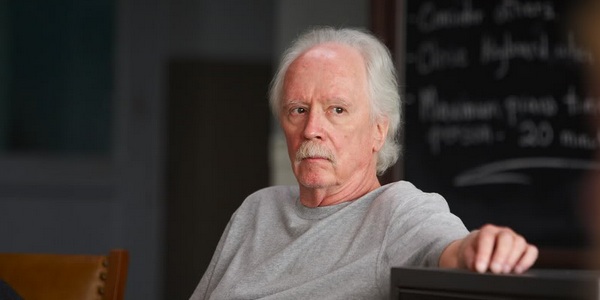 John Carpenter is one of the most influential cult directors of all time. Very few of his films were ever massive commercial successes at the time of their contemporary release, but he received an ardent following and his films have only grown in popularity as time's gone by. Carpenter's early work and collaborations with Kurt Russell are his most acclaimed and in Halloween, he made one of the most iconic horror films of all time. Carpenter's career took a downward spiral in the late 80's and he's never recovered. The vastly underrated They Live was his last good film and his last genuinely great work was Big Trouble in Little China and they were released in 1988 and 86 respectively, meaning it's been a very long time since Carpenter created anything of substance. A series of commercial and critical flops followed including the abysmal Ghosts of Mars which sent the once great director into semi-retirement. Carpenter attempted a comeback with 2010's The Ward which was a crushing disappointment and sadly the final nail in his coffin. During the 70's and early 80's, Carpenter created some of the finest pieces of independent cinema in American film history, but few fell off quite as dramatically as he did.
5. Oliver Stone
Oliver Stone is one of the most well known names in film, perhaps for his outspoken nature more than anything else lately. It's perhaps no coincidence that Stone's documentary making has improved as his features have decreased in quality as he no longer appears to have the same anger and ferocity he had earlier in his career, as both a writer and director. Stone's early films were like being hit over the head with a baseball bat as he hammered the message home with brute force and often it worked perfectly as films such as Scarface (he wrote, but didn't direct), Platoon, Wall Street, Born on the Fourth of July and Natural Born Killers proves. Stone has always been interested in politics from his anti-Vietnam films, to his anti-Capitalist films to his biopics of two former US Presidents, and he should now focus his efforts on his political documentaries which are very interesting. Stone's controversial career took a turn for the worse at around the turn of the century. After a five year break he returned with the highly anticipated Alexander only it turned out to be one of the most disappointing films ever made and a complete disaster, and for the first time in his career, Stone could be accused of being boring. Stone's movies have been increasingly lackluster of late, though W had some nice touches. His latest, Savages, looked to be a return to lurid and visceral form, but again we were left with a soulless film featuring people we didn't care about and Stone's shtick is getting really quite tiring now. He would be much better off retiring from feature film making and focusing entirely on documentaries and television as his history program is fascinating.
4. Bernardo Bertolucci
 Bernardo Bertolucci is probably most known to readers of this for the infamous Last Tango in Paris - a film most notable for its incredibly explicit sex scene between Marlon Brando and Maria Schneider. Despite being an Academy Award winning director, much of his work has gone unseen by a wide audience. His masterpiece, The Conformist is one of the greatest films ever made and an excellent examination of the psychology of fascism. Other films such as The Spider's Stratagem and The Last Emperor are also excellent pieces of cinema that deserve to be watched by the masses. Bertolucci's Novocento, despite being vastly flawed is also a stunning piece of art when it works. Bertolucci started his career in film working with the legendary Pier Paolo Pasolini, but it seems like he's going to end it on a whimper. His latest offering, Me and You was released recently in the UK to zero anticipation and with it being his first film in 10 years, it seems as if Bertolucci's star has finally burnt out. Most recently, Bertolucci is going to be known for directing The Dreamers, a film that got more attention for its nude scenes than any of the drama. It's a pure headache of a movie and since the beginning of the 90's, Bertolucci's movies have been near unwatchable. Stealing Beauty, despite Liv Tyler's best efforts was in particular a monotonous affair. Bernardo Bertolucci has two Academy Awards, a Golden Lion and a honourary Palme D'Or to his name, he has nothing left to prove and if his recent films are anything to go by, nothing left to give.
3. Brian De Palma
 Brian De Palma has made some truly terrible movies over the years. Even before his recent slump, his career has been littered with abysmal offerings. Much of his vary early work can be left alone and it wasn't until 1976 with Carrie and Obsessed where he found success. From the mid-seventies he had a great run, directing his masterpiece Scarface as well as several excellent pictures such as Dressed to Kill, Blow Out, Body Double and Carlito's Way. During this period, he also directed his two most commercial films in The Untouchables and Mission: Impossible which brought him significant commercial success as well as more eyes on his back catalogue. De Palma's decline can be traced back to 1990 with the release of The Bonfire of the Vanities though Carlito's Way was released three years later and Mission: Impossible three years after that. Ever since Mission: Impossible, De Palma's stock has plummeted with the release of five successive bombs of both the commercial and critical kind. He was given the chance to resurrect his career with an adaptation of James Ellroy's The Black Dahlia in 2006, but he botched it horribly, as it was uninteresting and empty rather than the LA Confidential-esque masterpiece that was expected. Most recently, De Palma has fell off the map completely and despite his latest film - Passion - starring Rachel McAdams and Noomi Rapace it has yet to be picked up for distribution. De Palma's movies were never to everybody's taste, but at least people took notice when he had a film out. Now, casual film-goers barely know he exists.
2. Jean-Luc Godard
 Nobody will ever doubt or question Jean-Luc Godard's influence on cinema. His legacy is there for all to see and it is filled with great pieces of work such as his iconic debut A Bout de Souffle, the playfully entertaining Bande a Part and the provocatively ambitious Weekend. Godard always looked for new ways to express himself through the medium of film, and whist his movies can be abstract, nearly all of them were deeply personal. A radical in both his movies and politics, and when both were mixed, the results were majestic. Godard has the reputation he has for a reason and directors ranging from Martin Scorsese to Wong Kar-Wai and Pier Paolo Pasolini to Paul Thomas Anderson cite him as an influence. Being an experimental filmmaker, not everything is going to work, there's nothing wrong with that, but some time over the last 20 or so years, Godard appears to have completely forgotten what made him so revered. Godard has always shown contempt for conventions and his films have always bordered on narcissistic pretension, but his recent work, in particular Film Socialisme have given the detractors ammunition to fire with. Film Socialisme was a complete disaster in every way imaginable. It's an attempt at a film essay apparently, but it is so tedious and has such contempt for its non-French speaking audience, it's just impossible to care. Godard hasn't made a good film for a very long time now and Film Socialisme even tested his most hardcore of followers meaning it's probably time to call it a day. At the grand old age of 82 and with 38 films to his name, nobody would blame him either.
1. Francis Ford Coppola
 Straight off, I will admit Francis Ford Coppola directed my personal favourite film in The Godfather Part II, but that was released in 1974, and sadly in the 39 years have passed since that film's release, he has gradually lost his touch completely. The 1970's completely belonged to Coppola. He directed four films during the decade - The Godfather, The Godfather Part II, The Conversation and Apocalypse Now - each one is a masterpiece and deservedly ranked alongside the greatest films ever produced. Few directors ever make one masterpiece, but Coppola made four, which is what makes his steep decline even more perculiar. Always experimental and revolutionary in his methods, Coppola continued to attempt to evolve cinema, but his entire output in the 80's, apart from The Cotton Club was a dismal disaster. Coppola's last film was Twixt in 2011, which next to nobody has seen as it has not received a proper release in America, a far cry from the record breaking numbers of The Godfather. Coppola's ouput has gradually decreased with age but so has the quality of his films and watching Youth Without Youth, it's hard to image the same man directed the groundbreaking Apocalypse Now. Coppola, alongside his friends and fellow revolutionaries used to rule the film world, but unlike them, he has failed to adapt, and sadly, it's about time he put the camera away for good.