10 Overhyped Horror Movies You Wish You'd Not Watched
Drawing on the immortal word of Twenty One Pilots: Don't believe the hype.

Nobody can talk up a movie like the horror fandom - just think of how many people have told you people really went missing during filming for The Blair Witch Project, or that The Exorcist is the scariest film of all time.
But just because other people love a film so much they're willing to bend your ear about it ad nauseam, that doesn't mean it's good! And in this day and age, when internet hype drives most trends, and every publication has an angle to sell, it can be hard to separate your Gremlins from your Critters.
Plenty of times we've bought the ticket, the Blu-ray, the Shudder subscription, only to find that that one big horror flick everyone's been bigging up is better off in the bin. Indeed, contrary to popular opinion, The Woman in Black didn't give us nightmares, Hush hasn't revolutionised the genre and Army of the Dead really is just another zombie flick.
Enter at your own risk and beware, because nothing is sacred, no film too beloved to be able to hide from our sheer regret at ever having seen it. Here are 10 overhyped horrors we've watched so you don't have to.
10. High Tension (2003)

Considered part of the New French Extremity - the movement of transgressive, absurd and frequently grotesque horror and horror-adjacent movies that came out of France in the late-'90s and noughties - High Tension puts the slasher and the psychological horror in a blender, with uneven results.
Rebranded in English-speaking territories, from Switchblade Romance to High Tension (bringing it in line with its original French title, Haute Tension), but still known by both names, the film sees student Alex (Maïwenn Le Besco) and her friend Marie (Cécile de France) travel to visit family in the country, where a psychotic truck driver (Philippe Nahon) shatter their peace for good.
While the film isn't short on some nail-biting moments and gory action, it is also not deserving of the hype that the splatter buffs afford it.
The film chugs along conventionally for the most part, until an unfortunate, late-in-the-day twist. Spoiler alert: Marie is the truck driver, unaware of her split personality and the sudden and severe effects it can have. Aside from being one of the dumbest cliché reveals available in fiction, the whole split personality thing tears the film apart at the seams, making a whole variety of the preceding scenes logically and logistically impossible, and leaving us wishing we'd never tuned in.
9. Hush (2016)

Crown prince of contemporary horror Mike Flanagan’s high concept Hush hit screens in 2016, generating a lot of hype thanks to an unusual premise. The film situates us in the company of deaf writer Maddie (Kate Siegel), who has opted out of the multitudinous hazards of mainstream society in favour of a quiet life in the woods. No prizes for guessing that someone is soon stopping by to spoil that silence.
A masked, crossbow-wielding killer (John Gallagher Jr) descends upon her house, at first appearing by her windows before ramping up the torment, the intensity, the violence, and his level of daring as he launches an all-out assault on Maddie's life.
So, sure, the premise of a deaf horror protagonist is an interesting one, because it bathes much of the film in silence and immediately eliminates most conventional attempts to seek help, but beyond this there's not a whole lot of film to bury your eyes in.
There are some creative self-defence tactics - props go to the insecticide in the face - but nothing deserving the overwhelming praise the film received. Overall, it's dull, it's dry, and after 80 minutes of struggle, there's not a motive in sight.
8. The Woman in Black (1989)

Hailed by your mum, your dad, your teachers and pretty much anyone other Brit who was alive in the '80s as one of the scariest films of all time, ITV's 1989 Christmas Eve horror movie The Woman In Black has always had an awful lot to live up to.
Adapted from Susan Hill’s 1983 novel of the same name, it focuses on young solicitor Arthur Kidd (Adrian Rawlins) who travels to east-coast market town Crythin Gifford to settle the estate of a recently deceased reclusive widow, where he discovers the town haunted by the titular woman.
The film has its moments - not least the bedroom scene towards the conclusion - but on the whole, The Woman in Black hasn't aged well. Apart from the fact that it trudges along at a snail's pace (an unfortunate attribute of most ghost stories), it is all a bit hammy, a bit rough around the edges. And there are too few scares with a lot of space in-between, rendering the whole thing a dull, snooze-worthy affair.
This is one instance in which the modern remake was not only justified but vindicated when compared side-by-side with its predecessor.
7. The Grudge (2004)

English-language remakes generally get a bad rap, and rightly so, given more often than not they are designed solely to bleed profit from a successful foreign-language film that English-speaking, primarily North American audiences are too lackadaisical to read the subtitles on. But the gambit almost always pays off, and audiences gobble them up.
Such is the case for Takashi Shimizu's US remake of his own 2002 film Ju-On: The Grudge, rehashed before the original had cooled and with none other than Buffy the Vampire Slayer herself, Sarah Michelle Gellar, in the lead role. American nurse Karen Davis (Gellar) moves to Tokyo, where she encounters a supernatural curse - the titular Grudge - that passes from victim to victim leaving a series of mysterious, horrifying deaths in its wake.
Despite its derivative nature, the film really took off, gaining the word-of-mouth notoriety necessary to take nearly 20 times its budget at the box office, and many more millions in home media. But it's not worth your while.
There are a handful of creepy moments, but the scenes are disjointed, the plot unnecessarily convoluted and it mostly scans as a poor retelling of Ring (1998). If you want the highlights, Scary Movie 4 (2006) manages to hit all the key moments in a fraction of the time.
6. Hellraiser (1987)

Written and directed by Clive Barker, and based on his 1986 novella The Hellbound Heart, supernatural horror Hellraiser spawned a decade-spanning franchise that is still limping along today.
The plot is built around the discovery of a mysterious puzzle box that summons the Cenobites, interdimensional beings who can no longer tell the difference between pain and pleasure, led by the horror icon Pinhead (Doug Bradley). And, while on a conceptual level Hellraiser more than deserves its place in the horror canon, that doesn’t make it a good film.
With the way the horror community reveres it, one expects something more on par with the John Carpenter classics, and yet Hellraiser is surprisingly limited. Pinhead is a phenomenal creation and a horror villain for the ages, but that simply isn’t enough to carry a film that is ugly, schlocky and feels cheap in a way that most of the other films typically mentioned in the same breath do not.
5. Army of the Dead (2021)

Suffice to say, Zack Snyder's Army of the Dead was one of the most keenly anticipated movies of the pandemic, publishing straight to Netflix after only a limited release in cinemas. And while some fans were disappointed that it wasn't a sequel to his 2004 remake of George A Romero's Dawn of the Dead, there was nonetheless a major hype train that buffered the film into our living rooms and onto our screens.
With a large cast featuring, amongst others, Dave Bautista, Ella Purnell, Theo Rossi, Matthias Schweighöfer and Garret Dillahunt, the film charts a crack team's mission into a zombie-infested Las Vegas in an attempt to recover a major payday from a casino vault before the government nuke Sin City. High concept, major fun - or so you would think.
Maybe it was because most people were still stuck at home; the internet had become the only place to champion new releases; or that small wins were treated like epic milestones, but the delivery did not match the fanfare. All the Snyder excesses are working overtime in this one, including too many characters, desaturated images, overuse of slo-mo, and, above all else, a consistent, headache-inducing shallow focus. Army of the Dead is palatable, but just not really worth the time it takes to watch, especially not when compared against the wide array of other zombie flicks on offer.
4. Mama (2013)

Hailed as a return to old-school moviemaking sensibilities, Andy Muschietti’s Mama was championed by fans, and yet when it boils down to it the supernatural horror is just a rehash, rather than a reinvention, of old images and tropes.
Sisters Lily (Isabelle Nélisse) and Victoria (Megan Charpentier) disappear into the woods on the day of their parents’ death, and despite a desperate search by their uncle Lucas (Nikolaj Coster-Waldau) and his girlfriend Annie (Jessica Chastain), they seem to be gone for good.
Nevertheless, five years later, the girls are found in a remote cabin, with Lucas and Annie rushing to adopt them. And they all lived happily ever after. Or they would, if the mystery of who sustained them all these years didn’t hang over the family’s heads and come crawling out of the shadows to find them.
As evidenced by its premise, the film is creepy enough, but there’s not much more to it. The titular ghoul is good for some jump scares (whose presence seem to deny the “old-school moviemaking” claim), but her background - mentally ill mother comes back to haunt the living – feels worn out on arrival. No doubt the name association of Guillermo del Toro as executive producer boosted this one in the public consciousness, but it just doesn’t stand up.
3. Ringu (1998)
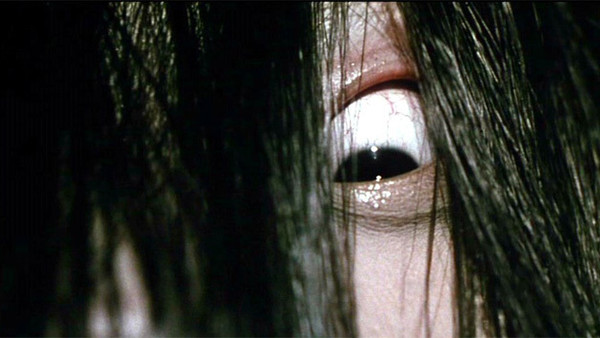
The big daddy of contemporary J-horror, Hideo Nakata's Ringu (リング) was an international sensation upon release. And what's not to love - there's a cursed videotape, a girl in her nightie climbing out of the TV, and a rollicking mystery about the what and the why of all this to drive the plot.
Given all that promise, then, how come it's so underwhelming? Ringu got huge through word-of-mouth, referenced by many as one of the most terrifying movies ever made, and yet when it comes down it, it's just not. There's a lot of wandering around and investigating things, and not a whole lot of tension.
Where the film should be turning the screws and ratcheting up the fear factor, it gets lost in its own (relatively slender) running time, failing to deliver much in the way of TV-based shenanigans, be-nightied girls or genuine horror.
In fact, the scares are so few and far between that, pound-for-pound, the US remake (considered inferior by pretty much anyone with two eyes and a Twitter handle) has it totally outgunned. Our advice, when there are films like It Follows (2014) out there, is to just not bother at all.
2. 30 Days of Night (2007)

Wedged in that weird time period between the end of Buffy and the beginning of True Blood and Twilight, 30 Days of Night was said to be the revolutionary vampire movie, redefining the genre for the next generation with a concept that had never been seen before.
Adapted from the graphic novel of the same name by several of its writers and brought to the big screen by David Slade (who, coincidentally, wound up directing 2010's Twilight: Eclipse), 30 Days situates its action in a small Alaskan town during its annual winter month without sunlight. Understandably, a vampire horde descends on these ripe pickings and an extended fight for survival begins. But what was supposed to be John Carpenter meets Danny Boyle feels instead like Paul W S Anderson meets Jon Avnet.
Truth be told, the film is lacking an enjoyable monster element, leaning too hard into its "new", ugly and gory idea of what vampires could or should be, and away from the modern yet romantic lore that the successes of Anne Rice, Joss Whedon and Stephenie Meyer tell us people go in for.
Danny Huston puts in a good shift as archvillain Marlow, and the aesthetic is compelling, but the other characters are difficult to root for and the cold, almost greyscale colour palette gets old pretty quick.
1. Audition (1999)

Another runaway J-horror success, Takashi Miike's Audition retains a notoriety unbroken by English-language remakes and enshrined in a lore carried over from the days of analogue media, limited internet and excessive word of mouth.
Widower Shigeharu (Ryo Ishibashi) decides to start dating again, and for some reason that can only be attributed to late-‘90s reality TV and dating culture, agrees to allow his film-producer friend Yasuhisa (Miyuki Matsuda) to hold auditions for a fake production to vet suitable candidates. Polite, mysterious, attractive Asami (Eihi Shiina) catches Shigeharu's eye, and they embark on a relationship that seems made in heaven before things begin to sour. Thing is, Asami is neurotic, obsessive and has a penchant for chopping up the people who do her wrong.
Several big names in Hollywood (including Tarantino) have hailed Audition as one of the scariest and the best horrors ever made, and yet it is neither particularly well made nor scary. The hype surrounding this one definitely rests on the torture scenes, which preceded Saw and Hostel, and which are brutal, grim and disturbing. If this is your man-filled bag, that's great, but it is not enough to prop up an entire movie.
The vague plot progresses at a snail's pace, and most scenes are shot and acted as if by amateurs. The final torture sequence is well conceived, well lit and offers a few genuine horrors, but again, this is not enough to save a seriously overrated movie.