10 Pitched Movies Hollywood Wasn't Ready For
Tarantino's R-rated Bond was ahead of its time.
It's often the case in Hollywood that innovative and creative movies don't pick up an audience until later in their lifespan: Blade Runner, for instance, was a box office dud but eventually became a cult classic, and that's just one of the many notable examples.
But sometimes a film project comes so out of left-field that it never actually gets made, ending up stuck in development hell at best or, at worst, never even escaping the pitching phase itself.
These 10 prospective films are among cinema's most agonising ventures that never were, be they stunning potential projects from auteur filmmakers or ambitious, boundary-pushing tentpole movies.
In each case, the films were conceptually ahead of their peers, and while in some cases you can't really blame the studio for passing on the idea at the time, in retrospect it's easy to imagine how they could've actually been made under different circumstances - in a different time, perhaps.
While it's possible that a few of these films could still go before cameras, you'd be foolish to get your hopes up...
10. A Dark Knight-Inspired, Two-Part MCU Hulk Saga

In a recent interview, Edward Norton revealed that, after signing on for 2008's The Incredible Hulk, he pitched Marvel Studios on a two-part Hulk movie saga inspired by Christopher Nolan's groundbreaking The Dark Knight. Norton said:
"What Chris Nolan had done with Batman was going down a path that I aligned with: long, dark, and serious. If there was ever a thing that I thought had that in it, it was the Hulk. It's literally the Promethean myth. I laid out a two-film thing: The origin and then the idea of Hulk as the conscious dreamer, the guy who can handle the trip. And they were like, 'That's what we want!' As it turned out, that wasn't what they wanted."
While Marvel Studios' reluctance to pull the trigger on further solo Hulk movies is likely more a result of the Norton-starring film turning in mediocre box office returns alongside the solo movie rights being tied up at Universal, it's safe to say that "Dark Knight but Hulk" isn't exactly a pitch that easily takes hold in the brains of Hollywood money-men.
Given the inherent silliness of The Hulk as a character, it's easy to appreciate why the MCU went the direction it did with the character, even if the notion of a dark character study focused less on explosions and more on the duality of Bruce Banner and the Big Green Guy sure does sound intriguing.
Hollywood certainly wasn't having it back in 2008, and honestly, it's tough to imagine this approach ever mustering up the necessary enthusiasm - nor the budget - it'd need to actually get made.
9. Neill Blomkamp's $135 Million Halo Adaptation

In the mid-2000s, Microsoft made a concerted effort to get a movie adaptation of their hit FPS franchise Halo off the ground, even drafting in Alex Garland (Ex Machina) to write a script, while Peter Jackson was aboard as producer, and Neill Blomkamp (District 9) was set to direct in his feature debut.
By most accounts, Microsoft's aggressive approach to shopping the movie rights around town and demanding a massive cut of the profits caused many studios to walk away from the table.
Though Microsoft did eventually come to an arrangement with Fox and Universal to co-produce the film with a $135 million budget locked in, Halo ended up cancelled early in post-production due to various business and legal disagreements, not least a budget skyrocketing to a reported $200 million.
Given that this was 15 years ago, where video game movies had a poor rep and nobody had ever mounted one at this price point before, it's totally understandable that Hollywood was bullish, even with an IP as instantly iconic as Halo.
Not until 2010's Prince of Persia did any studio go all-in with a tentpole-level pricetag - estimated at $150-200 million - and subsequent big-budget video game movies have only entered production sporadically.
But it's safe to say that in a world where a pricey video game movie like Rampage can turn a solid profit, a Halo movie is in no way the risk Hollywood deemed it to be 15 years ago.
It could still happen one day, but back in 2005 it was just too "risky" and ambitious for the suits to get their heads around.
8. Alfred Hitchcock's Necrophiliac Serial Killer Horror Film, Kaleidoscope

Alfred Hitchcock had enough unrealised projects to literally fill a Wikipedia page, and perhaps the most interesting and unexpected of them all is Kaleidoscope.
In the mid-1960s, Hitch was attempting to mount a quasi-prequel to his 1943 classic thriller Shadow of a Doubt, which would revolve around a young bodybuilder who moonlighted as a serial killer and necrophiliac in New York City. Yup.
The film would be filmed in black-and-white and, counter to his usual restraint, would feature graphic sex and violence.
Many of his prior collaborators passed on the opportunity to write the script, and even when a screenplay was finally hammered out and Hitchcock agreed to shoot it for just $1 million, he still struggled to muster much interest.
Ultimately, a Universal executive talked him out of making it, suggesting it'd ruin his "classy" brand, and it probably didn't help that upon showing the script to the legendary filmmaker François Truffaut, the Frenchman found the R-rated material too extreme.
Hitch ended up incorporating elements of this screenplay into his 1972 film Frenzy - one of Kaleidoscope's original titles - even if the bulk of this movie, sex, death and all, never made it to the screen.
Hitchcock's timing was probably a few years off here, as given the major shift in moral sensibilities which occurred throughout Hollywood in the 1970s, he might've been able to rustle up more interest by the middle of the decade.
Consider that today we have movies like Lars von Trier's The House That Jack Built filling up art-house cinemas, and it was clearly a case of wrong place, wrong time for the master director.
7. A Solo Catwoman Movie Starring A Middle-Aged Michelle Pfeiffer

Of the many, many unrealised DC movies over the years, there's perhaps none more intriguing than a 1998 pitch by Tim Burton's regular screenwriter John August, to make a solo Catwoman movie starring Michelle Pfeiffer, serving as a follow-up to Batman Returns.
Despite drumming up producer interest, a studio executive insisted that the movie needed to re-cast Selina Kyle with Sarah Michelle Gellar - almost 20 years Pfeiffer's junior - playing the part. Oh, and it had to feature a scene where she washed her hair...because reasons.
As intriguing as the pitch was, it featured so many things Hollywood hated at the time, namely female-fronted superhero movies, and actresses over the age of 40.
Granted, with the recent success of movies like Wonder Woman and Captain Marvel, and the uptick in revisionist superhero films like Logan focusing on older heroes - a man, granted - it would've been a far more enticing sell if pitched today.
The ship sadly sailed for Pfeiffer, and fans were forced to put up with the atrocious Halle Berry-starring 2004 Catwoman movie instead, before Anne Hathaway restored some dignity to the part in The Dark Knight Rises.
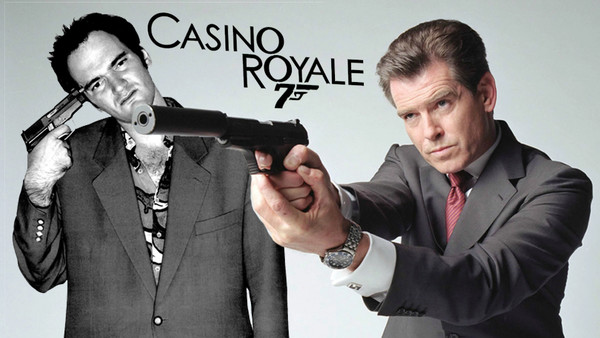
6. Quentin Tarantino's Pierce Brosnan-Starring Casino Royale

Following the release of the execrable Die Another Day, Quentin Tarantino actually attempted to acquire the rights to Ian Fleming's novel Casino Royale, yet was beaten to the punch by 007 producers the Broccolis.
His idea was to set the movie in the 1960s and shoot it in black-and-white, with Pierce Brosnan reprising the role of Bond one last time in a standalone continuity, while Uma Thurman would play Vesper Lynd, who Bond would kill at the end of the movie for betraying him.
Tarantino even approached Brosnan about the idea at a hotel bar, and after sinking some drinks, Brosnan agreed to lobby for Tarantino's involvement.
Though the next Bond film was indeed a quasi-reboot version of Casino Royale, neither Tarantino, Brosnan nor Thurman weren't involved, with Daniel Craig being cast as 007, while Martin Campbell was hired as director.
In the years following Casino Royale's release, Tarantino has effectively taken credit for it revitalising the Bond franchise, claiming that Barbara Broccoli never would've optioned Fleming's novel had he not made such a fuss about trying to adapt it himself first.
While it's absolutely fair to say that Tarantino would've been an extremely radical choice to direct a Bond film, especially given the PG-13 content restriction, there's also no doubt he would've delivered the most singular entry in the entire series.
But coming off the back of the extraordinarily goofy Die Another Day, Tarantino's style and tone would've caused too much of a whiplash among fans, so Craig's gritty-but-not-too-gritty movie was the understandably safer approach.
With Tarantino set to wrap up his filmmaking career soon enough - allegedly, anyway - the window of opportunity for a Bond film has likely passed, even if with Broccoli offering Spectre to Nicolas Winding Refn and hiring Cary Fukunaga to helm the upcoming No Time to Die, she's clearly getting more comfortable with hiring left-field auteurs.
5. Orson Welles' Heart Of Darkness
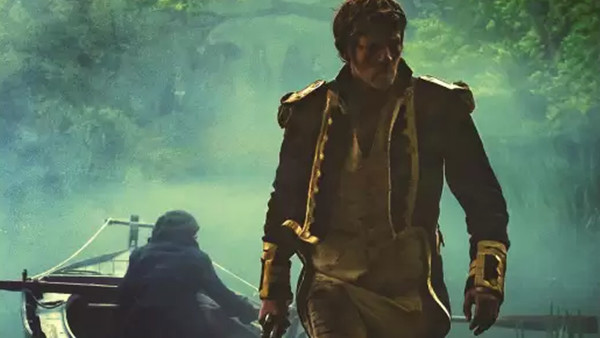
Joseph Conrad's legendary 1899 novella Heart of Darkness was adapted into a 1938 radio play by Orson Welles, who also intended to film it as his directorial debut.
Welles' plan was to shoot the entire project from a POV perspective, using roughly 165 panning shots to create a hypnotic rendering of protagonist Charles Marlow - to be played by Welles himself - as he ventured into the African jungle (which would be filmed on location).
Studio RKO eventually passed on the project after calculating the costs and impracticalities of Welles' vision, and it was almost a further 40 years before Francis Ford Coppola loosely adapted Conrad's novella into Apocalypse Now, almost killing himself and Martin Sheen in the process.
Welles moved on and instead debuted with the statuesque Citizen Kane, so it's tough to feel too bad for him, even if the ambition of the project sure would've made it something to see.
All the same, it's easy to appreciate why the studio heads of the early 1940s wouldn't greenlight such an avant garde project.
Yet by the time the 1970s rolled around, boundary-pushing filmmakers like Coppola and Werner Herzog were busy leading the charge on almost impossibly complex cinematic odysseys filmed in hellishly impractical locations.
4. Darren Aronofsky's Gritty, Revisionist Batman: Year One
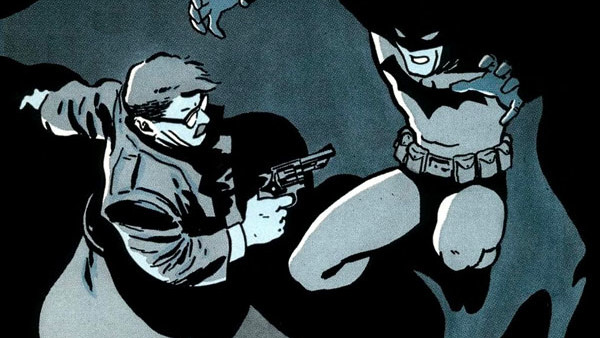
After Joel Schumacher's Batman and Robin cratered critically and commercially, Darren Aronofsky was hired in 2000 to write and direct a loose adaptation of Frank Miller's much-loved origin comic Batman: Year One, with Miller being brought aboard to co-write the script.
Aronofsky's goal was to create a gritty superhero movie in the vein of Death Wish or The French Connection, throwing out many of the comic's conventions in favour of a new story which nevertheless retained the same basic themes.
For example, Alfred was now a black working class mechanic called "Big Al," which alone was probably enough to make Warner Bros. balk.
Yet according to Miller himself, the project stalled because he and Aronofsky disagreed on the tone of the material, with Aronofsky wanting to go darker than even Miller was comfortable with.
Several years later, Warner Bros. finally settled on Christopher Nolan's grounded take on a Batman origin story, Batman Begins, which itself drew many visual and thematic influences from the Year One comic.
Though such a radical departure from typical conceptions of Batman was unthinkable in 2000, in a present where a Justice League movie is about to be outgrossed by a gritty, R-rated Joker origin story, does Aronofsky's Year One really seem that out-there?
3. Francis Ford Coppola's 212-Page Sci-Fi Epic, Megalopolis
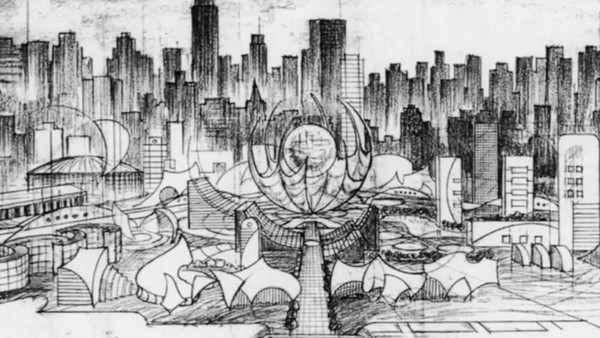
Megalopolis has been Francis Ford Coppola's dream project for close to 40 years, an absurdly ambitious 212-page sci-fi epic script he wrote in the 80s, revolving around a wealthy architect who attempts to build a utopian settlement in futuristic New York City following its destruction.
The project enjoyed plenty of buzz in Hollywood around the turn of the century, and Coppola had even secured funding, but before production could ramp up...9/11 happened.
All of a sudden, the movie's NYC-centric premise touched a raw nerve, and even Coppola himself admitted he had no idea how to approach the material in light of the terrorist attacks.
Coppola has spent most of the last two decades downplaying the prospect of it ever going before cameras, though made the shock announcement earlier this year that he is fully intending to make the movie in the near-future.
You'd be forgiven for being skeptical considering that Coppola hasn't directed a major studio film in over 20 years, but if Megalopolis does actually get made, it'll be because humanity has finally put enough distance between itself and that fateful 2001 day to consider Coppola's vision as the escapist fantasy it was originally intended to be.
2. Guillermo Del Toro's R-Rated At The Mountains Of Madness

Guillermo del Toro wrote an adaptation of H.P. Lovecraft's 1931 sci-fi horror novella At the Mountains of Madness back in 2006, which languished in development hell for several years after Warner Bros. expressed concerns about its budget and uncommercial nature.
However, in the summer of 2010 it was announced that James Cameron would be serving as producer on the $150 million 3D epic, with Tom Cruise set to star and filming due to begin in mid-2011.
But in early 2011, Universal Studios pulled out of funding the movie after Del Toro refused to shoot the film for a PG-13 rating, and also amid concerns that the material was too similar to Ridley Scott's Prometheus.
The project is generally accepted to be dead, yet given that recent R-rated films like Deadpool, Logan, the It movies and Joker have all proven the lucrative appetite for adult-orientated tentpole fare, maybe there's a future where someone actually rolls the dice on it.
Del Toro recently winning the Best Director and Best Picture Oscars for The Shape of Water couldn't have hurt its odds, either. But don't get your hopes up.
1. Alejandro Jodorowsky's INSANE Dune Adaptation

Alejandro Jodorowsky's attempts to mount an adaptation of Frank Herbert's sci-fi novel Dune were so extensive and elaborate that there's even a brilliant documentary, Jodorowsky's Dune, about the subject.
In 1975, the legendary surrealist filmmaker was planning to shoot Dune as a 10-hour movie starring Salvador Dalí, Orson Welles, Gloria Swanson, David Carradine, Mick Jagger and more, with Pink Floyd providing the musical score.
Budgeted at $9.5 million, the project was deep in pre-production when funding ran short, and upon meeting with Jodorowsky, Herbert discovered that $2 million of the budget had already been spent before shooting a single frame of film. Worse still, Jodorowsky's gigantic script would actually result in a 14-hour movie.
The plug was pulled, then, and David Lynch was eventually drafted in to direct the hugely divisive 1984 adaptation, which was widely criticised for its lack of faithfulness to Herbert's novel, while Lynch ultimately disowned it due to a lack of sufficient creative control.
Rather ironically, next year's new Dune adaptation is being directed by another risky, left-field filmmaker - the brilliant Denis Villeneuve, whose previous film, Blade Runner 2049, was a $185 million box office dud.
Though Villeneuve's film likely won't get close to the acid-tinged insanity of Jodorowsky's vision, it might at least provide a glimpse into what the iconic filmmaker was grasping for 45 years ago.