10 Polarising Filmmakers Whom No One Can Agree On

You either love 'em or you hate 'em.
Even if you dislike Martin Scorsese€™s films, there€™s a good chance you still respect him as a filmmaker and appreciate the immense craftsmanship that goes into his films. Unfortunately, the same can€™t be said for the likes of Quentin Tarantino or Christopher Nolan, filmmakers who have just as many passionate fans as they do adamant detractors. Maybe it€™s their personalities, or maybe it€™s the kind of films they produce; maybe it's something controversial they once said, or maybe its their political opinions. Either way, there's something about these directors that just puts people off. They have a tendency to inspire some pretty serious debate, most of which just comes down to subjective taste and personal preference, but regardless, the arguments continue. With that said, here are 10 filmmakers who split audiences down the middle with every single film that bears their name.

10. Kevin Smith

Back in the 1990s, Kevin Smith was the filmmaker who nerds everywhere connected with; he was the guy who sold his comic book collection to make Clerks; he was the guy who loved Star Wars and Batman, and inspired a generation of filmmakers to pursue their dreams - including a young Edgar Wright. Nowadays, he€™s the guy who made Cop Out, and the guy who suggested that all critics are just failed moviemakers who couldn't realise their own dreams. To some people, he's just not person he used to be; he's become a defensive whiner who lashes out when he can't get his own way. and that puts people off. The story behind the making of Clerks is inspirational. Without any help from studio backers, Smith worked solidly for over a fortnight, even going without sleep, to shoot the film. His actual workplace was the setting and his real-life friends were the cast and crew. Somehow, he made it work; Clerks became a cult classic, and Smith secured the admiration of a sizeable fanbase in the process. Since then however, Smith has alienated the vast majority of his fans with duds like Jersey Girl, Tusk and the aforementioned Cop Out. There are some people who genuinely believe that Smith has forgotten how to make movies, and there's plenty of evidence to suggest that they may be right.

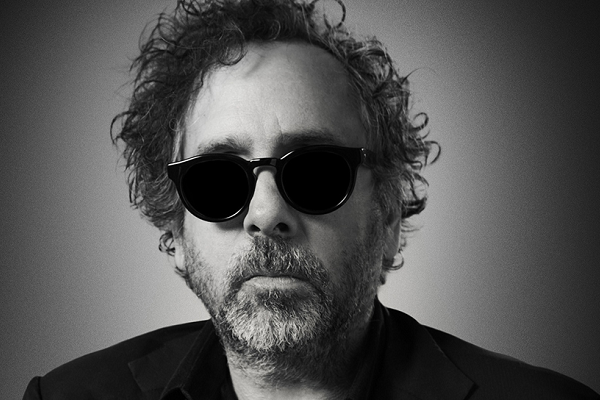
9. Tim Burton

With Tim Burton, people have a tendency to say €œI loved his early stuff€; in fact, it€™s probably the most overstated opinion in the world at this point. Burton is seen as two distinct individuals: early Tim Burton and current Tim Burton, the latter of which is often met with dispassionate complaints and audible grumbles of dissatisfaction. Though he continues to make some outstanding films to this day, his reputation has been mired by the occasional lacklustre flop like Charlie and the Chocolate Factory, flops that people just can't seem to look past any more. Some people seem to think that Burton's recent films are more like showcases for special effects rather than exemplifications of dramatic storytelling. Most of his more recent films have been financial successes, but critical failures: Alice in Wonderland was polarising to say the least, and Dark Shadows was uninspiring and forgettable.

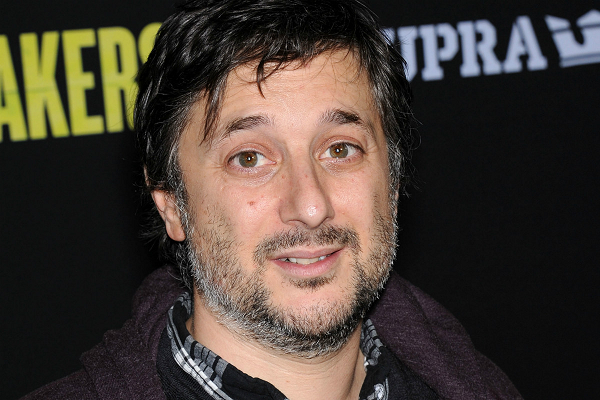
8. Harmony Korine

There are some people who would call Harmony Korine an artistic genius, and there are many more who would argue that he€™s a pale imitation of an avant-gardist. Somewhere between John Waters and Sophia Coppola, Korine has a tendency to polarise audiences with his bizarre visuals and unconventional storytelling; his films vary from the disturbing to the downright vapid, from Gummo to Spring Breakers. Korine also has a tendency to put people off; his actions over the years have been questionable to say the least, and his personality is disagreeable, or maybe just entirely unlikeable. Not only has he said some dubious and unflattering things in his life, he€™s also the guy who was banned from the Late Show by David Letterman for riffling through Meryl Streep€™s purse. Some people find him inspiring, and some people can€™t stand the guy. Considering his attitude, and his criminal behaviour, it's not wonder people are polarised. The legendary director Werner Herzog once called him €œa warrior of cinema€, but there are others who would prefer the term €œpretentious douchbag€.

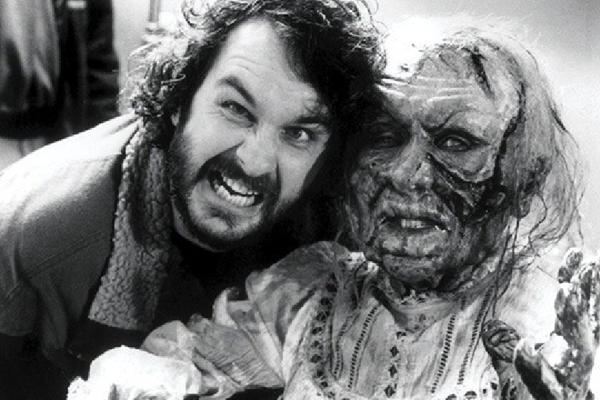
7. Peter Jackson

Most well-known for his work on the Lord of the Rings trilogy, Peter Jackson began his career in the 1980s directing horror films like Braindead, and dark comedies like Meet the Feebles. With an emphasis on practical effects, Jackson began cultivating a following in New Zealand and around the world, a following that grew exponentially once he was given the job of directing the Fellowship of the Ring back in 2001. After the critical and commercial success of the Lord of the Rings, you€™d be hard pressed to find anyone in the world who didn€™t appreciate the New Zealander, or just downright adore him. His output after Return of the King was fairly slow, and that King Kong movie wasn€™t received all too positively, but Jackson had secured our admiration with three of the greatest films of all time. He was set. Unfortunately, because people can€™t leave well enough alone, the Hobbit trilogy happened. A film that shouldn€™t have been more than two hours long was stretched to accommodate three entire movies, and Jackson€™s emphasis on practical filmmaking and realism went out the window in place of special effects and exaggerated, cartoonish nonsense. Nowadays, it€™s pretty hard to find anyone who unaffectedly loves Peter Jackson. He€™s earned our respect, certainly; it just feels like he€™s done everything in his power to squash that respect into dust.

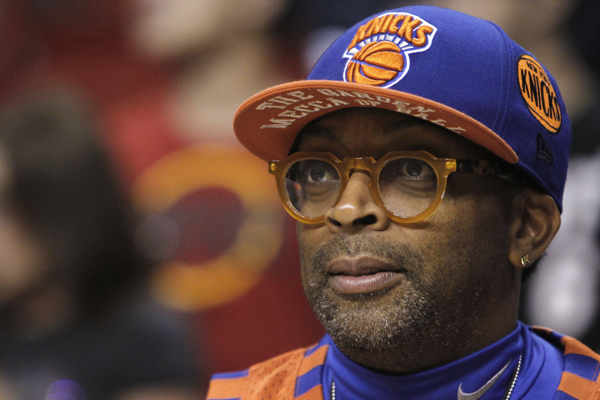
6. Spike Lee

Like Kevin Smith, Spike Lee is responsible for several watershed movies, movies that have told important stories and inspired future generations of filmmakers. Do the Right Thing represent a pivotal moment in cinematic history, and both Malcolm X and 25TH Hour are two exceptional movies with near universal acclaim. There€™s no doubt that Spike Lee has had a tremendous career with some standout moments. If we were judging him solely based on his filmography, he wouldn€™t be anywhere near this list. However, with that said, his attitude and his controversial opinions have rendered him a polarising figure, not to mention his often careless attitude towards issues of race and representation in movies. At this point, you€™d be hard pressed to find anyone who hasn€™t been called a racist by Lee; the list includes Quentin Tarantino, and even Samuel L. Jackson who was called a €œhouse-slave€ by the director for his endorsement of Django Unchained. In 2008, Lee even went as far to accuse Clint Eastwood of harbouring racist attitudes for not casting any African-American actors in his movie, Flags of Our Fathers. Speaking of which€

5. Clint Eastwood

The legendary actor and director, Clint Eastwood has had a standout career, a career that culminated last year with the release of American Sniper. Nominated for six academy awards, the film was received mostly positively by critics who applauded Eastwood€™s direction and storytelling abilities. With that said, there were many who couldn€™t ignore the political aspects of the film, some even going as far to suggest that the director was purposely inspiring nationalist and militarist sentiments. Eastwood himself denied the accusations and argued that the film was actually anti-war, and nothing akin to the warmongering propaganda that it had been accused of being. Despite Eastwood€™s libertarian political beliefs, the public perception of him as a right-wing Reblublican made his denials somewhat had to believe, serving only to spur on the debate. This, as well as incidents involving invisible presidents and conversations with chairs has rendered Clint Eastwood an extremely polarising figure; for some, it€™s difficult to separate the man from his politics, or at least the public perception of his politics.

4. Christopher Nolan

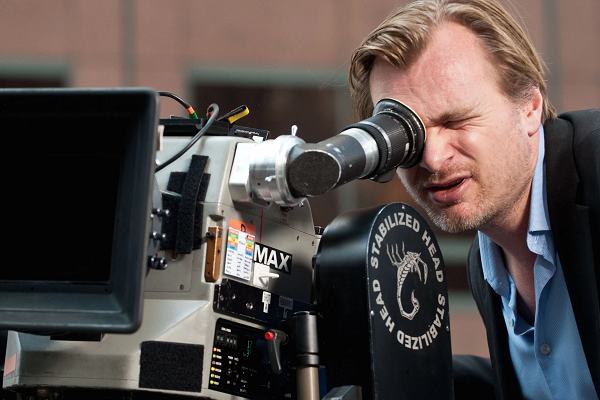
Christopher Nolan is the quintessential example of a polarising filmmaker. The man himself hasn€™t said or done anything particularly controversial, but his films have a tendency to divide audiences right down the middle. I€™m sure we all know someone who thinks Inception or the Dark Knight is the most intricate, thought-provoking films ever created; equally, we probably all know a bunch more people who find Nolan tedious and uninspiring, a filmmaker who turns otherwise simplistic stories into contrived, overly-complex spectacles that rely far too heavily on plot-twists and exposition to get their points across. Of course, not everyone feels that way. The Dark Knight is considered by many to be a masterpiece, and films like Memento and Insomnia are often used as evidence that Nolan can still produce inventive, high quality films without interstellar budgets.

3. Lars Von Trier

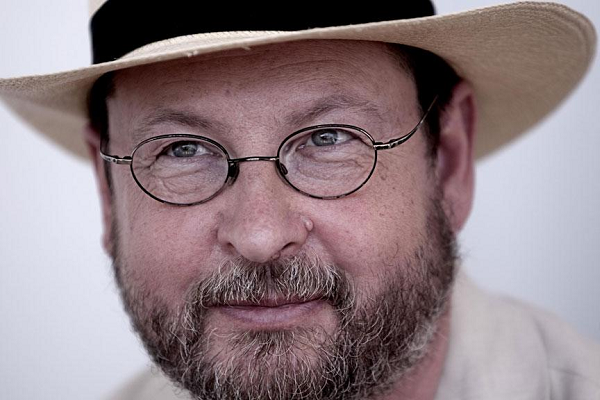
Director of Antichrist, Melancholia and Nymphomaniac, Lars Von Trier is naturally a polarising filmmaker. His reliance on sexually explicit imagery (including depictions of actual sexual intercourse) and his often upsetting subject matter has alienated a large portion of his audience, as well as many critics. Some people view him as an experimental, avant-garde genius, and others find his films disturbing, which should come as no surprise seeing as how several of them have been actually categorised as hardcore porn: Constance, Pink Prison and All About Anna. Add to that several controversial statements about his heritage and Nazism at the 64th Cannes Film Festival, and you've got yourself one hell of a polarising figure.

2. Quentin Tarantino

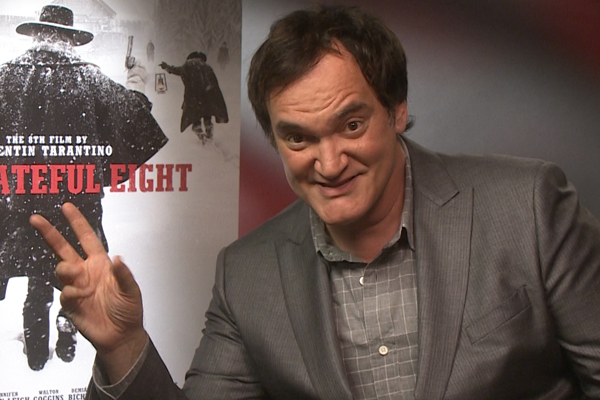
Despite his rabid following, his critical success and his extensive filmography, it€™s almost impossible to discuss Quentin Tarantino without mentioning his personality. To put it bluntly, he comes across a little obnoxiously; he certainly speaks his mind, only his mind is expressed in the most despotic, pompous way imaginable. You only have to look up certain, infamous interviews to see what I€™m talking about; the man€™s fully aware of his own brilliance, and he€™s not afraid to €œshut your butt down€ if you questions his intentions, or suggest that he€™s accountable for his art. Besides that, Tarantino€™s general abrasiveness and eccentricity tends to put a damper on conversations that would otherwise be resoundingly positive. People tend to love his films, just not him.

1. George Lucas

How could anyone else top this list? George Lucas, the director of Star Wars: A New Hope and Star Wars: The Phantom Menace, is perhaps the most polarising filmmaker of all time. He€™s made three of the most beloved, cultural significant films, perhaps ever, and three of the worst, vomit-inducing travesties to have ever seen the light of day. Honestly, watching early interviews with Lucas, it can feel like you€™re listening to the words of an entirely different person. In the documentary From Star Wars to Jedi: The Making of a Saga, he talks about his passion for storytelling and his tentative relationship with special effects; he talks with passion about the magic of movies, his writing process and the way he approaches directing a scene. Flash-forward twenty years and Lucas has become unrecognisable to some people, people who see him as a corporate stooge with an overreliance on special effects, convoluted stories and flat characters. When Lucas sold the rights to Star Wars to Disney, there were some who were generally excited; in their minds, Lucas was an incapable creator who no longer understood the significance of his own creations.

Contributor
Contributor

Formerly an assistant editor, Richard's interests include detective fiction and Japanese horror movies.