10 Positives Joel Schumacher Actually Brought To Batman Movies
Schumacher's Batman films were more than just Bat-nipples and Bat-credit cards.
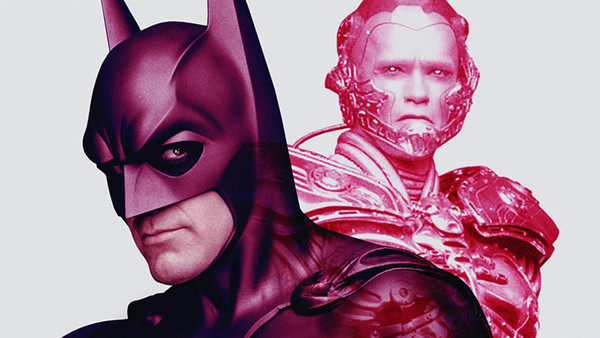
Until recently, the name “Joel Schumacher” was a dirty word to many, particularly to many a Batman fan.
Then, suddenly, the controversial director of two Batman films succumbed to cancer at the age of 80 and there was a very public outpouring of sadness at his passing.
Certainly, Schumacher’s contributions to Warner Brothers’ original quadrilogy of Batman films are not as highly regarded as Tim Burton’s Batman (1989) and Batman Returns (1992). However, it is also important to bear in mind that Schumacher, unlike Burton, was a self-confessed Batman fan and was purportedly instructed by the studio to follow a more light-hearted approach to the films.
His name sadly became mud after his second entry into the franchise, Batman & Robin (1997), but he remained proud of his first effort, Batman Forever (1995), albeit nobly taking the blame for Batman & Robin, which placed further cinematic Batman projects into development hell before Christopher Nolan swooped in to the rescue with Batman Begins (2005).
Whilst his work on Batman is often compared far less favourably to the work of Tim Burton and Christopher Nolan, who bookended his career in helming the Dark Knight’s cinematic world, he actually invested more into the cinematic Batman character than both fans and critics alike care to give him credit for.
10. Nora Fries
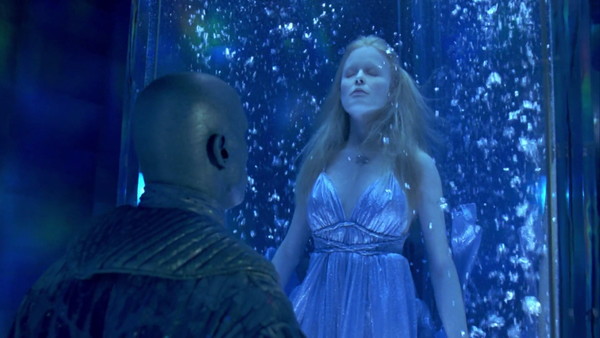
Arnold Schwarzenegger’s Mr. Freeze in Batman & Robin is often regarded as one of the cheesiest comic book villains ever put to screen. Whilst previous Batman villains spewed one-liners (and, in Danny DeVito’s case, black bile as well) with great comic timing and finesse, Arnie sadly gave the performance of a guffawing frozen ex-college boy who needs to beef up his bravado to match his image. All of this directly conflicts with the real reason why he is committing his crimes: not for himself, but to cure his terminally ill wife, Nora Fries.
And the involvement (even in suspended animation) of Dr. Victor Fries’s wife is one of the few (and we mean very few) saving graces of his performance. Arnie’s pain as a result of his wife’s terminal illness and the good memories that he has of their relationship, his raw anger when Uma Thurman’s Poison Ivy informs him that George Clooney’s Batman has killed Nora, and his tears of relief when Batman tells him the truth and of Nora’s survival are very convincing and, at times, even moving.
Admittedly, Nora was not created by Joel Schumacher and screenwriter, Akiva Goldsman, but by the creators of Batman: The Animated Series in their Emmy-award winning episode, “Heart of Ice”. However, Schumacher made the wise decision to incorporate Nora into the cinematic Freeze’s backstory as, no doubt, without her, Arnie’s Freeze would have had about as much of a character arc as his predecessors in the Adam West TV series. However, the downside is that the film ditches Nora as anything more than a vague plot point almost as soon as it introduces her rather than taking the-then daring move of perhaps even curing her ailment during the course of the movie.
As an aide, however, Schumacher cast buxom supermodel, Vendela Thommessen (now Kirsebom) in the role of Nora to satisfy red-blooded fans.
9. Gotham City Police Headquarters
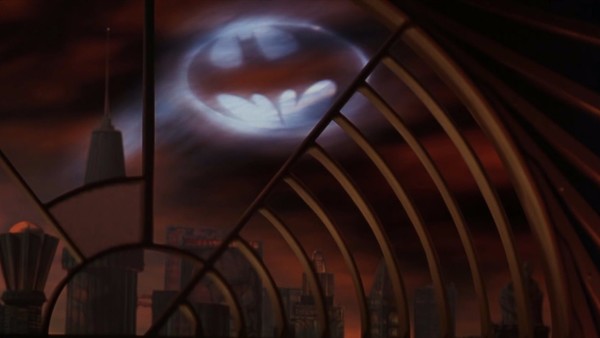
Tim Burton was not a confessed Batman fan, but he had, however, introduced the Bat-Signal at the end of the first film and used it to summon Batman to Gotham City in Batman Returns.
Even though Burton had established that Gordon had control of the Bat-Signal, it was Schumacher who gave us the first glimpse of police headquarters itself, including Dr. Chase Meridian’s office, in Batman Forever. The offices were portrayed by 1911 Surrogate’s Court, 31 Chambers Street at Center Street in Lower Manhattan, New York City, whilst the rooftop housing the Bat-Signal was constructed on the same soundstage at Warner Brothers Studios in Burbank, California where Michael Keaton’s Batman had had his rooftop tangle with Michelle Pfeiffer’s Catwoman in Batman Returns.
However, it is notable that the women of Gotham often operated the signal more frequently than Gordon himself. For example, in Batman Forever, Nicole Kidman’s Dr. Chase Meridian used the Bat-Signal as “a beeper” to summon the Caped Crusader to discuss Two-Face’s particular brand of psychoses before getting to her real purpose of flirting with the vigilante.
Then, in Batman & Robin, Uma Thurman’s Poison Ivy outdid her by stealing Gordon’s keys to the Bat-Signal and using the brute strength of her henchman, Robert “Jeep” Swenson’s Bane to steal the whole signal. Her reason: to turn it into a Robin Signal so that she could drive a further wedge between the Dynamic Duo.
8. Two-Face's Introduction

Admittedly, Tommy Lee Jones’s Harvey Two-Face deserved a lot more screen time and character development than he got in Batman Forever as, let’s face it, Jim Carrey’s The Riddler completely stole the show.
However, Jones’s introduction in the film is both inspired and excellently achieved, even though it is not an origin story. Robbing the Second National Bank of Gotham, Two-Face taunts a captured security guard and waxes lyrical about how luck is the only true form of justice, before using the guard as a pawn to ensnare Batman – a perfect two-part scheme that is worthy of the villain.
It was certainly a missed opportunity for the first live action depiction of the villain (but not the first live action depiction of Harvey Dent) that he did not receive a proper origin story, as Tommy Lee Jones could have provided us with a performance for the ages as Gotham’s no-nonsense crusading District Attorney Harvey Dent before spiralling into the madness of Two-Face, not unlike Aaron Eckhart’s later performance in The Dark Knight (2008). Indeed, just imagine how much more satisfying Batman Forever may have been if it had taken the lead from Tim Burton’s original film and been fronted by only one villain: Two-Face.
However, Jones’s earliest chronological scenes in Batman Forever are among his best and, indeed, introducing Two-Face with his trademark scarred coin spinning in mid-air before we even see him stands as one of the most haunting and effective introductions of any live action Batman villain.
7. Robin's Origin
To try and satisfy Warner Brothers, Tim Burton had attempted to shoehorn Robin into both Batman and Batman Returns (even casting Marlon Wayans and performing costume tests for the character for Returns). However, both Burton and the screenwriters of the first two films could not make the Boy Wonder fit into the tone of those respective films.
By the time preparation for a third film came around, the studio required Robin’s inclusion to help provide audiences with a more family friendly Batman outing. This was achieved by diving directly into the comics to depict his origin, which sadly meant that Two-Face was deprived of a meatier background story, no doubt as his scarring may have been considered too intense for children.
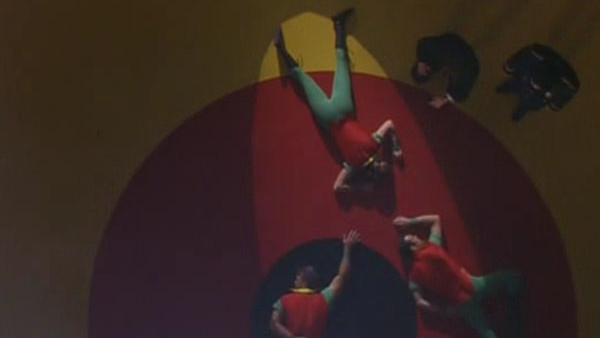
Even though the criminal involved in the Batman Forever version of the death of the Graysons involves Two-Face mercilessly bringing the high-wire careers of The Flying Graysons to a premature end, instead of gangster, Tony Zucco, and provides Dick Grayson with a brother, it is a highlight of the film, which turns from being a glitzy, glamorous big night out for Val Kilmer’s Bruce Wayne, Dr. Chase Meridian and other key figures of Gotham society to a tragic bloodbath in no time at all.
Sadly, Chris O’Donnell’s Grayson is not the young, lost boy that Bruce is able to identify with and is, instead, in his mid-twenties and more than capable of going it alone so readily.
6. Arkham Asylum
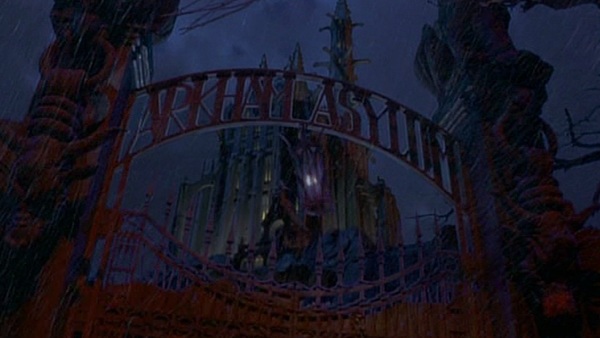
Given that Tim Burton wanted to portray the dark and gothic elements of Batman’s world, it is surprising that he never introduced the Elizabeth Arkham Asylum for the Criminally Insane. However, given the apparent mandate of killing off at least one villain in each Batman film (after all, Bane’s fate in Batman & Robin is very much left open to interpretation), he did not have much chance or reason to do so.
Schumacher introduced Arkham Asylum as a looming madhouse for the damned perched on a cliff and almost constantly shrouded in storm clouds in true Hammer Horror and Edgar Allan Poe style in Batman Forever. A sequence in which Tommy Lee Jones’s Harvey Two-Face escapes at the opening of the film was cut, but the facility appeared at the film’s conclusion when Dr. Chase Meridian visits Edward Nygma, formerly The Riddler, to confirm that he is a “wacko”.
In Batman & Robin, the institution was represented as being even more medieval and decrepit for a sequence in which Poison Ivy and Bane liberate Mr. Freeze from Arkham. Arnie proves just how antiquated the facility is when he freezes the pipes from his cell’s sink to the wall, exploiting the existing cracks in the wall and causing it to shatter. In true Arkham style, nothing has changed in the facility by the time Freeze is returned to it, this time to share a cell with Ivy.
It is incredibly important to note that, in a time when Batman films were notorious for their lighter tone and tendency to recall the campiness of the Adam West years, the inclusion of the grim and gothic Arkham Asylum is integral in reminding audiences that Batman is meant to live in a dark and psychological world.
5. Wayne Enterprises
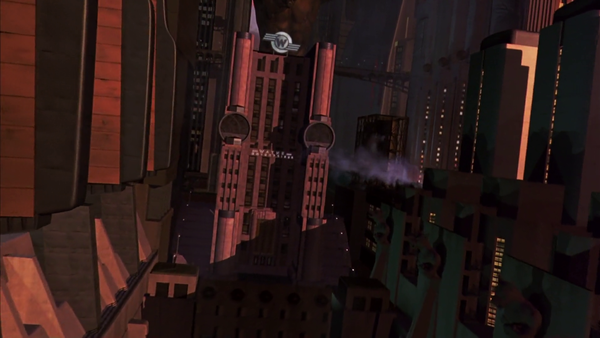
In the first two Batman films, Bruce Wayne is something of a mysterious and very lonely entity, either shutting himself away from Gotham or wandering its streets in an apparent daze. However, as shown in Batman Returns, he does have an interest in corporate matters, which begs the question of where his fortune comes from (not to mention all those Bat gadgets).
In Batman Forever, Schumacher brought about the long-overdue debut of Wayne Enterprises in film, which is housed in a modern building constructed over a dam using clean energy as its source of power (as opposed to The Riddler’s Nygmatech base on Claw Island featured in the closing stages of the film). Although the company is primarily used as a plot device to bring about the introduction of Jim Carrey’s Edward Nygma (soon to become The Riddler), it also shows us Bruce Wayne’s benevolent side in extending his profit-sharing scheme to the members of the Electronics Division.
On a more cosmetic level, Wayne also maintains a direct connection via an underground luge that connects his office with the Batcave so that he can been seen to be working late whilst Batman prowls across Gotham’s rooftops.
In Batman & Robin, Wayne Enterprises is donating a state-of-the-art telescope to the Gotham Observatory so that the city can peer into the heavens and around the globe for years to come, again demonstrating Bruce Wayne’s benevolence to Gotham. The telescope later becomes a major plot point in the film.
4. Wayne Manor
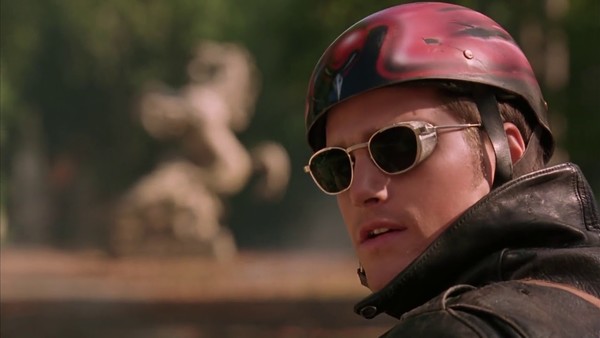
The home of billionaire Bruce Wayne and his forbears is often seen as a rather haunting and lonely place, often gothic in style. This was precisely how Tim Burton and his respective production designers, Anton Furst and Bo Welch visualised the mansion in Batman and Batman Returns, providing it with a sinister aura.
Joel Schumacher and his production designer, Barbara Ling instead visualised Wayne Manor as one of the grand mansions on Long Island, portrayed by The Webb Institute of Naval Architecture on Long Island, which later featured as Wayne Manor in both Gotham (2014-2019) and Joker (2019). Additionally, in Batman & Robin, Wayne Manor’s grand formal gardens were represented by Greystone Park and Mansion in Los Angeles, itself a popular filming location.
In Schumacher’s version, Wayne Manor is still a lonely place of sorts, seemingly far removed from the mean streets of Gotham City. The sun shines there but emphasises the classic architecture and older qualities of the building that Bruce Wayne wishes to preserve in memory of his parents and what little childhood that he had. It is a haven in both reality and from a psychological perspective, which makes it more shocking when Harvey Two-Face and The Riddler storm the Wayne family homestead in Batman Forever. The building is also not free from the sinuous memory of Poison Ivy, who slinks her way into the mind of George Clooney’s Bruce Wayne there in Batman & Robin, right in the middle of Bruce’s date with Elle Macpherson’s Julie Madison.
However, when Dick Grayson and Alicia Silverstone’s Barbara Wilson come to live at Wayne Manor, they breathe life into the mansion.
3. Continuity
Batman and Batman Returns were incredible and certainly the best entries in the Batman quadrilogy. However, Tim Burton was not keen on the idea of making a direct sequel to Batman and therefore remodelled its first sequels, other than retaining the absolute key ingredients (i.e. the presence of Michael Keaton, Michael Gough, Pat Hingle, the 1989 version of the Batmobile and Danny Elfman’s superb musical score). Therefore, there is little continuity between the two films.
Whilst Schumacher picked and chose what he wanted to carry over from the Burton films, he did at least provide an element of continuity and progression within his own vision of Gotham City, rather than the near-complete change that Burton instilled between his own two films.
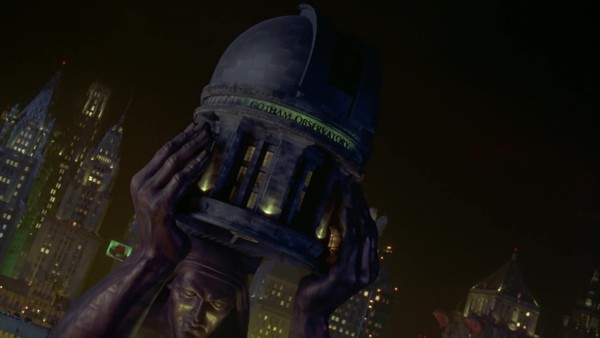
For example, in both Batman Forever and Batman & Robin, Gotham is a great, teeming metropolis of eye-catching statues, glittering architecture and dazzling neon. It may not be everyone’s idea of Gotham, but it remained consistent in both films
One downside in this, of course, was that he didn’t seem able to keep hold of the same actor as Batman/Bruce Wayne...
2. He Accepted Burton's Batman
Not many writers or directors may necessarily be willing to accept or even to acknowledge the work of their predecessors when they adopt a franchise partway through. However, even though Schumacher’s tone varied drastically from Burton’s, he did not purely write Burton’s films off.
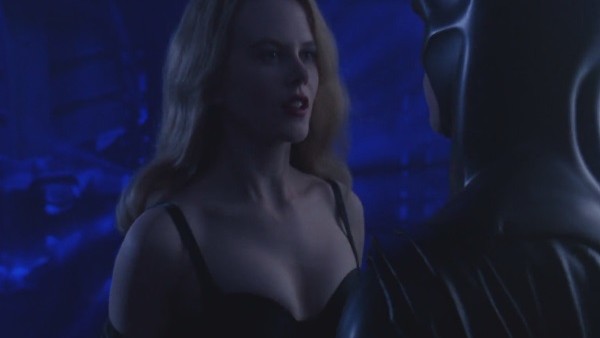
For example, in Batman Forever, Dr. Chase Meridian flirts with Val Kilmer’s Batman on the rooftop of Gotham City Police Headquarters, observing that he likes “strong women”, and asks him if he would find her more attractive if she were to adopt “skintight vinyl and a whip”.
Inverting the issue in Batman & Robin, when he is cornered in the basement of Mr. Freeze’s lair by the voluptuous Poison Ivy, who is intent on poisoning him with her kiss, Clooney’s Batman laments “Why are all the gorgeous ones homicidal maniacs? Is it me?!?”. These are both clear references to Catwoman in Batman Returns.
Also in Batman Forever, Schumacher shot a beautifully atmospheric film noir-style flashback to the murder of Bruce Wayne’s parents in Crime Alley that not only recalled the comic mythology, but also closely recalled the murder sequence that Tim Burton filmed for Batman.
A lot of this may actually have arisen because the original plan was for Michael Keaton to return in the lead role in Batman Forever, but departed at a relatively late stage of pre-production when Keaton withdrew, meaning that the references were already contained in the script. It was therefore illogical not to have continuity between Batman Forever and Batman & Robin, given that Schumacher, Warner Brothers and the toy companies knew the sort of Batman films that they wished to portray onscreen.
1. A Sense Of Family

Whilst the whole point of Schumacher’s entries into the Batman canon was that they were more family friendly and marketable than, well, Batman Returns, Schumacher’s Batman films convey a true sense of family, not unlike the unity of the Bat Family portrayed in Batman: The Animated Series, which was airing on the Fox Network and The WB around the same time.
In Schumacher’s films, we see Bruce Wayne taking Dick Grayson under his wing, both literally and figuratively; the grief of Bruce, Dick and Barbara Wilson over Alfred Pennyworth’s terminal illness; Alfred seeking out his brother, Wilfred to try and convey the importance of the Caped Crusaders’ mission, and Batman, Robin and Alicia Silverstone’s Batgirl learning to work as partners and as a family rather being in competition with one another.
The “family” scenes in both films are beautifully shot and speak directly to the fact, whether you wear a cape or not and despite whatever adversity may be present in your life, the importance of family is crucial. Indeed, Clooney’s Bruce tells Michael Gough’s Alfred that “not all heroes wear masks”.
Prior to this, Batman had only had Alfred to confide in but, alongside the lightening in tone came the hope that was provided by Bruce becoming a surrogate father in his own right to two wayward spirits and eventually accepting Dick and Barbara as equals to be trusted.
Watch Next
DC Quiz: How Well Do You ACTUALLY Know Batman?
