There is perhaps no film genre as picked apart as the comic book movie: its fans tend to be some of the most passionate and devoted in the history of pop culture, eagerly poring over each and every detail put on screen. Often this may simply be an effort to uncover obscure, slyly-hidden Easter eggs that a director has embedded deep in their movie, but it may also result in picking apart a movie's narrative flaws, or perhaps decrying that "it's not like the comics". Comic book fandom is a double-edged sword, for sure: filmmakers must be acutely aware by now that any deviation from the source material or perceived flaw is going to ignite a certain amount of anger, often a disproportionate amount that any "casual" viewer simply won't care about (or at least not as much). Basically, here are 10 comic book movies, 10 flawed but certainly entertaining comic book movies which just haven't enjoyed the reputation they should have over the years. The criticisms themselves are often fair, but they've been blown wildly out of proportion, such that the film's legacy has been tarnished. In some cases, the movie just didn't find an audience despite critical acclaim, quietly fading into the ether. Whatever the reason, these 10 comic book flicks easily qualify as underrated, and audiences need to learn to love them. Did we miss any massively underrated comic book films? Let us know in the comments!
10. Hellboy II: The Golden Army
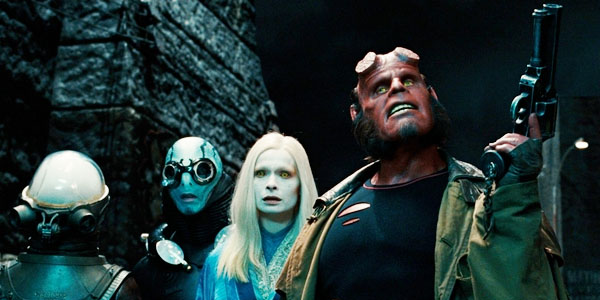
2004's Hellboy was a critical success (81% on Rotten Tomatoes) but didn't exactly set the box office on fire (making $99 million against a $66 million budget), somewhat explaining why it took a whole four years to get the sequel, Hellboy II: The Golden Army, off the ground. A significant improvement over the original film, Hellboy II benefits once again from Guillermo del Toro's flair for visual majesty, with the movie's outstanding visual effects and production design serving as a potent tonic to that summer's gritty, ultra-realistic The Dark Knight. In addition to this, the movie is just a lot of fun: it hasn't got a single moment of serious regard for itself, and is just interested in being entertaining rather than profound. Ron Perlman again delivers a marvelous performance as the title character, easily one of the most accurate renditions of a comic book character to date, and the supporting characters on both sides of the protagonist are an absolute blast to behold. Bounding along at a breathless pace and easily one of del Toro's best directing efforts to date, Hellboy II should be held to be a classic comic book sequel. Why, then, does nobody talk about it anymore? Despite critical acclaim (87% on RT) and a significantly better financial showing than the original ($160 million profit against an $85 million budget), Hellboy II is a mostly forgotten comic book movie. One possible explanation is that it was ill-advisedly released just a week before The Dark Knight, with the shadow of The Joker essentially being the only film-related thing anyone could talk about that month.
9. Dredd
After Sylvester Stallone's laughable 1995 attempt to bring the 2000 AD icon to the big screen, 2012's Dredd didn't exactly have to do much to be a significant improvement. Despite murmurs of production troubles (director Pete Travis was locked out of the editing process after disagreements with producers), Dredd turned out to be the gritty, R-rated adaptation of the classic comic we had all been longing for. Despite a modest $45 million budget, the movie benefited from excellent visual effects, and in particular some beautiful slow-motion photography used to portray the effects of the drug Slo-Mo. If the plot itself was frequently compared to The Raid, Dredd certainly had more on its mind than in that movie: the characters are fleshed out enough to be believable, and the performances, especially from Karl Urban as Dredd, Olivia Thirlby as Anderson and Lena Headey as Ma-Ma, were widely praised. And better yet, there isn't one second in this movie where Dredd takes his helmet off: victory! The movie scored well with critics (78%), but only made $41 million at the box office, making it a financial failure, even with the strong home video sales. Its status as a cult classic keeps the idea of a sequel very much alive, but clearly, not enough people are loving this movie if it couldn't even make its budget back at the cinema. It might not be high-art, but it's damn fun, and deserved a far more fruitful reception.
8. Captain America: The First Avenger
Captain America was easily the most challenging character from the Marvel Cinematic Universe to adapt to the film medium: just look at the ridiculous 1990 version to see how not to do it. The main issue confronting the 2011 movie was that Cap's old school, all-American appeal would likely not sit well with international audiences, who would probably find the whole idea of such a jingoistic superhero obnoxious and irritating. Credit to director Joe Johnston, then, for having an unexpected lightness of touch, and making of Captain America: The First Avenger a surprisingly self-aware, old-fashioned adventure movie which managed to perfectly resolve the character's perceived issues. What's key is that the film is a period film in the same vein as, say, an Indiana Jones movie, and that it makes light fun of Cap's wholesome image and use as a propaganda tool, rather than going the self-serious route. Chris Evans' spot-on portrayal of the character and an excellent supporting cast (namely Stanley Tucci, Tommy Lee Jones, Hugo Weaving, Toby Jones & Haley Atwell) helped to make this a breezy blast, and something completely different from what we'd seen in the MCU up to that point. Cap was a critical hit (79%), and made $370 million against a $140 million budget, though this was significantly less than the first outings from Iron Man ($585 million) and Thor ($449 million), if more than 2008's The Incredible Hulk ($263 million). Cap has since enjoyed considerable success in The Avengers, and been fully established as an A-lister with the mega-hit Captain America: The Winter Soldier (which has just crossed the $700 million mark worldwide), seemingly causing many to dismiss the first Captain America movie as a passable first time up to bat, when in fact, it's considerable better than that. It may not boast the thrills or political currency of the sequel, but the first Captain America smartly side-stepped its potential pit-falls and delivered an exhilaratingly old-school action flick that deserves far more credit than it gets.
7. Blade II
The Blade trilogy were rare R-rated comic book movies, attempting to blend that signature outlandishness with colourful language and plenty of gore: why bother adapting Blade unless you were going to do it that way, right? The first Blade was a modest critical success (55%) and a huge financial hit (especially for an R-rated movie), leading to Guillermo del Toro directing the 2002 sequel. Though the visual effects admittedly have not aged well, del Toro again elevates pulpy material with his signature style, making it feel as though the comic book pages are flying out of the screen, while a more confident Wesley Snipes delivers a near-perfect rendition of the title character. It's not just the action that sizzles, though: the relationship between Blade and his mentor Whistler (played by a superb Kris Kristoffersen) continues to be the movie's most interesting component, and Whistler's resurrection was certainly a smart creative decision (before they stupidly killed him off for good in the third movie). Then there's the addition of the Blood Pack, a group of vampire assassins Blade reluctantly teams with, including Ron Perlman and Donnie Yen in its roster, who add considerable personality to the movie. In fairness, Blade II is the best-reviewed (59%) and highest-grossing ($155 million against $50 million) movie of the franchise, so as a result it should have pretty high esteem, right? Well, firstly, it deserves considerably higher than 59% from critics, yet despite its strong box office performance, it's just not a movie that appears often in discussions about great comic book movies. It may not have the complexity of the MCU or Christopher Nolan's Batman movies, but in terms of capturing the essence of its character, Blade II is pretty much note-perfect.
6. Daredevil: Director's Cut
2003's Daredevil was rightly given mixed reviews from critics (45%), even if it did make $179 million against a $79 million budget. Over the years, it has become something of a de facto punching bag for comic book fans, a movie that's easy to criticise for its schmaltzy plot and indifferent performance from Ben Affleck (with criticism being renewed when he was announced as the new Batman). However, in 2004, a Director's Cut of the movie was released on DVD, which didn't just restore the film's R-rating, but re-inserted an entire subplot into the movie. Yes, Affleck still wasn't a particularly gripping Daredevil, but when everything else around him feels so much tighter, it's less of an issue. Containing over 30 minutes of material not seen in the theatrical release, this is a considerably more hard-edged movie, toning down the romance between Daredevil and Elektra (the sex scene is omitted completely) and instead focusing on the brutality of the fights, and Matt Murdock as a human being. The added subplot has Murdock defending a gangster (played by Coolio) who is framed for murder by Kingpin, which strengthens Murdock's reasons to want to bring the villain down and further immerses us in the depraved locale of Hell's Kitchen. It's still far from perfect, but this is the Daredevil movie fans deserved, yet due to the negative reception of the theatrical cut, sadly most viewers interested in the movie have likely sworn it off altogether.
5. Men In Black 3
Extra points if you actually knew that the Men in Black movie franchise was adapted from Lowell Cunningham's The Men in Black comic book series. The original 1997 Men in Black was a mammoth success, earning 91% on Rotten Tomatoes, making $589 million at the box office, and even being nominated for 3 Oscars (and winning one for Best Makeup). 2002's follow-up was a considerable step down, failing with critics (39%) and making "only" $441 million. However, this didn't stop production of a third film, which after many stalled starts finally came to fruition in 2012. Expectations were low for MiB3, and rumblings of on-set problems and script re-writes on the fly certainly didn't help, so what a surprise it was when the third outing turned out to be a highly entertaining romp, even if it didn't meet the high standards of the original. The movie earned solid reviews from critics (70%) and made $624 million at the box office, making it the highest-grossing MiB film to date (unadjusted for inflation), so why doesn't anyone ever talk about it beyond "I suppose it was better than I expected"? MiB succeeded because of its interesting time travel narrative, wacky characters, a brilliant Josh Brolin performance and a surprisingly emotional ending, prompting even director Paul Thomas Anderson to proclaim, It was f***ing great...The time-travel stuff cry my eyes out. Im a sucker for that stuff. If it's good enough for PTA, there probably should be more fanfare for this movie, which smokes the dreadful second film and is far closer in quality to the first film.
4. The Punisher
Here's an R-rated comic book character that sadly didn't enjoy the success of the Blade movies: the Thomas Jane-starring vigilante flick The Punisher bowed to a critical drubbing (29%) and a so-so box office ($54 million against a $33 million budget), despite the fact that it's actually rather good. Roger Ebert described the movie as "grim and cheerless", though it seems that he and many other critics clearly didn't pick up on the movie's deliciously dark, sadistic bent of humour, delivered with demented aplomb by Jane, a confessed fan of the source material. It may not have had the most complex narrative, but The Punisher was a wildly bombastic entertainment, a tough-edged rebuke to the easy morality of most comic book movies, asking more challenging questions about the nature of vengeance, and boasting plenty of violence in accompaniment. A riveting throwback to the politically questionable revenge thrillers of decades past, The Punisher deserved to find an audience, though sadly didn't. Jane however continues to show passion for the character, even starring in a recent short film, Dirty Laundry, hoping to again drum up enthusiasm for another sequel.
3. Batman Forever
It's easy to see why some Batman fans don't like either of Joel Schumacher's Batman movies: if Batman & Robin is almost irredeemably terrible save for Arnold Schwarzenegger's hilarious mugging, Batman Forever deserves to be distinguished from that mess. It may simply be too flamboyant and silly for some, but there is a lot of greatness in the film: firstly, the movie looks fantastic from start to finish, thanks to some outstanding production design and stellar visual effects (which have held up pretty well). It's hard to argue against the fact that Val Kilmer was a middling Batman, and Nicole Kidman didn't exactly get much of interest to work with, but the villainous performances are a lot of fun: Tommy Lee Jones is in a rare outlandish mode as Two-Face, while Jim Carrey steals the show as the maniacal, bombastic Riddler. To its credit, Forever made $336 million against a $100 million budget and was nominated for 3 Oscars (including Cinematography), but the critical reception sits at just 41%, and the comparisons to Christopher Nolan's unarguably superior Batman movies certainly don't help. But that doesn't mean we should forget Batman Forever. It's very much its own thing, and though this approach didn't work for the super-camp Batman & Robin, Forever earns a lot of esteem for its go-for-broke tone, visual grandeur and excellent work from Carrey.
2. Watchmen
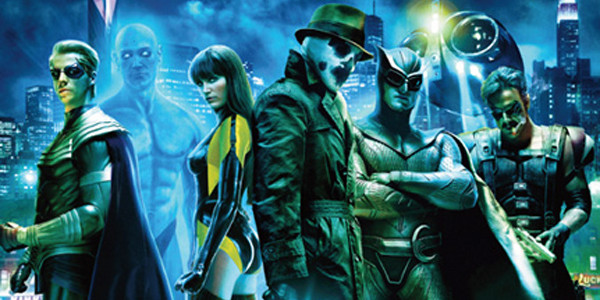
Watchmen is easily one of the most divisive comic book adaptations of all time, as Zack Snyder sought to bring Alan Moore's "unadaptable" graphic novel to the big screen with a $130 million budget in tow. With a tricky premise revolving heavily around politics, featuring acts of sexual assault and touching on the generally darker side of superheroes, Watchmen wasn't a frothy comic book flick ala Spider-Man, nor could it even simply be called "gritty" like Christopher Nolan's dark Batman movies (which are nevertheless peppered with humour). The movie heavily divided critics, earning 64%, while grossing only $185 million at the box office, making it a colossal financial disappointment. Looking back, though, it's little surprise that the movie didn't make money: for all of its visual beauty, the postmodern approach to superheroes was simply too strange and too much for casual audiences, which is the audience Watchmen really needed to make serious money (though with the R-rating, this was always going to be a struggle). Fans of the comic may have scoffed at Snyder changing the ending of the movie (by removing the giant squid attack), though this is easily forgiven considering how challenging creating a convincing CGI squid would have been, and how this probably would have turned off those casual viewers even more. For the open-minded viewer, Watchmen is gorgeous, thought-provoking, well-acted and absolutely like nothing ever put to film. To call it underrated is an understatement.
1. Man Of Steel
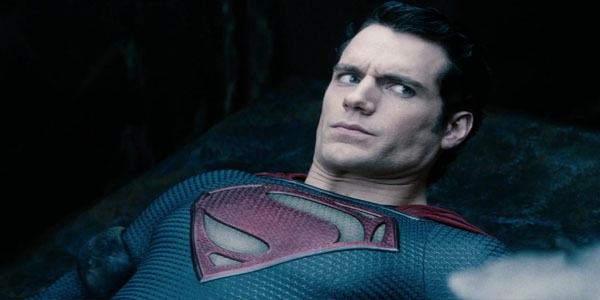
Snyder also earns our #1 spot with last year's Superman reboot, Man of Steel, which was so strangely divisive with critics that even an employee of Rotten Tomatoes couldn't believe the movie couldn't break "fresh" status on the website (it currently sits at 56%). Against a huge $225 million budget, it made $668 million, so is for all intents and purposes considered a success, enough that Snyder is moving full speed ahead with the controversial Batman vs. Superman movie. But the critical consensus speaks volumes, and the Internet uproar over the movie has been considerable, that it lacked character development, that the Lois-Clark relationship didn't work, that Zod was a bad villain, that there was too much mindless destruction, that Cavill was a bland Superman, and that Superman shouldn't have killed Zod at the end. For the most part, it felt like some audiences simply weren't happy with seeing a radically different Superman movie, one without Lex Luthor and Kryptonite that took a far more downcast trajectory, while still including the key elements of his character. Zod's death was a major point of discussion online, with many protesting that Superman simply would not kill Zod under any circumstances. But in 2014, isn't this just pretty stupid? Black and white moral "rules" like this can so easily be broken, and that's what Zod managed to do so easily: by forcing Superman into such a tough scenario, we ended up with a far more provocative and interesting movie, rather than simply following along the tired simplicity of previous Superman movies. In time, perhaps more audiences will come around to what just might be Zack Snyder's best film. Are there any hugely underrated comic book flicks we missed? Let us know in the comments!
Stay at home dad who spends as much time teaching his kids the merits of Martin Scorsese as possible (against the missus' wishes).
General video game, TV and film nut. Occasional sports fan. Full time loon.