10 Reasons You Should Give The Hobbit A Second Chance

It's no Lord Of The Rings, but there's plenty to like in the prequel trilogy.
Peter Jackson's film adaptation of J.R.R. Tolkien's The Hobbit could have been many things. At first conceived as a stand-alone movie before he tackled The Lord Of The Rings, the idea of making it as a prequel to the epic trilogy slowly emerged in the decade after. Originally split into two films and with Guillermo Del Toro attached as director it looked set to be something rather different to what audiences were accustomed to from Middle Earth. That was until Del Toro left the project and Jackson returned, boosting the number of films to three. This very public production meant the first in the now-trilogy, An Unexpected Journey, was met with rather critical eyes. Although it has its staunch defenders who would claim its up there with The Lord Of The Rings, the general feeling is The Hobbit is a lacklustre entry in the Middle Earth canon. We'd say the truth is somewhere in the middle; watch it again, without high expectations and the two films released thus far emerge as perfectly competent blockbusters. Is The Hobbit as good as The Lord Of The Rings? Of course not. Does that make them bad movies? Nope. Of all the films to come out on the wave of The Lord Of The Ring's success (The Golden Compass, The Chronicle Of Narnia), The Hobbit is predictably the best. And today we give you ten overlooked positives that should make you, if you've dimissed it in the past, give it a second chance.

Honourable Mention - The Extended Edition Actually Improves The Film
It may seem an odd concept given how stretched the film felt, but Peter Jackson's trademark Extended Edition for An Unexpected Journey is actually better than the theatrical version. The added thirteen minutes are all contextual, but they serve to add more characterisation to the dwarves, something the original film was sorely lacking. Here's hoping the version for The Desolation Of Smaug is an improvement of equal level.

10. New Zealand Looks Great

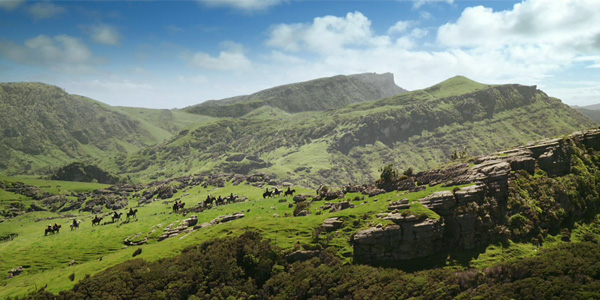
James Cameron allegedly made Titanic just to fund his obsession with diving to the depths of the ocean. Adam Sandler sets his 'comedies' in exotic locales so he and his buds can have a free holiday. And we wouldn't be surprised if Peter Jackson keeps making Middle Earth films just to fund his real passion of making New Zealand tourism videos. Seriously, although it's bringing a highly fantastical realm to life, his movies are chock full of shots that would make Visit NZ's marketing department jealous. And although The Hobbit boats more scenes than The Lord Of The Rings that were shot on sound stages or against green-screen, there's still a nice number of New Zealand location shots. Predominantly in An Unexpected Journey, before the halls of elves and towns of men become the default setting, the country was lusciously shot and made us once more wish we had the time to go get lost in its landscape. There is a bent in the new films to have the landscapes more heavily augmented by computers, but when the film actually ventures into the real world it looks gorgeous.

9. Gollum's CGI Is Jaw-Dropping

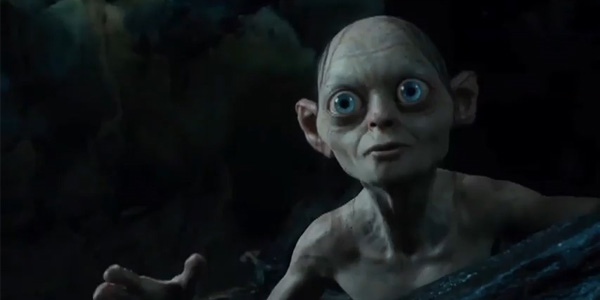
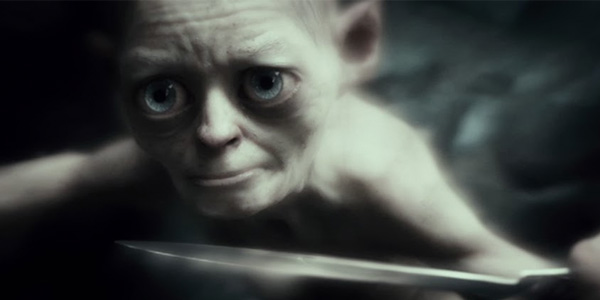
The CGI in The Hobbit may be ten years advanced from The Lord Of The Rings, but it is still a mixed bag. The decision to get rid of the models (affectionately called bigatures by their creators) and replace then with entirely computer generated constructs may allow for more expansive areas, but it all comes with a sheen that makes it feel unreal. Goblin Town looks gigantic, but it doesn't feel like it's actually there. Effects have advanced considerably, but sometimes film-makers forget they still require the same level of effort and creativity to look real. One area where the effects are remarkable is in character models, particularly Gollum. Compare Sméagol in Return Of The King, which at the time was utterly groundbreaking, to how the character looks in An Unexpected Journey. There is no comparison; in The Hobbit he feels fully integrated into the location, interacting with the cave and Bilbo convincingly, while his skin isn't just grey, but almost translucent. Smaug will probably go down as the trilogy's big effects spectacular, but that really shouldn't distract from how Weta further perfected Gollum.

8. It Corrects The Book's Flaws

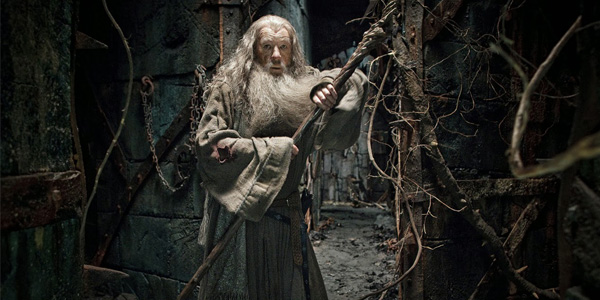
The Hobbit is an impressive children's book, but it isn't without its flaws that, if left unchecked, would greatly hamper any cinematic adaptation. The largest of these is Gandalf's hopping in and out of the story whenever he needed to. What he was up to was expanded upon by Tolkien in the Return Of The King Appendices, but in the book itself it just looked like the author needed the all-powerful wizard out of the way. Which is exactly what it was. People may bemoan the padding out of the story using elements from other parts of the mythology, but here it's necessary; to have Gandalf flippantly state he was leaving while mumbling something about a necromancer would look like lazy screenwriting, rather than faithful adaptation. Unfortunately not every issue has been dealt with. The band of dwarves may seen overblown at thirteen, with little time given to those outside a certain few, but that's really a hangover from the book; they're as interchangeable in print as Nori, Ori and Sleepy are on screen.

7. Smaug€™s Design

When someone's going to see a film adaptation of The Hobbit, the biggest question on their lips will be "what's the dragon look like?" Peter Jackson knew this and managed to build half his trilogy around the growing expectation; An Unexpected Journey teased Smaug at various points, showing little more than a tail and an eye, while The Desolation Of Smaug managed to keep the fire-drake in the shadows for the entirety of its marketing campaign. While this made the second entry in the trilogy a must-see - finally we'll get to see Smaug - it also amped up expectations and with it the possibility of disappointment. We needn't have worried. As the film slowly revealed the Benedict Cumberbatch-voiced behemoth, it became apparent that this is a meticulously designed beast. With no front legs (so technically he's a wyvern) and a spindly neck, Smaug is a totally inhuman, making him unique in the world of Middle Earth (even Sauron was humanoid). Although there's really only generic competition, Smaug is one of the best dragons ever but on screen, both invoking the conventional design from the book's illustrations and offering an interesting divergence (just look at the colour of his scales).

6. It's Greater Than The Sum Of Its Parts

The Battle of Moria is simultaneously the point where Peter Jackson stated his game-plan for the whole Hobbit trilogy and where many of its detractors began to register their disinterest. Although the director was trying to show how this wasn't a simple children's story, to many having another exposition dump so soon after the Ian Holm-narrated prologue and the introduction of the dwarves raised the question of whether The Hobbit even has its own story to tell. It's emblematic of much of the criticism with An Unexpected Journey; it was too disjointed and unfocused. And as a film by itself it admittedly doesn't work. But as the first chapter of The Hobbit film trilogy it's rather serviceable, with the lengthy time in Hobbiton at the start, or the lack of endings being less of an issue when there's not a year-long gap between watching the films; even with The Battle Of The Five Armies months away you can still see things slotting into place. This doesn't make the film any better, but it makes The Hobbit series, like fellow unfocused fantasy series Harry Potter, greater than the sum of its parts. As for the relevance of Moria, it's an essential piece of backstory for Thorin, who could easily have fallen into a proto-Aragorn role, particularly with the arc imposed on him. The expansions here gave some context to the character, making him more amenable than his book counterpart.

5. A Film Cliffhanger That Works?!

Cliffhangers in films are always tricky; if a writer's not careful it can look like a lazy get-out-of-a-plot-hole-free card or a desperate way to set-up a sequel. In TV an open ending will be addressed the next week, but in cinema there's going to be potential years between installments; it makes the ten month wait for more Game Of Thrones seem minimal. The problem is that, as films conventionally need to work on their own, it's hard to get cliffhangers to work. There are exceptions, but most end up feeling rushed; The Matrix Reloaded, which had sequel Revolutions due only six months later, ends with the most anticlimactic reveal imaginable, shoe-horning in a plot point from a hour previously as a 'big reveal'. Being an adventure that rarely lets up, finding a points to turn The Hobbit in two/three is tricky. The Desolation Of Smaug's ending is particularly cut fine, coming essentially in the middle of one extended sequence. But as the film has placed so much emphasis on getting to the Lonely Mountain, having a cliffhanger appearing just before a new step of the story begins (the repercussions of the dwarves arrival), it just about works.

4. The Songs

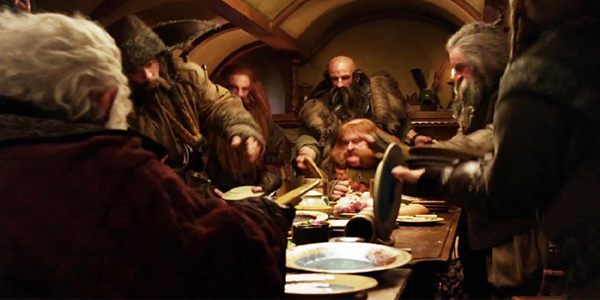
One element of Tolkien that The Lord Of The Rings, if anything, skimped on, was the songs. Aside from Pippin's The Edge Of Night any songs only form stylistic entries in the soundtrack, whereas in the books, particularly Fellowship, there's all manner of songs, jaunts and ditties. Being a lighter story (and needing more content to add to the run time), Jackson decided to feature more tunes in The Hobbit, with An Unexpected Journey seeing the dwarves break out in a tune twice before we even leave Bag-End. This did attract a fair bit of criticism, seeming a purely superficial addition to the film, but while they may be a little inconsequential to the plot, the poems do help build the tone of the film; these dwarves aren't warriors and showing them sing their way through the washing up not only highlights that, but get's across their general good nature. An essential part of the world Tolkien created, if anything having more songs links Jackson's Middle Earth closer to the literary one (which is handy given how other changes risk distancing the two versions of the story).

3. Expanded Material

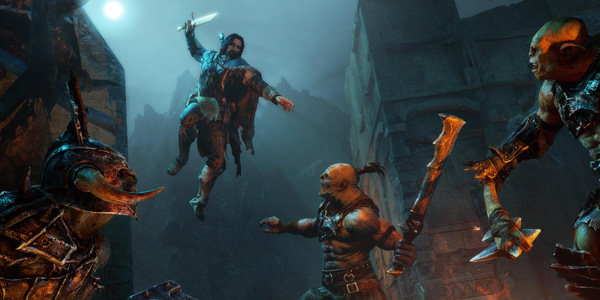
One of the most over-looked benefits of the Star Wars prequels is that they made the space franchise relevant again; so much of the expanded material wouldn't have existed without a mainstream endorsement. The same goes for Middle Earth. Although people would have always adored The Lord Of The Rings Trilogy, it would have become a fixed point in pop culture, rather than an ever-expanding piece. On top of bringing Middle Earth to the big screen and helping boost sales of Tolkien's books, The Hobbit has led to a plethora of related material. There's the usual merchandising, including some very intricate replicas of swords, rings and the rest, but one of the most enticing entries in the Middle Earth canon to be brought about by The Hobbit is upcoming video game, Middle Earth: Shadow Of Mordor. Set between the two trilogies, the Assassin's Creed-style game follows a magically-inflected ranger and his quest in the titular country. The release date is still a few weeks away, but the pre-release material looks good; it could even lead to a new arm of the Middle Earth franchise.

2. Martin Freeman€™s Performance

The Hobbit Trilogy may have broadened scope, but Bilbo Baggins is still the audience's viewpoint into this story; get him wrong and it'll be very hard to make us to care about this fantastical world. Even though audiences were already accustomed to Middle Earth thanks to The Lord Of The Rings, a miscasting of the protagonist could have proved fatal. And it could have so easily been done wrong; he's a sheltered, proper character who is completely out of his depth being thrown down rapids and dodging dragon fire, with none of the adventurous bent that glimmered behind Frodo's eyes. Thankfully Martin Freeman is the ideal Bilbo; his breakout role as Tim in The Office showed him as a master of bemusement, while Watson in Sherlock (which was integral in getting him the role) showed he wasn't just a comedy actor (and also that had the ability to run). Although Andy Serkis' Gollum or Ian McKellen's Gandalf are much more showy, as The Hobbit has gone on Freeman's performance has proven to be one of the big grounding forces of the series. That it hasn't been as resoundingly recognised is almost fitting of a character capable of "passing by unseen". It's understated, but only because Baggins himself is.

1. The Battle Of The Five Armies

When we say The Battle of the Five Armies we don't mean the third and final Hobbit film, but the titular showdown itself. Seeing the forces of humans, dwarves, elves, orcs and wargs square off in front of the Lonely Mountain, it's the moment that the whole trilogy has been building up to. Featuring just about every character we've met so far, it'll bring epic action, as well as the deaths of some fan favourites. Who isn't looking forward to seeing it? Well, a totally faithful adaptation wouldn't show it; it's not seen in the book. In Tolkien's novel Bilbo gets knocked out at the start of the confrontation, with all the action (and believe us a lot of stuff goes down) occurring off page. You can dispute the promotion of the battle to Pelennor Fields levels of epicness, but no one would argue that The Hobbit would be better not showing us the big clash. The acceptance of the battle as the epic finale of The Hobbit is something pretty impressive and should provide you enough reason to reevaluate Jackson's approach to the series; maybe changing things wasn't the worst thing. What do you make of The Hobbit so far? What would you like to see in The Battle Of The Five Armies? Let us know in the comments below?

Contributor
Contributor

Film Editor (2014-2016). Loves The Usual Suspects. Hates Transformers 2. Everything else lies somewhere in the middle. Once met the Chuckle Brothers.