10 Reasons Huge Movies Keep Flopping
Numerous 2023 movies have flopped or disappointed at the box office, but what's behind it?

Things have arguably never been more uncertain for Hollywood than they are right now, for though many hoped that 2023 would be the truly first "post-pandemic" year for the industry, the numbers mostly say otherwise.
At the time of writing and as per Box Office Mojo, almost half of the 20 highest-grossing movies of the year have either underperformed or outright flopped at the box office, suggesting that something is seriously wrong with the current big-budget filmmaking system. Such box office disappointments include Indiana Jones and the Dial of Destiny, Fast X, and Disney's Haunted Mansion, all of which have struggled to recoup their filmmaking budgets, the former two of which ran into the hundreds of millions of dollars.
There is no single reason that so many huge movies have been flopping as of late, but rather a number which, when combined, explains why studios have suffered so many recent financial calamities.
It paints a concerning picture for the future of blockbuster entertainment, and with ongoing strike action likely to affect 2024's planned slate of films, expecting a return to the glory days of 2019 - where nine movies made over a billion dollars - seems like a pipe dream.
There are of course positives to draw from - the success of "Barbenheimer" being one of them - but here are the pressing issues that Hollywood desperately needs to confront if it wants to stop setting money on fire...
10. Grossly Overinflated Budgets

It simply can't be ignored that so many of the huge movies flopping or underperforming in recent times have had mammoth budgets, with the likes of Indiana Jones and the Dial of Destiny and Mission: Impossible - Dead Reckoning Part One nearing $300 million a piece, while Fast X cost an eye-watering $340 million, making it the eighth most expensive movie of all time.
Generally speaking, a blockbuster needs to gross 2.5x its production budget to be deemed a commercial success, and so by the time movies cost $300 million, they're looking at a break-even point of $750 million.
That would've been a tall order even back in 2019, where nine movies grossed over $1 billion, but in the very different theatrical environment of 2023? It's a ludicrous expectation.
While it's impossible to ignore the fact that pandemic-related safety protocols have caused budgets on major productions to balloon over the last few years, that's only part of the equation.
Entries into long-running franchises like Fast X end up spending a huge amount of money on their casts, who typically expect to be paid more on each subsequent movie, and that's without getting into the tremendous costs of VFX-driven set-pieces, especially if studios pay rush fees to have them completed within a faster timeframe.
While it's tricky to point to any single solution to the problem, it's clear that blockbuster budgets as they stand now simply aren't sustainable for the vast majority of movies.
Had many of 2023's films cost $50-100 million less, it goes without saying that their financial exposure would've been hugely lowered, and they might've actually stood a chance of turning a profit.
9. Audience Habits Have Changed Since The Pandemic

The film industry is still reeling from the economic impact of the COVID-19 pandemic, and while there has been a degree of recovery, it's also fair to say that audience habits have been changed by it - partially due to studio strategies that were implemented during lockdowns, which saw more movies getting a simultaneous streaming and theatrical release.
Audiences simply haven't rushed back to the multiplexes in droves for much outside of either horror films or splashy, buzzy blockbusters.
The biggest financial hits of recent times - Top Gun: Maverick, Avatar: The Way of Water, The Super Mario Bros. Movie, Barbie, and Oppenheimer - all benefitted from being sold as major events that exploited people's FOMO.
With home cinema systems improving every year, and many investing in bigger TVs and better sound systems when cinemas were shut, it seems harder to convince audiences to leave the house these days.
For most, it needs to be not just a film but an experience, and sometimes even rave reviews aren't enough to generate a smash hit - as has been the case with Mission: Impossible - Dead Reckoning Part One.
8. Franchise Fatigue Is Real

Folks have been discussing the notion of "franchise fatigue" for years, typically in relation to the Marvel Cinematic Universe and superhero films as a whole.
But on a broader level, there's an argument to be made that the franchises that were once Hollywood's bread-and-butter have since become stale and lost the interest of general audiences.
Take the MCU for starters, which has seemingly lost its ability to consistently churn out $1 billion movies, in part due to the relatively mediocre quality of the post-Avengers: Endgame content, and also general exhaustion with the sheer amount of MCU content produced when including the Disney+ shows.
Elsewhere, Fast X undeniably suffered from the series running out of fresh ideas in recent entries; Transformers: Rise of the Beasts failed to rouse much interest, and The Little Mermaid just felt like yet another watchable-yet-forgettable live-action Disney remake.
As for Indiana Jones and the Dial of Destiny? It's easy to piece together how mixed reviews and the fact that the franchise simply isn't culturally relevant to Gen Z may have proven to be its undoing. (The previous entry, Kingdom of the Crystal Skull, released in 2008, leaving a 15-year gap where Indy wasn't at the forefront.)
But worst of all must surely be The Flash, which despite initial buzz and the return of Michael Keaton as Batman, illustrated how thoroughly over the DCEU general audiences are, enough that Blue Beetle (now retroactively the beginning of James Gunn's new DCU) and Aquaman and the Lost Kingdom both seem destined to bring the series to an end in financially calamitous fashion.
And again, even quality can't always help - Mission: Impossible - Dead Reckoning Part One has underperformed in part because it's a well-crafted yet largely more-of-the-same offering, its fortunes unfortunately contrasting with the freshness of Barbie and Oppenheimer.
Hollywood - particularly Disney - being forced to rely less on rehashing mainstay franchises could be a good thing for the long-term creative health of the industry.
7. China Is No Longer A Reliable Market

Once upon a time, China could be handily relied upon to save an underperforming movie from flop territory - take Terminator Genisys, which famously made more than 25% of its money in the region, without which it would've bombed.
But since the pandemic, China's support for Hollywood features has waned considerably as their domestic film industry has grown, with even numerous MCU films in recent years receiving no theatrical release at all in the country - a "ban" which has since been lifted.
All the same, China has become much pickier over which stateside tentpoles it grants a release, and even those that do have found themselves underperforming compared to prior entries into their respective franchises.
And so, China simply isn't the box office magic bullet that it used to be. This isn't to say that films can't make bank in the country - The Meg 2: The Trench is currently tracking to do gangbusters numbers there, as did the original Meg in 2018 - but it's very far from a sure thing these days.
6. Shortened Theatrical Windows

Perhaps the single most seismic change to the movie industry since the pandemic is the shortening of theatrical release windows.
Gone are the days of most movies taking 60-120 days to hit streaming services, with even commercially successful films often landing on PVOD within just three or four weeks, while outright flops might do so even faster.
While a shorter gap between theatrical and streaming is absolutely beneficial for customers, it's also conditioned audiences en masse to simply wait for the streaming release if they're not 100% sold on a film.
Unless something's successfully marketed to them as a must-see event film, why spend money on tickets for the whole family when you can stream it for a much smaller fee in a mere matter of weeks? Many cinephiles may venerate the experience of "going to the movies", but audiences, by and large, seem less sentimental.
Animation has clearly been the most blatant victim of audience habits changing around streaming, given how few animated films have been true smash hits at the box office since the pandemic. As per Screen Rant, Disney CEO Bob Iger even went on the record to lay part of the blame behind Pixar's recent box office disappointments on the company's approach to streaming.
As such, it's easy to see why the industry's biggest advocates of the theatrical experience - namely Christopher Nolan and Tom Cruise - have contractually stipulated theatrical windows for every movie they work on, to ensure as much big-screen revenue as possible.
5. An Overcrowded Release Calendar

Though 2023 was hailed as a major comeback year for blockbusters, given the much larger release slate than 2020-2022, it's simply proven too crowded a field for all movies to thrive.
Take June, which saw Spider-Man: Across the Spider-Verse overperform and take business away from Transformers: Rise of the Beasts, which released within spitting distance of The Flash, Elemental, and Indiana Jones and the Dial of Destiny.
And most recently, Mission: Impossible - Dead Reckoning Part One had its legs cut off by Barbie and Oppenheimer releasing barely a week later.
By comparison, The Super Mario Bros. Movie became the highest-grossing movie of the year by releasing in April, which was a largely dead period for blockbuster releases otherwise.
Though the summer months traditionally mean big business for studios, they'd certainly do well to consider the benefits of releasing in less-traditional months like September, to avoid movies cannibalising each others' profits.
With the ongoing strikes again throwing release schedules into disarray for the foreseeable future, 2024 would be a ripe time to experiment with more adventurous release dates in order to prevent a pile-up.
4. Poor, Uncreative Marketing

If nothing else can be blamed, there's usually one answer - poor marketing.
Marketing is, for better or worse, an extremely important part of guiding a movie to commercial success, and great marketing has helped many terrible movies print money, while awful marketing has done the opposite for genuinely great films.
2023 has certainly been no different, and outside of the organic "Barbenheimer" viral campaign, 2023 hasn't offered much in the way of particularly memorable or compelling movie marketing.
In an era where audiences need movies to stand out in order to be drawn to them, a bog-standard trailer drop just isn't going to do it.
Even Mission: Impossible - Dead Reckoning Part One, which leveraged itself on Tom Cruise's focal motorcycle stunt, couldn't match the marketing pep of predecessor Fallout, as well as the prevailing consensus that the motorcycle stunt was more-or-less given away for free in the trailers.
Selling sequels in increasingly long-in-the-tooth franchises is especially challenging, like Fast X, which simply looked like "just another Fast movie" in all of its trailers and promotional materials.
As such, it takes some seriously creative, clever marketing to maintain the audience's attention in this day and age.
3. Audiences May Care About Reviews More Than Ever

With audience habits changing and there being so much incentive to simply wait for streaming, quality has arguably mattered more than it ever has - or at least, a high Rotten Tomatoes score.
Basically gone are the days where a critically panned Transformers movie can walk away with $1 billion.
Critic-proof movies will always exist to an extent, sure - The Super Mario Bros. Movie didn't exactly get great reviews - but factoring in everything else on this list, audiences really need to know they're in for something great to get a babysitter and leave the house for a film.
Given that most of the year's biggest movies have, if we're honest, ranged from OK to mediocre in quality, it makes sense that audiences aren't enthusiastic to catch them on the big screen, especially with a streaming release being potentially only mere weeks away.
Of all the changes to happen since the pandemic, quality being king might not be a bad thing.
2. The SAG Strike Prevents Actors From Promoting Their Movies

Though the ongoing SAG-AFTRA strike only began mere weeks ago, there's no denying the huge impact it's going to have on every studio's ability to market their biggest upcoming movies.
Arguably the most obvious casualty of the strike limiting actor publicity so far is Disney's Haunted Mansion.
In an ideal world, Disney would've had Danny DeVito, Jamie Lee Curtis, and Owen Wilson doing the press circuit and promoting the film on talk shows, but without any of that, entire demographics never even knew the movie was coming out, causing it to flop in its opening weekend.
And so, with the strike potentially enduring into next year, some films are opting to move into 2024, while others face unique marketing challenges.
Perhaps more than any other film due to release soon, Blue Beetle desperately needed every single cast member loudly banging the drum for it, yet the strike prevents this.
That's just one of the many upcoming movies primed to struggle commercially without its cast promoting the film at every available opportunity.
1. The Cost Of Living Crisis Means Less Disposable Income For Movies
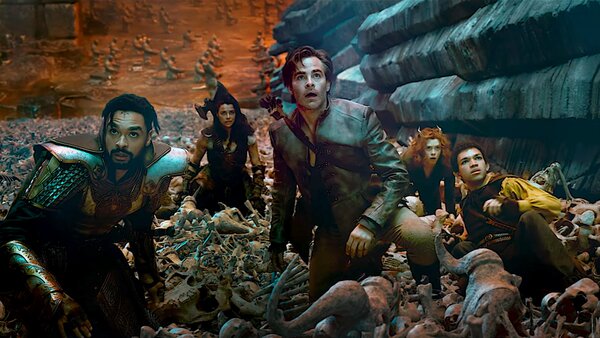
And finally, it's impossible to ignore the fact that people's wallets are feeling strapped around the globe as nations grapple with their own cost-of-living crises, ensuring that going to the movies is a luxury people can easily go without. Inflation and price increases for everything from energy to basic foodstuffs have left many people's paychecks not going as far as they used to.
Given what a night at the cinema can cost a family, it's little surprise that so many are opting for the cheaper streaming option mere weeks later, and saving the big-screen experience for only the most sure-thing projects - the Barbies and Oppenheimers of the world.
For many, moviegoing simply isn't as sacrosanct a social activity as, say, going for a nice dinner - the home experience is "good enough" for most, and it's an easy cutback to make if things are tight financially.
This at least has the potential to change in the future as global economic conditions improve, but for now, can people really be expected to splash out on multiple movies per month if they're struggling to put food on the table?