10 Reasons Why The Lord of the Rings Is Hollywood's Greatest Achievement
 Peter Jackson's adaptation of J.R.R Tolkien's classic epic fantasy novel is the most impressive big-budget production in Hollywood history. That's not saying it's the "greatest" Hollywood movie of all time because that would be a foolhardy claim and one that would be nearly impossible to argue. I will attempt to show however, that there has never been a series of movies in the history of Hollywood that took on a story of such size, scale, and scope, located exactly what made the source material so loved, and transferred it directly to the screen as spectacularly as these film did. What makes the trilogy even more impressive was that this was essentially Jackson's first big Hollywood movie and he had never made anything to hint at how well he could handle such a vast and complex project. Fortunately he delivered and billions of dollars and boatloads of Academy Awards later, and The Lord of the Rings is one of the seminal series in cinematic history. In one of the rare moments of brilliance in the Hollywood studio system, New Line went all in on the project and allowed near complete creative freedom while allocating a massive budget for a relatively untested filmmaker. The shoot is still one of the most carefully planned, and ambitious in Hollywood history, encompassing almost eight years from pre-production to the release of The Return of the King. When you consider that the whole series is essentially one 12 hour movie split into three sections, it's hard to argue against it being among the most spectacular accomplishments in film history but if you need some more convincing, here are 10 reasons that make it the greatest achievement in Hollywood history.
10. Great Story
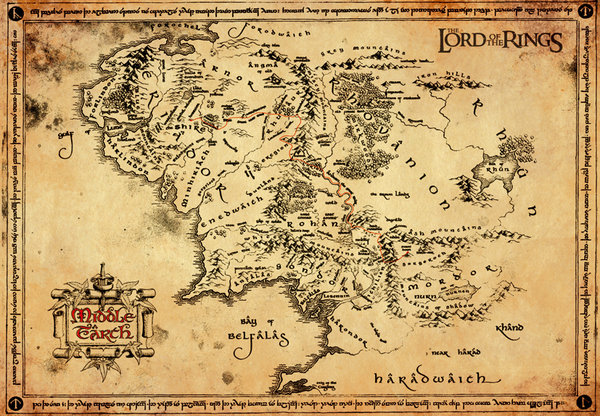 Peter Jackson and his screenwriting partners Philippa Boyens and Fran Walsh had to overcome one massive obstacle before they could even think of the finer details of their project. How do you take a novel over a thousand pages long, steeped in an incredibly dense mythology, and compress it down to its bare essentials in a way that can be filmed on screen? Somehow, they delivered and for the most part the movies are very faithful to the source material, changing a few things along the way but mostly just leaving out superfluous elements. Jackson managed to touch on the broader history of Middle Earth while developing characters and handling multiple narratives in a way that never goes too fast or too slow. He did so by trimming the fat off Tolkien's story and grounding the films in as much realism as possible, ensuring that while there are wizards, dragons and monsters, what you see on screen feels real. The Lord of the Rings celebrates honor, friendship, love, and virtue while also getting epic battle scenes and a classic tale of good versus evil. The novel was a brilliant example of good old fashioned fantasy storytelling and it's adapted to the screen magnificently.
9. Size & Scale
 The Lord of the Rings took movies to a size and scale to a level not really seen before or since. Within five minutes of the start of the first film, a battle with thousands of participants is shown and over the next ten hours, the audience is assaulted by the sights and sounds of Middle Earth almost non-stop. Places like Minas Tirith, Mordor, and Isengard come to life during the run-time and spectacular battles form the climax of all three films with the Battle of Pelennor Fields remaining arguably the most impressive screen battle of all-time. Even the simplest scenes take on an epic feel under Jackson's care. Scenes of the Fellowship walking by ruins on a mountainside are breathtaking in their own right and and the filmmakers seem to delight in surprising the audience at every chance with how impressive they can make everything on screen. It almost feels like Jackson's answer to everything was to make it bigger, and rarely has bigger equaled better like it has in these movies.
8. Great Characters
 The Lord of the Rings has arguably the deepest set of great characters of any movie series since Star Wars. Aragorn, Gollum, and Gandalf rank highly among the greatest screen characters of all time while Gimli, Sam, Boromir, Galadriel, Saruman, Legolas and really all of the other speaking roles are memorable in their own right. Even the minor characters like Lurtz, the Witch-King, and (in the extended edition) the Mouth of Sauron all make their mark in limited screen time. Even more impressively, all of the characters mix together just right. Many of the characters like the Hobbits are directly relatable, they aren't heroes or incredibly skilled warriors but they still find a way to get the job done. Even the larger than life characters like Gandalf and Galadriel still manage to be almost "human" despite being magical, immortal beings. No member of the fellowship is neglected throughout the series: the hobbits go from nobody's to heroes, Aragorn goes from a lost wanderer to king, Legolas and Gimli go from bitter rivals to inseparable friends, Boromir's arc is more tragic but he still manages to redeem himself in the end, and Gandalf manages to grow as well as the series goes on. The dedication to characters is essential to any kind of multi-film series as the audience has to be stuck with them for more than one movie, here though I don't think anyone would have objected to spending more time with these remarkable creations.
7. Restraint
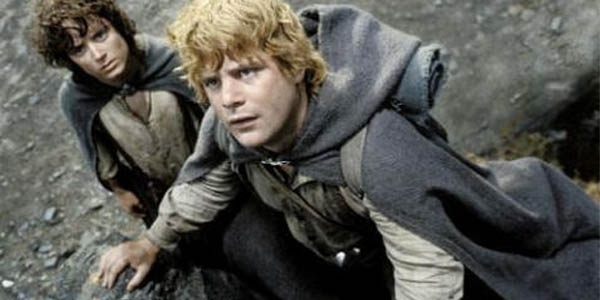 You couldn't tell from watching An Unexpected Journey, but The Lord of the Rings were extremely good at restraining themselves as much as possible from throwing too much at the screen. Even though all the movies run for more than three hours, they could have been much longer and Jackson had the good sense to keep much of it for the extended editions. The story is stripped down to its bare bones, focusing squarely on the members of the Fellowship and generally not veering too far from any of them. The focus stays on two primary episodes: the main quest to destroy the ring and the war to keep Sauron from destroying Middle-Earth before it doesn't matter anyway. Jackson wisely avoids passages including Tom Bombadil, Barrel-Wights, and the anti-climactic Scourging of the Shire section, keeping the meat of the narrative front and center.
6. Consistent Quality
 Think of the few great movie trilogies in film history and you'll notice a general drop in quality in at least one of the entries. The Star Wars trilogy started out with two masterpieces and ended with a very good but not quite great entry, and the same could be said about The Godfather series. Nolan's Batman movies likewise started and ended with two supremely entertaining yet flawed films, the Bourne Movies were consistent but never quite reached "greatness", and the same could be said for the extremely impressive Harry Potter series. Meanwhile the Lord of the Rings trilogy is arguably the only blockbuster trilogy in film history without a significant drop in quality between the first and last installment. While Return of the King does have its share of questionable moments, it also contains some of the most epic scenes in blockbuster history. Unlike most trilogies, which gradually expand into future installments depending on if the original is successful, The Lord of the Rings was essentially shot as one gigantic movie which was split into three parts and released over a period of three years. Since the film was shot roughly back to back to back, the whole series flows smoothly between its parts without any major changes in the quality of the work. The Lord of the Rings, by ending in such a spectacular fashion, clearly ousted Star Wars as the greatest trilogy of all-time and with three movies of such magnificent quality, it lays an overwhelming claim to the longest stretch of greatness, in terms of run-time, in cinematic history.
5. Music
In a movie with this many distinct characters, locations, and civilizations, getting the right composer was essential. Luckily, not only did Howard Shore deliver a score that perfectly enhanced everything seen on screen, but he also created one of the most memorable film score in movie history, and one of the few that doesn't lose its effectiveness when listened to by itself. Just minutes into The Fellowship of the Ring, the audience is treated to the unforgettable Concerning Hobbits, while later on the movie gives us The Bridge of Khazad-dûm, Amon Hen, and the gorgeous Breaking of the Fellowship. The Two Towers gives us themes for civilizations like Rohan and the Ents and the Return of the King ties it all together musically while adding even more great stuff. Every civilization has their own distinct musical quality and each moment is brilliantly underscored and supported by the music. In many ways, The Lord of the Rings soundtrack is its own colossal masterpiece with over 10 hours of music recorded for the trilogy. Not only does the music work brilliantly in supporting the film, it stands outside it as one of the best works of modern classical music.4. Cinematography & Visual Effects
 The Lord of the Rings remains one of the most visually astonishing films ever made, blending old and new styles into a delightful mix of incredible eye candy. Famous Tolkien artists Alan Lee and John Howe helped give the film an incredibly realistic yet still fantastical look while Weta Workshop, headed by Richard Taylor, created all sorts of ridiculously detailed costumes, props, prosthetics and miniatures. Jackson used the versatile environment of his native New Zealand to incredible effect, finding natural environments that perfectly captured Tolkien's world. He also employed forced perspective photography and scale doubles at a level that had never really been attempted before, while groundbreaking computer effects were used when something was determined to be impossible using practical methods. This blending of different styles of filmmaking worked flawlessly, and a decade after the release of the last installment, it has barely aged at all visually. The filmmakers devote such care to recreating Tolkien's world that what you see on the screen might be more impressive than what you read on the page.
3. Innovation
 Besides being risky enough in terms of adapting the most popular fantasy novel of all-time on an unprecedented scale that would backfire horribly if it was unsuccessful financially, The Lord of the Rings managed to be one of the most daring blockbusters ever made, introducing a host of technological innovations. MASSIVE, a groundbreaking computer system that could simulate entire battles was used to create battles with hundreds of thousands of combatants, something that had never been possible in movies before. Equally groundbreaking uses of motion capture technology, along with the incredible performances of Andy Serkis, was used to create an utterly convincing CGI Gollum. The special effects crew worked tirelessly on The Lord of the Rings, often working overnight to meet deadlines and finishing some of the work mere weeks before release. Their hard work resulted in some of the most incredible and innovative special effects in movie history and opened new possibilities for big-screen spectacle.
2. Eloquence
 Sure they had Tolkien's writing to base their screenplay off of, but Walsh, Jackson, and Boynes managed to put together one of the best screenplays of any blockbuster ever, and Jackson filmed it in such a way that eloquence comes from what happens on screen as much as it comes from the words the characters say. Some examples include Theoden quoting poetry before a battle, Sam's closing speech at the end of Two Towers, Gandalf teaching Frodo a valuable lesson in a Moria crossroad, and the devastating finale of Return of the King to name but a few. Jackson's visuals themselves underscore and sometimes create eloquence of their own. Lots of movies have been based off of great books before, and many have been better books than The Lord of the Rings, but none have ever completely captured and actually enhanced the literary qualities of a pre-existing property quite like Jackson's films. Blockbusters have never been known for the eloquence or thematic beauty, at least until this remarkable trilogy rewrote the rules and raised the bar for every subsequent spectacle, blockbuster, and literary adaption.
1. Attention To Detail
 What really pushed The Lord of the Rings above other franchises is the astonishing attention to detail employed by the entire crew during the production of the film. Peter Jackson insisted on making the film feel as if it were a depiction of actual historical events and the production design team went to incredible lengths to make everything feel like it was part of a real, historical world. If you have a few hours to kill, go watch the special features on the extended edition DVD's of the trilogy, which takes you behind the scenes and shows you the incredible attention paid to even the most insignificant details. The props department was so dedicated that not only did they handcraft thousands of swords, shields, chain mail suits, and helmets, all with their own distinguishing characteristics. That same level of care went into every level of production, with actors learning various fictional languages, VFX artists working around the clock, and Peter Jackson supposedly averaging four hours of sleep a night. Even more importantly than the technical qualities, incredible care and effort was put into the story, and the characters, and the emotional themes that made the novel so beloved to begin with. Rarely, if ever, has such incredible ambition and drive been exhibited on a project of this size. Generally, blockbusters are paycheck movies, not something that the moviemakers are particularly attached to emotionally. The Lord of the Rings however, was the definition of a passion project, and after devoting nearly eight years of incredible care to every conceivable aspect of the production, the filmmakers gave audiences everywhere one of the all-time great cinematic gifts.