10 Reasons The DC Cinematic Universe Could Beat Marvels'

How peace has cost Marvel its strength, and how the DC rises.

Currently, DC's cinematic universe is without a doubt playing catch-up to Marvel. Man of Steel was a disappointing Superman reboot while Guardians of the Galaxy, a film based around characters that the majority of cinema-goers didn't even recognise, was the highest grossing superhero film of 2014. The Dawn of Justice is barely breaking, while Marvel will be fighting fans away after Infinity War. DC are completely beaten, right? Wrong. As everyone learned in childhood, slow and steady wins the race. Now that Marvel are getting up to speed and promising fans the world (and any other world that they decide to bring in alien superheroes from), they are much more likely to trip over their own spandex-slippers. With all the hype around Marvel's Phase 3, it would not be surprising if the executives were breaking into a sweat about having to deliver to that level of expectation. DC, on the other hand, have seen all of Marvel's superhero tricks and have been planning their retaliation, ready to reclaim the crown they lost after The Dark Knight Rises and become, once again, the comic book king. You might think it's impossible, but there's reasons why DC can come back and be the superhero franchise the world deserves and the one it needs right now. In fact, there are ten reasons.

10. DC Has More Iconic Characters

If you ask anyone to name any comic book superhero, their responses are probably going to be: "Superman" (or maybe "Batman"). In terms of notoriety, the 'Man of Steel' is always going to outclass Iron Man. Superman embodies everything that a superhero is, right down to his name. Nietzsche's ideal in spandex tights. In contrast, Marvel clearly realised that they were running out of what few big name brands they had when they released Guardians of the Galaxy; and it's highly doubtful that the same amount of time or money is going to be put into the Inhumans film as went into making Chris Pratt muscular and Karen Gillam blue and bald. The public saw the beginning of this trend with the relentless Hawkeye teasing, with audiences wondering how a glorified governmental Robin Hood could stand next to The Incredible Hulk and not question his career choices. DC, in contrast, have all of their hard hitting superhero names lined up, reading to showcase them all in the inevitable Justice League film - and even for the slightly lesser known superheroes DC are confident enough in their properties to insert them directly into their universe without having to preface them with their own, disappointing, films. It's a hard truth, but Iron Man and Iron Man 2, The Incredible Hulk and Thor all look pretty lacklustre in retrospect because their existence was to set up the Marvel canon. DC doesn't have that issue, because their superheroes are so well known they can be inserted into any narrative and audiences will know what to expect. That even goes for Aquaman.

9. Marvel Doesn't Own All Their Heroes

This is going to be an issue for all of the future Marvel films, and one that DC is sure to make the most of. In the next few years of superhero films, we are going to be seeing two versions of Quicksilver, and two versions of Scarlet Witch. One pair will be owned by 20th Century Fox, and one pair will be owned by Marvel, and this puts Marvel in competition with another company to outclass depictions of their own superhero. This is also going to be difficult for Marvel to make the most out of their bigger plotlines that involve the X-Men, or Spider-Man €“ who plays a large part in the Civil War storyline - because as yet Marvel does not have access to its properties. While Marvel are struggling to write alternatives to their stories, DC will be bringing out all of their headline names with such force that the inclusion of some of the lesser known characters such as Cyborg or the Suicide Squad will seem natural to audiences; DC won€™t have to spend time, as Marvel will need to, changing their narratives and will be able to focus completely on bringing us the best superhero films that they can.

8. More Interesting Powers

Superheroes The powers of the current rota of Marvel superheroes is lacklustre compared to DC€™s. Compare Captain America to Superman €“ while Captain America demonstrates his powers via rather monotonous fistfighting, Superman pushes the idea of being a physically superior human being to their logical extreme; Captain America has a limit to how fast he can run. Superman is so fast he can literally turn back time. Captain America is justified if he cannot save someone in time. Superman should be able to save everyone from mundane acts of violence but cannot, and that's an emotional narrative. The same goes for the difference between Iron Man and Batman, both of whom share the same superpower of €˜having Scrooge McDuck levels of money€™. However, Batman realizes vigilante justice cannot be a rule for the rest of the world to follow, and thus maintains the façade that Batman is a villain. That€™s why Comissioner Gordon saying that Batman is €œthe hero Gotham deserves, but not the one it needs right now€ is so potent. The third Iron Man film, on the other hand, is the fallout of Tony Stark realizing that swanning about in his fancy suit while knowing there are people out there that want him dead, which definitely isn€™t something he learned before *cough cough Hammer cough cough Iron Man 2* might not be such a good idea. In short, it's what you do with the superpowers that matters - DC's superheroes have more spectacular powers that will be interesting to see on screen, while Marvel is still content to show cool explosions and some substandard fight fights (I'm looking at you, Guardians of the Galaxy).

7. Marvel's Poster Boy Is Boring
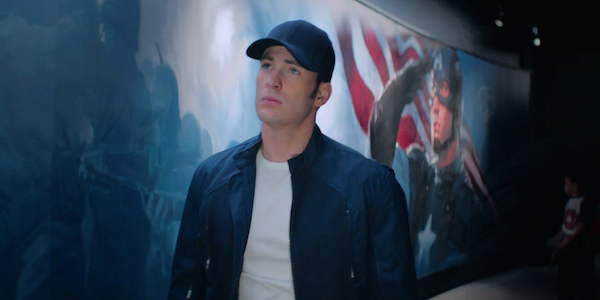
The Marvel Civil War has two pivotal characters: Iron Man, and Captain America. In the comic books, this was fine - we had entire comic book arcs about their personal nuances. However, the way that DC is going to overtake Marvel is because Captain America - the symbol of the Marvel cinematic universe is ... well, he's dull. This is because Captain America is always right. There have been two Captain America films: "Captain America vs the Nazis" and "Captain America vs Nazis in Disguise". The conclusion at the end of the films was: if you're not on the side of Captain America, whether you know it or not, you're probably a bad guy. Why even bring in the political ideas of Civil War when, according to Marvel's cinematic universe, there's no discussion. One side is clearly good, one side clearly bad. Man of Steel, in contrast, presented a Superman that could have some character development. The destruction of Metropolis as a metaphor (albeit an expensive one) for both the world needing to be rebuilt after superhumans exist and also for Superman to build himself as the hero he could be to mankind. DC can present a world where superhumans are just that: super humans. People that can't take solace in the fact that they are a god, or a genius, or the walking ideal of the United States of America. From their first film, they've shown that superheroes can do damage, and that with great power comes great responsibility - how's that for irony?

6. Power Creep

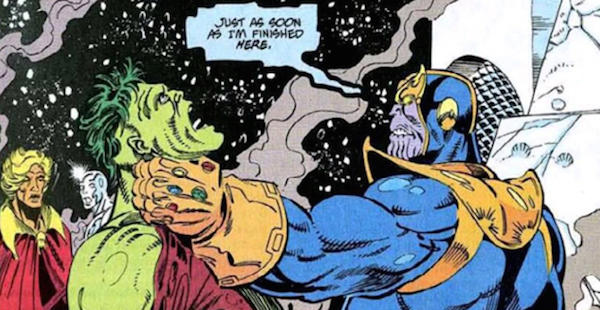
No, that's not the name of a terrible super villain. "Power creep" is the idea that the more iterations of a product, the greater power it must have to keep viewers interested. It's why in Avengers Assemble, Loki and his army were content to attack a city, but in Guardians of the Galaxy, Ronan was going to destroy a planet. In Age of Ultron, Ultron will be trying to destroy our planet, and in Infinity Wars Thanos will be attacking the whole of creation. So how can heroes like Iron Man or Captain America compare to the power of Thanos? With each iteration of Marvel films, the power increases until eventually we're going to have to mention that there are characters that literally embody the concepts of Chaos and Order. Eventually, the whole idea of a superhuman is going to become obsolete. In the DC universe, we can always count on some idea of balance to offset the abilities of any superhuman. The age old question of "Who would win in a fight, Batman or Superman" is a tired example, but probably the best one. Superman can always be taken down a couple of notches by the presence of Kryptonite, or by blocking out the rays of Earth's yellow sun (which Batman did in the Red Son alternative universe arc). The DC universe always knows how to make the stakes feel more real than Marvel, and eventually will overtake Marvel as their films become more ludicrous.

5. DC Is Spinning Fewer Plates

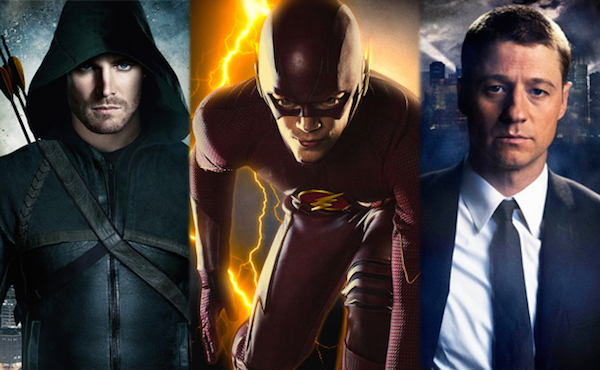
One of the major criticisms of Warner Bros. is that it, unlike Disney, has not made a studio specific to making superhero films. Marvel is a studio, whereas DC is an intellectual property, and because of this many have said that DC does not have the focus on films that Marvel does. However, this has only been true of the pre-DC cinematic universe, and Marvel is going to have to learn how to deal with a major issue that has plagued comic book fans for eons: continuity. Marvel does not confine its continuity to the cinematic universe, but also to television with Agents of S.H.I.E.L.D, and as such has to ensure that what happens in the television show fits with the narratives in the film. In the episode €œTurn, Turn, Turn€ Agent Coulson orders Skye to delete records of SHIELD's intel. This action takes place roughly around the same time as The Winter Soldier which ends with Black Widow uploading all of the SHIELD/HYRDA information onto the internet. So, either Skye's actions are pointless because Black Widow happened to override them, or Skye somehow either managed to delete something off the entire internet. That's bad continuity. DC can make The Flash, Arrow and Gotham, without having to worry that their television continuity will affect their films, because they have decided to keep them separate. Comic book fans will have more variation in the depiction of DC superheroes because of this separation than of Marvel characters, with the certainty that DC will not write itself into a Gordian Knot for the sake of continuity.

4. DC Can Learn From Its Mistakes

Man of Steel was a bad film. It's something that every fan of the DC universe is going to have to admit at some point. However, the best thing about mistakes is learning from them, and Warner Bros. will be more likely to make better films because of it. The reason is simple necessity; the company has dedicated themselves to the cinematic universe and know they are not going to be able to keep producing films if those films are disappointing to fans. Unfortunately for Marvel, they still have this fall to come. One can just imagine the headlines when that first 'bad' Marvel blockbuster hits the cinemas; you can say that it's never going to happen, but it's inevitable. Films like Iron Man 2 or Hulk are brushed under the carpet as having never happened because, while still part of Marvel's cinematic universe, the studio decides to ignore them. Something like the Ant-Man director debacle happening in the full swing of Phase 3 is sure to disrupt the careful planning of the Marvel cinematic universe, while DC - in only now creating their cinematic universe, will inspire more excitement and be able to overtake Marvel's current dominance in the superhero scene.

3. Marvel Turns Heroes Into Villains

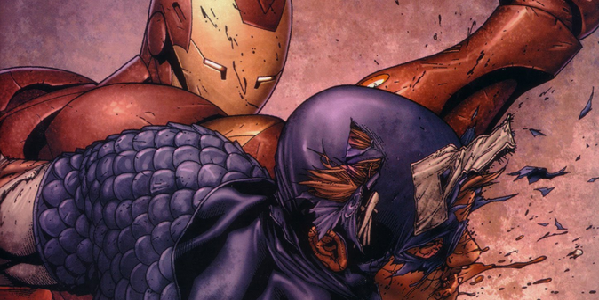
In the plot of Civil War, audiences are going to have to come to terms with the idea that Iron Man (directly or indirectly) is responsible for the *spoiler alert* death of Captain America. Naturally, this is going to divide superhero fans over which 'side' of the civil war was in the right, and hopefully lead to some nuanced debate. However, not all of the audience is going to be on board. Imagine a child whose favourite Avenger is Iron Man - how are they going to react to infighting between superheroes? Are they going to see differing ideologies, or just a film where their favourite hero becomes bad? DC doesn't have that problem. Not that they haven't had heroes be the antagonist of a narrative. Superman has been the villain during the Infinite Earth's plot or recently in the Injustice comic books, but they have never been the 'real' Superman. Batman has been the 'villain', in "The Dark Knight Falls" from anger. Green Lantern Hal Jordan famously became evil in the Emerald Twilight series, but that eventually got rewritten by explaining that he was possessed by Parallax. However, the examples above are all based on superheroes being motivated by reasons audiences can empathise with like anger, insanity and, uh, being taken over by a yellow space insect embodying fear. But never something as silly as political ideology. Besides, we had the Civil War plotline in X-Men 3: The Last Stand. And we all know how that turned out.

2. DC Takes Itself Seriously

One of the main ways that DC is going to overtake Marvel is by taking itself seriously. While Marvel is more concerned with making jokes that have followed the same format of "superhero makes pop-culture reference" Joss Whedon started in Avengers Assemble, DC is busy actually creating an accurate representation of how people would react should superheroes actually exist. In Avengers Assemble the police force, apparently waiting for the National Guard, need to be told by Captain America to set up a perimeter and to start evacuating buildings. On the other hand, in Man of Steel, the military become aware of Superman's existence and immediately come after him with enough firepower to take down a being that could possibly be a threat to the planet. Whether or not that's the right idea, you have to admit, it's more realistic than Marvel. DC knows how to present a threat. Marvel do not. An alien army with vastly superior technology were bested by an archer, a man on steroids and some rockets from Iron Man. One of the iconic scenes in Marvel€™s cinematic universe is Hulk punching the Chitauri whale ship in Avengers Assemble, but it is played for laughs. That is because threat does not exist with invulnerable characters like Hulk or Thor. Say what you want about the military or police force in the universe, but they make the attempt to keep costumed humanoids with the power of atomic bombs under control. It's certainly better than an Infinity Gem being able to destroy a planet being protected by Benicio Del Toro and nothing else.

1. Batman's In it.

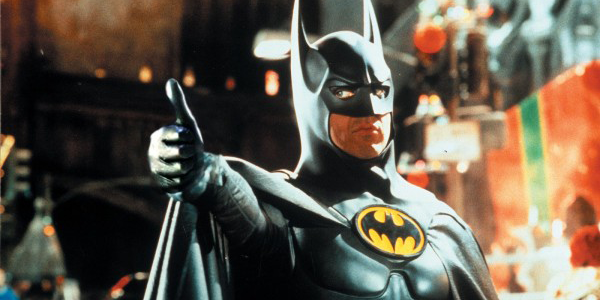
Grass is green, the sky is blue and people love Batman. There€™s something partciualrly empathic about the Dark Knight that means he can be inserted into anything, such as a film about Lego and make it a Batman film about Lego (and then they released a Lego Batman film). According to author of Batman Year One, David Mazzuchelli, Batman is the superhero who did not want to become one, who doesn't really care for attention. And that€™s why audiences like him €“ because his story is personal. There are no moral lessons to be learned from Batman as there are from Superman, just good old fashioned emotion. Batman has been stuck in his 10 year old kid mentality since the death of the Waynes, protecting Gotham because it feels so much like part of his own estate and he is desperate to defend his parents honour. Children knew we could never be Superman or Wonder Woman or Green Lanturn because they came from mystical words with extra-ordinary powers. But readers all felt that we could be Batman, if they worked hard enough. It€™s an idea that is part of Batman€™s very essence, and it€™s why audiences are chilled by three words: €œBecause I€™m Batman.€

 
Posted On: 
Contributor

Guest hasn't written a bio just yet, but if they had... it would appear here.