10 Reasons We've Already Given Up On The DC Cinematic Universe

Is it really worth all the effort?

Batman Superman Fan Artwork DC has watched Marvel take over your moviegoing lives and relieve you of your precious money for six years now, and it doesn't like it one bit. So now, intentions have been made clear: the DC Cinematic Universe is going to become a thing, whether you like it or not. After 2013's Man of Steel will come 2016's Batman vs. Superman, followed by a Justice League movie - which will assemble all manner of DC mainstays - reportedly arriving around 2017. A series of DC Cinematic Universe movies has been in the rumour mill for years - a George Miller-directed Justice League movie might already have been with us if it weren't for the 2007-2008 writer's strike. But now Christopher Nolan has successfully made Batman cool again and has subsequently taken the producing reins of the Superman reboot, DC officially has its own cinematic universe in its sights. Cool, no? No. There's nothing more worrying than seeing the comic book properties you love suddenly turn into movie productions without the delicate handling that's required. Based on what evidence we have so far, and on the ominous signs found in the seemingly daily updates, here are 10 reasons to not be excited about what the DC Cinematic Universe is cooking...

10. Man Of Steel
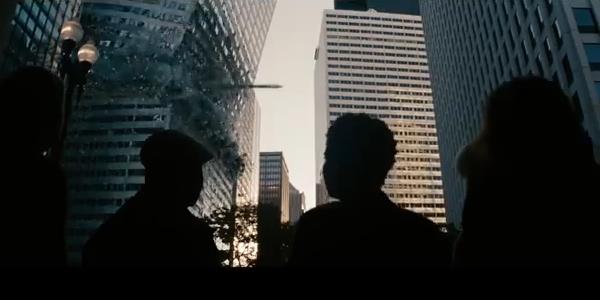
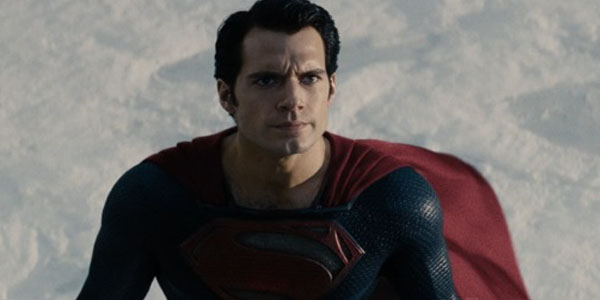
Where to start with Man of Steel? The gaping plotholes? The overlong action sequences? The mere presence of Russell Crowe? The destructive finale that saw Superman kill not just Zod, but presumably thousands of Metropolis citizens crushed under the pieces of city he routinely demolished? Produced by Christopher Nolan and directed by Zack Snyder, Man of Steel is almost schizophrenic in how it wishes to both ground its hero (that'd be the Nolan influence) and have him recklessly blow things up, sometimes just for the sake of it (that'd be Snyder). The film has a cold, grey look, matched by a cast that mostly phones it in, to play characters who don't require much more anyway. The opening sequence on Krypton sets the scene: it's a mish-mash of ideas that don't quite add up to anything of substance. It's also the first and probably last film that makes roaring lunatic Michael Shannon forgettable, which is not just a cinematic crime but a complete anti-fluke that should never have been able to happen. This misfire is enough to make anyone give up on the DC Cinematic Universe (DCCU) - as an indicator of where DC wants to take its new line of movies, Man of Steel couldn't incite less confidence. But in case you need nine more reasons...

9. Zack Snyder

OK, so we can't lay all the blame for Man of Steel at Zack Snyder's feet. He had pressure from the studio no doubt, as well as a rushed script from the now-infamous David S. Goyer - overall, the director didn't do so bad with the hand he was dealt, give or take a jaw-droppingly long and apocalyptic final action sequence. But it's the director's job ultimately to oversee everything - can we really trust Snyder with two more DCCU movies? So far, the director has one legitimately pretty great remake (Dawn of the Dead), a surprisingly iconic and influential comic book adap (300), a pretty lacklustre comic book adap (Watchmen) and a notoriously awful teenage wet dream (Sucker Punch) under his belt. And something called The Owls of Ga'Hoole. That's not a comforting filmography. It seems Snyder can do some good when the material works - Dawn of the Dead is an effective horror in its own right, while 300 works totally as its own campy, overblown thing - but not so much when it doesn't. It's a wonder, then, that DC made such a gamble hiring him to direct one of its movies, and then - after a backlash from critics and fans alike - hired him to direct TWO MORE. Also remember that, if DC was ever to utilise another director for its films, it would still be the same outfit that already passed on Darren Aronofsky in favour of the guy responsible for Sucker Punch. Don't be getting your hopes up.

8. DC Hasn't Learnt The Right Lessons From Marvel
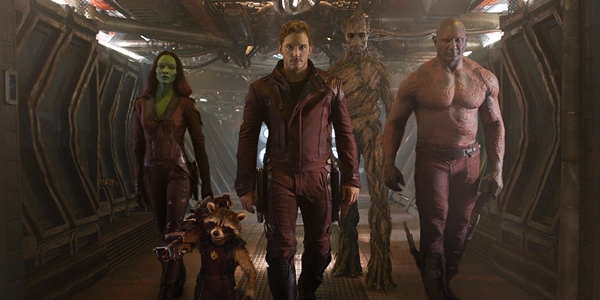
Snyder is the kind of filmmaker Marvel avoids: a hack director with a history of questionable movies. You see, Marvel has taken 'risks', apparently, by choosing proven directors who have the ability to bring their own uniqueness along to projects, as opposed to the kind of yes-man blandness Snyder brought to Man of Steel. Marvel goes for 'offbeat' and for variety because the studio understands that resting on your laurels leads to audience fatigue. This is something that, so far, DC appears to have missed. All the usual suspects will likely appear in Justice League, following a Superman origins movie that really didn't try to do anything different, nor distinguish itself from the already packed superhero marketplace. DC's biggest mistake is its short-term thinking, which stands in complete opposition to the Marvel Cinematic Universe (MCU) model. Marvel has plans that stretch to 2028 - ambitious, obviously (it's unlikely comic book movies will still be all the rage after 14 more years packed with them), but the studio at least knows how to pace itself. Marvel managed to ease audiences into the idea of Thor, Black Widow and Hawkeye by introducing them via the movies of more well-known characters. At the moment, it seems DC's only plan is to cram as many of its most popular characters into its next two movies as it can.

7. The Boring Superheroes

Marvel has a space Viking, a brilliant scientist with uncontrollable rage issues, an out-of-time super-soldier and a talking, gun-toting raccoon. And yeah, Captain America has been accused of being one of the more boring superheroes out there, but he's at least refreshingly bereft of the gloomy outlook of all the DCCU characters to date, and Marvel at least had the good sense to build two of its best, most fun movies around ol' Cap. Man of Steel, by comparison, featured probably DC's least interesting 'name' superhero (an invincible alien whose alter-ego is open to just as much threat and intrigue), and the film he featured in was moody at best, inert at worst. It's not that DC has boring superheroes, but its cinematic interpretations of them so far haven't exactly inspired. DC's characters are also at a disadvantage, in that they're liable to repeat what the already successful cinematic superheroes of the age are doing. Superman is a nigh-on indestructible extraterrestrial made a fish-out-of-water on Earth? So is Thor. Batman is an eccentric billionaire with psychological issues? So is Iron Man. Wonder Woman is the token female superhero begrudgingly included in the universe by execs trying to deflect cries of sexism? So is Black Widow. No matter what DC does now, it may all just be too late; originality still reigns superior for movie audiences, and there's only so many movies in which cinemagoers want to see a depressed billionaire cry over his lavish lifestyle, or a super-heroine be neglected so the men can get on with doing everything important.

6. The Tone

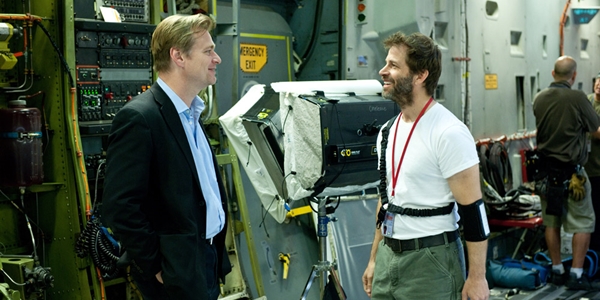
As much as he contributed to the comic book movie boom with his Dark Knight trilogy, Christopher Nolan is already proving to be a bit of a burden on the DCCU. Nolan's presence as producer on Man of Steel initially told fans they were in safe hands - the man behind probably the best comic book movie trilogy ever could surely do no wrong. But when Man of Steel came along, it was apparent that only Nolan's worst qualities had been allowed to shine through: here was another humourless superhero movie treating its character with all the reverence of some divine religious figure, shot with a stifling realism in a dour colour scheme. Has there ever been a movie featuring an hour of explosions that's as joyless as Man of Steel? Minus Nolan's craft, the look and feel of his superhero movies could come across as stylistically shaky. The ultra-serious comic book movie is, quite frankly, past its sell-by-date and, as good as Nolan's Batman films were and still are, DC shouldn't have used them as a guide for the tone of its cinematic universe. Marvel, by comparison, never loses its sense of fun, and keeps defying expectations by changing up the genre of its movies. Captain America: The Winter Soldier was a conspiracy thriller and Guardians of the Galaxy looks set to be a comedic space opera, like Star Wars made by a much funnier George Lucas. DC should be taking risks and moving on, not playing it safe. And speaking of playing it safe...

5. The Casting Choices

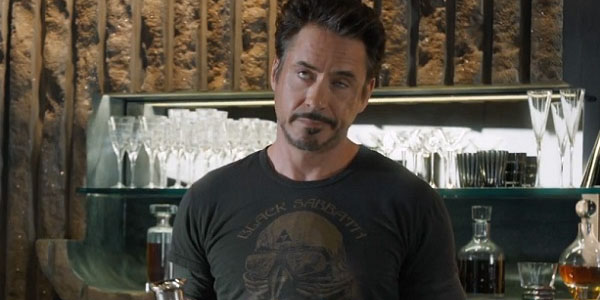
Leftfield casting has worked for all manner of recent superhero movies; perhaps most significantly, it paid dividends for The Dark Knight (although it's hard to say the casting of Heath Ledger as The Joker was that 'leftfield', considering he'd already been nominated for a Best Actor Oscar for Brokeback Mountain). Casting Jesse Eisenberg as Batman vs. Superman's Lex Luthor could prove inspired, while writing off Ben 'Caped Crusader' Affleck entirely as he continues his career comeback is possibly premature, but... Gal Gadot as Wonder Woman? The way-past-his-prime Jeremy Irons as Alfred? Really? In many ways, the casting of Henry Cavill as Superman was an indication of the safe direction DC was going in: here was an inoffensively handsome actor with unremarkable acting talent, looking the part but perhaps not savvy enough to suggest there was much going on underneath the pretty shell. Remember when the un-castable Robert Downey Jr. got the part of Tony Stark and became the world's highest-paid actor as a result of that, or when an unknown but hugely talented Tom Hiddleston became a star overnight thanks to his being cast as Loki? It's hard to imagine any of the casting choices made in the DCCU so far will result in similar kinds of success. Even Amy Adams, star of everything else she appears in, barely registers in Man of Steel. Did you even remember she was in it?

4. The Embarrassing Fan-Baiting

Batman Begins featured a set of villains that non-comic book fans who'd previously only seen Adam West, Michael Keaton, Val Kilmer (ugh) and George Clooney (ugh!) play the title role knew about. But it worked, because Christopher Nolan and co. saw potential in bringing Scarecrow and Ra's al Ghul to the big screen, and figured they'd be new bad guys for purely screen-addicts to love. Man of Steel and Batman vs. Superman, on the other hand, feature Superman's two most famous cinematic villains, General Zod and Lex Luthor, for probably a no more obvious reason than that they're more likely to bring in fans of the older Supes movies. It's misguided, the hollow attempts to appeal to fans through recycling the same old characters coming across as obsequious with a hidden agenda rather than generous. The logical leaps that DC has been taking, too, seem desperately cynical. Batman vs. Superman? Where's the sense in that when Nolan satisfyingly ended the Batman saga only two years ago? The announcement of the project seemed more like a way of bringing some attention to DC rather than a calculated effort to actually make the cinematic universe work. As for the Justice League movie - with presumably a brand new set of superheroes (for cinema anyway) teaming up with Superman and Batman, expect to find Zack Snyder struggling to fit a bunch of origins tales into a single competent narrative.

3. The Evident Lack Of Patience

Movies need care and preparation, otherwise you're looking at a reduced possibility of producing something great (or even coherent). They went to shoot the second and third movies of the Pirates of the Caribbean franchise back-to-back with no ready script in place, hence why the films turned out as they did: weird and bloated, with Johnny Depp trying to paper over the cracks by out-Keith Richardsing Keith Richards. Batman vs. Superman hasn't even started shooting, and yet DC is already looking to release a Justice League movie in 2017. For Marvel, it was baby steps - an Iron Man movie in 2008 to test the waters, followed by Thor and Captain America, along with a few teases here and there to connect the films together and hint at the idea of a larger cinematic universe, with a total of five movies and four years passed before The Avengers came along in 2012. The Avengers was the result of a planned build-up by Marvel, one which worked through the studio breaking its intentions down into 'phases'. On the other hand, we have one DC Cinematic Universe movie, Man of Steel, and one more in the works, and yet already a Justice League movie is on its way. Even that rumoured Flash movie might not come to fruition before Justice League - if it doesn't, the production rush will be felt even more.

2. Trying To Emulate Marvel Rather Than Carve A New Path
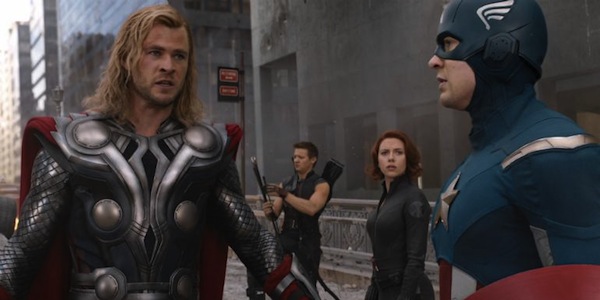
So DC has lessons to learn from Marvel, but outright trying to copy what has worked for its rival studio so far is a seriously unwise decision. Unoriginality is the name of the game for the DCCU it seems, what with the uninspiring casting, rehashing of old storylines and popular characters, and the repeated hiring of a fairly uninteresting director. But by trying to make Man of Steel and Batman vs. Superman the DCCU's build-up movies, and Justice League its Avengers Assemble, DC only looks like a pretender rather than a pioneer. The very fact that DC is striving for a cinematic universe in the wake of Marvel's huge success with its own movies makes DC look like the school outsider desperately trying to copy the popular kid to get noticed. DC could have gone in many different directions - the beauty of decades-old comic universes is the vast collection of stories and immense number of possibilities available - but it has instead looked to Marvel and made a conscious decision to follow rather than lead. And that DC is prepared to disregard its most acclaimed set of movies, found in the Dark Knight trilogy, in order to build a new cinematic universe is even more worrying.

1. Marvel Has Clearly Already Won

It's difficult to care all that much about the DCCU when Marvel's own MCU has been doing what DC wants to do so successfully. If anything, Marvel's movies are only improving: critical acclaim for Iron Man 3 and Captain America 2, respectively, was higher than for any of their predecessors, while The Avengers topped four years of MCU films as Marvel's best yet. When Marvel is already doing its thing so well, the real question should be: Who actually cares about the DC Cinematic Universe? As it valiantly pushes onward, DC is trying to edge into an already crowded market for cinematic superheroes. Audiences are into the X-Men, both future and past, Spider-Man (and his spin-offs, presumably) and of course anything Marvel Studios is offering up - there surely can't be room for any more? Audiences like superheroes now, but how much longer until fatigue sets in? Spider-Man, the X-Men and Marvel pretty much had it nailed down before DC decided to have another go at the Justice League, and before it got the wheels rolling with Man of Steel. It should be just about full-up out there - it's hard to imagine there's much room left for audiences to start over with another new comic universe. What do you think? Let us know in the comments section below.

Contributor
Contributor

Lover of film, writer of words, pretentious beyond belief. Thinks Scorsese and Kubrick are the kings of cinema, but PT Anderson and David Fincher are the dashing young princes. Follow Brogan on twitter if you can take shameless self-promotion: @BroganMorris1