10 Reasons Why Richard Donner's Superman Is Still Awesome
There's a reason Woman Wonder paid so much of a homage...

We live in a superhero movie renaissance. The Marvel Cinematic Universe continues to thrive, DC has finally gotten out of the mud with Wonder Woman, and Fox’s X-Men films are still trucking along despite some forgettable moments.
But in all the deluge of films about costumed crime fighters and their varying degrees of angst, little attention is seemingly paid to the film that started it all.
Not Iron Man or Spider-Man, not The Dark Knight or even the original Batman. The real OG is Richard Donner’s 1978 classic Superman, the film the practically invented the genre as we know it.
Is it the best superhero film of all time? No, but it’s certainly among them and easily one of the most influential.
Now a lot of people might call the film cheesy and dated, but not only does Superman hold up incredibly well, it actually does some things that are missing from the more modern cinematic interpretation of the character...
10. John Williams

From the instant Superman starts, John Williams' score immediately captures the imagination. Though Williams had already created quintessential scores for Jaws and Star Wars, one could argue that his music for Superman is the best work of his entire career.
Of course, the Superman theme itself is instantly recognisable and still the music most associated with the character. The Max Fleischer cartoons, Superman: The Animated Series and Man of Steel all had solid themes, but nothing quite matches the heroic majesty of Williams' work.
But the rest of the score is just as memorable. Right after the opening credits, the forboding theme of Krypton captures the grandeur of the movie in a few simple notes.
Lex Luthor's theme is incredibly goofy but memorable and extremely fitting for this film's interpretation of the character, and Can You Read My Mind? is a beautifully romantic piece that accentuates a lynchpin scene of the movie; thank the gods they didn't use the version with Margot Kidder singing over it.
9. Krypton And The Fortress Of Solitude

Krypton has been depicted in a variety of ways over Superman's history, but Donner's version is easily the most recognisable. Designed to be pristine and crystallic, it has an immediately alien feel but without going too surreally sci-fi. This aesthetic is then also used for the Fortress of Solitude, sprouting from the ground when Clark drops a crystal into the arctic water.
Production designer John Barry, another veteran of Star Wars, did a fantastic job with just a few models and a lot of imagination; it's incredibly impressive for the 1970s.
The designs are so perfect that many have dared not touch them. Whilst Krypton has since been reinvented several times, Barry's version of the Fortress is still being used to this day on Supergirl.
The DCEU has yet to establish its own version of Superman's hideout (not counting the crashed Kryptonian ship from Man of Steel), so it's yet to be seen if the franchise will figure out how to reinvent this design firmly embedded into the Superman mythos.
Interesting trivia fact here: it was actually Marlon Brando who came up with the idea of the Superman S being the crest of the El family, with the other Kryptonians wearing crests representing their own houses; a fantastic idea that adds an extra layer to meaning to the symbol and is still used to this day.
It's just a pity that no one corrected Brando on his pronunciation of the word Krypton.
8. Christopher Reeve

Hugh Jackman, Robert Downey Jr., and now Gal Gadot join the ranks of actors who are the definitive on-screen versions of their respective superheroes, but Christopher Reeve started it all. When you think of Superman, you still think of Reeve and, unless Henry Cavill suddenly gets a shot full of charisma when he comes back from the dead in Justice League, you probably always will.
Casting Superman was probably the hardest job Donner had in making the film, with big names like Robert Redford and Jon Voight being thrown around the Warner Bros lot. But Donner felt a big-name star would distract the audience from the character.
He wanted them to see Superman on screen, not an actor in a Superman suit. So he insisted on finding an unknown actor and, after much insistence, cast a scrawny Reeve and put him through an intense work-out regimen to get him up to superhuman size.
But what makes Reeve so brilliant in the role is that he's just as good, if not better, in the Clark Kent persona. So many people make fun of how no one can tell Clark and Superman are the same person because of a pair of glasses, but Reeve makes it believable.
He subtly alters his voice, his hairline, his posture, and even his smile. Just watch the scene where he considers revealing his identity to Lois and how quickly he changes personas. That isn't just changing a costume.
That's real acting.
7. The Entire Supporting Cast

By casting Reeve in the lead, Donner decided the best way to compensate for his lack of star power was to pack the supporting cast with some of the biggest names in American cinema at the time. As a result, Christopher Reeve ended up being billed only third in the credits, but when you've got Marlon Brando and Gene Hackman in your movie you've got to get your priorities straight.
Brando was notoriously difficult to work with on this movie. Not only did he mispronounce the name of his own planet constantly, he read all of his lines off of cue cards and at one point even asked if he could be replaced by a floating bagel; no, that really happened. But his performance as Jor-El is fantastic and sells the epic gravitas of the movie in its opening minutes; his speech to young Kal-El as he sends him off in the rocket still brings a tear to the eye.
There are too many names to count and we'll be covering a bunch of them later, but just to name a few: Ned Beatty as Luthor's bumbling assistant Otis will always be a memorable goofball, Jackie Cooper as Daily Planet chief Perry White is like the progenitor to JK Simmons' J. Jonah Jameson, and Glenn Ford as Jonathan Kent gives Clark his entire moral centre in just a few minutes of screentime.
6. The Death Of Jonathan Kent
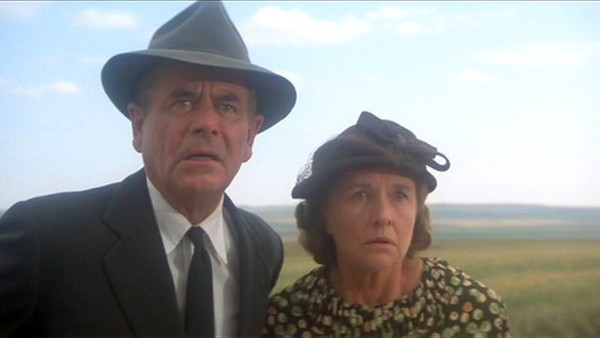
The way Jonathan Kent died in Man of Steel was always a point of contention for fans. He was killed saving a dog from a tornado that Clark could have easily saved him from but Jonathan refused, being more willing to let himself die than allow his son to expose his powers to a community that already somewhat knew about them.
It's silly, it doesn't make sense, but most of all it goes completely overdramatic over an event that is way more impactful when done simply.
Despite spending far less time with Glenn Ford than we do with Kevin Costner, seeing Pa Kent's death in Superman is far more tragic because it's so sudden: he just dies of a heart attack. Sure, a dramatically convenient one since it happens right after giving Clark a speech about using his powers, but it proves you don't need some crazy death to drive home the tragedy.
The effectiveness of this moment is really then solidified by Clark's words at his father's funeral: "All those things I can do. All those powers. And I couldn't even save him." People often criticize Superman for being overpowered. He can shrug off bullets, combat alien invaders and throw entire islands into space... but he can't prevent heart attacks.
In one simple line, Clark Kent's humanity is made clear to us, and the fact that Man of Steel's Clark could have saved his father but chose not to is a real spit in the face of this character-defining moment.
5. The Clark Kent-Lois Lane Relationship
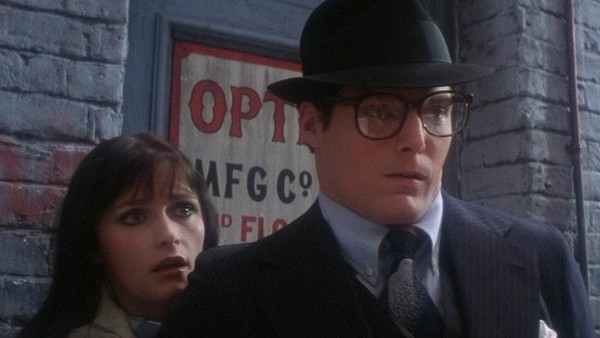
There have been many love interest pairings in superhero movie history, but none of them are as balanced and entertaining as the relationship between Reeve's Clark Kent and Margot Kidder's Lois Lane.
Taking on something of a Cary Grant-Katherine Hepburn vibe, the pair neither instantly fall in love nor play cute with each other. Clark is bumbling and awkward but polite and trying to be helpful, whilst Lois plays nice but ultimately is very dismissive of him; like how she uses him to carry her things or makes fun of his golly-gee chipper attitude.
Most superhero relationships are pretty one-sided even when both parties are interested. It's always about the hero's quest for the girl, and rarely do we see her point-of-view on the matter.
In Superman, Lois actually serves the purpose of being a counterbalance to Clark's personality and values; the streetwise woman schooling the naive country boy on the ways of modern urban life. It's an even-handed dynamic where instead of one character being subservient to the other, they play off each other and ultimately make each other stronger as a result.
The alleyway mugger scene is the perfect summation of their relationship. Clark immediately wants to give in to the crook's demands, but Lois tries to outsmart him instead. Unbeknownst to her, Clark rescues Lois by catching the bullet, but keeps up his ruse by pretending to faint.
We get the best of both worlds by seeing our hero save the day, but without making the female character look totally helpless; a rare feat in even modern comic book movies.
4. Lex Luthor
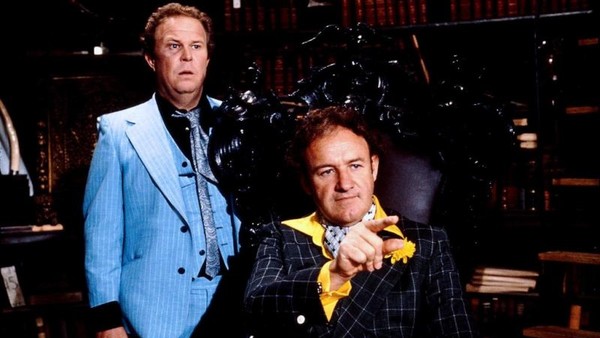
There are superior versions of Luthor in other forms of media, but Gene Hackman's portrayal of Superman's nemesis is not only the best on celluloid but an incredibly entertaining villain in his own right.
Sure, he's the neither the mad scientist of the classic comics nor the scheming businessman he was reinvented as post-Crisis, but Hackman's Luthor is here reimagined as the in-fashion antagonist of the era: a James Bond villain.
Think about it: he's got an eccentric lair refashioned out of an abandoned train station, a bumbling henchman in Otis, a femme fatale with Miss Teschmacher, a visual quirk with his wigs compensating for his baldness, and an over-the-top plan to take over the world through unconventional means. With a few tweaks, Hackman wouldn't look out of place battling Roger Moore instead than The Man of Steel.
But what is Luthor's plan? To trigger the collapse of the San Andreas fault with nuclear missiles, sinking the west coast of California into the sea and making his currently-worthless land on its border prime beachfront property. It's a preposterous plan, but it works because there is a genuine threat to it.
Millions will die if he succeeds, and for good measure he sends another nuke in the opposite direction just to screw with Supes even more. Hackman may be playing the role over-the-top, but it's still an iconic performance that Kevin Spacey would go on to essentially replicate in Superman Returns, whilst Jesse Eisenberg... Let's just not, shall we?
3. Superman And Lois Lane Go Flying

Possibly the most iconic sequence of the movie is Superman taking Lois Lane for a flight over Metropolis, and it's a truly magical series of scenes for a number of reasons. First off, the interview beforehand is adorable and totally redefines the relationship of these characters.
After walking all over Clark, Lois is suddenly smitten by the mere appearance of Superman, with him confidently answers all of her awkward questions with a cheeky knowing smile. Reeve's performance really shines here, as he manages to pull off peeking at Lois' underwear with X-ray vision when she asks him what colour they are without looking like a total creep; "I like pink very much, Lois", indeed.
But once Superman takes Lois' hand and they fly up over the city, no more words need to be spoken. The elation on these actors' faces, combined with Williams' soaring music, instantly enraptures you in the wonder of the moment. The way Superman comforts Lois whilst slowly making her more confident in this precarious situation, eventually holding her weight purely by the tips of his fingers, is pure cinema magic.
Admittedly, the bit where Kidder then reads off the lyrics to 'Can You Read My Mind' like a nervous high schooler at a poetry competition is a bit off, but otherwise the entire relationship between Superman and Lois is solidified here with barely a word being uttered.
2. Reversing Earth's Rotation

Yes, what many consider to be the film's biggest flaw is still a reason why the film is awesome. The climax of the film, in which Superman turns back time by reversing the Earth's rotation so he can save Lois from an avalanche, is utterly preposterous on so many levels.
Not only does every law of physics and time travel get broken in a matter of mere seconds, but it somewhat negates the film's emotional highpoint: Superman cradling the dead Lois in his arms and screaming to the heavens.
But the reason it works is threefold. First off, this film was made in the 70s, and Superman comics of the period were full of ridiculous nonsense like this; compared to the genuine issue where Superman is turned into a lion for some reason, Earth rotation time travel seems pretty tame.
Secondly, by this point in the story the filmmakers have clearly established a certain tone. Donner constantly talked about wanting to give the film verisimilitude; even in the most ridiculous of circumstances, everything was to be treated with utmost respect and realism. After two hours of film featuring planets made of crystal, a flying boy scout in blue tights, and a radioactive rock that can kill aliens being taken at face value, why is time travel such a bizarre contrast in comparison?
But most important is the fact that it is yet another moment where Superman outdoes Man of Steel in regards to theme. Jor-El has told Clark that he is not to use his powers to interfere with human history and, though he tolerates his heroic deeds, breaking the laws of space/time may be a step too far.
But in that moment, Superman chooses to listen to Jonathan Kent's words of wisdom instead: "And one thing I do know, son, and that is you are here for a reason." Instead of Clark seriously consider the notion that letting people die is preferable to outing yourself as an alien, the film nails down Superman's ethos in this simple moment: if he can save someone, he will save someone.
1. Superman Never Punches Anyone

it may sound bizarre, but the best thing about this superhero movie is that the hero never really fights anyone. Yes, he does stop a few criminals, but he does so by simply overpowering them rather than beating them into submission. Otherwise, Superman spends the entire movie doing what Superman should: saving people.
When Superman Returns was released in 2006, everyone complained about how there was a lack of action and that "Superman didn't even punch anyone!" Sure, while Returns was short on thrills, it not being the action spectacle modern audiences wanted it to be showed a respect for the character; misguided respect perhaps, but respect nonetheless.
When Man of Steel came out and compensated with a third act of nothing but Superman punching things, it was a cool spectacle but it felt out of place. They were the actions of a superhero, yes, but befitting of Superman.
Superman isn't supposed to be this unstoppable force who resolves problems by hitting them real hard. He's here to save us from the disasters we can't solve ourselves and, when he can do that without resorting to violence, he will.
Donner clearly understood this about the character and gave us a hero who can save the day without forming a fist. He showed us a Superman who put as much care and thought into saving a cat from a tree as he did to him saving Air Force One, portraying both as equally noble acts.
In today's modern superhero movie landscape, it's refreshing to go back to a time when heroes just saved people instead of bickering and fighting with each other about the moral ethics of doing so.