10 Reasons Why Star Wars: The Last Jedi Is Better Than The Force Awakens
It's not hard to beat a movie that was essentially a remake, anyway.
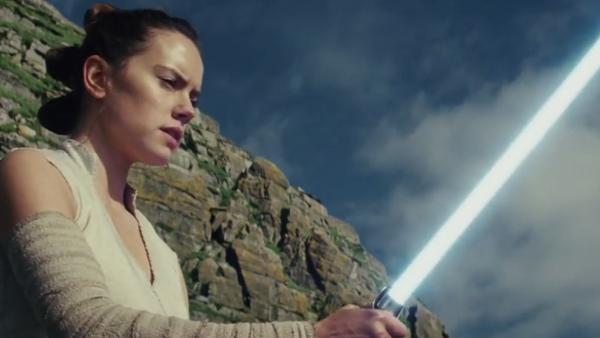
In the same way that Empire Strikes Back took the original trilogy in a completely different direction after picking up from A New Hope, Rian Johnson's The Last Jedi has radically altered the trajectory set by J.J. Abrams' The Force Awakens.
Not only are they vastly different from a narrative standpoint, with the new director having his own say over where to take the wealth of plot threads established in the previous movie, but everything from the tone of the comedy to the look of the lightsabers has been completely shaken up going into the latest sequel.
Fortunately, the shift in direction has resulted in a film far greater than The Force Awakens. While they're both still amazing movies in their own right, the decisions The Last Jedi makes will have far-reaching effects on the entire Star Wars universe to come, and act as a confident step forward for a franchise perceived to have been playing things far too safe under Disney's tutelage.
Of course, there's spoilers galore going forward, so if you don't want the mystery of how Jar Jar returns to destroy the First Order ruined, then check the film out before diving headfirst into the reasons why it's easily the best entry in the new trilogy so far.
10. It Takes Chances With The Lore

The Force Awakens was a dream come true for Star Wars fans, but in the excitement to pick up where the original trilogy left off, gave the impression that not much had changed in the years between sequels. In fact, in a lot of ways characters and stories had regressed; Han was back to being a lovable smuggler, the new hope was once again an orphan from a desert planet and the rebels were still battling against an overwhelming authoritarian force.
The Last Jedi on the other hand doesn't shy away from expanding on the lore, world and characters as opposed to working within the same Star Wars framework. For instance, unlike Han, Luke has shown genuine growth in the years between Return of the Jedi and this, and Johnson casts the character in a darker, more conflicted light than ever before.
It's not that challenging and changing the lore is inherently a positive thing - see the prequels for an example of how it can lead to terrible results - but actually developing this world and these characters in a substantial way is more rewarding from a story standpoint than working within the limitations of a thirty-year-old trilogy and refusing to take any risks.
9. The Jokes Are Actually Funny

Whether it was the trash compactor sequence in A New Hope, Yoda playing tricks on Luke in Empire or the Ewoks in Return, the Star Wars franchise has always been punctuated with a great deal of humour.
While The Force Awakens attempted to capture this same carefree attitude in a more serious story though, it only had a few genuine jokes that landed, usually reserved for Han or a couple great visual gags with Kylo Ren.
The Last Jedi, on the other hand, is genuinely hilarious. From the opening scene with Poe prank calling Hux to Luke guzzling Bo Müvine's green milk, the jokes in the sequel come thick and fast, while never taking away from the serious sequences.
This sudden injection of humour has been contentious, sure, but Johnson ultimately gets away with it because it serves to humanise the characters.
The franchise doesn't need to be a laugh-a-minute comedy, but seeing otherwise one-note baddies like Hux deal with a concept as alien to him as "humour" inherently brings them down to Earth and presents them as relatable human beings.
8. There Are Genuine Stakes

With the exception of Han Solo's pitch-perfect death, there was never a worry that anyone in The Force Awakens was in any genuine danger. The main heroes and villains were far from expendable, but the worst part was that although the entire plot revolved around Starkiller base's planet-destroying super-weapon, the impact of its power was never effectively communicated.
By bringing down the scale of the First Order's threat to focus purely on the characters we see on screen though, The Last Jedi is able to convey a permeating sense that the entire fate of the resistance is to play for.
Unafraid to kill off major characters, the likes of Snoke, Phasma and Luke dying all reinforced the idea that nobody was safe, while the constant loss of rebel fighters like Holdo, Paige and even Ackbar conveyed the First Order's strength.
Consequently the film enjoyed a sense of tension The Force Awakens couldn't come close to capturing, with fans breathing a sigh of relief when their favourite characters made it out an action scene unscathed.
7. Puppetry Takes Precedence Over CGI
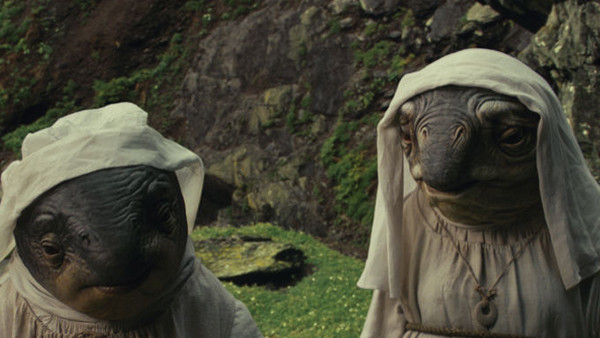
To The Force Awakens' credit, the movie actually did a pretty good job of scaling back the CGI present in the prequels and grounding an aesthetic closer to the original trilogy, but The Last Jedi is so old-school in its filmmaking techniques that it fits in the same world as the older films perfectly.
Likewise, as a result of moving away from CGI creatures in favour of actual puppetry and in-camera animatronics, the world of The Last Jedi feels more tangible than ever. Hell, even when digital effects are used, it's always in a way that mimics the dated, stilted puppetry of the first three movies, with the First Order's AT-AT's stop-motion-esque movement being the biggest example of Johnson's throwback approach.
Plus, how great was it to see the real Yoda again for the first time in years? Puppets might be more limiting than the power of CGI, but when it comes to Star Wars, they'll always reign supreme.
6. Everything Isn't Moving At A Breakneck Speed

One of the biggest complaints about The Force Awakens was that it never took the time to breathe. Moving at a breakneck speed, the sequel constantly jumped between characters and locations, rattling off one plot point after the next.
Not only did it result in iconic characters like Leia being short-changed, but it offered a shallow exploration of the world, never diving too deep into plot points or characters. As a result, and despite being over two-hours long, it was easy to see how fans felt a little let down with being rushed through the franchise's grand return.
While The Force Awakens' approach to pace over plot was summed up by Maz Katana's infamous "a good question for another time" line though, The Last Jedi isn't afraid to slow down, answer questions and put its characters under the microscope.
In a lot of ways, the pacing might even be a little too lax (and the movie is certainly overlong), but it gives viewers the breathing room to truly take in the new world the filmmakers have created.
5. Action Reaches Rogue One Levels Of Intensity

While both The Last Jedi and The Force Awakens' approach to lightsaber fights are equally as captivating, the former's action scenes, especially the team up of Kylo and Rey, are downright incredible. Retaining the intensity of the previous film while improving the overall choreography, Johnson's movie imbues each duel with the same visceral speed and ferocity of the best Samurai movies.
However, it's the other action beats which elevate The Last Jedi above the film that came before it, with the opening set-piece in particular being a genuine spectacle that balances jaw-dropping visuals with heartbreaking character moments. The director doesn't consistently hit the war-torn heights of Rogue One (which has set the bar for action in a SW movie), but he comes awfully close.
The success of each major sequence is of course helped by the fact that these characters could genuinely be in danger, but even on a pure visual level, The Last Jedi effortlessly communicates the raw intensity and the sheer spectacle of fighting back against a military force as powerful as the First Order.
4. It Naturally Balances New Characters With The Old

Not only did The Force Awakens have the gargantuan job of reintroducing beloved characters fans hadn't seen for decades, it also had to establish an entirely new cast which could carry the franchise going forward. While J.J. pulled off this unenviable task as well as he could, trying to balance such an expansive array of characters inevitably resulted in some of them feeling underutilised.
Now that the likes of Finn, Poe and Rey have become fan-favourites though, The Last Jedi can confidently place them at the heart of the Star Wars universe, properly integrating them with the old guard. Where the previous film felt a little disjointed, Johnson's sequel feels whole, with relationships between old and new heroes - like Poe's story with Leia or Rey's with Luke - giving the right amount of time to just about everyone.
Sure, not every character is treated equally - and Captain Phasma in particular is criminally underused - but for the most part every main player gets enough to do in the latest film.
3. Prior Movies Are Referenced To Make A Point

While The Force Awakens was criticised for playing things a little too safe, it took even more flack for pretty much outright ripping off key scenes from A New Hope. Between Han's death directly paralleling Obi Wan's to the climax boiling down to pretty much destroying yet another Death Star, a lot of fans complained that Abrams' films essentially just remade the original Star Wars.
Johnson's sequel isn't free from scenes that riff on familiar scenarios, of course, but the key is that the director only ever recreates prior scenes to make a point. The showdown between Kylo, Rey and Snoke in the throne room, for instance, is ripped straight out of Return of the Jedi, but the familiarity of the situation is all in service of highlighting how both the Jedi and Sith are stuck in a cycle where the past repeats itself.
These scenes pay homage to previous movies not only because it's cool, but because it's thematically important to the story, and fundamentally results in The Last Jedi forging a distinct identity for itself in a way that The Force Awakens never did.
2. The Narrative Does Away With "Mystery Box" Storytelling

J.J. Abrams set up way more plot threads than he was ever going to answer in The Force Awakens. Sticking to his "mystery box" approach to storytelling, where questions are thrown into the mix to get people talking without having a clear answer in mind, the plot of the 2015 film was exciting to ponder, but it resulted in a confusing story that felt neither satisfying nor finished.
The Last Jedi is the complete antithesis to this approach, directly tying up the majority of questions posed in the previous film in a way that subverts the audience's expectations. Snoke's mysterious backstory? It doesn't matter, he's dead. Rey's parents? They're literal nobodies. Luke's reaction to receiving his long-lost saber? He just throws it away.
Unlike Abrams who likes to set things up and let fans debate their meaning for years, Johnson imbues the actual answers themselves with meaning, creating a plot that feels complete, rather than a story which constantly defers resolution.
The juxtaposition between the two styles is admittedly abrasive, and it's easy to see why fans are annoyed at the flippant answers to questions they were heavily invested in, but there's no denying that Johnson's approach makes for a more cohesive and satisfying story in the long run.
1. The Themes Of The Franchise Are Always At The Forefront

Although in many ways The Last Jedi is the least Star Wars-feeling movie in the franchise, it's the first one in years to properly capture the themes that made the series such a phenomenon to start with.
Like Rogue One before it, the idea of hope is central to the sequel, with Finn and Rose's subplot in particular being all about spreading tales of heroism both big and small to inspire the next generation to stand up against the evil around them.
More than that though, the sequel brilliantly plays with the concept of the "chosen one" narrative through Rey's discovery that her parents weren't related to any of the powerful Jedi from throughout the series, but were simply randoms who happily sold her into slavery.
While the twist has been contentious, it's absolutely integral to the message of the movie: it's not only legends like the Skywalkers who can be heroes, but anyone throughout the galaxy willing to stand up to tyranny.