10 Reasons Why The Justice League Cartoon Is Better Than The Film
Wait, you're telling me this Batman DOESN'T use guns? How absurd!

2017 might have heralded the live-action debut of the Justice League, but the group's earlier, more animated appearances are something every fan should cherish.
Released as a part of the DC Animated Universe and as a follow-up to both Batman: The Animated Series and its Superman counterpart, Justice League (later Justice League Unlimited), was the comic book adaptation fans had always wanted. Spearheaded by the likes of Bruce Timm, Dwayne McDuffie and Paul Dini, the show reiterated that mature storytelling - much like BTAS - could be a staple on kid's television. It was smart, dark, entertaining, and provided the defining image of DC's premier team a decade before Ben Affleck and Gal Gadot would take to the screens as Batman and Wonder Woman respectively.
And yet, it's been largely overlooked since.
Cancelled in 2006 and never heard from again, the series has developed a major cult following and one that's managed to mobilise itself within the past week as talk of a potential film reunion has hotted up. Indeed, it's a testament to the series' timelessness that it still endears people today, and while yes, there are plenty of people out there content with the DCEU, it's equally fair to say that Justice League - the 2001 version at least - is a superior product.
Also, Kevin Conroy is a better Batman. Just saying.
10. It's Much More Mature
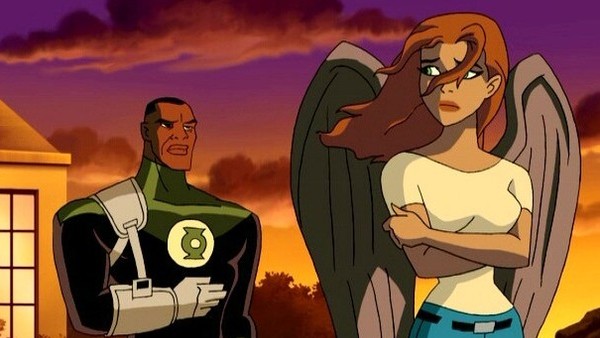
The visual hallmark of the DCAU may have been Bruce Timm's iconic character designs, but there's another thing that brought these shows together: their maturity.
Justice League was no exception to this rule, and while BTAS may be able to boast seminal storylines like Heart of Ice, Feat of Clay and a Bullet for Bullock, Justice League has just as many hits to its name. The team dynamic even allowed the show's producers to push the series in bold new directions, and indeed, in many ways, the show is even smarter for it.
Certainly, Justice League's frank and honest discussions surrounding relationships, trauma and loss deserve to be commended. The series was very adult when it wanted to be (you could probably fill up an article comprised solely of all its innuendos), but it served a purpose in creating a show that catered for all ages.
Another DC series, Young Justice, would later follow in its footsteps, but there's just something uniquely engaging about JL's character-driven ethos. You won't find a series like it.
9. It Gave Us The Perfect Superman
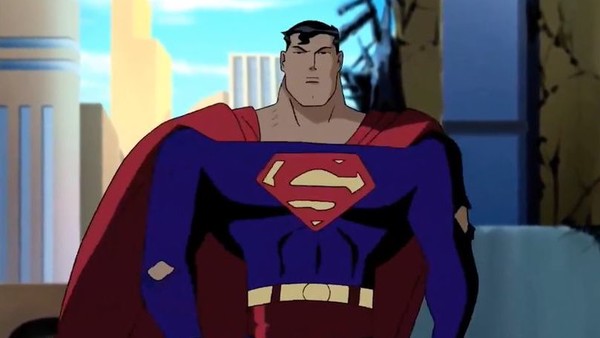
No matter your opinion of the DCEU, it's a sad reality that Henry Cavill simply hasn't been given the chance to be the real Man of Steel. Moments from Justice League offered a glimpse into the Supes we're all after, but any sense of gravity was totally squandered by that stiff-upper-lip, or rather, the CGI'd lack thereof.
With Justice League, the series had a stoic and superb Superman in George Newbern, who took over from Tim Daly shortly before the season premier in 2001. Not only was this Man of Steel strong and commanding, but caring too. He completely embodied the strength and optimism of Christopher Reeve's portrayal and supplemented it with the intensity of the character's post-Crisis roots, conjuring a modern Man of Tomorrow for an equally modern audience.
And this isn't to say that the show didn't push Superman in bold and at times uncomfortable directions - quite the opposite. Rather, the series was at its best when Superman was forced to overcome challenges both physical and intellectual, whether it be the machinations of Amanda Waller's Cadmus program, or the sheer strength of Doomsday or Darkseid (exemplified wonderfully in the following sequence).
Contemplative, commanding and brilliant from top to bottom, Justice League's Man of Tomorrow is still yet to be topped, be it on the big screen, or small.
8. It Had A Message

While Zack Snyder's DCEU may have garnered a reputation for bungling its sub-text, the same can't be said for Justice League, which seemingly shirked all attempts at having a meaningful conversation by dropping a gigantic green screen on its cast.
But, unlike both of those interpretations, McDuffie's Justice League most definitely has something meaningful to say, typified by the series' seminal CADMUS Crisis that bookended Unlimited's first season. Centred around Amanda Waller and her attempts to form a meaningful opposition to the increasing power of the Justice League, the story-arc dealt with the fallout surrounding the League's expansion and how that would impact upon a real world populace.
Waller's attempts to stifle Superman et al. don't emerge come from a place of malice in this sense, but rather from a profound sense of duty for her country. There are rogue elements at play, particularly when she uses Task Force X (everyone's favourite Suicide Squad) to disable the League's orbital headquarters, but - for the most part - you can understand the anxiety.
Said anxiety is best embodied by Jeffrey Combs' Question, the League's crackpot conspiracy buff who - for once in his life - uncovers one worth unraveling. He's the heart and soul of that arc, and the enduring image of the show's wit, warmth and intelligence (and fashion sense, depending on who you ask).
7. It Didn't Rely On The Original Seven

DC have a near endless selection of superheroes to adapt to both the big and small screens, and yet you'd be hard-pressed to find an adaptation that fully tapped their library.
For the Justice League film, it's understandable; it's DC's first attempt at a live action superhero ensemble and, for the most part, the roster is solid (bar the omission of one or two superhero staples). The problem, however, is that it feels as though it's unrealistic to expect Warner Bros. to exploit all of the publisher's apparent potential, certainly not in the way Marvel have done with Iron Man, Guardians of the Galaxy or Ant-Man.
This may stem more-so from DC's wider strategy to place the Trinity (but especially Batman), and the original seven Leaguers (and Batman), in the limelight, but it's also true that the animated series placed no such emphasis on these characters - certainly not to the detriment of the DC Universe's supporting cast, who unashamedly dominated the series' latter seasons.
Part of JLU's magic, in this sense, was that it wasn't afraid of shifting away attention from the League's founding members. Entire episodes were dedicated to Vigilante, Stargirl, Booster Gold, Doctor Fate and even Wildcat, and they were every bit as fun and engaging as those that focused on the original seven.
6. Batman Had A Proper No-Gun Rule
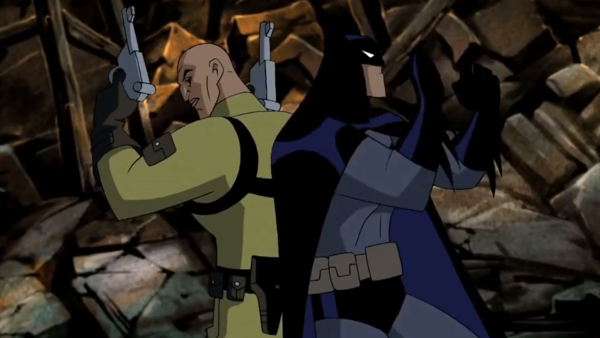
At this point, it would probably be safe to start calling Bat-fleck Gun-fleck, because from BVS all the way through Justice League, it's become increasingly apparent that he's fond of firearms.
And yet, anyone who's ever picked up a Batman comic straight up knows that that isn't what the character's about. He hates the things, and again, that's made plain for all to see in Justice League's closing episodes, where Bats is forced to fend off an alien invasion with nothing but his nous and the scraps lying in his utility belt.
Immediately preceding this is a sequence where the Deadman (Boston Brand), possesses Batman to save a life. Forgoing Bats' no gun and no killing rule, Brand snatches a stray pistol and shoots Devil Ray, forcing him onto an exposed control panel where he's promptly electrocuted and never heard from again.
Batman, incensed by the intervention, reiterates his no-gun policy and proceeds to illustrate its salience when again, he rejects one of Luthor's weapons as Darkseid's Parademons show up. It's a character trait every adaptation, in theory, should be able to follow, and yet the DCEU continues to perplex in how it divests from that premise entirely.
5. It Had The Right Kind Of Scale
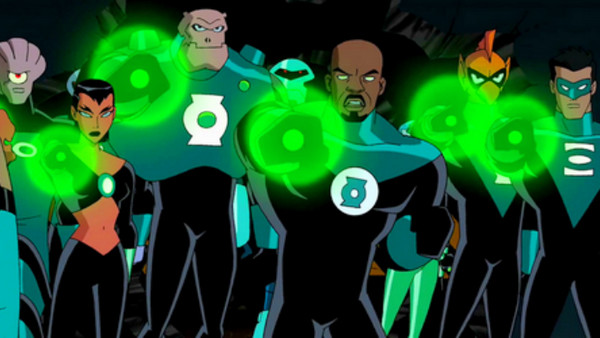
Although Justice League should receive credit for venturing into the world of Jack Kirby's New Gods, what with its allusions to Apokolips, Darkseid and all the rest, it's equally true that it lacked one or two elements to really take it up a notch, one of them being the Green Lantern Corps.
The animated series' Green Lantern was John Stewart, who was played to great effect by Phil LaMarr throughout its run. For those who grew up with that series he's still their GL; Hal Jordan seems bland and totally uninteresting by comparison.
But it wasn't just the Corps that got their nod in Justice League, the New Gods, like Mister Miracle, Big Barda and Orion all featured in some way over the course of the show's five year run, in a period that also saw the series cross cities, galaxies, dimensions and timelines. It was a living love-letter to DC's history, and while there are certainly limits of what can be achieved in a live action arena, there's nothing to stop the DCEU from embracing the mythos with the same gusto Warner Animation did ten years ago.
Oh, and if DC are going to include a Lantern for their JL follow-up, it better be John.
4. You Cared About The Team
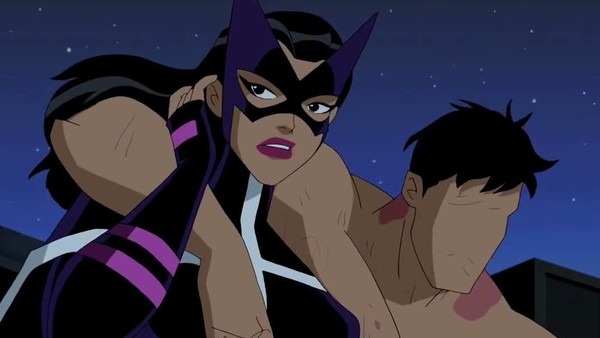
By far the DCEU's biggest problem is that it was simply too eager to get going. Man of Steel might be four years old - and the same timespan existed between the first Iron Man film and Avengers Assemble - but Marvel had a greater output in those years. The Incredible Hulk, Iron Man 2, Thor and Captain America: The First Avenger all released before the Avengers set the world alight in 2012, and they were all invaluable in its success.
People cared about the team because, for the most part, they'd gotten to know them over the course of their own individual features. With Justice League, only Batman, Superman and Wonder Woman had been given even the most basic of exploration in the years before, which made the film's team dynamic feel contrived and indeed, far less organic than its Marvel counterpart.
The Justice League animated series suffered no such issues, largely because it juggled its time (wisely) between each member of its cast. While this may speak more to the limits of the live-action format more than any inherent lack of quality on JL's behalf, it's simply true that the cartoon made fans fall in love with its heroes. The serialised format was instrumental in this success, most definitely. But any show is only as good as its characters, and it's equally true that the characterisation of each and every Leaguer in this series is superior to their respective live action counterparts.
You just care what happens here, whereas the film - on the whole - just feels like a cynical product.
3. There Was Real Pathos
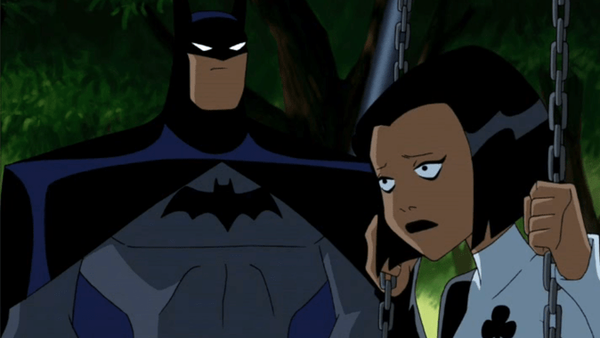
One thing that you'll definitely struggle to find in the DCEU is a genuine sense of pathos. It oozes tragedy, but on a pretty puerile level, typified in full by Affleck and Cavill's 'MARTHA' contest at the end of Batman v Superman.
The cartoon series, on the other hand, had bags of the stuff. Characters died, others mourned, and there were moments of genuine weight. No JL fan could possibly forget Epilogue, the 26th episode of the second season that served as a finale of sorts to Batman Beyond. There, we see Ace - again losing control of her powers - on the cusp of wiping out an entire city. Things don't look good and, without hesitation, Batman volunteers to bring her in.
Except, he knows that this isn't any other arrest. Ace is dying, and could potentially obliterate the city as a direct consequence. Given an experimental weapon by Waller - one that would kill Ace and disrupt any potential psychic backlash - Bats heads into her fortress to end it all for good. What makes the resulting scene so great (and so emotional), isn't that Bats decides to use the device - because he doesn't - but because he went in there with the intent of reassuring Ace in her dying moments.
The image of Bruce emerging from the fortress with Ace is one of, if not the, defining moment of the series. Not only does it embody all that Batman's meant to be, in that it represents the character at his most vulnerable, it proves to everyone that the character can be so much more than he's often held to be.
2. It Wasn't Just There To Sell Toys
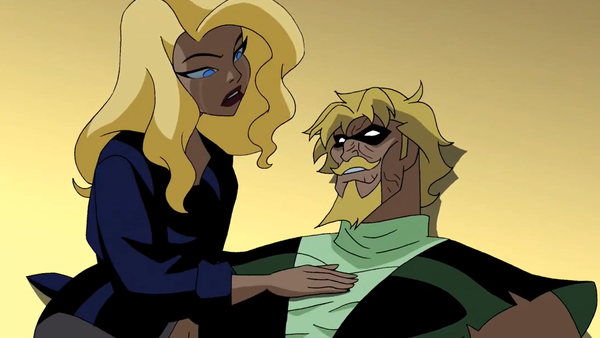
While any cartoon series will have to vindicate its existence with a bevy of merchandise, Justice League wasn't just created to sells toys, and neither were its predecessors. Each and every entry in the DCAU was conceptualised yes, as a means of diversifying DC merchandise, but more-so to take a hold of the medium in a way their competitors simply weren't.
BTAS, STAS, Static Shock and Batman Beyond all embodied that mantra before Justice League came along, but when it did, it served as a true successor to the series that kicked it all off a decade earlier. There isn't a show out there that can easily lay claim to the same plaudits BTAS did when it first aired, but if any were to come close, it would be Justice League. It just carries itself in such a way that, be it in the first season or the last, you feel its salience.
A lot of this stems from the fact it's a character-driven series, and that by default, it succeeds on the strength of its heroes, villains and the supporting cast more generally, but it's important to remember that this was all down to the strength of its writing and the talents of the actors involved. Dwayne McDuffie was phenomenal as the series' main showrunner, and the likes of Susan Eisenberg, Michael Rosenbaum and Maria Canals-Barrera were electric in their respective roles too.
There isn't a wardrobe change, vehicle switch or gimmicky shift to be found. It had the heroes. It had the villains. It was more than enough.
1. It Was Genuinely Enjoyable
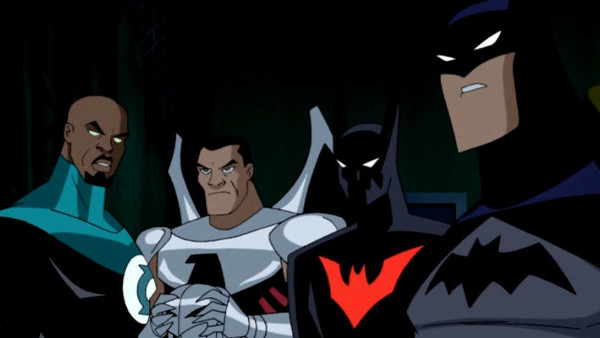
More important than anything else however, is the plain and simple truth that Justice League was fun from top to bottom.
While fans will undoubtedly attest to the Whedon-esque inflections of the Justice League film, and perhaps even deem them to be an enjoyable feature in some respects, there's no denying that it lacks the kind of universal appeal these older shows did.
And that's the point! Justice League was a fantastic show all around and one that entertained as soon as that opening themed started to chime (particularly the electric number from the Unlimited days). It was smart, fun and energetic from start to finish, leaving a lasting impression that the DCEU - in its current state at least - couldn't possibly hope to reach.
It's almost too good, and while the DCEU continues to attract detractors and defenders by the second, there's no denying that its animated counterpart was a much, much better product - Conroy, Hamill and all.
Do you miss Justice League? Be sure to let us know in the comments below!