20 Times Star Trek Movies Went Woke
Batten down the hatches; Star Trek's about to make waves on the big screen.
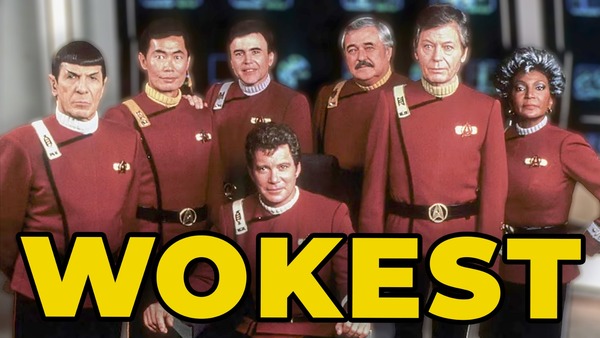
Star Trek gave us hours of wonderfully woke stories, and the movies were no exception.
If anything, the big screen allowed them to go bigger and bolder across decades of films. That's a lot of social commentary to get your teeth into.
Wars ignited and ended, regimes collapsed, communities fought for equality, the internet changed society forever, and humanity had to face the evidence of what they were doing to the planet. And the Star Trek movies weren't going to let a little thing like being set in the future stop them from tackling the issues of the day.
Before we begin, let's remind ourselves once more of what, exactly, the word 'woke' represents according to the Merriam-Webster dictionary:
Aware of and actively attentive to important societal facts and issues (especially issues of racial and social justice)
Don't know about you, but the more we read that, the more it sounds like part of a blurb for Star Trek in general.
So get ready for a journey that begins with an ambitious motion picture, takes us through wrath, avarice, gluttony, sloth, pride and envy, then launches us into the beyond.
(Sorry lust fans, this just isn't that kind of list.)
20. Humans And Machines

Star Trek's very first motion picture had a lot to prove. If the cast and concept were going to survive the leap to the big screen, they needed to show they were serious about sci-fi. And they struck on a theme that only became more relevant as the decades passed.
In 1977, two Voyager probes were sent into the final frontier, each carrying a record filled with images, sounds and music from Earth. NASA likened it to a message in a bottle, and it would certainly be a beautiful way to say hello.
Then, just a couple of years later, Star Trek: The Motion Picture had Admiral Kirk encounter V'Ger, a vast and destructive entity threatening Earth. The true name of the ship at the centre of the mass was Voyager 6, upgraded to learn all it possibly could. And having gathered enough knowledge to become sentient, it was returning home.
For all its intelligence, this new form of life was lost, without meaning or purpose, and even struggled to communicate. V'Ger abducted poor Lieutenant Ilia, creating a liaison in her image before finally merging with both the Ilia clone and Will Decker. And that union is the heart of the story.
The Washington Post reported how NASA scientist and Star Trek adviser Jesco von Puttkamer worked with Roddenberry on the themes for The Motion Picture:
...technology and humans can enjoy a symbiotic relationship -- machines need not overwhelm mankind...
When V'Ger absorbs human experience, emotion and soul alongside all that cold data, it finally evolves into something more. Yes, technology can be intimidating and destructive without boundaries, but when the right balance is struck, we can achieve harmony. And most importantly, technology should enhance the human experience rather than undermine it.
How prophetic that sentiment now seems in the 21st century.
19. Sulu The Family Man

Star Trek: Beyond gave us something that many fans had been waiting decades for. An out-and-out same-sex couple on screen.
For years, people had been asking when Star Trek was going to introduce a gay character. And in a franchise that took such pride in being forward-thinking across other subjects, it didn't seem like too much to ask.
Some fans once thought it would be Star Trek: First Contact that would finally deliver. Before its release, the rumour mill was pretty insistent that the new Lieutenant Hawk was a gay character (and a certain writer can attest to reading such scuttlebutt at the time). But when the film came out, nothing of the sort materialised. The character did join the LGBTQ+ family in novels, but where did this initial rumour about the First Contact movie come from? Who can say.
So while Sulu's reunion with his male partner and daughter in Beyond is short and sweet, it means a huge amount to a whole lot of people. And it's not just seeing the relationship that's important...it's how they did it. Kirk's fond smile shows nothing but acceptance. It's presented without fuss, as if it's just a regular part of life in the future. And using one of the originals avoids a new character being defined solely by their sexuality.
That last point proved contentious, though. George Takei, who originated the part, welcomed gay representation in Star Trek, but objected to it being Sulu, believing it went against Gene Roddenberry's vision for the character.
Meanwhile, writer Simon Pegg explained in a BBC interview why he was so fond of the idea:
...in this universe it felt like a smart way of introducing a character. Introducing an aspect of a character that we just hadn't previously known. It means that you already have an opinion of him before you find out that personal detail. And if that personal detail changes your opinion of him, you have to take a good hard look at yourself.
18. Superior Ability Breeds Superior Ambition
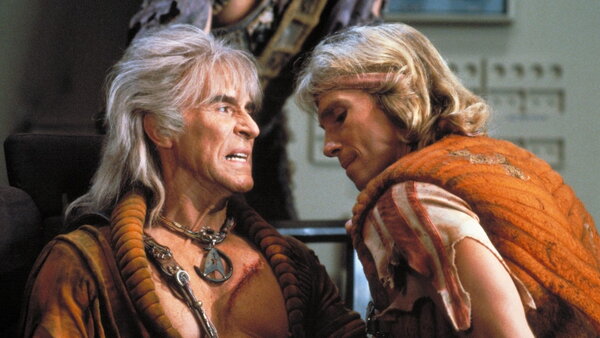
Khan: a name with such weight that Benedict Cumberbatch managed to stretch it into five syllables.
A tyrant from Earth's murky eugenics past, Khan Noonien Singh proved to be an engaging if unnerving villain. Bred and genetically engineered for sheer superiority, he was stronger, smarter, more resilient...and he knew it. But that sense of superiority also made him ambitious, manipulative and ruthless. The dictator thought nothing of subjugating others, sacrificing their freedom for 'order'. His order.
And that has always been the unapologetic message behind the character of Khan. He might be genetically enhanced, but it doesn't make him a better person. Arguably, it's his arrogance that leads to his thirst for domination and vengeance...which becomes his undoing in Star Trek II: The Wrath of Khan.
Of course, Khan's story originates from 1967's Space Seed, an episode aired only 22 years after the end of World War II. The Nazis launched an abhorrent campaign of eugenic atrocities during their reign of terror. We won't go into the details here, and be warned, it's a truly harrowing topic to read about.
With those horrors still within living memory, Space Seed presented Khan, an antagonist with just as many moral flaws as physical attributes.
Bringing him back in the second Star Trek movie was a storytelling decision. Producer and co-writer Harve Bennett could see that Space Seed was begging for a sequel. But when you look at what was happening in the early 1980s, the synchronicity is astonishing.
In 1980, Robert Klark Graham launched a controversial 'Nobel Prize sperm bank', recruiting supposedly brilliant (and white) donors with the express belief that the world needed to actively breed more intelligence to counteract so-called 'inferior' genetics. Sound familiar?
Fast forward to 1982, and a US presidential commission published Splicing Life: A Report on the Social and Ethical Issues of Genetic Engineering with Human Beings, which later featured in a hearing on the subject.
And in the very same year, The Wrath of Khan was showcasing the personification of all those anxieties.
17. Beware False Prophets
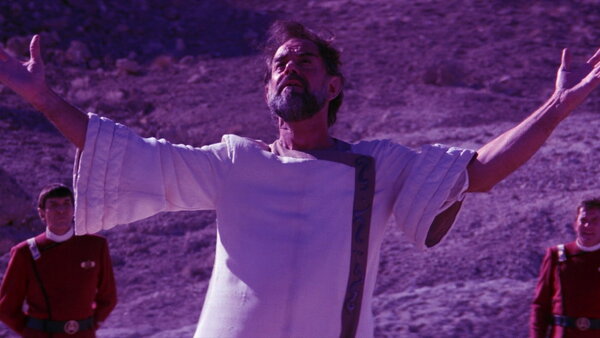
When Spock's half-brother, Sybok, arrives in 1989's Star Trek V: The Final Frontier, he's brimming with charisma. A Vulcan who's abandoned logic, he's gathering an army of followers in his search for the mythical Sha Ka Ree.
It's a bit of a departure from the usual Star Trek movie, but it may well have rung a bell for many viewers in the 1980s, particularly in the US.
While evangelists had been using radio and television to spread their religious messages for decades, 1980 to 1987 is now seen as the 'golden age' of televangelists. Millions of people were watching them across more than 200 religious stations. And what did many televangelists have in common? They were charismatic presenters, claiming to know the will of God while painting vivid visions of heaven.
Director William Shatner was remarkably candid about their influence in his book Star Trek Movie Memories:
...They were repulsive, strangely horrifying, and yet I became absolutely fascinated, [...] Was this the ultimate narcissism? A surefire money-grabbing scheme? Psychosis? I was now officially spellbound.
So when we see the silver-tongued Sybok enticing new followers and leading them in his crusade to find 'god'...it mirrors what Shatner saw happening at the time. With one key difference.
Several scandals rocked the televangelist community in the mid-to-late 80s. Sybok, however, genuinely believes in his mission. But that doesn't mean he's not misguided or foolhardy. He still puts his devotees at risk when he takes them through the Great Barrier. And that 'god' he'd been seeking was just another cosmic cosplayer.
Maybe that makes the message even stronger. Because a person who believes what they preach, even when they're wrong, can be very dangerous indeed.
Faith, hope and scepticism don't have to be at odds with each other; in fact, finding the balance between them can be a healthy way to live. But sometimes, remarkable claims from the most persuasive of people really are worth questioning.
16. Money Talks

When Picard gives Lily Sloane an impromptu tour of the Enterprise in Star Trek: First Contact, he shares some 24th-century wisdom with his 21st-century guest:
The acquisition of wealth is no longer the driving force in our lives. We work to better ourselves and the rest of humanity.
We also hear Deanna Troi deliver a very similar message to Zefram Cochrane about the importance of his work:
It unites humanity in a way that no one ever thought possible when they realise they're not alone in the universe. Poverty, disease, war, they'll all be gone within the next fifty years.
Hold this up next to Cochrane's confession that the Phoenix project is about money for him and it's hard to ignore the statement being made.
Now, this ethos is nothing new for Star Trek. For decades we've heard about a future Earth that's free of money and inequality. It's clear that breaking free of economic shackles was considered an important part of humanity's evolution. But hearing such a pointed comment about it in 1996, in the middle of an action film? Maybe there was something in the water.
In 1995, The Harwood Group produced a fascinating report based on US focus group data, Yearning for Balance: Views of Americans on Consumption, Materialism, and the Environment. It found that people from a variety of backgrounds were concerned that:
...materialism, greed, and selfishness increasingly dominate American life, crowding out a more meaningful set of values centered on family, responsibility, and community.
Meanwhile, in the same year, the Los Angeles Times published an article by Robert B. Reich about corporate profits rising while numerous workers faced stagnant pay or layoffs. Sounds depressingly familiar.
All these years later, with the rich getting richer while too many people struggle to make ends meet...well, that idea of abolishing poverty resonates more strongly than ever.
15. A Woman Of Colour In The Centre Seat
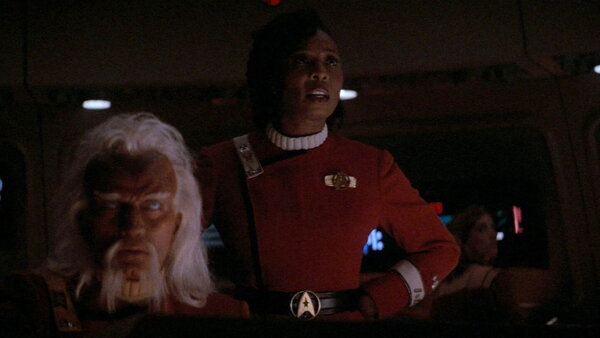
Star Trek IV: The Voyage Home may or may not be making another appearance in this list after making such a splash. But before we meet the charming George and Gracie, there was another wonderful moment.
When a huge probe appears with a mysterious message, it's the USS Saratoga that first makes contact. And the Saratoga just so happens to be commanded by a black woman, played by Madge Sinclair, who would later appear as Captain Silva La Forge.
The screentime of the ship was so brief that we're not even given her name. But the novelisation of the film called her Captain Alexander. And after a little more digging, it would seem that by the time she appears in the novel The Star to Every Wandering, she's married to a fabulous cook...called Cynthia. It gets better and better.
The importance of Captain Alexander can't be overstated. She was the first female starship captain shown in Star Trek. And given the clanger Turnabout Intruder dropped when it suggested that women weren't welcome in the captains' club, her appearance resolved that argument once and for all.
It was also exactly the kind of representation needed in 1986. In the UK, women wouldn't be sent to sea by the Royal Navy until 1990. And women in the US Navy would have to wait until 1994 before being allowed to serve aboard combat vessels. So seeing a woman of colour in command of a ship, going about her business as if it were the most natural thing in the world? Perfection.
14. The Obsession With Eternal Youth
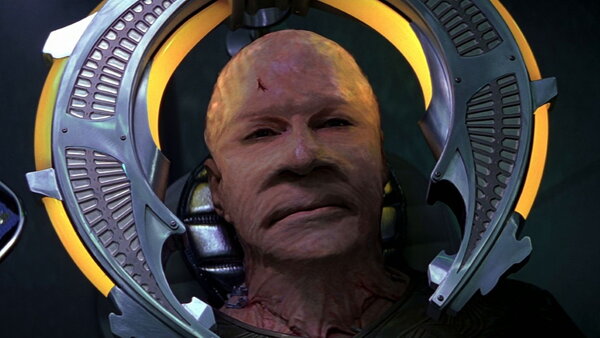
For many people, one of the most memorable parts of Star Trek: Insurrection may be the grotesque facial stretching of the Son'a. No longer kept youthful by the regenerative radiation of Ba'ku, they've resorted to more drastic solutions to nip and tuck their way through a longer life.
Insurrection was released in 1998, during a decade that saw a boom in cosmetic procedures. Prices were going down, the internet was making research and options more widely accessible, and less invasive treatments like collagen fillers were gaining popularity.
An excerpt from Terry J. Erdmann's book The Secrets of Star Trek: Insurrection quotes writer Michael Piller on his inspiration:
I literally got the idea for this film one morning as I was putting on my Rogaine, [...] it becomes easy to understand how those of us 'getting on in years' are doing weird things -- like working out at the gym, having plastic surgery, using Rogaine -- doing everything we can to stay young.
And actor F. Murray Abraham, who played the unforgettable Son'a villain Ru'afo, spoke of a similar motivation for the role in an interview for Star Trek Monthly:
Ru'afo and his race practice vanity to such an extent that they don’t even see their own ugliness. To me, it’s a great parallel to this so-called ‘Beauty Culture’ that we are all apparently fascinated with now, and have been for generations.
To be fair, Insurrection clearly shows the benefits of the radiation too. The Ba'ku live an enlightened, leisurely life with time to soak up every moment. The crew of the Enterprise even start to enjoy a sense of recaptured youth, with Picard indulging in a spot of dancing while Riker and Troi enjoy...well...a bath.
The distinction comes when the pursuit turns to obsession. An obsession that causes harm to both the Son'a and the people around them. We see how their quest for eternal youth has warped them as a people, and the destruction they're willing to cause to get what they want.
Almost thirty years on, in an era where social media and influencers are constantly pushing 'must have' beauty products and regimes, the message still holds value.
13. Our Pain Belongs To Us
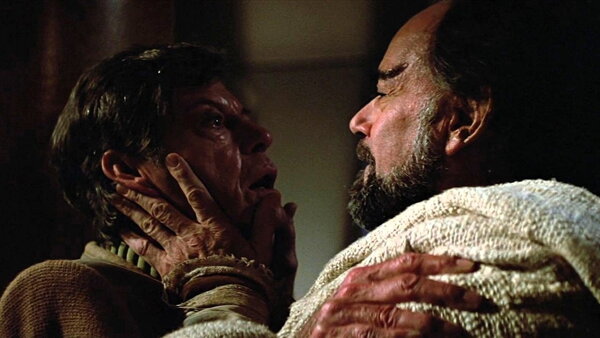
Charisma might play a big part in Sybok's rabble-rousing, but he has something far more powerful up his voluminous sleeve. When he encourages a follower to share their pain, he can relieve their suffering. And he's not wrong when he says it helps free them from fear...but it also leaves them in awe and indebted. Pretty handy when forming a cabal.
We see two very different perspectives of this gift in The Final Frontier. When Sybok urges McCoy to face the ordeal of his father's death, we see how much grief and guilt he's carrying...and how much it means when Sybok eases it. But when he presses Kirk to do the same, the captain refuses, delivering one of his most moving speeches:
Damn it, Bones, you're a doctor. You know that pain and guilt can't be taken away with the wave of a magic wand. They're the things we carry with us, the things that make us who we are. If we lose them, we lose ourselves. I don't want my pain taken away. I need my pain.
Neither man is right or wrong. McCoy needs to ease his pain, Kirk needs to feel his. And we all have the right to heal in our own way, and in our own time.
While the 1980s saw a rise in 'New Age' self-improvement, the idea that there was no quick and easy cure for deep emotional scars was also becoming more widely acknowledged. In 1980, PTSD was formally recognised as a diagnosis in the US, along with the long-lasting symptoms that come with it.
And when dealing with such life-changing pain, Kirk makes an important argument. In the real world, it can't just be waved away. It takes time and work, and often a lot of grief for what was lost. Most importantly, it's a personal journey that we all have to walk for ourselves, with the right people at our side.
12. Found Family
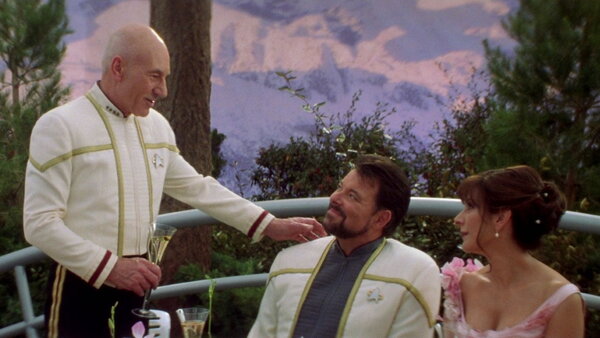
Long before we reach the dramatic reveal of Picard's clone in Star Trek: Nemesis, we're invited to the celebration of Will and Deanna's marriage. And about time too.
It's a gloriously warm and fuzzy snippet in an otherwise dark film. And in Picard's speech, he says something rather lovely:
Will Riker, you have been my trusted right arm for fifteen years. You have kept my course true and steady. Deanna Troi, you've been my guide and my conscience. You have helped me recognise the better parts of myself. You are my family.
Hearing those words from Picard, a man who has put his career ahead of his personal life, is genuinely heartwarming.
Just a few movies earlier in Star Trek: Generations, Picard was grieving the loss of his brother and nephew, along with the realisation that their deaths meant the end of the Picard line. And here, in Nemesis, he's embracing another family. And they were right there with him all along.
For anyone who has ever gone from feeling alone to finding their chosen family, or had the realisation that there can be all sorts of different families, it's a powerful moment.
And in a wonderful real-life parallel, Nemesis saw the return of Wil Wheaton to the fold. In episode 3 of The Center Seat II: 60 Years of Star Trek, he explains:
LeVar asked me if I was coming back for the last movie, and I said oh no, no Rick [Berman] hates me. I'm not, I'm not welcome.
However, he'd soon get a call asking him to return for the wedding scene, and it finally gave him the chance to make up with Berman:
[Rick] said I love you, I'm so sorry, I'm really glad that you're here. I accepted it, and I said thank you. And I had a really good time on the set.
So while Picard was acknowledging his found family on screen, Wil Wheaton was patching things up with his Next Generation family behind the scenes.
11. A Sum Of All The Rage And Hate

Star Trek: First Contact gave us much more understanding of how deeply the Borg wounded Picard. They mutilated his body, robbed him of his individuality and used him as a weapon against his beloved Federation.
The Borg's attack on the Federation in First Contact finally forces him to face those demons. And when they invade his ship, seeking to change Earth's history, he gets the chance to make them pay.
He's not wrong in that famous speech of his. A line does have to be drawn, and the Borg's atrocities stopped. But not at the expense of other people's lives. Not when there's a safer option.
In a 1996 interview with Michael Nazarinia for the Daily Bruin, Patrick Stewart discusses how his experience with Amnesty International allowed him to find the emotional truth in Picard's trauma:
...having first-hand contact with people who have been physically and mentally abused and incarcerated, their freedom and liberty taken away from them. Because of my involvement with Amnesty International, I've talked with people who have been put in a place in which they never thought they'd escape from, which was very similar to what Picard went through...
It takes Lily Sloane, a woman from another time, to call out his need for vengeance, despite Picard's claim that humanity has moved past revenge. He's willing to risk everyone's lives to keep fighting instead of evacuating, until Lily forces him to confront the anger that's driving him.
And finally, the depth of his rage makes him realise that he's at risk of losing himself in the fight against his enemy...just as Captain Ahab did.
At no point do we lose empathy or understanding for all that Picard suffered at the hands of the Borg. But in recognising that he can't allow his own hurt to harm the people around him, Picard starts to regain control over that pain.
And crucially, he never stops fighting the Borg...he just realises it's time to oppose them on his own terms rather than theirs.
10. No Man Is An Island
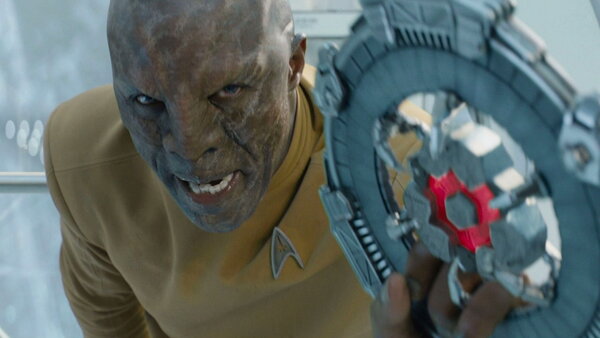
2016's Star Trek: Beyond released into an almighty political storm. And writers Simon Pegg and Doug Jung weren't afraid to face that social shockwave head-on.
The Scottish independence referendum saw Scotland remain in the United Kingdom by a relatively small margin. Eurosceptic feeling was becoming more pronounced throughout Europe. And Trump was on the campaign trail in the US, promising travel restrictions and a wall along the US-Mexico border.
In an interview with GeekTyrant, Pegg was blunt about how isolationism became an important theme of Beyond:
It's taken on more meaning in a way since we started shooting it because it was always about separatism versus collectivism, and that's so prevalent at the moment. We've just voted to leave the EU in the UK, you've got Trump talking about building a wall, these are all things that exist right now for us.
The villain, Krall, taunts Uhura about how the Federation's unity makes them weaker. That it's the struggle of survival that makes you strong. Knowing the writers' intentions suddenly makes those comments feel very pointed.
Krall finds himself unable or unwilling to move past old conflicts and accept alliances. In many ways, Krall's story is the other side of the coin to Kirk's struggles with the Klingons in Star Trek VI: The Undiscovered Country.
When their new ally Jaylah is unsure if she should risk helping Kirk, Scotty sums up the call for unity that was being made in the real world too:
You cannae break a stick in a bundle. You're part of something bigger now, lassie. Right? Dinnae give up on that. 'Cause we'll sure as hell never give up on you. That is what being part of a crew is all about.
9. Hidden Figures
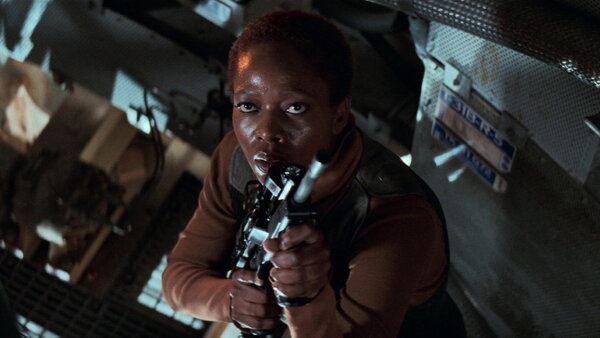
TrekCulture has discussed at length how important Star Trek is for normalising women in STEM. And in Star Trek: First Contact, we're given another stunning example in the form of Lily Sloane. As fierce as she is brilliant, Lily is an integral part of building the Phoenix, humanity's first warp-capable vessel. In fact, when the mighty Zefram Cochrane turns out to be a bit of a hot mess, it makes you wonder if it would have ever got off the ground without her.
Lily is more than 'an assistant' to Cochrane. She's framed as the practical one, helping to bring his ideas and dreams to life. She's even meant to be on that first flight with Cochrane until the Borg put a stop to it.
Nothing shows her dedication more than when the settlement comes under fire. Lily's first priority is to get to the Phoenix...while Cochrane says to hell with it. Lily even defends it against the Enterprise trespassers, alone, with nothing but a rifle and a whole lot of grit.
And yet, while the crew gush over Cochrane's legacy, vision and even his statue...no one seems to recognise Lily. We can't say for certain to what extent Lily is or isn't documented in the Phoenix's story. What we do know is that at no point does Picard (or anyone else) say 'ah, of course, Sloane! Cochrane's right-hand woman!' And in a film that spends a lot of time on the hero worship of Cochrane...it's conspicuous.
But it wouldn't be the first time a woman of colour was overshadowed in history's hindsight. Twenty years after First Contact's release, Margot Lee Shetterly shone a light on the real-life women of colour who played a crucial role in NASA's early space program. Her book, Hidden Figures: The American Dream and the Untold Story of the Black Women Who Helped Win the Space Race was followed by a film adaptation. And finally, Congressional Gold Medals were later awarded in their honour.
It's hard to look at the way Sloane is depicted in First Contact and not think of those NASA hidden figures. While history made the troubled, chaotic Zefram Cochrane into a hero, Sloane doesn't seem to ring any bells. Did...First Contact put a remarkable black woman at the heart of a historic moment, while accidentally reminding us how easily such women can be forgotten?
8. The Needs Of The Few
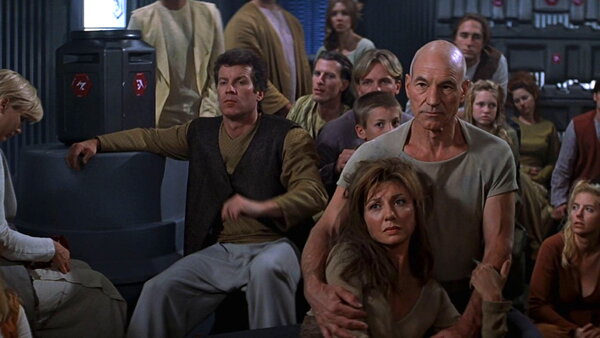
Is the suffering of the minority acceptable if the majority benefit in some way?
When the Federation team up with the Son'a in Star Trek: Insurrection, Picard has a thing or two to say about it. Their plan is to harvest healing metaphasic particles from Ba'ku's rings, but it will leave the planet uninhabitable. Their solution? Move the Ba'ku to another planet without their knowledge or consent. And you can imagine how well that went down with Picard.
Writer Michael Piller had a tricky task on his hands when crafting this dilemma. He needed to create a conspiracy that would deliver on the title's promise, without making the Federation seem like complete brutes. In his unpublished manuscript, Fade In: From Idea to Final Draft, Piller writes about his inspiration:
We started talking about how governments throughout history have turned a blind eye to a distant, unseen people whose needs are not considered as important as those in power... Native Americans, for example, who'd been moved off their ancient lands by the U.S. government to make way for western expansion. Forced relocation became our conspiracy's goal.
So when Picard speaks about those dark moments in history where forced relocation has destroyed cultures, the reference to real life travesties is very deliberate.
Admiral Dougherty maintains that the forced relocation of 600 people is a small price to pay to harvest regenerative radiation that could help billions. Picard is adamant that an act doesn't become right or wrong based on numbers. It's either ethical, or it's not. And it's not just the argument that resonates, it's seeing how far Picard is willing to go to stand up for minority rights.
7. An Eye For An Eye And The World Goes Blind
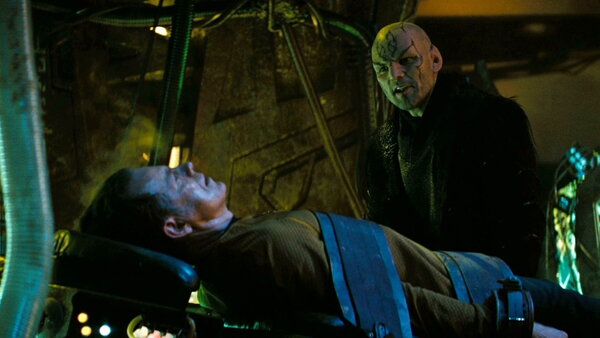
There might be seven years between Star Trek: Nemesis and J.J. Abrams' Star Trek, but the two films share a common theme. Being wronged isn't an excuse to hurt somebody else.
When Romulus is destroyed and Nero loses his wife in Star Trek, his grief and anger are completely understandable. Under any other circumstance, he'd have nothing but our compassion. But then he decides to inflict the same fate on Vulcan. Even more chilling, Nero doesn't just want revenge when he destroys Vulcan...he wants Spock to suffer.
Co-writer Roberto Orci spoke to Gizmodo about the Enterprise crew's choice to end the vicious cycle:
The destruction of Vulcan in Trek lore to us is kind of the equivalent to a September 11th and the Holocaust all rolled into one. How does this crew deal with that? Is it a cynical decision that leads to a war with Romulus? Or is it a singular [problem solving] situation, with the person who really did it?
Shinzon's trauma in Nemesis was much more deliberately inflicted. Originally created as a political weapon, he was later discarded among the oppressed Remans. He leads an uprising to liberate his adopted people, and it's made all too clear what the Remans have endured at the hands of the Romulans. But instead of attending to his people, Shinzon turns his rage on Picard and Earth.
While their harrowing stories differ, both Shinzon and Nero end up locked in the same circle of violence. The terrible things that have happened to them and their people don't justify their retaliatory atrocities.
6. When Science Becomes A Weapon

When Carol and David Marcus worked on the Genesis project, they envisioned a terraforming marvel that could change a barren planet into a life-nurturing paradise. Unfortunately, both Star Trek II: The Wrath of Khan and Star Trek III: The Search for Spock chart the destructive potential and political fallout of such a device.
There's no real suggestion that Carol and David had anything but good intentions, but they do say that's what the road to hell is paved with.
It's when Khan gets his hands on their device and the Klingons become involved that we see the real threat their work poses.
From the Klingon perspective, not only is the Genesis Device a powerful weapon they'd like for themselves, it could also shift the balance of power in the Federation's favour. How very Cold War of them.
It was this idea, the possible weaponisation of a well-intentioned scientific endeavour, that seemed to catch producer Harve Bennett's attention. In the July/August 1982 issue of Cinefantastique, art director Michael Minor spoke about the idea he put forward:
You pick a dead world or an inhospitable gas planet, and you change its genetic matrix or code, thereby speeding up time. This, of course, is also a terrible weapon. Suppose you trained it on a planet filled with people and speeded up its evolution. You could destroy the planet and every lifeform on it. The Federation is involved with playing God, but at the same time, trying to take barren dead planets and convert them into lovely worlds.
Science, technology, research...they all have consequences, even when the goals behind them are noble. And getting so carried away with the advantages that you fail to consider the risks? Well, even unintended irresponsibility can cause an awful lot of damage.
In a way, Star Trek II and III almost play devil's advocate to The Motion Picture's story about our relationship with technology. Perhaps it's a reflection of just how quickly life was changing between the 70s and the 80s.
5. Damsels In Shining Armour
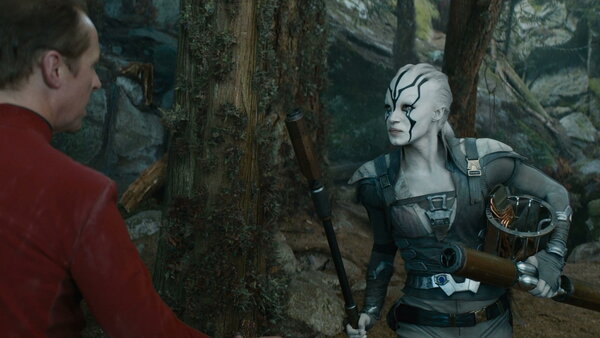
We've had some truly tenacious and inspiring women in Star Trek over the years. But it would be fair to say that they didn't always get the same screen time or agency as their male counterparts.
When co-writing Star Trek Beyond, Simon Pegg (lifelong geek and Star Trek fan) was determined to ensure there was a strong female presence in the movie. And frankly, it was warranted after Into Darkness, which limited Uhura's role and decided that clothes were overrated for Dr. Carol Marcus.
In an interview with Fast Company, Pegg was clear about how important it was for him to put that right in Beyond:
...we felt like we needed to get a greater female influence into our particular story, [...] We wanted to have a very resourceful, smart, female character who had found herself stranded on this planet.
And you see that intention all over Jaylah. She comes to Scotty's aid, plays an integral part in rescuing the crew, hotwires an old starship, and never stops fighting even when the chips are down.
And Uhura is just as active, sacrificing herself to save Kirk when the ship is falling apart, rescuing Spock during her own jailbreak, and standing up to Krall's tirades before working out who he really is.
Yet it never feels too much. They're still allowed to be vulnerable, as are the male crew throughout the story, and they balance warmth with capability.
When Uhura's captured, she still shows grit and resourcefulness. When Kirk goes back to help Jaylah, she defends herself with every ounce of strength she has left. And never are they the damsels in distress. That's Scotty's job.
4. Men Grieve Too
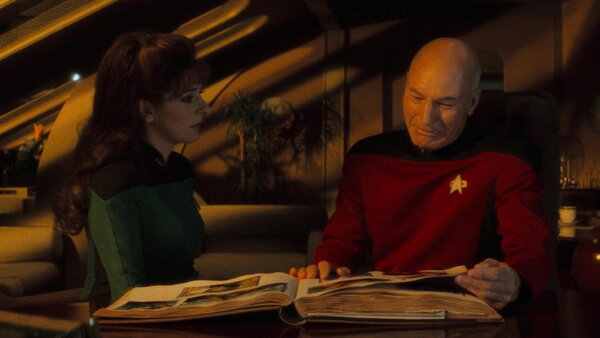
In Star Trek: Generations, Picard receives the devastating news that his brother, Robert, and nephew, René, have been killed in a fire. And when he starts talking about how gentle René was, and all the things he'll never experience, the usually stoic captain begins to cry.
It might not be as unusual to see our male heroes cry on screen these days. In fact, Pike's recent grief over the loss of his would-be-daughter in Strange New Worlds comes to mind. But in the 90s? Not so much.
It was reportedly Patrick Stewart who pushed for a more painful version of the scene. He even requested it be rewritten to include Troi rather than Data, so he could reach the depth of emotion required.
In the Generations DVD commentary, director David Carson recalls that neither he nor Patrick Stewart felt ready to tackle such an intense scene after a full day of shooting. So they delayed it until the next morning to give it the emotional space it deserved. He continues:
...it was very necessary that this was really genuine, and he was free to act it beautifully. [...] I mean, you know, this is the captain of the Enterprise, in tears. Extraordinary situation, really. And you can see that he, he really was crying. You can see those tears there.
Unfortunately, the stigma surrounding men openly showing their emotion and pain is still clinging on today. And that's why a seemingly simple moment like this can be so important.
Captain Jean-Luc Picard is usually the composed, decisive commander with all the answers. So seeing him cry and express grief without losing a modicum of respect from those around him or the audience...it's truly meaningful.
3. Militarising Fear
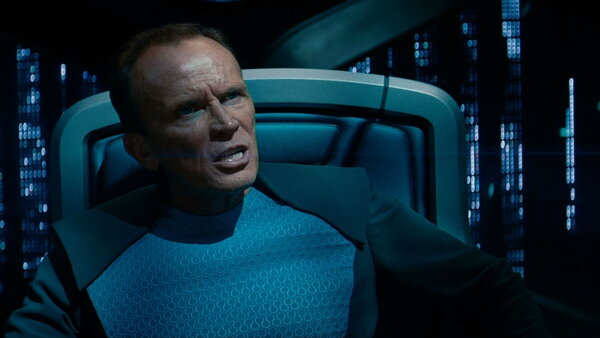
During an interview for StarTrek.com, co-writer Damon Lindelof explained that they wanted to use Star Trek Into Darkness to explore the fallout from the previous film:
After what happened to Vulcan, after Earth gets attacked, would Starfleet say, "well, we dodged that bullet, back to exploration?" Or would they say "we have to prepare ourselves if this ever happens again." What would a more militarized Starfleet look like? Ultimately, the story would be about that, and for the soul of Starfleet.
Cue Badmiral Marcus, ready to do whatever it takes to dictate the terms of the Federation's next conflict.
Marcus uses the defrosted Khan to design a mountain of weaponry, in secret, for a war that hadn't been declared yet. And there's an obvious reason to keep it quiet; he knows full well that Starfleet will be less than thrilled. But even worse, Marcus is willing to use the terrorist attack carried out by Khan to instigate his war.
The plan was to send Kirk to attack Khan on the Klingon homeworld using state-of-the-art long-range torpedoes. Khan would be eliminated (and silenced), and the sabotaged Enterprise left behind for the Klingons to find, igniting a war that Marcus was more than ready for. When the plan falls apart, Marcus channels his inner Thanos and turns up to annihilate both Khan and the Enterprise himself.
It's easy to see elements of modern history threaded throughout Admiral Marcus' decisions. Several people have compared the use of those long-range torpedoes to targeted drone warfare in contemporary conflicts. Post-9/11, the US moved towards a strategy of pre-emptive action, concerned that deterrence alone was no longer enough. And Marcus' actor, Peter Weller, compares his character to General Curtis LeMay, who pushed for military strikes during the Cuban Missile Crisis of 1962.
These comparisons sadly show how long we've been repeating the same hostile escalations. Marcus is a disturbing example of what happens when principles give way to paranoia and militarisation. And worse, how easy it can be to use other people's fear and anger to lead them down a path to war.
2. Eco Warriors Unite
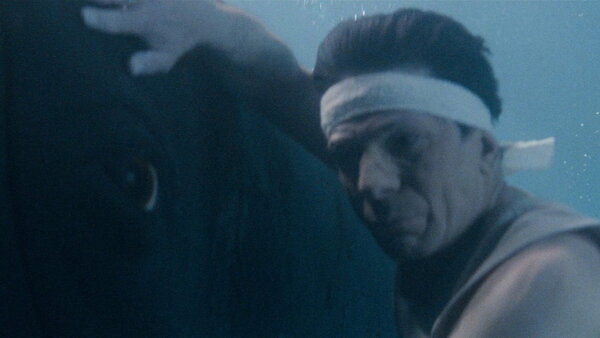
The Voyage Home had another pretty dominant theme going on. Save the whales! Or, as director Leonard Nimoy once corrected an interviewer at Hillsdale College: save the world.
The main thrust of the story may well follow Kirk's mission to travel back in time and bring a pair of extinct whales to 23rd century earth. But Nimoy's vision was much greater.
It's easy to see why he felt the time was right for a story about environmentalism in 1986. The early 80s saw growing awareness of how much harm acid rain was capable of. Deforestation remained high on the list of eco anxieties. And in 1985, scientists discovered the shocking damage being done to the ozone layer.
But it was the disturbing rate of species extinction that Nimoy decided to spotlight. In an interview with American Cinematographer, Nimoy spoke openly about his fear for the planet:
In [Edward O. Wilson's] book Biophilia he tells us that in the 1990s we could be losing as many as 10,000 species off this planet per year. [...] He touches on the concept of a keystone species. [...] a planetary imbalance might be caused by the destruction or loss of just one. Also, I came away with the concern amongst these brilliant people that science is expected to quickly find solutions for the stupidity — or arrogance or lack of conscience or call it what you will — of the rest of society.
And that idea of a keystone species was clearly represented by those gorgeous whales in Nimoy's story.
When that probe arrives in The Voyage Home, unleashing destructive forces on Earth until it gets an answer from a species long since extinct, it's not just a plot device to get our heroes moving. It can easily be seen as a symbol of the unknown consequences that might come from our continued mistreatment of the planet.
1. Making Peace With The Enemy
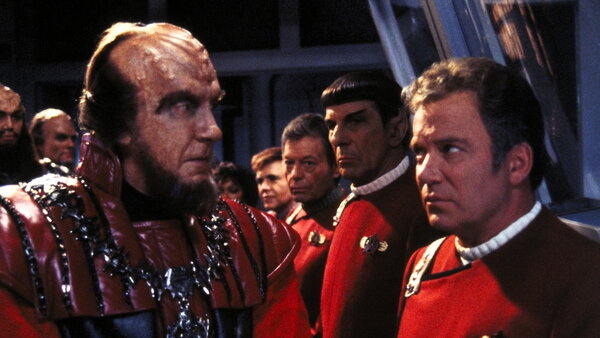
When Star Trek VI: The Undiscovered Country hit screens in 1991, the 'winds of change' were picking up speed. The Soviet Union was faltering, the masses were making themselves heard and a notorious symbol of oppression, the Berlin Wall, had finally fallen. It didn't seem too much to hope that the Cold War would soon be a memory.
And so, the time was right for Star Trek to bring an end to one of its own long-running conflicts. As director Nicholas Meyer explained in an interview for StarTrek.com:
Basically, as [Nimoy] put it, “The wall comes down in outer space.” The wall had just come down in Berlin. As he explained to me, the Klingons had always been Star Trek’s stand-in for the Russians. If there was no more Soviet Empire, as there was no more Klingon Empire, who am I? Who am I if I have no enemy to define me?
The Undiscovered Country opens with a catastrophe that threatens the Klingon homeworld. Chancellor Gorkon reaches out to the Federation in the name of peace. And the Federation sends Kirk and the Enterprise to take his hand.
But years of hostility have left their scars. When they meet with Gorkon's entourage, the crew we've grown to love so much displays some unpalatable prejudice. The dinner party and transporter room scenes are especially uncomfortable to watch. But that's the point.
Gorkon predicts that their generation will have the hardest time living in this brave new world of peace, and he's not wrong. When people have spent so long mistrusting and even hating each other, how do they suddenly forgive and move on? The lines between vigilance, fear, prejudice and racism are all too fine. And who better to drive that message home than Kirk, a man whose son was murdered by Klingons.
When Spock tries to reason with the captain over the Klingons' plight, insisting that they're dying, Kirk snaps, 'let them die'. Hearing those words from a man who's spent a career upholding the Federation's ideals is shocking. And it's meant to be.
It's only later, when he hears those words repeated back to him, that he's forced to confront the venom in them. Hearing his own prejudice echoed by anti-peace conspirators, Kirk finally sees the ugliness and futility of hate and resolves to move beyond it.