10 Recent Horror Movies That Were Sent Out To Die
Even the studios had no faith in this bunch.

Horror advocates have been spoilt for choice over the last few years. With the recent release of The Substance, Smile 2, Terrifier 3, Nosferatu, and a deluge of other gems, it's challenging to catch up with everything.
Despite the fact Alien, Saw, and Predator have been flagging franchises for quite a while, the latest instalments have reignited interest in these brands. And with a legion of chilling sequels, reboots, and new IP on the way, the future of horror couldn't be brighter.
Although many great slashers, creature features, and dystopian thrillers have risen to the top recently, there's been plenty of turkeys too. Though the entries on this list range from indie projects to studio-based blockbusters, they each share one common denominator: they are mindbogglingly terrible.
What's worse is several of these bungled projects were doomed from the start. The producers and advertisers put minimal effort into the marketing, so potential customers didn't know what the films were about or when they were released.
Sometimes, the horrors in question were abruptly dumped onto streaming, even though they've could made a killing in theatres. In situations like this, you have to wonder if the powers-that-be wanted them to fail.
10. Apartment 7A

Okay, nobody was asking for a prequel to Rosemary's Baby. However, there wasn't much interest in an Omen prequel either, and The First Omen was a triumph. Taking that into account, Apartment 7A deserved to be judged on its own merits.
Our story opens with a down-on-her-luck dancer called Terry (Julia Garner) who befriends an elderly couple after moving into an apartment. Terry believes the couple can use their industry connections to help with her career at first, but later realises their true intentions are far more sinister.
Were it not for Julia Garner owning the role, Apartment 7A would be a waste of time. Though it emulates the atmosphere of its predecessor, the film focuses more on tying itself to the original rather than telling its own story. Apartment 7A follows Rosemary's Baby almost beat-for-beat, so it feels like a retread rather than a prequel.
Considering Rosemary's Baby made drastic changes to the novel it's based on, Apartment 7A had the opportunity to tell a story closer to the source material. Instead, it imitates the same themes as before, but with less nuance.
Apartment 7A was released on Paramount+ last year with so little fanfare, there was next-to-no indication it was connected to Rosemary's Baby, not to mention a horror movie.
9. Salem's Lot

Although remakes get a bad wrap, Salem's Lot deserved another shot. The 1979 mini-series was solid, but really shows its age by today's standards.
So, when it was announced The Conjuring director, Gary Dauberman, was helming an adaption, it looked like Stephen King's fangtastic story would be entertaining a new generation.
But the end product was a sorry and toothless affair. One of the biggest problems with the film is how unnecessarily fast-paced it is. The book is engaging despite being a slow-burn, thanks to the well-written characters and consistent sense of danger.
But the 2024 adaptation rushes everything, undermining the tension and preventing the characters from having any emotional depth. The actors try their best, but not enough time is spent with the characters to make them relatable.
Not only did critics and moviegoers find Salem's Lot disappointing, it didn't look like anyone connected to the film had much faith in it. Originally set for release in 2021, Salem's Lot was delayed for three years, incentivising King himself to ask if it would ever see the light of day.
Initially intended for a theatrical release, the project was dumped on Max, since Warner Bros. believed the streaming service was starved for content.
At one point, it was rumoured Salem's Lot would be cancelled and treated as a tax write-off, in the same vein as Batgirl and Coyote vs. Acme. After looking at the finished product, maybe it should've been.
8. Never Let Go
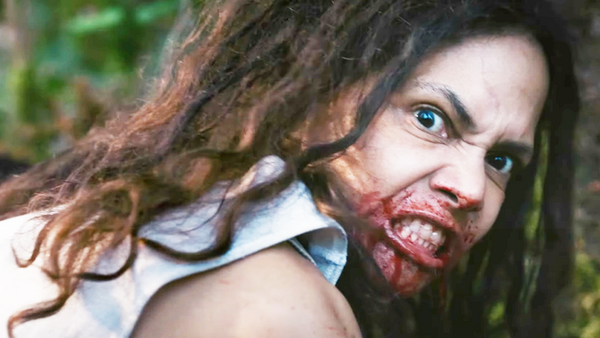
Alexander Aja has proven to be an incredibly diverse horror director over the last 20 years, helming French extremity films, slashers, supernatural thrillers, sci-fi dramas, monster B-movies, and nature horror. What's more remarkable is Aja hasn't had a single misfire.
Until now. Never Let Go is a post-apocalyptic thriller, centring around a mother (Halle Berry) and her children, Samuel and Nolan. The three live in the forest, trying to hide away from a dark force, which has taken control of the world's population. When the boys start doubting the entity's existence, it isn't long before everything goes to hell.
Aja may have a knack for making the most out of a flimsy plot, but this one was definitely a losing battle. Despite the solid direction and Berry's harrowing performance, Never Let Go is let down by its formulaic story, telegraphed scares, and predictable reveals.
Rather than trying to break new ground, Never Let Go relies on every horror trope imaginable. It also seems like the filmmakers didn't know how to end the story, since the climax is stuffed with every twist possible, to the point where they contradict each other.
7. Renfield

Nicolas Cage as Dracula? Who wouldn't want to see that?
A lot of people, apparently. Despite the hype Cage received after being cast as the iconic vampire in Renfield, Chris McKay's horror-comedy bombed spectacularly.
It's a massive shame, since Renfield has a great premise. The story focuses on English lawyer, R.M. Renfield (Nicholas Hoult) abandoning his position as Dracula's servant, hoping to carve his own path in life. However, Renfield finds it difficult to step out of his master's shadow, since he's been locked in a manipulative relationship with Drac for over a century.
Renfield isn't terrible by any stretch of the imagination, but it definitely wasted its potential. Though it highlights the dangers of a codependent relationship effectively, the social commentary could've been explored better (especially if it wasn't overstuffed with brainless action sequences.) Although Cage is terrific as Dracula, he's relegated to a side character.
Of course, the mediocre reviews aren't the only reason Renfield flopped. For some reason, Universal saw no issue with releasing the blood-soaked fantasy a week after The Super Mario Bros. Movie. Even though Renfield wasn't expected to bring in the big bucks, releasing it immediately after a billion-dollar blockbuster guaranteed its failure.
6. Last Voyage of Demeter

Sadly, Renfield isn't the only Dracula adaptation that flopped in 2023. Based on a single chapter of Bram Stoker's classic novel, The Last Voyage of the Demeter follows the doomed crew who battled the Transylvanian count on their schooner.
Though Andre Ovredral's supernatural slasher has plenty of suspense and innovative gore, it doesn't come together due to the slow pacing and the by-the-numbers screenplay.
But since it only cost $45 million, it should've had little trouble making a profit.
However, Demeter failed to earn half its money back due to its laughable marketing. Let's start with the title. "The Last Voyage of the Demeter" doesn't mean anything out of context, so there was little incentive to go see it. (Also, most people don't even know how to pronounce "Demeter".) Some international markets went into damage control mode, slapping Dracula's name on the title, but it was too little too late.
Even though it would've been sensible for the bloodsucking flick to come out around Halloween, it was released while Barbie and Oppenheimer were busy obliterating the competition.
Acknowledging The Last Voyage was a sinking ship, the studio released it digitally less than a month after hitting cinemas.
5. The Front Room
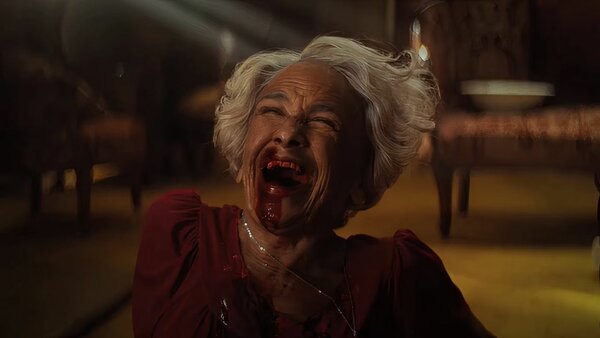
Based on Susan Hill's short story of the same name, The Front Room revolves around a pregnant professor called Belinda (Brandy Norwood), who's forced to take in her husband's estranged mother, Solange (Katheryn Hunter). However, Solange becomes the in-law-from-hell when she moves in, turning Belinda's life upside-down. As Belinda uncovers more about Solange's life, she realises she and her husband are in serious danger.
What makes The Front Room such a disaster is the fact it had serious potential. It deals with many heavy themes, like micro-aggressive racism, religious abuse, family burdens, and miscarriages. Sadly, the way these themes are explored is dull and uninspired.
The story is should have an intense conflict, with Belinda and Solange trying to one up each other through devious mindgames. Instead, many scenes of the pair butting heads involves Solange soiling herself to make Belinda uncomfortable. The scenes are supposed to be disgusting, but they come across as tasteless and offensive.
Although the supernatural elements are initially intriguing, they never amount to anything, which is sure to leave viewers dissatisfied.
Kathryn Hunter chews the scenery every time she's on-screen, but it's not enough to save this insipid film.
4. Subservience

The Terminator was deemed pure science-fiction when it was released, since it seemed implausible for artificial intelligence to turn against humanity. But with AI advancing at an astronomic rate in recent years, that notion doesn't sound too far-fetched.
Which brings us to Subservience. S.K. Dale's second feature takes place in the not too distant future, where society can purchase assistant androids called sims. When Nick's daughter becomes ill, he buys a sim called Alice (Megan Fox) to care for her at home. Alice malfunctions soon after, causing her to grow increasingly jealous of Nick's family.
Megan Fox is great in the role, playing Alice with convincing artificiality, whether she's helping around the table, seducing Nick, or subtly threatening his wife.
Unfortunately, Subservience is let down by is predictability. There's no tension, since it's obvious how everything is going to play out. The talented cast are limited by ChatGPT-sounding dialogue, (which is pretty on-brand). At the end of the day, Subservience doesn't do anything that hasn't already been done countless times.
Anyone intrigued by the premise should watch M3GAN or the underrated series, Humans, instead since they explore the same concept infinitely better.
3. Werewolves
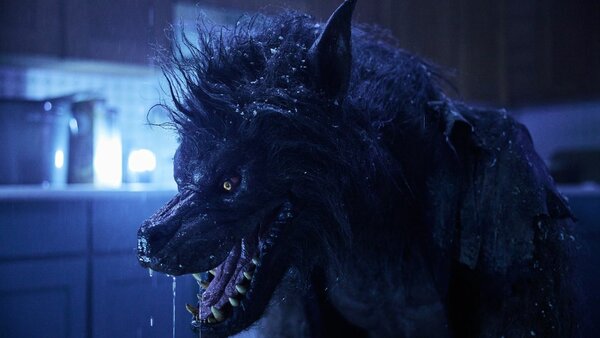
If you thought "Werewolves" was a lazy title, it's more creative than anything else in this movie.
One year ago, a billion people were transformed into werewolves after gazing at a supermoon. Luckily, there's a scientist called Wes who believes he can stop the pandemic by using anti-moon eyedrops. (Just to be clear, this isn't a comedy.) Armed with bear-traps, guns, and razor wire, Wes must fend off an army of lycanthropes while finalising his invention.
Now, there's nothing wrong with a dumb popcorn flick. But the problem with Werewolves is how it plays everything straight (even when there's a wolf man wearing a biker jacket). Also, every joke and one-liner falls flat. As such, the funny parts are cringey and the badass moments are unintentionally hilarious.
Though modern movies are criticised for excessive CGI, that's not the case here. Sadly, the practical effects used for the werewolves is so god-awful, viewers will be wishing that CGI was used more often. What's worse is the camera lingers on these moon-howling fiends for ages, emphasising how cheap these costumes are.
Werewolves also has some amateur flubs, including boom mic shadows, visible strings when characters are flying through the air, and sloppy continuity.
Although Werewolves will leave viewers howling, it'll be from laughter, not terror.
2. Y2K

It's easy to forget Y2K was a serious concern at the turn of the millennium. Many people believed computers would reset on January 1st 2000, which could lead to nuclear meltdowns, planes falling out of the sky, and bank details being erased forever.
As a result, making a tongue-in-cheek horror about Y2K sounds like a neat idea. Unfortunately, Kyle Mooney's directorial debut couldn't have turned out worse. Considering the world-ending computer bug scare was over 20 years ago, you'd think the filmmakers would've devised plenty of inventive scenarios.
And yet, Y2K is painfully derivative. The first-half feels like a Superbad, rip-off with three unpopular teens crashing a party so one of them can hook up with his class crush. The second-half feels like a lamer version of Maximum Overdrive, with every machine and vehicle coming to life to attack humanity.
The dystopian dud ultimately fails as a horror-comedy since it's not frightening or funny. Every scene is so barebones, it feels like the screenwriters made everything up on the spot. And when the ensemble inexplicably team up with Fred Durst, it's baffling to think these creators couldn't come up with anything better.
1. Goldilocks And The Three Bears: Death And Porridge
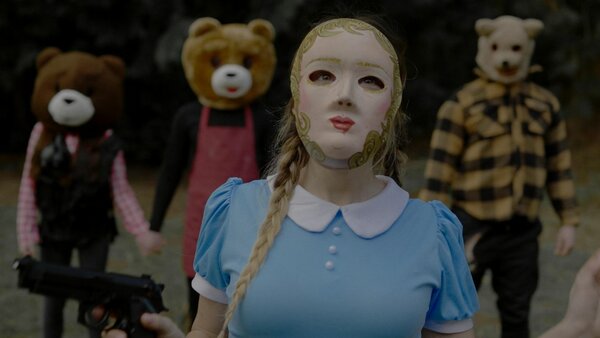
The worst thing about the trashy cinematic universe surrounding Winnie the Pooh: Blood and Honey is that it's now inspiring equally cheap copycats. And the latest children's tale to be tweaked into a brainless horror flick is Goldilocks and The Three Bears: Death and Porridge.
Craig Reese's slasher opens with a group of friends arriving in a vacation home, only to learn they've stumbled into the wrong house. The ensemble are horrified to learn the residents are a group of psychotic killers, dressed as Goldilocks and The Three Bears.
Death and Porridge is under 90 minutes, but feels significantly longer, due to the bereft characterisation and atrocious filmmaking. The lighting, editing, cinematography is so amateur, it seems like nobody involved had worked on a movie before (or held a camera). It's so boring, viewers will be impatiently waiting for the masked maniacs to show up just so something will happen.
Somehow, the film gets worse when Goldilocks and her crew are introduced. Despite Goldilocks best attempts to be menacing, it's almost impossible to understand what she's saying since her mask muffles her dialogue. (This might be a blessing, since she churns out eye-rolling quips like "Who's been sleeping in my bed?" and "This one looks just right.")
Winnie the Pooh: Blood and Honey may be hot garbage, but it's a masterpiece compared to this abominable drivel.