10 Ridiculous Movie Tropes So Common People Think They're Real
Movies are lying to you all the time.
Movie tropes and cliches exist for a reason - they're a simple and efficient way to convey a piece of information to the audience or get characters where they need to go while cutting through the boring complexities of, you know, real life.
And while many outlandish and unrealistic tropes draw easy attention to their own absurdity, often they end up so widespread throughout cinema that general audiences actually believe them to be perfectly reflective of real life.
Though in many instances this pertains to heightened aspects of action cinema that, thankfully, most of us don't encounter in our everyday lives, occasionally these tropes can prove legitimately harmful, by spreading false information or otherwise leaving audiences blind to the helpful truth.
Inspired by a terrific recent Reddit thread on the subject, these movie conventions have lodged themselves so deeply in the audience's collective consciousness over the years that they've basically rewritten reality.
And so, it's time to take a step back and consider just how full of it cinema truly is...
10. Silenced Guns Make Almost No Noise Whatsoever
The Trope
Watch just about any action movie these days where a character attaches a silencer or suppressor to their gun, and the resulting gunshot will sound like nothing more than a gentle whizz.
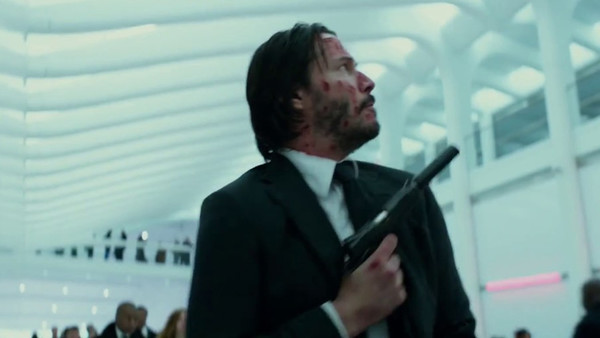
Case in point, John Wick: Chapter 2, when Wick (Keanu Reeves) and Cassian (Common) fire their silenced pistols at one another in a crowded train station while the general public remains blissfully unaware. Granted, it's played for laughs in this scenario, but still totally absurd.
The Reality
In actual fact, silencers are only able to reduce a gunshot's loudness to a fairly limited degree.
Your average gunshot is somewhere in the 140-190 decibel range, and a silencer can reduce it by anywhere from 15-45 decibels, ensuring even a suppressed gunshot should be about as loud as a chainsaw or a thunder clap.
One of the few films to actually get this right is The Bourne Identity, for when Conklin (Chris Cooper) is assassinated with a silenced pistol at the end of the movie, the shots let out a distinctive and appropriately loud "thwack!" sound complete with a resonant echo.
9. Morning Sickness Is The Best Pregnancy Test

The Trope
Any rom-com movie that features the protagonist getting pregnant will almost inevitably feature a scene where said woman suffers a sudden bout of morning sickness, causing her to realise that - surprise! - she's pregnant.
Outside of actual viral thrillers like Contagion, there's basically no other reason you'll see a woman vomit on screen.
It's almost exclusively because she's pregnant, and it'll happen like the day after she's had sex with someone, where she'll initially assume it's a stomach bug.
This is quite blatantly exemplified in Knocked Up, where mere minutes of screen time after Katherine Heigl has sex with Seth Rogen, she's shown violently vomiting...twice, prompting her to take a pregnancy test and confirm the truth.
The Reality
Generally speaking, morning sickness doesn't show up until around 8 weeks after conception has been achieved, and studies suggest that "only" 60-70% of women actually end up vomiting at all during their pregnancy.
Perhaps the only movie in history to do anything interesting with this trope is Fargo, where pregnant cop Marge (Frances McDormand) almost blows chunks while inspecting a gnarly crime scene, only to tell her partner it's just the pregnancy nausea.
8. Enhance!

The Trope
This is a hugely pervasive trope across not only crime movies but also serialised TV, where a character will find a way to "enhance" a blurry image to reveal greater clarity and provide further clues about their investigation, typically revealing a perp's face.
The trope is taken to surely its most absurd zenith in Blade Runner, where Deckard (Harrison Ford) uses state-of-the-art photo-analysis tech to glean laughably implausible details from Zhora's (Joanna Cassidy) picture.
Scott's film arguably just about gets away with it due to its sci-fi setting and the apparent self-awareness with which the prolonged scene conducts itself, but it's absolutely pushing it.
The Reality
Despite everyone having a camera and basic image editing tools in their pocket these days, many people still don't appreciate that an image can't magically reveal detail beyond its native resolution with a few magical clicks.
There are of course tools which can attempt to clean up an image and remove intrusive visual noise within a fairly narrow margin, but there's no world where such tech can reveal a supernatural level of added detail.
Thankfully the trope has been mocked widely enough in pop-culture that its use has declined significantly in recent years, but even so, many still take it for granted that a snapshot, no matter its resolution, is a boundless window into the past.
7. Grenades Cause MASSIVE Explosions

The Trope
Pretty much every action movie in existence is guilty of this: any time someone deploys a garden variety fragmentation grenade, it'll let out a colossal explosion that launches the bad guys 20 feet across the room, destroys entire buildings and basically annihilates anything that gets in its way.
The Reality
Despite what movies and video games might tell you, real life frag grenades are actually far more modestly destructive, as evidenced by the hundreds of "live grenade detonation" videos on YouTube.
Frag 'nades don't let off fireballs nor can they tear a wide radius apart: there's a puff of smoke, a bang and some localised fragmentary damage.
One of the few films to get this even basically correct is war classic The Thin Red Line. When Sgt. Keck (Woody Harrelson) accidentally detonates his own grenade, he isn't instantly blown to shreds but is in fact left entirely in tact as he dies. They did include an explosion, though (tsk).
6. Being Knocked Unconscious Is A Minor Inconvenience

The Trope
Hitting your head so hard you're rendered unconscious is no big deal, right?
That's what the Back to the Future franchise tells us, anyway, with the sheer number of times Marty McFly (Michael J. Fox) is knocked out across the franchise, only to wake up in bed after sleeping it off for a comical amount of time, with no apparent side effects.
But it's a trope pervasive across the action, thriller and horror genres, too: a head injury significant enough to make someone lose consciousness is no more traumatic to the victim than having a power nap.
The Reality
In reality, being knocked out for even just a few minutes can cause potentially life-altering brain damage, and being unconscious for much longer than that severely reduces your chances of ever waking up at all, let alone doing so in a manner where you'll actually know who you are.
Wouldn't it be great to see an action movie where the protagonist spends half the movie at the hospital after getting sparked out? No?
5. Cars Are Extremely Flammable
The Trope
This is a trope that's celebrated by fans of the action genre no matter how silly it can look - that any car or road vehicle is basically a tinderbox on wheels, whereby shooting a single bullet into the gas tank is enough to send it up in flames.
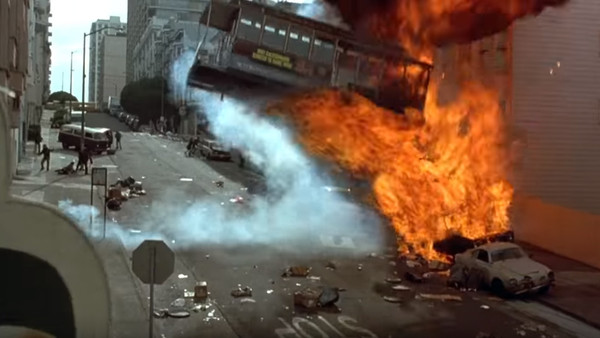
Perhaps the best ever example comes, unsurprisingly, from Michael Bay's The Rock, where a car chase climaxes with a tram car sliding down a hill and smashing into a parked car at relatively slow speed.
Rather than simply send some metal and glass smashing together, the collision triggers a gigantic explosion, catapulting the tram car a good 20-30 feet into the air. Right.
The Reality
While we're all aware of the possibility for cars to end up aflame following an accident, the incidence is decidedly less likely in real life. Thankfully, a few films have subverted this quite hilariously.
In Last Action Hero, when the titular hero Jack Slater (Arnold Schwarzenegger) travels from his movie world to our own reality, he's shocked that firing a few easy bullets into a car doesn't cause it to explode into a fireball.
21 Jump Street also did a terrific job mocking this, with the final car chase constantly teasing cliched explosions that never happen...until a gigantic fireball is finally triggered by...a chicken coop.
4. Defibrillators Will Revive A Flatlining Person

The Trope
When an important character in a movie flatlines, it's incredibly common for another character, be they a medic or otherwise, to use a defibrillator to bring them back to life, shocking their chest in order to "restart" their heart.
There's even an 80s cult thriller, Flatliners, centred around this concept, with a group of medical students literally killing themselves to experience "the other side", only to be brought back to our physical realm with a handy defib.
The Reality
Granted, most of us are fortunate enough to never come in contact with a defibrillator in our daily lives, and so we're free to gleefully accept that this is how the machines work.
In fact, a defib won't actually work on a flatlined heart, at which point a medical professional needs to administer adrenaline and begin CPR procedures to try and get the heart working again.
A defibrillator is instead used for irregular electrical activity in the heart - aka a faulty rhythm - whereby a shock can "reset" the heart to a healthy, normal beat.
The trope is so aggressively commonplace in both movies and TV (especially medical drama shows) that real life really doesn't stand a chance.
3. Poison Can Be Sucked Out Of A Wound
The Trope
If a character gets poisoned, either injected by a malevolent party or simply bitten by a venomous animal, often the advice will be to find a close friend who might be willing to suck the poison/venom out of the offending wound.
The trope has been the ripe source of comedy in countless films, most recently Grimsby, where Nobby (Sacha Baron Cohen) has to suck poison out of his brother Sebastian's (Mark Strong) balls, and the infamous "suck the venom!" scene from 2011's Your Highness.
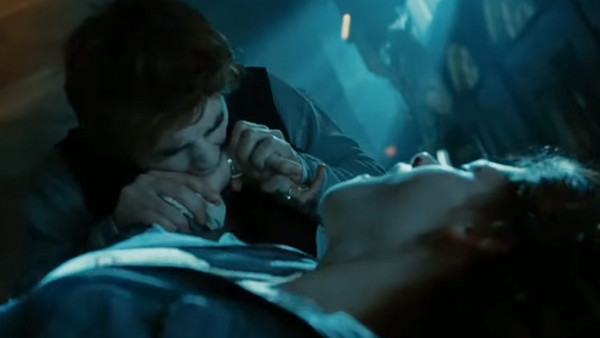
The trope was played bizarrely straight in Twilight, however, when Edward (Robert Pattinson) sucks the venom out of Bella (Kristen Stewart), albeit with a massive dose of unintentional hilarity.
The Reality
But in real life trying to suck poison out of a wound isn't just useless, it can be actively harmful to the sucker themselves.
Where snake venom is concerned, it will disperse into muscle tissues too quickly to be sucked out, and instead immediate medical assistance from a professional equipped with anti-venom must be sought.
Furthermore, depending on the nature of the venom, the sucker may risk damaging their own oral tissue, and if they have any cuts in their mouth, perhaps even spreading it through their own body.
No matter how fond you are of someone, if they've been poisoned, don't start sucking the wound, even in pure desperation.
2. "I Want My Phone Call" (But Only One)
The Trope
The overwhelming majority of crime-centric movies and especially TV shows will feature arrested characters demanding their phone call, the implication being that they're statutorily granted just one phone call to their lawyer or to a family member.
The Reality
Though many U.S. states now do allow prisoners the fair and free use of phones, it's certainly not guaranteed everywhere, and largely at the discretion of police officers who may or may not grant it depending on an inmate's behaviour.
But more to the point, there's no unreasonable limit on the number of calls a prisoner can make, and they're certainly not limited to making just a single call before being thrown in the slammer forever more.
Of course, if the police have good reason to believe you're making calls to conceal evidence or commit a crime, they can revoke your phone privileges, but generally speaking the idea of having just one call is a total myth.
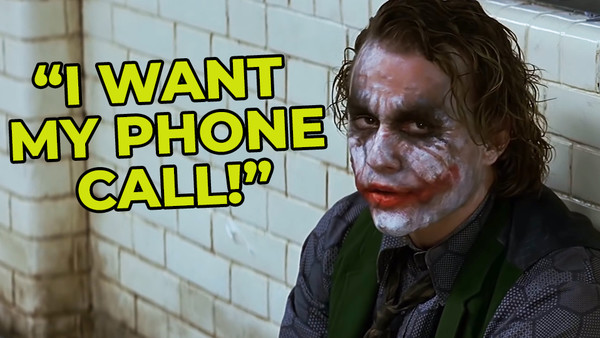
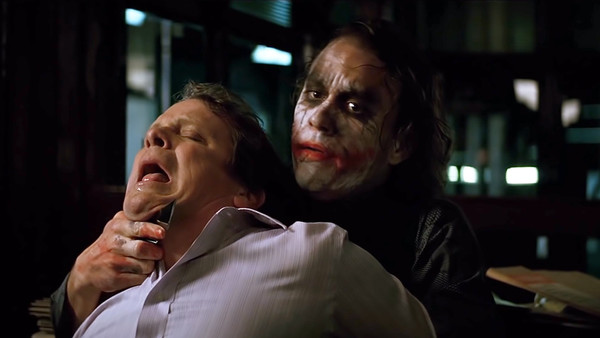
One of the more memorable uses of the trope, The Dark Knight, actually ends up proving just how silly the trope truly is.
The Joker (Heath Ledger) keeps begging for his one phone call, and when they finally grant it to him (after he takes a cop hostage), he uses said call to detonate a bomb which ultimately frees him from prison.
1. Undercover Cops Have To Admit They're Cops If Asked
The Trope
Here's a trope so common in cop shows and movies that your average criminal absolutely believes it's true, that if you're in the presence of an undercover cop and you ask said cop if they are indeed an undercover cop, they're legally obliged to tell the truth in order to avoid entrapment.
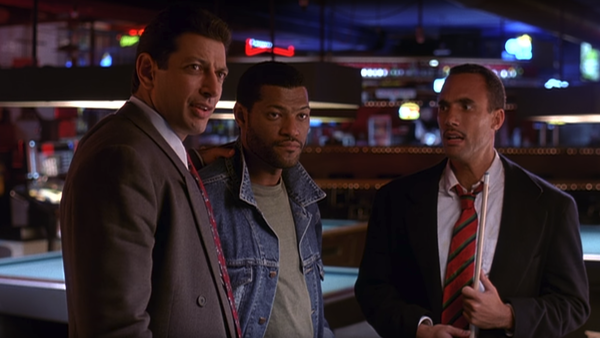
In movies this will often play out with the undercover cop jokingly "confessing" to being a cop in such a jovial manner that the criminals don't actually take their confession seriously - as Laurence Fishburne's undercover cop did in the 1992 cult classic thriller Deep Cover.
The Reality
This is, of course, total nonsense. No police force on the planet would ever make undercover cops come clean if asked, because above all else, there's a good chance they'd be executed or seriously injured on the spot.
More to the point, a cop refusing to disclose they're a cop does not constitute entrapment: entrapment would be a cop inducing a criminal to perform an act they otherwise would not have, rather than simply tricking them into getting caught in an existing criminal enterprise.
This was subverted quite hilariously in Breaking Bad's second season, where gullible drug dealer Badger (Matthew Lee Jones) is told the myth by an undercover cop himself (DJ Qualls), only for the cop to buy drugs from Badger and arrest him immediately afterwards.