10 Rules That Make Every Movie The Same

Loki, Khan and Javier Bardem: all singing from the same hymn sheet.

Going to the cinema these days can inspire a special sort of deja vu. We're not talking about the constant churn of sequels or remakes, or attending a special screening of either Groundhog Day or that one scene of the cat from The Matrix (we're not sure why any cinema would partake in the latter), by the way; we're talking about the fact that every film seems to be exactly the same. You can take films as diverse as, say, Guardians Of The Galaxy, The Great Gatsby and Gravity, and still come away feeling like that was something familiar about each of them. They had something in common, besides taking place in space. Unless you're a screenwriting geek, then you probably haven't been able to put your finger on what exactly those similarities are. What exactly do adventures of Peter Quill, Nick Carraway and Dr Ryan have in common? Well, they are all slavishly devoted to a set of cast iron rules that every screenplay follows. You know how people complain about big budget Hollywood films being formulaic? That's because they have a literal formula they follow in order to write a successful movie. You can see why they do it €“ those big budgets are huge investments, and huge gambles. You want a return on that investment. Why wouldn't you stick to a tried-and-tested method to make all your films by? The screenwriting seminar industry has dominated Hollywood for decades, playing on the anxieties of executives, directors and writers alike. Movie veteran John Howard Lawson wrote tons of books on the subject (before he got blacklisted), Robert McKee picked the ball up with his Story: Substance, Structure, Style and the Principles of Screenwriting lectures, and recently tinsel town has fallen under the thrall of a book called Save The Cat! In those lectures, book and self-help guides, you can find the ten rules that make every movie exactly the same.

10. Three-Act Structure

Okay, so maybe this one isn't totally the fault of Hollywood. The three-act structure has been around for a long, long time. It originates in theatre, which is why it has €œact€ in the name €“ you never saw act breaks in a Hollywood movie, did you? €“ but it's in cinema that it found its real home. The three-act structure is the most basic framework on which to base a screenplay, the litmus test which ensures your story will be up to the usual standards of a blockbuster. We aren't kidding when we say it's incredibly basic: the three acts in question are the €œSet Up€ (that's the first third of the film; everyone gets introduced, as does the central conflict that drives the plot), then Confrontation (the conflict comes to a head; bad guys and good guys both fight to get the upper hand), followed by Resolution (the climactic scene of the conflict, followed by a satisfying ending). Once you know the three-act structure, you can apply it to any story you're told, whether it's in a movie, video game, book, or your mate down the pub on a Friday night. It also means that, since everything and everyone uses that structure, stories get incredibly predictable. Anyone who's seen a handful of films knows roughly when the €œSet Up€ is over, realises that when it seems like the villain has the upper hand halfway through it won't last, and can judge how long there is left of a film once the climax has clearly been reached. Thanks a lot, the theatre.

9. We're Not So Different, You And I

A perennial piece of advice when it comes to writing a good bad guys is to make them believable. Don't just produce another of your common-or-garden villain who wants to take over the world, or kill a bunch of people, or destroy your hero for no real reason. That's boring. That's been played out. You want to give your antagonist some sort of motivation, in the same way that (hopefully) a protagonist will have some motivation to go after them. A good €œbad guy€ is a character who, from their own perspective, isn't a bad guy. Because if they would, they stop, like in that one Mitchell and Webb sketch about the Nazis noticing the skulls on their hats. Even better when producing a compelling villain is to give them some connection to their heroic foil. That's the lesson Robert McKee puts forward in his Story seminars (and its ensuing book of the same name), but we're not sure Hollywood took it quite the right way. A connection can mean any number of things €“ Batman going after The Joker because he killed his parents in the Burton films, on one end; a cop going after a criminal, because it's his job, on the other €“ but, for the most part, movies have gone for one trite relationship. So trite, there's a supercut about it. https://www.youtube.com/watch?v=GH0YPXb49q0 €œWe're not so different, you and I€, the villain will state in the soliloquy which will probably seal their fate, rather than departing and getting off scott-free. It's supposed to taunt our hero, whilst also nudging the audience and saying €œEh? Eh? See the connection between the bad guy and the hero? Two sides of the same coin!€ It'd be more interesting if we hadn't seen it in everything from Heat to Austin Powers...

8. Comic Relief

This one's all the fault of Shakespeare, too. Stupid bard. You imbued our nineties teen movies with a sense of literary importance and weight, but you were also indirectly responsible for Jar-Jar Binks. If he'd just kept to the rules of the Greek tragedy we'd've never had to suffer wisecracking sidekicks or bumbling fools literally stumbling into dramatic films and mucking things up with some poorly-timed and just plain unfunny jokes. It's a concept he introduced to lighten the mood a little in Hamlet, Macbeth, and Romeo and Juliet €“ and, hey, if it's good enough for Bill, it's good enough for Hollywood! Both McKee and John Howard Lawson were evangelical about going back to the classics when wanting to understand story structure, and the most successful way to pen a script (Lawson even got his start in the theatre), referencing the likes of Aristotle alongside Shakespeare. It was the latter that inspired the need for comedic characters in even the most po-faced Hollywood productions, however, because what could be a safer bet than a form of writing that was funded and patronised by the English monarchy back in the day? Thanks to this trope we got Jar-Jar, but we also got the double act of C-3PO and R2-D2 in the original Star Wars trilogy; Alan Cumming's dorky hacker Boris in Goldeneye; Chekhov's comedy accent in the Stark Trek movies; oh, and pretty much every pairing in a Disney film, from Timon and Pumba to Olaf and Sven. This one's so formulaic that it almost always uses a twosome as the comic relief, something shown to work from Rosencrantz and Guildenstern to Laurel and Hardy.

7. False Victories

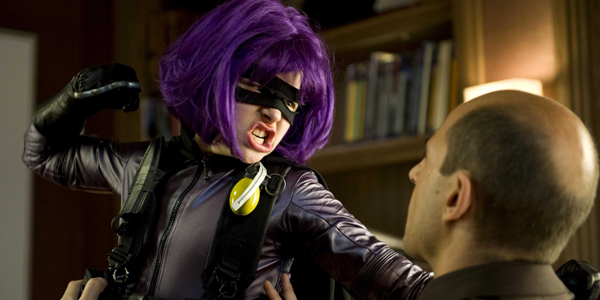
Now we're getting into the nitty-gritty of why every modern Hollywood blockbuster seems exactly the same. There are tropes and basic structures that have been used by screenwriters in perpetuity; then there's Save The Cat!, a book by veteran movie scribe Blake Snyder, which goes a little further than that. Save The Cat! literally gives the formula for a successful screenplay, breaking it down to the point that the book will tell you exactly on what page certain things need to happen in order for a story to work. These "beats" are used so widely, that they can be applied to basically any film produced in the last ten years (and possibly before). One of the big beats in the Save The Cat! structure is the "false victory". If we're hearkening back to the three-act structure, this would happen in the second part €“ the one that's meant to trick you into thinking it's all over but, because you're a savvy cinema-goer, you know that it isn't really. There's still a good twenty minutes to go. It's when they think they've won the final Scare Games challenge in Monsters University, when capturing The Joker feels like the end of The Dark Knight, when Kick-Ass and Hit-Girl take down that room full of criminals. The idea of a false peak was around way before Blake Snyder (who, by the way, only had two original screenplays produced: Blank Check and the universally-reviled Stop! Or My Mom Will Shoot) gave it a name, but since it got quantified like that? You'll find it everywhere. In Gravity, there's the bit where she imagines George Clooney saving her. In Guardians Of The Galaxy, you assume crashing Ronan's ship killed him. In The Great Gatsby...erm...

6. All Is Lost

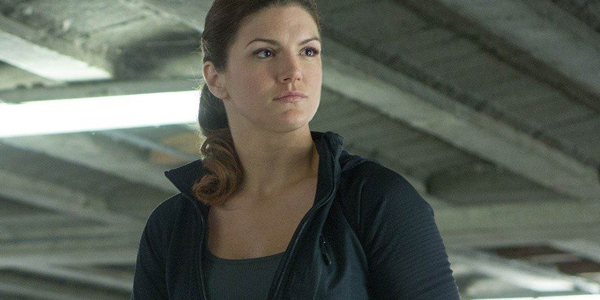
For both Snyder and McKee, this is one of the most important parts of a movie. It usually follows right after the false victory, around the time that the hero realises they haven't totally prevailed against whatever bad guy or evil force they're up against. Having got cocky, they get a thorough dressing/beat down from said antagonist, or else suffer some emotional trauma from which they're going to have to work to return from, during which time they will examine their character and (hopefully) go through some hard-earned development. It's through these moments of adversity, these "dark nights of the soul" as Snyder names them, that the true personality of these fictional characters are revealed. In Guardians Of The Galaxy, it's when the team gets done in by Ronan and co, and Peter Quill realises he probably should actually act heroically instead of flying around making jizz jokes. In Fast & Furious 6, it's when Gina Carano's DSS agent Riley Hicks betrays the crew, and it turns out she's been working with the villains all along, leaving The Rock and co in shambles. It's another piece of a successful formula. It not only means the film can shoehorn in some quiet reflection on the motivation of their characters (which is usually them figuring out said motivation for themselves), and create the sense that maybe the good guys could actually lose? Obviously they won't in the end, but hey, they failed at least once before, see? Anything can happen! So long as €œanything€ is part of a codified and well-known list of rules for screenwriting.

5. Villains Captured On Purpose

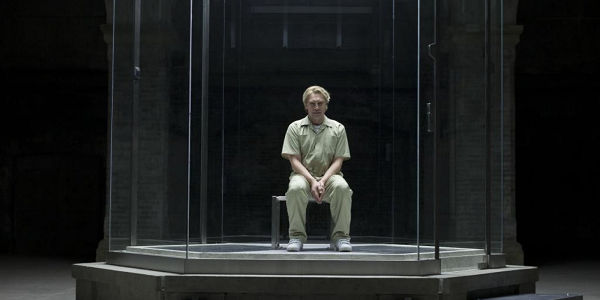
We've started to notice a weird trend in our movie antagonists. They keep getting caught, around halfway through the film, but the protagonists. That's another one of those false peaks, but it comes pretty early on, and then it turns out that the bad guy actually wanted to get caught all along - it was part of the plan! Khan did it in Star Trek Into Darkness. Loki did it in Avengers. Javier Bardem's Raoul Silva did it in Skyfall. As we've said in the past, though the plans were enormously entertaining to watch, it€™s a ploy that€™s not only becomes tiresome in its contrivance, but also woefully predictable. It's something that's actually been around a little longer than the recent examples - bad guys, imprisoned but still screwing with the good guys, dates back to the likes of Hannibal Lecter - but the modern trend is probably rooted in The Dark Knight, where one of The Joker's thousands of possible plans apparently involves getting arrested by the Gotham Police, interrogated by Batman, then break out by using a cell phone bomb sewn into some poor unfortunate's big belly. Oh, and it gets mentioned in Save The Cat! too, of course. Like the false victory, it's supposed to suggest that our heroes are more fallible than they actually are. Every film follows the most basic framework which, inevitably, leads to good triumphing over evil. When you watch a film, you know there's no way the protagonist isn't going to prevail. There will always be a happy ending. Having the villain best the goodies early on, however, introduces some level of doubt and threat - especially when it involves a plan that involves outsmarting and manipulating our heroes. Which might also make them seem totally incompetent, but oh well.

4. The Romantic Subplot

The majority of these rules which make every movie the same come from actual guides on screenwriting, the oft-invoked stone tablets brought down from the mountain by Lawson, McKee and Snyder. Those are the tried-and-tested formulas that mostly every Hollywood films is based off of, but cinema's been around a lot longer than any of those guys and their textbooks. There are just as many unwritten rules about things that every film absolutely every film must include in order it be a success, rules that have seeped into the popular consciousness so much we even apply them to our everyday life. We guarantee there isn't a single film you watched at the multiplex this cinema that didn't involve at least the hints of a romantic subplot. Oh no, aliens are going to destroy the Earth and Tom Cruise is the only one who can save us, by dying and coming back to life repeatedly until he knows their weakness! Oh, also, he fancies Emily Blunt. Oh no, Ronan The Accuser is going to get enough power to destroy an entire planet and then possibly conquer the universe! Oh, and Chris Pratt fancies Zoe Saldana. Romantic subplots get shoehorned into every. Single. Movie. Regardless of how appropriate it is, or whether it'll totally derail the plot by having to take time for canoodling. As Roger Ebert put it, Pearl Harbour is about how, on December 7, 1941, the Japanese staged a surprise attack on an American love triangle. The Harry Potter films pushed the romance to the forefront, even when loads of people were getting murdered by evil wizards. Annie Hall even started as a murder-mystery with the romance in the background, only for the plot to get totally excised in favour of the love story, effectively creating the modern rom-com. Why, why, why? Because Hollywood says so, that's why, and it's never going to change.

3. Twist Endings

The ending is the most important part of any film. If Robert McKee wants you to take one thing away from his Story method of screenwriting, that's the one. You can have an otherwise perfect film which doesn't stick the landing, and people will go away feeling disappointed. We humans are blessed/cursed with a short term memory; our lasting impression of a movie will be the ending, and if it sucks, our perceptions will change to think the whole thing sucked. On the other side of the coin, a brilliant ending can elevate which was otherwise a bit of a dud. Just look at The Mist! Or, wait, don't, we don't want to be responsible for doing that to you. Thing is, once again, Hollywood have totally bungled that rule. Instead of taking on board the rest of McKee's advice - which, for the most part, is rooted in the sort of classical structures that have been used in drama for time immemorial - they saw the words "strong ending", then looked at their shelves full of M Night Shyamalan films, and thought "oh, so every film's gotta end with a twist! Then people will really like it and talk about it and the film will be really popular! It doesn't even have to make sense!" We've talked about how the ending of the Sixth Sense doesn't actually make sense, right? Okay, so here's the deal: Bruce Willis is a ghost, right? Woah, didn't see that coming! Except when you go back and watch the film, it makes no sense. He just never wondered why nobody ever talked to him? How did he get assigned to be Haley Joel Osment's therapist if nobody can see him? So many plot holes. But it doesn't matter, cos the twist ending made that movie's millions. That's why, ever since, you get countless twist endings that make zero sense; not just in Shyamalan's films, but also the remake of Planet Of The Apes, Inception, every Saw movie, Batman Begins, Fight Club, Mission: Impossible, the friggin' Wizard Of Oz...

2. Save The Cat

So why exactly is Blake Snyder's book called Save The Cat!, anyway? Guy never wrote any films about cats, so far as we know. We can't even think of that many films about cats, besides That Darn Cat, The Cat From Outer Space, or Catwoman. And we hope to glob that the current crop of Hollywood blockbusters doesn't take any sort of inspiration from that last one (we would, however, welcome a gritty reboot of the second option, perhaps with Christopher Nolan directing). Save The Cat! is actually another of Snyder's vital "story beats", and it doesn't necessarily have to involve a feline. Hollywood loves a good hero, but you know what they love even more? An anti-hero. A guy or girl who's kinda flawed, who has to convince you that, deep down, they're a good person. The obsession with anti-heroes comes from another misreading of most screenplay textbooks (that you should make your character rich and interesting, which usually translates as "he's a bit of a douche" or just "y'know, Han Solo"), but the way you make those anti-heroes likeable? Pure Snyder, baby. And you see it in every single movie going. It's a single scene which exemplifies the protagonist's virtuous soul, despite all evidence to the contrary. It's Aladdin sharing some of his stolen bread with orphans, it's young Peter Quill defending a frog from some kids who wanted to squish it, it's James Franco being the only scientist who's nice to the monkeys in Rise Of The Planet Of The Apes. It almost always comes in the opening scene, to ensure a proper set up for our protagonist. Like the rest of the Save The Cat! beats the particular timing and delivery has become so routine that you can practically set your watch to it by watching any big budget movie. And routines start to get a little boring after a while, don't they?

1. The Hero's Journey

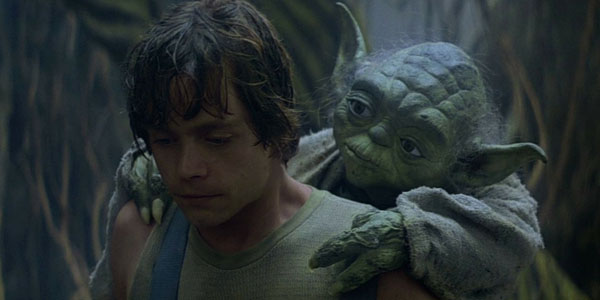
When you boil it down to its component parts, every single film follows the same plot. Not just the Snyder story beats, the McKee essential elements, or the basic three-act structure. Nope, absolutely every Hollywood movie you watch will follow a story that's existed since the dawn of time: the monomyth or, for the less Joycean in the audience, the Hero's Journey. Described best by Joseph Campbell in The Hero With A Thousand Faces, which compared the way stories have been told in mythology and folk tales throughout history, all over the world. It's a "journey" which appears in every single story ever told, from The Bible to Noah (the film with Russell Crowe in, remember that?). Campbell gives the basic set up as "A hero ventures forth from the world of common day into a region of supernatural wonder: fabulous forces are there encountered and a decisive victory is won: the hero comes back from this mysterious adventure with the power to bestow boons on his fellow man." That might seem a little different from what happened in Gravity, but the basic bits are all there: everything's normal at the start, they want something, they go after it, they face conflict, they return to the starting point, having changed. The narratives of Gautama Buddha, Moses, and Christ all follow that structure; so do most of the Greek myths; so does Star Wars (Lucas is an avowed Campbell fan). The plot points have even been adapted for screenwriters particularly, in Christopher Vogler's The Writer's Journey: Mythic Structure for Writers. Campbell argues that this structure is inherent in humanity's brains from birth, that we're hard-wired to tell stories that way, so we guess it's natural that all these things would appear in movies. It's what we've been doing for millennia so why stop now? Because it's boring. That's why. Whatevs, Campbell, we want something different from Transformers 5!

Contributor
Contributor

Tom Baker is the Comics Editor at WhatCulture! He's heard all the Doctor Who jokes, but not many about Randall and Hopkirk. He also blogs at http://communibearsilostate.wordpress.com/