10 Sci-Fi Inventions That Came True In 2014

Where's your hoverboard? Right here!

According to films, books, television and video games, the future is a terrifying place. Not only is the fashion awful and the career prospects lousy but we're almost certain to fall into some apocalyptic trap, either relying on machines too much; granting them too much power; or else tearing ourselves apart in nuclear annihilation, allowing apes to rise and make James Franco cry. It's not all bad, though. The greatest science fiction thinkers of our time €“ and the times before and since €“ have either extrapolated from the current state of things, or else allowed their imaginations to go on wild flights of fancy, coming up with all sorts of weird and wonderful inventions that may become part of our every day lives. Laser pistols! Flying cars! Time machines! Robot butlers! Believe it or not, half of those things came true this year. Yes, the science fiction gets ever closer to the science fact, the boundaries between the two blurring to the point you may soon be speaking in Neuromancer-esque cyberpunk slang (please don't, though). Maybe save that for the Netrunner table. What you can look forward too, however, is a smorgasbord of technology seen in everything from Star Trek, Back To The Future and Red Dwarf in the palm of your hand, with the ten sci-fi inventions that came true in 2014.

10. Interplanetary Communication...

NASA are finally beginning to stir back to life €“ how much of that is thanks to people actually giving a crap about space travel due to Gravity and Interstellar is up for debate €“ whilst entrepreneurs like Space X offer private trips amongst the cosmos, and everyone from China to India's space programs starting to kick up a notch and all. 2014 is the year humanity affixed its eyes on the stars once more, arguably for the first time in decades. Sure, there was the whole thing with the shirt, but there was also the plans for NASA to build a floating city above Venus. Very sci-fi. The first sci-fi technology to be perfected this year, however, was a little more benign: interplanetary communication. Believe it or not one of the least believable science fiction concepts was people chatting across light years, since it's meant to take yonks. Breakthroughs in quantum teleportation could make that far more believable.

9. ...And A Universal Translator

So, it looks like we might have instantaneous communication between far-off shuttles, probes and alien beings nailed. But what good is that if we make first contact and can't actually understand the extraterrestrials? Well, we're not quite at Star Trek levels of sci-fi tech just yet, but the first universal translator is almost here. Surprisingly, the technological breakthrough in this case comes from Skype, the free video call service that Microsoft snapped up but whom the Gates Corp have yet to sort into a form that doesn't constantly lag, drop calls, or not remember you have a webcam. Yes, that broken piece of crap is responsible for one of the science fiction inventions that actually became a reality in 2014. For now it's in the beta stages of development, but before too long you'll be able to chat to people in a different language over Skype and have the conversation instantly translated with the text chat along the side.

8. Medical Nanobots

Nanomachines are largely in the research-and-development phase, but already governments and medical bodies have been mulling over the future uses of tiny little robots that could be used for all manner of things (including putting in place laws to make sure nobody uses microscopic androids for any nasty business). 2014 was the year they actually found a proper use, though. Nanomedicine is a concept that's been around for a while and all, in both actual scientific research and Red Dwarf. It was only this year that they became a real, tangible €“ well, sort of €“ reality, however, as researchers developed tiny, self-powered, swimming robots that could be used by doctors to explore your body from the inside. If anything, they've made the Fantastic Voyage a reality. Except instead of Raquel Welch and Donald Pleasance flying down your gullet, it'll be a nanobot swimming through your eyeballs, able to use smart technology to seek out, diagnose and maybe even repair problems in your body. Better than the evolved cats things becoming true.

7. Robot Arms That Actually Work

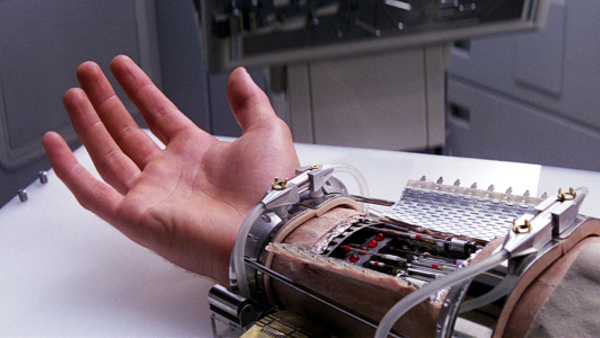
Prosthetic arms have existed for a good long while, in various guises. For the most part they've been poor replacements for the real thing, with amputees having to put up with hook hands, plastic limbs, or some other manner of pretend arm, leg, or other body part that don't really match up to the originals. How come we've not got to, say, Luke Skywalker's good-as-new robot arm from Empire Strikes Back? Funnily enough, despite happening a long time ego, we're only just getting around to that particular bit of Star Wars tech. Lightsabers might be more fun, and Death Stars would certainly change the battlefield of modern war considerably, but the working, durable, moving prophetic limbs seen in the series are probably the most useful in the contemporary world. And some crazy breakthroughs have been made with such limbs recently. Earlier this year saw the first such replacement that moves based on brain activity, just like a €œreal€ arm, and just this month doctors at Johns Hopkins University outfitted a double amputee with two similar robot arms that work like a charm.

6. Magical Microwaves

The sci-fi technology of 2013 was the 3-D printer, something so fanciful that it rarely came up in actual science fiction. Like, seriously, who in their right mind would cook up an idea as bonkers as a printer that could produce actual 3-D models €“ and not just models but, conceivably, weapons, food, clothing? For cheap-as-free (or as cheap as raw materials)? Ridiculous! And yet, it is so. Around the same time came some major breakthroughs in artificial foods, with the first hamburger grown in a lab €“ the jury's out on how it tastes €“ alongside steaks that a veggie could have no moral qualms about tucking into. This year saw the two of them come together, not unlike that magical microwave from The Hitchiker's Guide To The Galaxy film. The so-called Foodini machine lets you print everything from edible burgers to pizza to chocolate. You pop the ingredients in the top of the machine in little silve capsules, and out come your fully-fledged meals. It's kind of amazing, and will apparently begin mass manufacturing in the second half of 2015.

5. Send In The Clones

Dolly The Sheep didn't wind up being quite the cottage (or farm) industry as many expected. The stunning breakthrough in genetic sequencing allowed British scientists to create the first mammal to be cloned from an adult somatic cell, using the process of nuclear transfer. Since then they did the same with pigs, deer, horses and bulls. It never got used for anything though, really. At least, not in the Western world. There were reports this year that cloning in China was at an €œindustrial scale€, with one plant applying similar techniques that the Dolly crew used into producing an astonishing 500 cloned pigs a year. That's a lot of pigs you guys. Sooam Biotech took it even further into the commercial sector €“ ie not just for farmers €“ this year by offering cloned versions of dear family pets, beginning with dogs. Surely it can't be all that long until we're cloning loved ones, making sure they live forever? Or else cloning cows on an industrial scale to feed into our Foodinis...

4. LASER CANONS

Lasers do not work how they work in the movies. For one thing, they don't tend to be of the sort seen in Goldfinger: endless red rays of light that can cut through a steel table (or Sean Connery's genital) like a hot knife through butter (or Sean Connery's genitals). For another, they don't have much application for weapons, despite the endless amounts of plasma rifles and the like you get in every video game. At least, you didn't until 2014, which is the year that the US Navy approved the first combat-ready laser cannon. Yes, a canon. Just like the photon canon every variation on Star Trek's USS Enterprise has been equipped with. Well, not just like, if you fancy delving into the actual science of it, but still. Following a series of successful trials the weapon €“ called LaWS (for Laser Weapon System) €“ has been placed upon the amphibious dock transport vessel USS Ponce, whose slightly crummy name belies the fact that the ship's commander is authorised to use the system as a defensive weapon.

3. Proper Virtual Reality (Almost)

Virtual reality as a concept has been knocking about for a good long while, and has existed in one form or another since the eighties, when Nintendo dealt with their first big failure (the Virtual Boy wound up just giving people headaches and nausea with its red-hued worlds, rather than immersing players in a totally different world). William Gibson, The Matrix, all that gubbins... ...It certainly seemed like science fiction rather than science fact, with the technology struggling to match up to the ideas. Virtual reality as a concept is sound, but how likely were you to believe you were in another world when you're dealing with the Playstation era of graphics? The HD, photorealistic views of the current gen of consoles, meanwhile, are something else altogether. As is the Oculus Rift, the new form of VR headset, hit the big time this year after being bought up by Facebook. Their technology is far more like the sort sci-fi authors have dreamed of for years, causing people to believe they're actually riding a rollercoaster. And acting accordingly. At last, First Person Shooter will be a reality! Wait, is that a good thing?

2. Killer Robots

One of the other, less exciting and more horrifying advances to be made in 2014 was a step closer to The Terminator's Judgement Day. Thankfully there's no Skynet around yet (or is there...?) ready to become self-aware, but this year did see some giant leaps being made in the field of killer robots. As in, robots that could kill you. Or at least, robots thata re being developed by the US military. The military's DARPA (that's the Defense Advanced Research Projects Agency, for those who haven't played Metal Gear Solid) has not only their utterly terrifying robot super soldier that they're currently developing, but they've also just announced plans for an Edge Of Tomorrow-style robotic suit for soldiers to wear in the field to boost their muscles. Then there's the android policeman they're trialling and all, which is an interesting idea given the current lapses in moral judgement €“ to put it mildly €“ offered by human policeman in the US. Not to mention the cancellation of Almost Human. And if that's not enough reason to lose sleep at night, imagine MIT's cheetah robot chasing you down a dark alley. The future!

1. At Last, A Hoverboard

Back To The Future Part II made all sorts of promises it doesn't look like it's going to keep. What looked like the far-flung future of 2015 to filmmakers in 1989 is fast become the far more banal present for us in the modern day, and many of the €œpredictions€ about the coming year from the middle instalment of Robert Zemeckis's time travel trilogy look like they're fairly wide off the mark. Hopefully the double tie thing isn't going to take off €“ although really, who can predict the fashion trends we'll have forced upon us in the coming months €“ and Jaws is a fair ways off of its nineteenth part, although the return of 3-D films is pretty on the money. The one big invention everyone was looking forward to, though? Hoverboards. And that looked like it was going to be just an avenue of disappointment (although some fans have a theory about that). That was until the Hendo arrived, a crowdfunded, real-life hoverboard. Like, that actually works. That is, if you're willing to shell out $10,000 for a prototype that's fairly limited. Maybe time to look to the past and steal a Sports Almanac...

Contributor
Contributor

Tom Baker is the Comics Editor at WhatCulture! He's heard all the Doctor Who jokes, but not many about Randall and Hopkirk. He also blogs at http://communibearsilostate.wordpress.com/