10 Sci-Fi Movies That Broke All The Rules
Rules are made to be broken.

Every movie is built on the conventions and rules of its genre, and while these rules can and do change over the years, for the most part Hollywood doesn't like to tinker too much with a winning formula.
The sci-fi genre is certainly no exception, typically defined by spacefaring adventures with colossal production budgets, often revolving around everyman protagonists thrust into the role of the world-saving hero.
Maybe there's time travel involved, or perhaps there are aliens - or possibly even both! Whatever the end result, the tropes associated with these genre elements are all incredibly well-defined.
But every so often, a filmmaker decides to push back against those conventions, daring to go in another direction altogether and leaving audiences thoroughly gobsmacked as a result.
These 10 films, all genre masterpieces and cult classics in their own right, cast the safe and successful rules aside and forged ahead on their own path, in turn massively subverting expectations in ways fantastic, mind-blowing, and sometimes more than a little confusing...
10. The "Chosen One" Actually Isn't - Blade Runner 2049

One of the most well-worn tropes in both sci-fi cinema and blockbuster movies as a whole is that of the "Chosen One," the seemingly ordinary protagonist who learns that they're somehow destined to become a saviour figure. For example, Luke Skywalker (Mark Hamill) in Star Wars or Neo (Keanu Reeves) in The Matrix.
It's a tidy way for screenwriters to introduce audiences to a foreign, high-concept sci-fi world alongside the protagonist, even if in 2020 it's a plot device that feels thoroughly played out.
So a wonderful surprise it was, then, when Blade Runner 2049 decided to cleverly flip the entire Chosen One arc on its head.
For most of the film, audiences are led to believe that replicant protagonist K (Ryan Gosling) is the son of Deckard (Harrison Ford) and Rachael (Sean Young), only for the third act to reveal that, in fact, K isn't related to them at all.
Rather, Deckard and Rachael's child is actually a daughter, Dr. Ana Stelline (Carla Juri), a fairly minor character who appeared earlier in the film.
It's a brilliantly executed moment, ingeniously subverting one of the most commonplace sci-fi movie cliches, underlined by K's utter devastation at learning he isn't who he thought he was.
9. The John Connor Paradox - The Terminator

Time travel is always a tough nut to crack, and more often than not the films that best manage to weather the logical issues associated with timey-wimey shenanigans are those that actually embrace the contradictions.
And there's perhaps no better example of that than James Cameron's The Terminator, which of course follows soldier Kyle Reese (Michael Beihn) as he's sent back through time by human resistance leader John Connor to protect his mother Sarah (Linda Hamilton) and ensure that he himself is eventually born.
But the film's big twist is that Kyle and Sarah end up falling in love and conceiving John themselves, creating a brain-breaking chicken-and-egg scenario where audiences have to ponder how John could even send Kyle back in the first place if he hadn't yet been conceived by Reese.
While many fans have attempted to find a logical answer, Cameron was clearly encouraging audiences to simply accept the heady circuitousness of it all rather than try to find a clear solution.
The vast majority of popular time travel movies attempt to lay out a clear set of rules for audiences from the outset - think Back to the Future - but The Terminator totally flew in the face of any concrete logic, opting instead for brilliantly confusing cosmic poetry.
It's basically Cameron saying, "Time travel movies inherently make no sense. Accept the paradox. Think about it a little, but not too much."
8. Humans Were The Bad Guys All Along - Starship Troopers

Science fiction has a storied history of treating humanity as either the intrepid, well-meaning explorers of the galaxy or the victims fending off an invading extraterrestrial force.
Take Star Trek, which generally took an optimistic, earnest bent to space travel, with humanity trying to explore and connect with as many far-flung alien races as possible.
On the flip side, there are literally dozens of big-budget alien invasion movies like Independence Day, War of the Worlds, Edge of Tomorrow, and so on, where the aliens are depicted as grotesque "others" who represent a major existential threat to humanity.
But Paul Verhoeven's deliciously entertaining sci-fi satire Starship Troopers opts for a far more fascistic - and, let's be honest, realistic - inverse of these tropes, where humanity is depicted as a tyrannical space-faring force which pounds foreign races into submission by any means necessary.
Though Robert A. Heinlein's original novel was a genuinely earnest piece of right-wing military propaganda, Verhoeven threw all that out to emphasise the brutality of the real-life military industrial complex, particularly as it pertains to American foreign policy.
The film is rife with hilariously tongue-in-cheek propaganda commercials for the fascist, colonialist United Citizen Federation, and as visibly repulsive as the Bugs may seem, ultimately they're beaten into a pitiable state of fear by film's end, as is proudly cheered by the UCF soldiers.
While the film does appear to depict the Bugs launching an asteroid towards Earth, killing millions, it doesn't take much of a below-the-surface reading to suggest that this may well have been a false flag operation concocted by the UCF to justify a strike against the Bugs.
Either way, Starship Troopers wasn't the first alien invasion movie to make humans look bad - The Day the Earth Stood Still did it decades earlier - but it was certainly the most blatant, even layered behind a gossamer-thin veneer of social satire as it was.
7. Changing The Original Ending...For The Better - Invasion Of The Body Snatchers (1978)

Remaking a classic sci-fi movie is a thankless task at the best of times, but you're wading into flat-out sacrilegious territory when you start to toy with the plot - in particular, the ending.
Don Siegel's original 1956 Invasion of the Body Snatchers is a classic sci-fi horror film in which aliens attempt to covertly invade Earth by replacing its citizens with creepily docile "pod person" replications.
This version of the film ends on a somewhat optimistic note as it's implied that the FBI is finally taking measures to stamp out the pods, but for the 1978 remake, director Philip Kaufman dared to offer up a far bleaker climax.
In the remake, the final scene horrifyingly reveals that protagonist Matthew Bennell (Donald Sutherland) has also become a pod person, leaving Nancy Bellicec (Veronica Cartwright) as one of the city's few remaining humans and implying that, most likely, the pods will end up winning.
Though there was some initial division about the remake straying from the original ending, ultimately it's a gamble that paid off with unforgettable dramatic results.
There are sadly far more instances of sci-fi remakes altering endings for the worse - primarily the shambolically nonsensical climax of Tim Burton's 2001 Planet of the Apes - but Body Snatchers 1978 was brave enough to try something different and pull it off in a manner both clever and terrifying.
6. Scientists Are Stupid - Prometheus

It goes without saying that most sci-fi films feature at least a few scientist characters, and more often than not, we as audiences expect these characters to be smarter than your average person, right?
Then there's Ridley Scott's Prometheus, which treats most of its scientists like they're the clueless, bumbling fools you'd expect to see in, say, a slasher movie.
In particular there's Fifield (Sean Harris) and Milburn (Rafe Spall), a geologist and biologist respectively who not only get high while on manoeuvres, but also get lost despite being the ones responsible for actually mapping the alien planet.
Further in the case of Milburn, he even wilfully engages with an alien creature which, predictably, attacks and kills him.
That's not to ignore archaeologists Shaw (Noomi Rapace) and Holloway (Logan Marshall-Green) arrogantly believing the ancient cave paintings to be an invitation to humanity, and everyone basically doing the exact opposite of what their survival instincts should have them do - above all else, removing their helmets.
The idiocy of the supposedly smart characters was one of the most pervasive fan complaints about the movie, an issue which inexplicably continued into sequel Alien: Covenant.
At least most of the Covenant's crew were colonists rather than scientists, so it was slightly more excusable.
5. Reality Matters...Until It Doesn't - Inception

The big, ambitious hook of Christopher Nolan's Inception is that it's a heist film-of-sorts taking place within the dreams of its central characters, with much of the film focused on notions of reality, namely how easy it is for someone to become lost in a dream.
Protagonist Dom Cobb (Leonardo DiCaprio) commits the titular heist in order to legally return to the U.S. and be reunited with his children, an end goal that is very much rooted in reality.
But the final scene of the movie calls the apparent "success" of Dom's mission into question, as he spins Mal's (Marion Cotillard) reality-defining totem - a spinning top - and walks away to see his children.
We never see the outcome of the top's spin, and though it certainly seems to waver before Nolan cuts to black, there's no clear-cut answer as to whether or not we're seeing Dom's reality or Dom's dream.
But the real point, of course, is that Dom no longer seems to care about finding an objective truth, walking away from the spinning top and embracing not only his children but also whatever reality is presented to him.
For a movie as high-concept as this to basically throw out its primarily dramatic conceit - the reality or unreality of Dom's situation - in the final shot is bold as hell, and absolutely fantastic.
4. Time Travel Doesn't Work How You Think It Does - Avengers: Endgame

The vast majority of popular time travel movies adhere to the logic that if you travel back in time and change the past, it will immediately alter your future - most popular envisioned in the Back to the Future films.
But Avengers: Endgame bravely - and, upon first viewing, confusingly - decided to go in an entirely different direction with its logic-bending approach to time travel.
After Rhodey (Don Cheadle) asks Professor Hulk (Mark Ruffalo) why they can't simply murder Thanos (Josh Brolin) as a baby, Hulk explains that changing the past doesn't change the future.
Effectively, by travelling back to a given past, that past then becomes the future, and what was your present then becomes your past, which by the laws of causality can't then be changed by your new future.
It's certainly noodle-baking to think about, yet if we're honest, it's basically just a neat way to hand-wave the inevitable timeline contradictions so the audience can enjoy the fan service of Captain America (Chris Evans) fighting himself without thinking too much.
Even so, fans are still debating the finer points of Endgame's time travel rules to this day, which if nothing else run entirely counter to the time-hopping logistics audiences are used to dealing with.
3. Improvised Scenes - Under The Skin

The very nature of most sci-fi movies, shot on expensive sets with tons of CGI, means that there's rarely much room for improvisation, with scenes instead being intensely rehearsed and choreographed within a strict set of technical parameters.
But Jonathan Glazer's masterful sci-fi horror film Under the Skin is a very different beast indeed, a low-budget genre effort starring Scarlett Johansson as an alien entity who, under the guise of a beautiful woman, devours men in Scotland.
Because the movie had a relatively small crew and employed minimal VFX, Glazer was allowed a greater sense of freedom than is possible in 99% of sci-fi films.
As such, for the scenes where Johansson's character is driving around Glasgow seeking out men to pick up, Johansson literally drove a van fitted with hidden cameras around the city and picked up local men.
After being asked for their permission to use the footage, several of the men then filmed additional scenes where they were lured into a black liquid and consumed by the alien, resulting in an eerie intermingling of the real and the fictional.
For the sci-fi genre, which relies so often on soundstages and exorbitant effects, that level of intimate authenticity is virtually unheard of.
2. The "Protagonist" Dies Half-Way - Alien
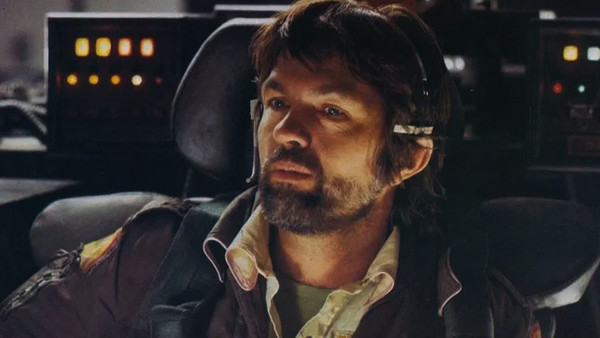
Ridley Scott's Alien is one of the most innovative and influential sci-fi films of all time, and of its many creative masterstrokes, perhaps the greatest of all is its expert use of a decoy protagonist to completely throw the audience off the narrative scent.
Viewers spends the first half of the movie quite understandably assuming that the Nostromo's steely, hyper-masculine Captain Dallas - played by acting vet Tom Skerritt, no less - is the film's bulletproof protagonist.
But at the mid-way point, Dallas ends up unexpectedly cornered and killed by the Xenomorph, to the surprise of everyone watching.
Ultimately, it's not really until the third act that Ripley - played by the not-remotely-famous Sigourney Weaver - is revealed to be the true protagonist and, eventually, the Nostromo's sole survivor.
It's an ingenious switch that flies in the face of precisely what audiences expect from sci-fi movies and tentpole cinema as a whole.
1. Explaining Almost Nothing To The Audience - Primer

Though many huge-budget sci-fi movies like to leave audiences with something ambiguous to consider for themselves, almost all of these films still give viewers a healthy serving of narrative meat to chew on.
And so for everyone who thinks that 2001: A Space Odyssey is too vague and explains too little, it positively holds the audience's hand compared to Shane Carruth's innovative 2004 indie sci-fi Primer.
Even the most measured sci-fi movie will typically make sure that viewers more-or-less know what's happening at any one time, but Primer is a grounded time travel film which boldly refuses to curtail its scientific techno-babble for the sake of the audience.
The two lead characters talk to one another through mostly impenetrable, mumbled dialogue which leaves viewers to figure out much of the context, beyond the obvious fact that the pair have clearly managed to invent a time machine.
As a result Primer remains a hugely divisive film, though it's certainly nothing if not a minimalist breath of fresh air in a genre known for its patronising, overdone expository dialogue.