10 Secret Worst Movie Heroes

Strong? Check. Fast? Check. Fresh from the fight? Ahhh... we'll get back to you.

The role of a protagonist in your basic mainstream movie is to propel the plot: the story is all about them, and their actions and reactions form the thrust of the narrative. In many cases, the protagonist is also the hero, the moral compass of the tale, capable and strong in all the ways that matter. This is basic storytelling, Narrative 101. So what happens when your narrative features a traditional hero-protagonist who, over the course of the movie, is revealed to be something altogether different? On a good day, it€™ll be because the movie is engaged in sleight of hand: a magic trick, whereby the audience is deliberately wrongfooted, their expectations confounded in a rewarding and entertaining way. Take The Usual Suspects, for example: the whole point of the film is the revelation that the narrator, one of the main protagonists and the only really likeable person in the story, is not who he says he is. On a bad day, the writer and director will have no idea. In this case, the film€™s not about subverting genre tropes or an example of the unreliable narrator: it€™s a straightforward mainstream Hollywood-style story, but one in which the hero-protagonist just€ isn€™t. Perhaps it€™s because he€™s not nearly as noble or admirable as he seems, his actions €“ when you think about it €“ fairly foolhardy, even reprehensible. Perhaps it€™s because he€™s not nearly as capable as he appears, the events of the film occurring despite him, not because of him. Hit sitcom The Big Bang Theory has helped popularise one of cinema€™s most famous examples with Raiders Of The Lost Ark (1981), where hero Indiana Jones is so irrelevant to the outcome that the Nazis would have done exactly what they did (located and secured the Ark Of The Covenant, decided to open it to check the contents before presenting it to Hitler and become consumed by the power contained therein) whether he€™d been there or not. With that in mind, here they are: the hero-protagonists of cinema who just don€™t live up to the name, or the hype.

10. What€™s In The Box?

David Fincher€™s Seven (or Se7en, if you€™re feeling fancy) is a serial killer thriller that delights in playing with genre tropes. Somerset is the world-weary detective on the verge of retirement, forced to take on an idealistic rookie partner in Mills, recently transferred to his department. The pair investigate a series of macabre deaths which are eventually hypothesised to be the work of the same man: a serial killer, patterning high concept, elaborately executed murders after the €˜seven deadly sins of early Christian doctrine. So far, so conventional. Throughout, we€™re presented with the contrast between the cynical way Somerset views crime in their unnamed city, and the more doggedly optimistic worldview presented by Mills. Somerset doesn€™t believe anyone can make a difference, to the extent that he€™s remained alone and childless and is leaving the city upon retirement, while Mills and his wife have actually moved to the city because of his transfer, and are (unbeknownst to him) about to start a family. Meanwhile, the unknown killer strikes again, and again, filling the pair with dread. The climax comes after the killer turns himself in, and his master plan finally reaches fruition. Our expectations are horribly subverted; the narrative follows through the oppressive, nihilistic mood the film has carefully set up, and the detectives, far from stepping in, ending the bloodshed and punishing the perpetrator, are revealed to have been unwitting parts of the killer€™s plan all along. It tends to be forgotten about in the sheer writhing empty horror of the ending, but the detectives we€™ve been following throughout aren€™t the protagonists of the film. The film€™s not really about them. They€™ve never had agency or power, just the illusion of it. Somerset was right: he and Mills aren€™t the engine of the narrative, driving the story and the conflict forwards€ they€™re just witnesses, and unknowing accomplices.

9. Should Have Called It Spoon Walker

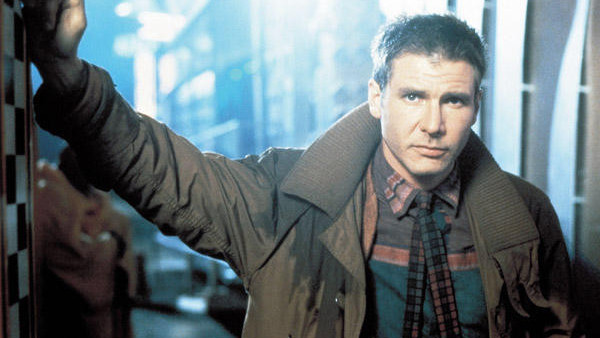
Neo-noir classic Blade Runner is set in a near future where near-human genetically engineered androids €“ replicants €“ are still being used off world, but are illegal on Earth. When a replicant mutinies, specialist police €“ blade runners €“ are engaged to track them down and €˜retire€™ them. Rick Deckard is the blade runner sent to track down the latest batch of rebellious replicants, led by combat model Roy Batty. It€™s implied that Deckard is out of the game, and that the police have had to strong-arm him into taking this case because he€™s the best, the elite: the last guy was shot. The scene is set, then: blade runners are elite investigators-cum-executioners, not run-of-the-mill police, and Deckard is the best, drafted in because no one else could cut it. Except that€™s not what we see throughout the narrative of the film€ Deckard doesn€™t use any specialist skill to locate and dispatch the four errant replicants, and there€™s nothing he does that a normal police officer or private detective wouldn€™t have done. He doesn€™t wheel out the Voight-Kampff test to locate any of the fugitive replicants; he just ransacks a hotel room and finds a clue. Moreover, he€™s so incompetent at the investigation part of the job that two of his targets end up targeting him. He€™s so useless at the execution part of the job that all four of them get the drop on him, three nearly kill him, and he only survives at all because Roy Batty is a bit of a philosophical sort. Blade runner? More like a butter knife.

8. Love Is Hell And Hell Is Other People

There€™s a horrendous truism in Hollywood, especially in romantic comedies, that it€™s fine to treat people like crap in the pursuit of love €“ friends, families, partners, you name it. If the film€™s magical prophecy of narrative fulfillment has Leading Lady X copping off with Leading Man Y at the end of act three, then any and all characters and situations between their introduction and said copping off fall under the heading of €˜surmountable obstacles€™. That includes their respective partners. After all, the deal is that X+Y happens, because it€™s written in the starlight and every line on their palms, blah blah blah. If X is engaged and Y is married? Well, them€™s the breaks. Those partners are just in the way of love€™s young dream, and when it comes to trampling redundant boyfriends, fiancées, wives and husbands, €˜Love€™s Young Dream€™ is the ironic name painted down the side of a giant monster truck. There are too many examples of this trope to mention here, but Annie Reed, played by Meg Ryan in Sleepless In Seattle (1993), has to be the worst. She€™s engaged to Walter, the nicest man in the world, played by Bill Pullman (for whom the word €˜hapless€™ may have been invented), and hasn€™t ever even met Tom Hanks€™ character Sam. Despite this, Annie makes some cockeyed arrangement with Sam€™s young son to meet them both at the Empire State Building because she heard their sad life story on the radio and it made her feel smooshy inside. Annie vacillates about going for a little while, stringing poor Walter along as much as possible, because she€™s under the impression Sam is actually attached now and therefore unavailable. Despite this, she finally decides to go to this tenuous maybe-meeting with the complete stranger who she believes has a girlfriend, and so without further ado breaks up with her fiancé, literally looking at the Empire State Building over his shoulder as she does so. Naturally, Walter lets her go with no recriminations or guilt, because he€™s a sweet guy, and because the movie doesn€™t want you to dwell on how awful Annie is. But she is awful. Awful, awful, awful. By the way, to make it up to him, a couple of years later Bill Pullman was cast as Leading Man Y opposite Sandra Bullock€™s Leading Lady X in the similarly titled While You Were Sleeping (1995), in which Sandy B lies to a whole family about being engaged to dear Bill€™s comatose older brother only to cop off with Bill at the end of act three. WHAT IS WRONG WITH YOU PEOPLE.

7. Inside Man€™s Man On The Outside

Spike Lee€™s Inside Man is a cracking heist movie, pitting Denzel Washington€™s smooth Detective (2nd Class) Keith Frazier against Clive Owen€™s scheming bank robber Dalton Russell. Frazier needs a promotion so he can afford to get married, but has an internal investigation for corruption hanging over his head. However, with a bank robbery in progress, he€™s handed command of the active crime scene and all hostage negotiations. Meanwhile, the chairman of the bank has his own reasons for hiring a fixer to negotiate directly with Russell. Frazier allows her, a lone civilian, access to the bank and the robbers in exchange for a guarantee that the corruption charge will disappear and his promotion will get moved up. He€™s completely blasé about the deal he€™s just made under the table in fact, even after being removed from the bank robbery case by his superiors. Let€™s not forget that we only have Frazier€™s word that the charges against him are a set-up, based on what he tells his partner and his girlfriend. Meanwhile, Russell€™s elaborate scheme succeeds without a hitch, and the robbers completely get away with everything they€™re after. Despite failing to stop the robbery, or even properly understand what they were after, Frazier manipulates his way out from under the axe that was descending upon his head and wriggles his way further up the greasy pole. When he finds Russell has slipped him one of the massive diamonds in his haul, he smiles: that rock€™s not going back to the bank vault, and everyone knows it. Detective (1st Class) Keith Frazier is going to get himself one serious engagement ring. Forget the good-cop-up-against-it act: despite what the film wants you to think, he€™s clearly dirty as hell and has been all along.

6. Captain Jack Won€™t Get You By Tonight

Pirates Of The Caribbean: On Stranger Tides, the fourth in the increasingly redundant series of swashbuckling movies featuring capering drunkard Captain Jack Sparrow, is a lumbering, chaotic mess of a film, and a lot more dull than a movie about supernatural piracy has any right to be. Essentially, the antagonists of the film are after the Fountain Of Youth, and reckon that Jack knows where it is. Holding up the narrative on his own this time, given that the heroes of the first three films didn€™t return for the fourth, we can see very clearly why Orlando Bloom and Keira Knightley were drafted in the first place. Johnny Depp€™s Captain Jack Sparrow is a foil, a spoiler: a comedy rogue there to add colour and panache to the story. He€™s a condiment, not a meal in itself. As the story progresses, it transpires that Jack is supremely uninterested in the Fountain€ so even the €˜hero€™ doesn€™t care about the MacGuffin that€™s supposed to be moving the plot. Want a hero-protagonist with coherent motivations to follow, someone to root for? You got Jack, buddy. Without a proper protagonist, a centre to hold the narrative, it€™s just the bad guys fighting amongst themselves while Depp gurns and preens somewhere in the background. We€™re left wondering why on earth we€™re watching and why on earth they bothered, because Jack Sparrow falling down every five minutes isn€™t nearly as charming as they seem to think it is.

5. What Does The €˜S€™ Stand For Again?

You€™re probably bored of hearing proper DC comics fans complain that the Superman we saw in Zack €˜The Hack€™ Snyder€™s 2013 toilet-busting effort, Man Of Steel, isn€™t the real Superman, the one they grew up with. They€™ll cite his almost complete lack of interest in preventing the wholesale carnage in Metropolis at the climax of the movie, preferring to engage his enemies in superpowered fistfights. They€™ll roll their eyes at his snap decision to murder General Zod to prevent him from killing bystanders, rather than any of the many other possible ways he could have stopped him from doing so. Then they€™ll mention the fact that this Kal-El isn€™t really that smart, for a Superman. They€™ll list all of the ways in which the big lug could have stopped Zod without a planet-wide alien invasion and accompanying catastrophe €“ like they do here, for example: https://www.youtube.com/watch?v=CjSNLmb0Ndw Well, far be it from us to deviate from the smart thinking. After all, vending machine coffee looks like coffee, is made from coffee, is marketed as coffee but tastes like hot old shoes. That€™s Snyder€™s version of Superman: looks like Superman, has the same back story as Superman, is sold as being Superman, but tastes like hot old shoes. Oh, and the €˜S€™ on his chest clearly stands for €˜schmuck€™. Batman is going to cream this doofus.

4. The Inspector Gadget Hypothesis

Commander James Bond, 007 is the ultimate superspy: tough, strong and thoroughly absorbent when it comes to vodka. Right? Of course not. Famously derided by his own creator as a €œblunt instrument€, a description so fitting that it even passed into the films, Bond is an unreliable loose cannon and a lone wolf in a business predicated on relationships, the chain of command and following orders to the letter, not the spirit. Now granted, the James Bond franchise isn€™t exactly John Le Carré when it comes to authenticity of tradecraft, but even within the context of the movies themselves, 007 is considered to be a wild card €“ a thug in a tux. He repeatedly goes AWOL, has ballsed up more than a few delicate missions by deciding to punch someone in the neck or shoot some other person in the face, and regularly causes more than a few raised eyebrows in public places by engaging in car, bike, speedboat, helicopter, ski and skydiving chases in broad daylight. He€™s a heavy drinker who€™s notoriously indiscriminate about who he sleeps with €“ the man puts the €˜peen€™ into €˜espionage€™. If all that wasn€™t enough, this is a professional spy whose idea of a covert op is to dress up to the nines, drive up to the front of the poshest casino in town, sit down opposite the terrorist/war criminal/gangster/fellow spy he€™s there to take down and introduce himself by his given name. €œThe name€™s Bond. James Bond.€ Yes, we know. Everyone knows who you are. You keep telling people your name and then shooting them. At least Denny Crane had Alzheimer€™s as an excuse. There€™s a popular theory, nicknamed The Inspector Gadget Hypothesis, that speculates that Bond is only sent in to be the clumsy, crude distraction: that his bull-in-a-china-shop clowning about grabs all the attention while the actual spies, working as part of a highly organised and stealthy team, do the real work sub rosa. How we wish that was true.

3. A Nose By Any Other Name

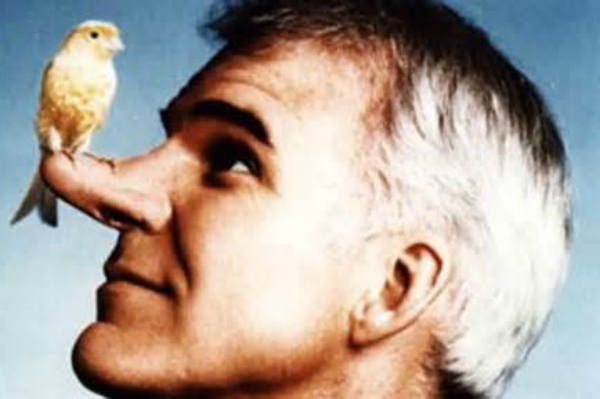
Steve Martin€™s adaptation of Edmond Rostand€™s 1897 play Cyrano De Bergerac, Roxanne (1987) sees the brilliant poet and fearsome swordsman Cyrano reimagined as firefighter Charlie €˜C.D.€™ Bales. Just as in the play, C.D is a larger-than-life, charismatic man, a self-taught intellectual, martial artist and acrobat, who falls in love with the equally erudite Roxanne (Roxane in the play). There€™s just one snag €“ Roxanne is beautiful, and Charlie has the largest nose known to man. Like Cyrano, Charlie is obsessively neurotic about his nose: because of it, he€™s convinced that no woman could ever fall in love with him, despite the fact that in every other way possible, he€™s the biggest catch in town. Like Cyrano, Charlie allows himself to become involved in the budding romance between astronomer Roxanne and a socially awkward friend, eventually seducing her on his behalf by writing her passionate love letters that leave her utterly smitten. A lot of the story, characterisation and set pieces have been retained in Martin€™s clever, witty screenplay. However, while the source material is a swashbuckling romance with tragic overtones, the latter is a gently amusing Hollywood rom-com€ and there€™s the problem. In the original story, Cyrano€™s friend and rival marries Roxane, but dies before the truth of who wrote the letters can be revealed. Rather than have the woman he loves devastated further, Cyrano redeems himself and keeps the secret for her sake, a secret he takes to the grave despite remaining her close platonic friend for the next fifteen years. In Roxanne€™s slightly tweaked ending, Charlie Bales gets the girl when he€™s outed as Roxanne€™s real pen pal after his rival skips town with a cocktail waitress. Sure, Roxanne€™s mad that Charlie lied to her and manipulated her into having sex with a virtual stranger under false pretences. She€™s also not at all keen on the fact that, when confronted, he gets narked at her for not having figured it out quicker and mocks her for being easy. She gets over it really quickly when the film needs to get to the happy ending, though. That€™s just not on, Hollywood: C.D.€™s actions are inexcusable and pretty damn creepy, and his entitled little boy attitude sucks. She should have kicked him right in the telescope.

2. A Wizard€™s Staff Has A Knob On The End

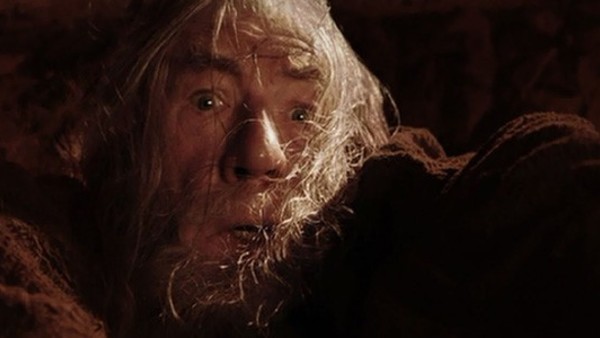
Watched all 22 hours of The Hobbit/Lord Of The Rings extended editions? You poor, poor people. Let€™s skip over the part where Gandalf is great pals with an army of giant eagles whose only job was to keep an eye on the kind of evil that Sauron and Smaug represent. Let€™s hurdle the point that they could have flown any combination of hobbits, men, dwarves and elves to whatever foul necromantic destination they desired, bypassing the various underground Lairs Of Evil altogether. Let€™s assume that there was some completely valid reason as to why that didn€™t happen (although there wasn€™t, by the way) and as to why Gandalf made everyone walk everywhere (there still wasn€™t). Yes, leaving the issue of the giant eagle army aside (good grief) Gandalf The Grey is supposed to be this unbelievably mighty wizard, capable of commanding audiences with kings and queens, and a member of the White Council. One would assume that a wizard would know how to utilise some form of, let€™s call it magic. You know, to deal with irritating problems they might encounter along the way, help them steer clear of trouble, that kind of thing. It appears not. Your kid brother probably got better magic tricks free with a box of Frosties. But no€ it actually gets worse. You see, Gandalf isn€™t really a wizard at all: that€™s just what men, hobbits and dwarves call him because they don€™t know any better. He€™s in disguise €“ he€™s really an angel given human form. An Istari, he was sent to guide the mortal races in the face of the evil represented by Sauron (who is of the same ilk as Gandalf, just totally evil and such). So€ he€™s an angel on (Middle) Earth, but one with no real power or agency, making hairy-footed young men travel around the fantasy equivalent of Salford town centre on a Saturday night to do his dirty work. Being a crap wizard is one thing, but being a crap angel is just embarrassing.

1. I Was A Teenage Iron Man!

After his abduction by terrorists possessing his weapons, Stark officially retires from being a merchant of death, but crucially, not from being a massive douchecanoe. Iron Man (2008) and the sequel are really just two character touchstones expanded and enlarged upon: Tony Stark designs bigger and better cool stuff, but wants no one to have the cool stuff except Tony Stark. Iron Man is his toy, no one else€™s. In Iron Man 2 (2010), that includes his own government as well as the terrorists €“ he€™s outed himself as the inventor and pilot of a revolutionary flying weapon, and only he€™s allowed to play with it, hence why he spends most of his time fooling about making much better versions of the bootstrap proto-Iron Man armour that busted him out. This, despite the fact that he€™s a narcissistic little boy with a drinking problem, and everyone knows it. When S.H.I.E.L.D. want to prevent the Abomination from being transferred from military prison to the Avengers project, they send Stark in negotiate with the Army, knowing he€™ll screw it up so spectacularly that Blonsky will never be released to them. The Avengers (2012) shows us a Tony Stark finding himself faced with his own inadequacy: Captain America€™s right, he is nothing without the suit. The other Avengers are heroes by choice or by destiny, whereas Stark is literally just playing at dressing up as a hero. It makes total sense that he€™d overcompensate and attempt to nobly sacrifice himself by way of nuclear wormhole doom: kids are known for grand gestures and a desire to impress. Following directly on from that, Iron Man 3 (2013) is a film about one man coming to terms with the stupidity of being a perpetually arrested adolescent and deciding to try to grow up, and Avengers: Age Of Ultron (2015) is about the fallout from a perpetually arrested adolescent thinking he€™s all grown-up now, making big decisions without thinking them through and then watching the world deal with the consequences of his thoughtlessness. Given what we know about Stark€™s role in the events of Captain America: Civil War, scheduled for release in 2016, it looks very much as though he€™s overcompensating again: becoming the poster boy for governments wanting superhumans to be both registered and accountable€ a far cry from his childish irreverence in front of the Senate in Iron Man 2. While we love Robert Downey Jnr. as much as the next guy (and the next guy is Mark Ruffalo), Tony Stark? Just no. Got any more examples of cinema heroes who don't cut the mustard? Disagree with our choices? Let us know all about it in the comments!

Contributor
Contributor

Professional writer, punk werewolf and nesting place for starfish. Obsessed with squid, spirals and story. I publish short weird fiction online at desincarne.com, and tweet nonsense under the name Jack The Bodiless. You can follow me all you like, just don't touch my stuff.