10 Simple Fixes That Would Make Movie Trailers Awesome Again
Spoiler alert (probably).

Everyone knows movie trailers kinda suck. That's not to say they're not an awful lot of fun, just that all too often they fail at that very important "advertise the movie" part of their definition; when they're not purposely mis-selling the movie at hand (no, Drive isn't a Fast And Furious thrill-ride and, no, The Place Beyond The Pines isn't a Drive-esque stylish meditation on life), they're going to whatever length possible to spoil the plot.
It's now incredibly common for trailers to spell out a story beat-for-beat, although even if they don't then odds are that across a teaser, first trailer, second trailer, final trailer, international trailer and two dozen TV spots (and that is in no way an exaggeration) you'll get enough footage to piece the narrative together regardless.
But there's more to the suckiness of trailers than simply giving away the ending. Oh, that part's terrible and by far the worst way to market a film ever conceived, but if we're actually going to fix movie trailers and not just take them while grumbling, we need to be a little more methodical. What are the systemic problems that need to be addressed so we can get back to a time where trailers made you want to see a movie, rather than making you feel like you've already seen the whole thing before even buying a ticket? Well, I'm glad you asked...
10. Stop Using Footage You Know Won't Be In The Movie
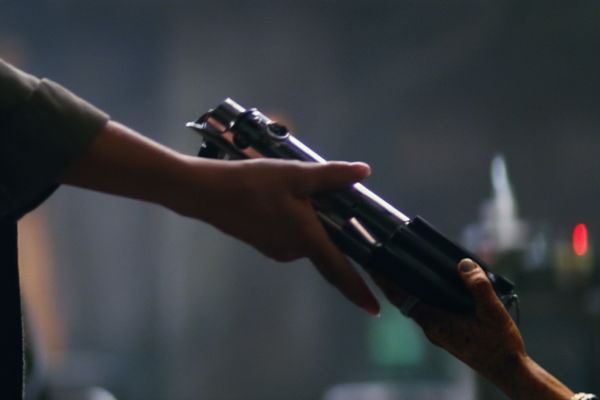
It's become an increasingly common trait that trailers for big movies contain copious amounts of footage that isn't in the finished film. And, while it's maybe not ruinous like giving away things that are in the movie, it can lead to expectations that can never be matched and twists what once appeared to be solid marketing campaigns into con jobs.
I know why this ostensibly happens - movie trailers are now released so far in advance that the movie is nowhere near finished when the early teasers hit, with special effects shots in progress and the final edit still uncertain - although I'm beginning to get the feeling that moments are being included with the full knowledge they'll not be in the finished film; there's simply too much of franchises like Marvel and Star Wars marketing campaigns not in the movie for it to be an accident.
Look at Maz Kanata. Pretty much every moment from the trailers featuring the character were cut from The Force Awakens, and while that shot of her passing Leia lightsaber was probably still intended to be in the movie when it was shown in the second teaser (released in April), you can't say the same of her all-knowing voice-over in the Final Trailer, which hit only two months ahead of release. That's obvious, targeted misdirection and, when you get down to it, was it really necessary for a film as anticipated as that?
9. Don't Release Them A Year Plus In Advance
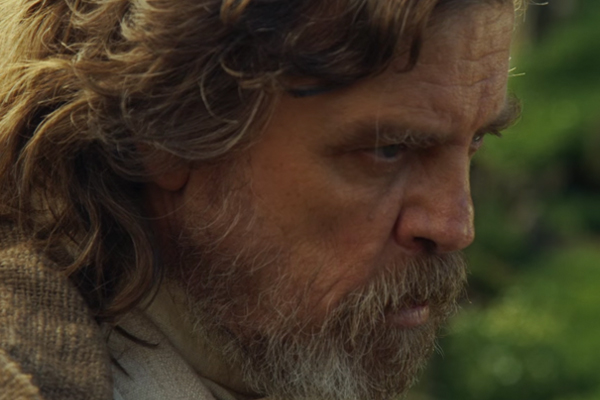
OK, so maybe this one's a little hypocritical of me. I love getting a trailer for a far off movie - it's all about the speculation - but I'd be lying if it isn't all getting a little ridiculous.
Batman V Superman's first trailer of many was released eleven months in advance of the movie, The Force Awakens teaser hit in November 2014, thirteen months ahead of the film, and Suicide Squad's First Look was the same distance, hitting in July 2015 ahead of an August 2016 release. Oh, and it gets worse; it may not be widely available, but Rogue One's concept trailer was shown at Star Wars Celebration twenty months ahead of the film and Episode VIII's announcement trailer (which is all behind the scenes footage, but still counts) hit almost two years in advance.
The problem with this is that it completely skews a movie's lifespan, meaning a film spends more time getting massive levels of hype than it ever will in cinemas, and opens to door for more and more trailers being released down the line. There's also the point of acclimatisation to a film - Batman V Superman has evolved from Man Of Steel 2 to a Batman/Superman showdown to a Justice League prequel and back again across its marketing, which creates a rather confused message when taking the whole campaign into account.
What's worse is that audiences are now getting so accustomed to this that when movie's opt for more traditional marketing patterns it's treated as an affront on behalf of the studios; Captain America: Civil War's trailer didn't arrive until November 2015, six months ahead of time, and that was treated as "late". Hopefully that movie's success will bring a more standardised run back.
8. Get Rid Of Quick Fades To Black
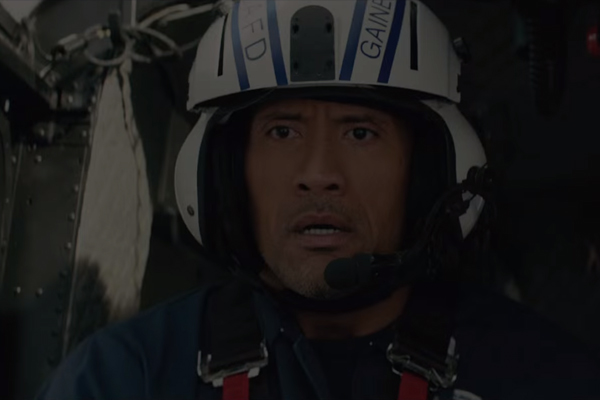
God help you if you try to nip to the toilet once the trailers start playing. There's so many smash fades-to-black that cinemas may have to start providing strobing warnings just for the adverts and giving out free tickets for all the toes accidentally squashed.
The fade-to-black is one of those simple editing tricks that is at its core effective, but has been so overexposed and bastardised in recent years it's as visually affronting at the Inception-esque booms are audibly. It's now at the point where the effect has completely changed; instead of slowly building tension as originally executed, it's done so frequently and at such pace it's nauseating. Some films even have fades between the same shot, nullifying any purpose and doing it simply because editors now think audience require it.
Like any trope, some films do get it right - The Force Awakens is the obvious candidate - but as a general rule it's an editing trick that has become far too overexposed to have anything close to the original effect.
7. Just Stop Doing Teaser Teasers
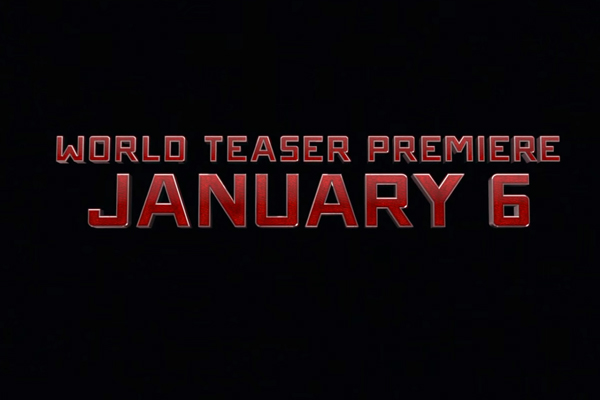
Who actually likes teasers for teasers? Has anybody ever sat through one of the ten-second clips and either felt more hyped for a movie than they were before or as satisfied as they would be waiting two more days for a proper trailer? Now, there have been some creative uses of this irritation - Ant-Man had a tiny "ant-sized" tease that was as cheeky as the film - but for the most part it's simply a cynical extension of trailer hype.
Of course, given how skewed online film journalism is to the pre-release hype it was only inevitable the unveiling of a new trailer will become an event in itself, hence why we've seen more and more of these advance notices of new sneak peaks premiering at major events, but whoever thought the trick of showing a little bit of the finished teaser was the best way to do it needs to go back to the drawing board.
I get the distinct impression that studios don't really know what they're doing with teaser teasers, at this point releasing them merely as a manner of course; they have an idea of what they want, but it's not been developed beyond a thoughtless Vine. There was even one released for The Huntsman: Winter's War, a movie nobody, not even Chris Hemsworth, could give a sh*t about. Did they think getting a split second of Emily Blunt as Elsa really change that?
6. Don't Ruin The Resolution Of Even Minor Beats
The primary role of a trailer is to sell the movie, and the best way to do that is to tease some of the big events while leaving enough unseen to make the viewer want to buy a ticket: "Here's an enticing set up for free, but you'll have to pay to see how it's resolved." Simple, right?
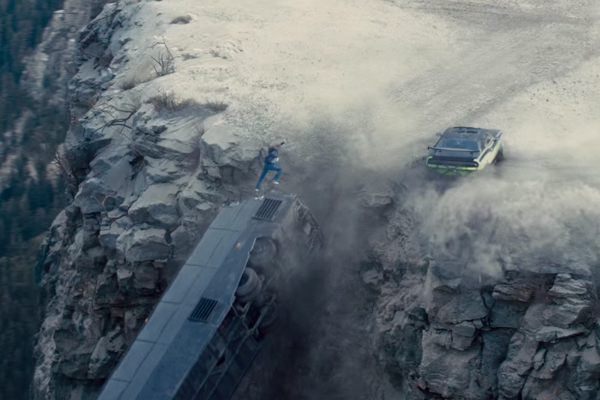
Well, someone needs to tell the guys making blockbuster trailers. You see, this rule doesn't just apply to the broad plot (although we've already established that's a problem), the same goes for smaller, contained beats too, particularly when it comes to action. Seeing Paul Walker running up a falling bus and making a leap for the edge of a cliff is an exhilarating promise of what you can get in the movie.
Seeing Paul Walker running up a falling bus and making a leap for the edge of a cliff, then catching Michelle Rodriguez's car and getting back on the ground safely is a fairly cool watch, but means there's nothing more to get out of seeing the movie proper. At some point it was decided you could carte blanche spell out an action sequence across multiple trailers, without anybody really considering that what you're doing over the course of a marketing campaign is systematically removing even the smallest surprise.
5. Do They Really Need To Be Over Two Minutes?
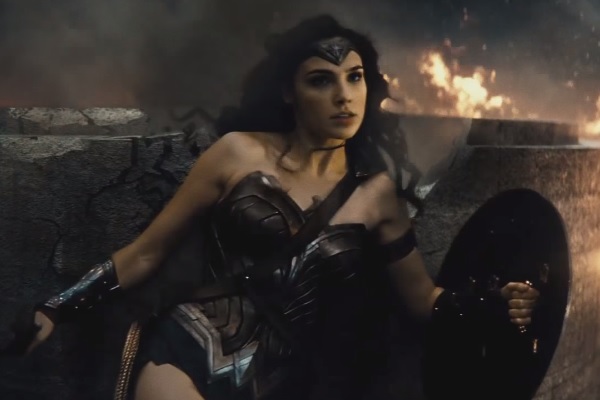
Trailers are long. Like, really long. You're lucky if a tentpole sneak peak doesn't crack two-and-a-half minutes, while teasers are now basically the length trailers used to be. And now Comic-Con footage is more commonly getting released online, it's only getting worse - the trailers for Batman V Superman and Suicide Squad that came out of SDCC last year both broke three minutes.
There's no real reason for this and all too often the editor can't quite sustain interest for the full length (it also irritatingly balloons the already ridiculous amount of extraneous advertising you have to sit through at the cinema). Part of this comes from that misguided sense throughout the movie industry that longer movies are intrinsically more epic (while you couldn't do Lawrence Of Arabia in ninety minutes, the converse isn't necessarily true), with a longer trailer making the movie seem like a bigger deal, although the greater reasoning appears to be more to do with what the extra time affords; you can set-up all the plot and offer a couple of money shots in the space of a-minute-and-a-half, but throwing in an extra sixty seconds plus of footage allows for more jokes, CGI or whatever you're really wanting to push.
So, once again, it's a decision motivated by a desire to show as much of the film as possible, with little thought given to how that can actually hurt expectations for a film. Let's nix that, shall we?
4. No Presenting Of Dreams As Real
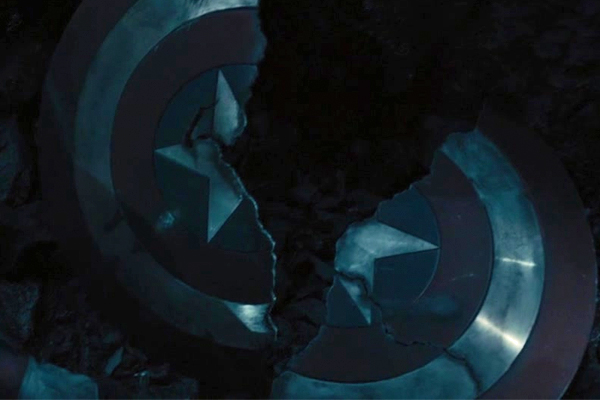
How are the Avengers going to repair Captain America's shield? What is Luke doing with R2-D2? How is Batman going to get out of this post-apocalyptic landscape? These were some of the biggest questions from the trailers for some of the past year's biggest films, moments that are exciting when you first see them and can form the crux of the speculation around a movie (that was the most we saw of Mark Hamill before The Force Awakens hit).
But after the movie (and I'm calling it for Batman V Superman), the whole thing feels hollow. The moment you realise something's a dream it ceases to be important; the scene is removed from the internal logic of the world of the film and that promise of resolution we talked about earlier is destroyed (we never learned anything about the prospect of a broken shield and the specifics of Luke's pre-island antics are still up in the air).
You can argue it's a little cheap of the director relying on visions as a narrative device in the first place, but that's nothing compared to the cheek of presenting a dream as reality; while it's obviously oh-so easy for a trailer editor to use, it has such a deflating effect that they really should avoid it.
3. Avoid Cross-Cutting Scenes
No trailer trope is more overused than the beat-altering joke: a teaser's running along nicely, setting up the plot and introducing the characters, and then - wham - the music stops and somebody says something funny (or is at least something meant to be funny). It's a fair enough marketing trick by itself, yet readily gets abused; comedies obviously do this multiple times in a trailer (usually to condition an audience to some of the bigger jokes in the film), but it's also pretty prominent in ads for "straight" movies, leading to trailers becoming a mush of generic gags that make movies completely indiscernible from each other.
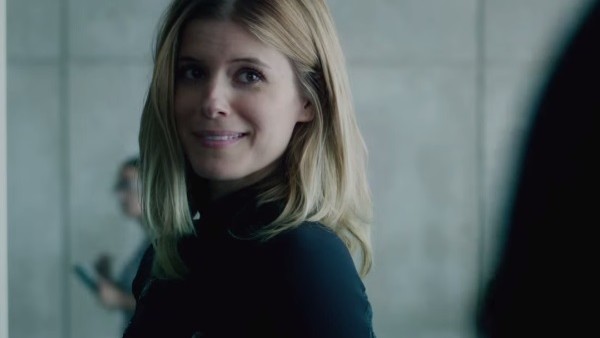
But, worse than that, all too often these "funny moments" are made up of two different moments and twisted into a Frankenstein punchline. And to what end? If the movie doesn't have any quippy gags, then don't just pretend it does. Fant4stic even used the same shot of Kate Mara laughing (hopefully originally at how dire her situation was) as the framing for multiple cross-cutting jokes across several trailers, none of which were actually funny exactly because they were each clearly constructed from three totally unrelated scenes.
It's not just for manufacturing jokes that this editing trick is used for either; look at how random lines are run after each other to create the illusion of a conversation or grandiose statement that just isn't in the film (Lex Luthor has stated two different "biggest lies in America" across Batman V Superman's marketing). The result is always the same too; the varied intonation in the lines' deliveries just makes it all sound very disjointed.
2. Stop With This "One Surprise" Marketing Tactic
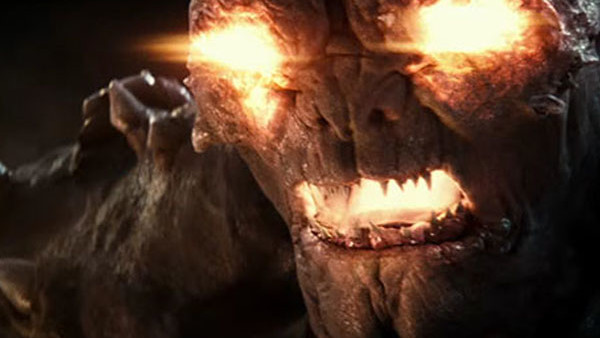
The criticism that movie trailers spoil far too much can be seemingly countered by a barrage of recent examples where secrets were kept tight until release: Luke in Star Wars: The Force Awakens; Dr. Mann in Interstellar; the return of Jean and Cyclops in X-Men: Days Of Future Past; presumably the Justice League in Batman V Superman and Spider-Man in Captain America: Civil War. Those are all pretty cool moments that were kept on the down-low, right?
Well, yeah, but what do these "major surprises" all have in common? That they're singular moments, one-and-done secrets against a backdrop that has otherwise been fully revealed. We're now at a point where movies have one allocated surprise that isn't shown explicitly designed to pique interest ahead of release or manufacture shock in the cinema, with everything else openly shown and discussed in the build-up to release.
There are exceptions to this - Star Wars kept a lot more under wraps than most, even if a lot was eventually revealed/alluded to in TV spots - but this is definitely emerging as a hard-and-fast rule, perhaps in reaction to the rise of spoiler culture. But why does it need to be this way? Yes, it's nice to have a morsel of surprise in the cinema, but wouldn't it be nicer to get a proper shock from a big movie?
Even Iron Man 3, which contained a shock so controversial that years on it's still a heavily divisive film, only really had that one ace up its sleeves; everything bar the Mandarin twist was out there from the start.
1. Consult The Director
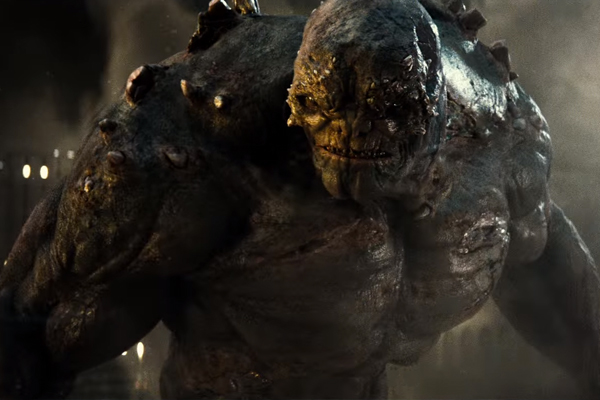
It shouldn't be the case that after a particularly underwhelming trailer the director/writer/other key creative has to come out and reassure burnt fans that the movie is different to how it's currently being advertised. Seriously, just think how ridiculous it is that Zack Snyder is having to defend Batman V Superman in the wake of a spoiler-ridden trailer, or that Simon Pegg shares fan bewilderment over the teaser Star Trek Beyond, a movie he wrote?
While it's clear sometimes distributors do work with a director on crafting the best marketing campaign possible - Bryan Singer tweeted an image of him working on X-Men: Apocalypse's trailer and The Force Awakens entire campaign was meticulously planned with the cooperation of the always secretive J.J. Abrams - all too often it feels like a film is simply pawned off on the trailer editor who's given an incredibly vague brief and free reign to butcher whatever footage he wants.
Now, of course, in the months leading up to release a director typically has more pressing concerns on their mind, but their knowledge of what tone the finished movie's going for and what big reveals shouldn't be ruined is essential information for a editor. As trailers become as big as the movies themselves, it's only sensible the directors get a little more involved.
What problems with movie trailers do you think need fixing? Share your suggestions down in the comments.