10 Simple Tips To Instantly Improve Your Screenplay

If you go looking for screenwriting tips online, you'll certainly find 'em. The internet is packed to the brim with screenwriting tips of all shapes and sizes, many of which can prove themselves to be totally invaluable in the sum of one small sentence, whilst others seem to exist purely to contradict everything and anything you've ever read or learnt about the craft. Some tips, of course, will only work for certain people, although a truly "great" screenwriting tip should benefit all those who read it. For this article, I've tried to assemble 10 of that kind - tips that will help you to make your screenplay better right now, in just a few simple steps...Welcome to a new series of articles were running here at WhatCulture, prior to a new section of the site that will be opening up soon one which will focus entirely on the subject of screenwriting.
Previously, Ive explored the screenwriting mechanics working behind The Dark Knight Rises, Prometheus, Django Unchained and Iron Man 3. Ive also offered out a few handy tips for beginners who might just be getting into screenwriting, and recommended the screenplays that I believe every aspiring writer should get acquainted with. Today, Ill be offering out 10 simple ways to improve whatever screenplay you happen to be writing at this time...
10. Don't Over-Describe Your Characters

JACK enters the saloon - he's dressed in a long, filthy duster jacket. He's well over 6ft tall, his face covered in four day's worth of stubble and tainted with years of experience. His cowboy hat is tipped slightly over his forehead, covering his eyes and creating an air of instant mystery. Under his jacket, a shiny metallic star can be glimpsed, pinned clumsily to his shirt. His teeth are yellow and rotten. An intimidating character, if ever there was one.It's just too much. We get way too much detail about this character, even if it seems like essential stuff. It happens easily, of course, because you want to make sure that whoever's reading your script gets exactly the kind of person you're writing about. But if we ease up on the description somewhat and let Jack do something as he enters which helps to define his character instead of all the description, we're on the right track. For example:
JACK enters the saloon. He's a giant compared to the rest of the patrons, clad in a duster jacket and tipped cowboy hat. He surveys the saloon without saying a word. Then he spits a huge, brown mess of chewed tobacco onto the floorboards from between two rows of yellowing teeth.We've got exactly the same impression of Jack without over-describing the guy. The fact that he spits tobacco onto the floor as he walks lets us know he's an "intimidating character" without spelling it out (and also gives us an avenue to mention the state of his teeth). Also saying that he's a giant is more interesting than writing down his actual height - it gets the imagination working. If possible, then, go back and dilute moments like this throughout your entire screenplay, and let actions speaker louder than overwrought descriptions.
9. Can You Cut Down Your General Description/Action By Half?
 This is something of an extension to the point I just went over, though here I'm talking about all of the description and action in your entire screenplay. In this case, you don't need to necessarily go through you whole script trying to cut things down, because most of the time, you're probably find that what you've written needs to be said. But ask yourself, at least: is it possible to cut this down by half and still get the message across? This is massively important, because cutting down your description and action to its bare bones makes for a far sleeker and easier reading experience. You know when you're reading a book and you get to a huge chunk of description and you instinctively scout the page for some dialogue? That's probably the same thing that's going to happen when a reader gets ahold of your screenplay and notices endless pages packed with description. You've heard less is more, too, right? Remember that with a script, you're guiding somebody through a piece of writing that should exist to imitate the exact speed and delivery one would feel watching the same thing on the big screen. Your want the experience of actually reading this blueprint to be a relatively easy one, so cut down the big words and massive explanation-aligned paragraphs. Try and get your point over as coherently and as neatly as possible. You want somebody to keep reading because your style is making it easy for them to do so.
8. Read Your Dialogue Out Loud
This might seem like an incredibly simple tip, but many writers just don't seem to take notice - maybe because it seems weird or something to actually do it, or because they don't like the idea of somebody overhearing them speaking their dialogue out loud. But do it. Do it all the time, at the end of every scene you write. Read every single "finished" line of dialogue out loud and see what it sounds like to actually hear it. You might be surprised. I've written lines of dialogue that I thought sounded great on paper, only to end up saying them out loud and finding that they don't sound right. If you pick up a novel and read the dialogue out loud, more often than not you'll find that it sounds oddly clunky. Stephen King's dialogue works amazingly in his books, but on screen, it's usually terrible. Stephen King just isn't very good at writing dialogue in screenplays. It's a totally different style. My point is: if it reads good on paper, it might not read as well when it's being said by an actor in real life. Genuinely imagine that your dialogue is being said out loud by a paid actor; see if you can actually imagine somebody saying it in a movie. Sometimes you'll have to change a few words around, or maybe you'll have to rephrase the line entirely because what you wrote just doesn't flow quite as well as it did on the written page. Better yet, if you can find somebody willing to read through you entire script with you, seize the opportunity: when they stumble over certain lines or you see them struggling to get one of your sentences out, it probably means that your line is a dud. Have them try to them reinterpret the line in a way that makes them feel more comfortable - you never know, they could be onto something. If not, at least you've been made aware of it.
7. Do You Really Need That Voice Over?
 If there's one thing that I've noticed reading through hundreds and hundreds of speculative scripts over the past few years, it's that writers love to use voice over narration. I think, for a lot of first-time writers, it's something of a comfort to have the constant ability to reiterate your story beats and explain things that you think might go over the audience's heads. As a framing device, it can sometimes be useful (think Sunset Boulevard). In most cases, though? That voice over you've taken so much time with probably isn't necessary. The simple method I like to use to decide whether or not a voice over is needed (and trust me, they usually aren't) is to remove it completely. Does your story still pretty work without the voice over in place? If so, you probably don't need it, and it isn't helping your script. Fact is, a voice over should only be used to comment on the story at hand anyway, and not to actually tell it, so removing it shouldn't take anything away from your screenplay. Which begs the question: how necessary was it in the first place? A lot of the time, you'll find that you're just wasting precious page space for something that doesn't really improve your screenplay overall. There are differing opinions on this, of course, and this one just happens to be mine. Generally speaking, though, there's a time and a place for voice over, and if you're not sure whether or not you're script is that right time or place, it's probably easier to disregard the device all together.
6. Be As Creative As Possible With Your Settings
 I can't actually remember where I heard this first or where I actually saw it (it might be from an existing movie, to be honest, though I apologise for forgetting its name if so), but it's always stuck with me as an image and it constantly springs to mind whenever I write a scene. The scene was as follows: two gangsters are discussing a future mob hit in private. A simple concept, and one that we've seen in a whole bunch of movies. The thing that made this particular variation on the scene so memorable, though? The setting. The gangsters were sitting in an empty children's playground. On the swingset. Just chatting business. But the strange juxtaposition made it feel oddly sinister: the fact that two men are talking about killing somebody, but in a place that we associate with children and laughter and families, just made it far creepier than if they had been talking in a restaurant or an apartment, which is where these scenes always seem to take place. Point is, I remembered it. It stuck with me. And it's with this attitude that you need to construct all of your scenes, because you're striving to create a continuous stream of moments that people will remember. Got a scene with people just talking in a hallway? Where else you could move the action so that the scene is instantly more memorable? It doesn't have to be crazy and it doesn't even have to juxtapose - you simply want to create a memorable image; one that sticks in the minds of the audience, no matter how big or small the moment is.
5. Be Critical Of Your Exposition
 Exposition is a narrative technique which serves to provide backstory to the audience: every movie has tons of the stuff, though it's your job as the writer to make sure that nobody really notices when you're using it. It's not always that easy to hide, though, and there are good writers out there (Christopher Nolan, for example) who aren't particularly good with exposition. When going over your script, though, I can't recommend enough that you try your best to find better ways to employ exposition. The worse case of exposition overload comes in the form of an "information dump," which is one character tells another character something they already know because the screenwriter needs to tell the audience about it. In reality, moments like this rarely occur. Why would somebody say something that they knew somebody else already knew? That's to say, read your script and genuinely be honest with yourself. Would a character really say, to a co-worker who had experienced the same situation, the following line?
"Remember last year when the lab exploded? Fifty people died... we couldn't get back into the building for weeks. The boss went nuts and starting firing people all over the place. It was crazy."I doubt it, because all he would have really needed to have said is "Remember last year?" and the other character would have known what was being discussed. The rest of the information is just for our benefit. But it's possible to give across the same information without making it obvious:
"Well, we don't want a repeat of last year. I can't go to that many funerals in the space of a week again. And nobody around here is gonna put up with the boss if he starts firing people."The phrasing is slightly different, but this time somebody could get those points across and it make sense. It's not a great line of dialogue, of course (an out of context example, at best) but you get the idea. Tweaking this kind of thing in your own script is of huge importance: there's nothing that will take you out of a movie faster than a clunky line of exposition. It instantly reminds you that somebody sat down, wrote the line and - worst of all - tried to sneak it past you. It's a certified mood killer, for sure.
4. Scene Doesn't Move Your Story Forward? Cut It!

3. Does Your First Scene Emphasise The Overall Tone, Genre & Mood Of Your Script?
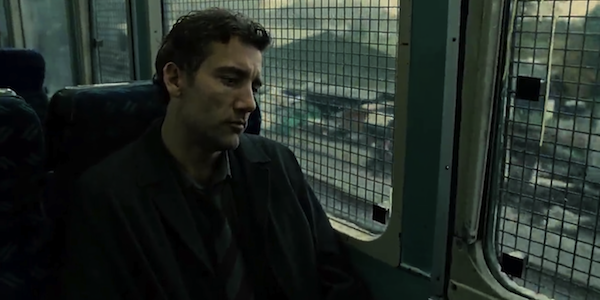 The first scene in any movie is where an audience's expectations are set up for whatever it is that's to follow. It's the point at which you allow them to understand the style, mood, genre and tone of your entire screenplay. Your first scene, then, is critical, because this is the one that will either draw a script reader into your world, or have them throwing your work into the rejection pile because it feels like something they've read before. Your first scene needs to be gripping, though it doesn't need to be the best scene in your script: you need to set up your world, though, give the reader enough information to intrigue them, and - mostly importantly - allow them to understand what sort of movie they're going to be watching. It's important that you re-work your first scene (or first ten pages, whatever comes first) so that it's working at its maximum capacity. A showcase, if you will. Establish your own style and start at the latest point in your story that makes sense. Make sure that your protagonist makes an appearance as close to the first ten pages as possible - you don't want to make it hard for anybody to "get to know" your main character, and the later you include them in the story, the harder they are to relate to. That doesn't mean you need to start with your protagonist, but that's never been a bad idea. Don't forget to make the genre known in the first scene: there's nothing more irritating than a spec that tries to be coy about its genre (only rarely does this pay-off). If you're writing a sci-fi, make sure we know it's a sci-fi movie: show us the future, for example, or how people are living in the year 2434, as soon as possible. Audiences like to know where they stand; this goes doubly so for exhausted script readers.
2. Does Your Script Sound Like It's Written By One Person?
 Establishing your own unique voice is the cornerstone to any successful writing career. In my previous article for Iron Man 3, I went into detail as to how Shane Black helped to make himself into the world's highest paid screenwriter through use of his unique voice. Your job isn't to imitate Black, of course, but to ensure that your own voice is the one that's coming across on every page at all times. Remember: you don't want your script to feel like it's written by different people because you ended up experimenting with different styles for the five or six months that it took you to conjure up a final draft: keep it consistent, and - mostly importantly - keep it sounding like you. Ultimately, studios want to make movies that come from writers with their own clear, unique voices... voices they can market time and time again.
1. Print Your Script Out & Read It Before You're "Done"
 This will perhaps sound somewhat unnecessary to many fo you, but it's something that works for me, so I'm opting to include it. When you read your script on a computer screen over and over again, you become familiar with it in a way that... well, in so that it doesn't ever feel "permanent" - you know you can change anything at at a moment's notice, because you can. That's the beauty of word processing. No harm done, right? But it helps to get your screenplay out of the computer and onto the page, because you begin to see it in a new light when you're staring at actual printed pages. From the perspective of a script reader, for example. And when you see your mistakes on script pages that aren't digital, you remember them better. It's a real learning curve to have this huge collection of pages and... wait, this scene just isn't working. I need to fix this. It forces you to look at your work from a different mindset entirely, and one which will grant you a new-found appreciation of your script. It's of my own opinion, anyway - whether you're worried about wasting paper or not - that it helps to read the physical copy - the copy that, symbolically, anyway, you hope will one day be in the hands of that special person who can make your dreams come true. Like this article? Let us know in the comments section below.