10 Theories That Help Explain The Works Of David Lynch

This is a story that happened yesterday. But I know it's tomorrow.

Few directors create work as abstract and mysterious as David Lynch. From the dark surrealism of Eraserhead, to the narrative playfulness of Mulholland Drive, right through to the dense experimentation of Inland Empire, his is a filmography rife for picking apart and arguing over, from fans and critics alike. Lynch is notorious for refusing to shed any light onto his original intentions and meanings, always maintaining the belief that it is more important that his audience interprets the work in their own way. He is even quoted as frequently saying that visual ideas just come to him, and that his films are therefore divorced from any measured overarching meaning. Infuriating though this may initially appear, it has resulted in some genuinely fascinating (and often unbelievably intricate and complex) theories as to the underlying concepts and themes behind his output. 10 such theories are listed here, ranging from fan forum hypotheses, to interpretations of individual films, to more in-depth academic readings of the works as a whole. What inspired Eraserhead? Why so many shots of flashing lights and references to electricity? What is the Black Lodge? Can anyone explain the puzzle-box narrative of Mulholland Drive? Does everyone "live inside a dream"? All of these questions and more are, if not answered, then at least pondered carefully in this list.


10. Eraserhead Is About Lynch's New Fatherhood

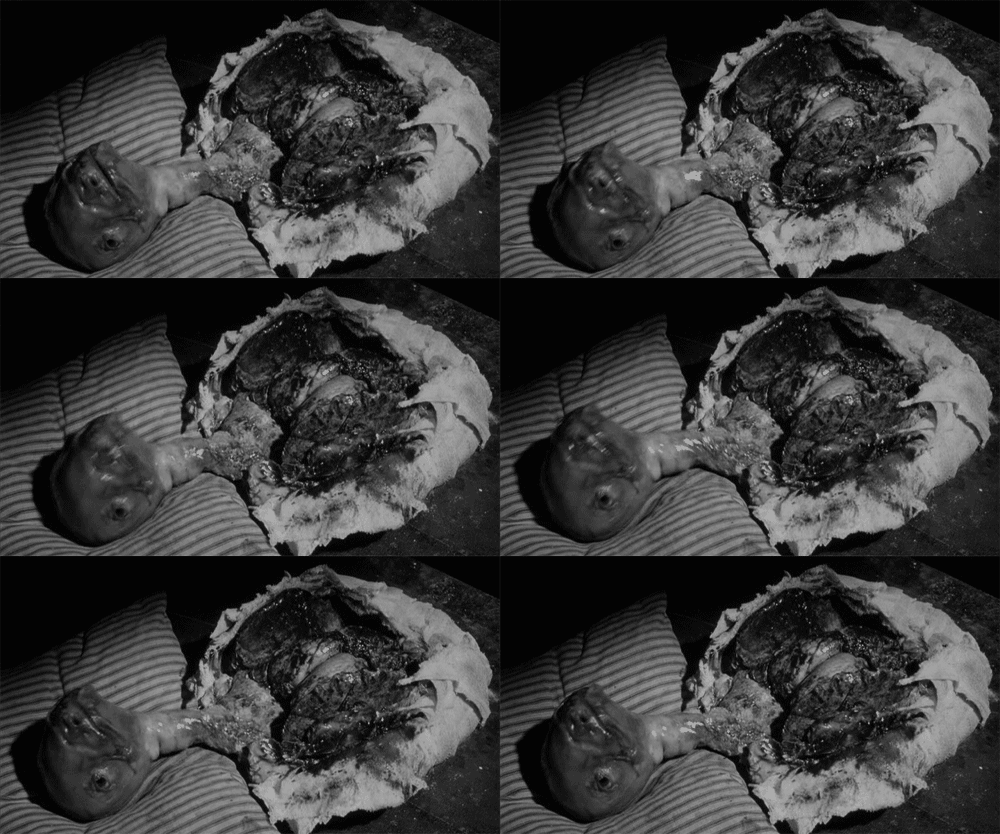
It's probably worth beginning with a pretty straightforward and fairly well-known theory about Lynch's work: the most common interpretation of Eraserhead's dark and confusing descent into Hell. The film revolves around Henry's (Lynch regular Jack Nance) apparent difficulties in coming to terms with settled marriage life and parenthood, and it has often been suggested that, because Lynch was going through similar experiences at the time, it is a semi-biographical narrative. This isn't a huge leap. Henry suffers immeasurably throughout Eraserhead, having to put up with the fact that every other character bar himself is clearly unhinged in some way. In fact, the other characters all feel a bit like they've been drawn from well-worn stereotypes of an awful marital existence. There's the menacingly grinning father-in-law, the sexually-driven mother-in-law, the neurotic and demanding wife, the temptingly sensual neighbour, the innocent fantasy girl that the man dreams of running off with and, most crucially, there's the incessantly crying baby.
Henry's baby is a bizarre, monstrous looking creature. It has an alien appearance while also evoking images of sex cells. It is as if Henry (and, in real life, Lynch) sees his baby as something that is to be reviled and repulsed by. A little problem, caused by sexual deviance, that has come to dominate his life. Its never-ending whimpers keep him awake, driving him insane with exhaustion. All he wants is to run away with the beautiful dream-like Lady In The Radiator who squashes sperm-shaped creatures beneath her feet while dancing alluringly. The symbolism couldn't be any clearer. Of course, Lynch has denied that this interpretation is correct. He has stated outright that no-one has come close to interpreting Eraserhead accurately. It is interesting that he is so defensive of the meanings behind what is clearly his most "personal" film. Whether his denial is to be believed - or whether it even matters, given his belief in the power of audience interpretation - is a wholly different matter.

9. Recurring Links To Alice In Wonderland And The Wizard Of Oz

David Lynch is known to be a fan of both Lewis Carroll's Alice In Wonderland and Victor Fleming's The Wizard Of Oz, and there are many allusions to these texts in his own work. This has resulted in many fans suggesting that, perhaps, his films are reinterpretations of these works. Here are a few of the references to both that can be found throughout his filmography. The Wizard Of Oz: Practically the entirety of Wild At Heart is a pastiche of imagery and characters from The Wizard Of Oz, and it is filled with very clear references throughout The constant use of shots of roads in Lynch's films has been read as a reference to The Yellow Brick Road, and the journey that Dorothy goes on in the classic film. Dorothy Vallens, the desirable woman in Blue Velvet, is named in reference to Oz's Dorothy. As is Major Garland Briggs in Twin Peaks - a nod to actress Judy Garland. When Nikki/Sue vomits on the Hollywood Walk Of Fame in Inland Empire, it is onto a star with the name "Dorothy" on it. The dream-like narrative of Mulholland Drive is similar to dream-like structure of Oz, with the revelations of Club Silencio being very similar to the unmasking of the Wizard in the earlier film. Mulholland Drive and Oz both feature jitterbug dance sequences. Roquat, ruler of Oz's underground world, is "about 4 feet tall". Mr Roque, the evil controller of Mulholland Drive, is 3'7". Alice In Wonderland: The Rabbits in Inland Empire are the clearest nod to Alice In Wonderland. Nikki/Sue disappears down the rabbit-hole that is the film's narrative, and instead of answers she finds... Well... Rabbits! Diane, who Cooper speaks to through his dictaphone in Twin Peaks, is a reference to Dinah - Alice's cat, who she talks to constantly without receiving a response. Lynch consistently employs the same forms of poems and riddles that dominate Lewis Carroll's work. "That gum you like is going to come back in style"; "This is a story that happened yesterday, but I know it's tomorrow"; "You will see me two more times if you do bad"; "Through the darkness of future past..." - all mysterious lines that could absolutely have appeared in Carroll's books. Windom Earle's obsession with cards - and the Queen of Hearts in particular - in Twin Peaks is an obvious reference to Alice's stories. The frequent foregrounding of conventionally "pretty" blonde women (Laura Dern, Naomi Watts, Lady In The Radiator, Sheryl Lee, Patricia Arquette) has been interpreted as a nod to the innocent Alice.

8. Kyle MacLachlan Is The Cinematic David Lynch

This is another common theory that has come to be accepted by most Lynch fans. Kyle Maclachlan has starred in three of Lynch's most important cinematic universes: the flawed big-budget science-fiction epic Dune, the critically-acclaimed Blue Velvet, and the televisual masterpiece Twin Peaks. While Lynch has employed many actors on multiple occasions (see, as just a few examples, Jack Nance, Laura Dern, Grace Zabriskie, Justin Theroux, Harry Dean Stanton, etc.), there is little doubt that MacLachlan is the figure most associated with the director. MacLachlan's long association with Lynch has been analysed at length by fans, with the overwhelming belief being that MacLachlan has been selected to play characters that Lynch has written based on himself. There are several reasons for this. The first is the visual resemblance. MacLachlan absolutely resembles a young David Lynch: just look at the facial structure (that pointed chin), and the slicked back hair of Special Agent Dale Cooper in Twin Peaks.
There is also the curious heroism that defines MacLachlan's characters. In Blue Velvet, Jeffrey is a young innocent detective, investigating the dark underworld to which he does not belong. This could just as easily be a description of what Lynch is doing as the film's creator. In Twin Peaks, Cooper is the image of goodliness, always doing the right thing. He is a city boy that is utterly captivated by both the beauty of the town of Twin Peaks and the ugliness of its secrets. Watch any interview with David Lynch and you'll see a man that shares these exact traits. In Dune, MacLachlan plays the hero Paul - the fantasy idol that Lynch, as director, wishes he could be. In all of these roles, MacLachlan seems to hold unique spiritual insight beyond the comprehension of other characters, as if he has been bestowed with a third eye by the narratives' creator (famed, of course, for his love of transcendental meditation).Plus, on top of all of that, there's the mirroring between the master and his apprentice. This is particularly clear when Lynch, as Special Agent Gordon Cole, visits Twin Peaks personally. His clothes, his mannerisms, his spiritual understanding, his bizarre quotes... They are all eerily similar to those of his protégé.

7. Cinema Of Attractions

One analysis of Lynch's work that has dominated much academic discussion is that he is obsessed with the idea of film as being a purely experiential medium. In other words, he is more interested in making his audience "feel" something than actually creating a story that can be easily followed. This ties Lynch in with the notion of a "cinema of attractions", a term most frequently applied to the early days of cinema (late 1800s-early 1900s). During film's infancy, the most exciting aspect of seeing a piece of film wasn't the notion of a great piece of storytelling. Rather, it was the thought of this new and incredible medium itself. Pictures that move! Images from distant worlds! Think about the famous anecdote about the first screening of the Lumière brothers' "Arrival Of A Train At A Station", when audiences were so shocked by the moving images that they supposedly fled from the oncoming locomotive. Before film became preoccupied with narrative and storytelling, it was a format entirely dedicated to its visual power.
Lynch has often been quoted stating that he loves this idea of a "pure" cinema, divorced from the pressures of a story and instead playing with the beauty of the image itself. Although his films certainly have more narrative than those from cinema's infancy, he has openly explained that he deliberately creates sequences entirely for their emotional and aesthetic impact, rather than their importance to the story:
It's so magical to go into a theatre... You go into a world. Cinema is a language... It's so beautiful to something that can be done only through cinema... When I catch an idea for a film, I fall in love with the way cinema can express it... A film should stand on its own.
The director knows that he isn't creating a novel. Stories are exciting, and he enjoys the storytelling aspect of his films, but he much prefers the sounds and images that can be evoked in a wondrous piece of cinematic art. The ubiquitous red drapes in his films, which usually appear in scenes that are revealing something to the audience, represent that moment when "the lights go down, it's very quiet, and then the curtains start to open. Maybe they're red". Lynch wants to show something to his audience beyond a simple story - he wants them to experience the same emotional attachment to film as a medium that he maintains.

6. Technology Vs. Fantasy
Lynch's love of cinema as a distinct medium has inspired the constant references to technology, industry and filmmaking apparatus in his films. There are so many examples of this: the industrial hum of Eraserhead's soundtrack; the video cameras that dominate Lost Highway's narrative and visual style; the revelatory shots of movie cameras in Inland Empire; the tape recordings in Mulholland Drive's Club Silencio; Cooper's dictaphone in Twin Peaks; the flashing and faltering lights, references to electricity and shots of factories that appear throughout his oeuvre.... One interpretation of this is that the director is playing on the well-worn phrase "the medium is the message", coined by Marshall MacLuhan to refer to the fact that an audience comes to understand what is happening in a medium (say, a film, a song, a TV show, a novel) through the stylistic devices of the medium itself. Effectively, the only way that a film makes sense is because of its own technologies - sounds, cinematography, editing, acting, post-production. In Lynch's films, he does not want the audience to forget this, so he consistently reminds them of the presence of technology in the film, as in the examples listed above.
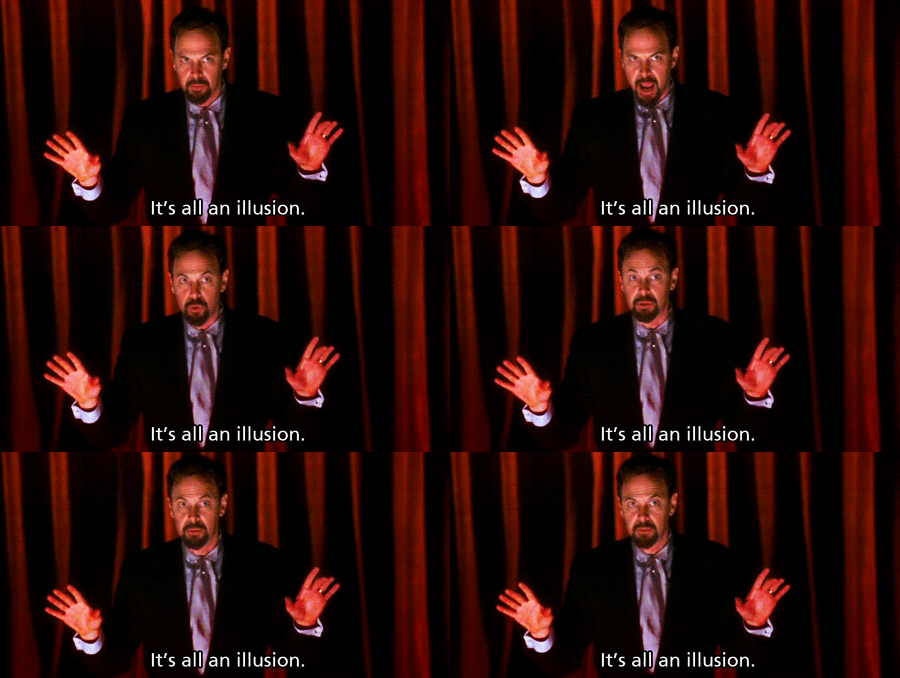
In Lynch's mind, the narratives and images of films are fantasy places that audiences can escape into when "the lights go down the curtains start to open". They can lose themselves in a beautiful world that they can't experience elsewhere. But it is important to Lynch that viewers do not forget that this fantasy world has been carefully created by technology. The film's universe isn't an actual fantasy, like a dream - it is a carefully designed and constructed film. Everything shown on screen has been made with the use of cameras, microphones, lighting, etc. It is impossible to forget this while watching Lynch's films. He reminds the audience constantly, as with the grainy video footage in Lost Highway, the unclear shifts between "film" and "filming" in Inland Empire, and Bondar's reminder that everything being shown is "an illusion" in Mulholland Drive.

5. Blue Velvet Is Heavily Inspired By Freud And Psychoanalysis
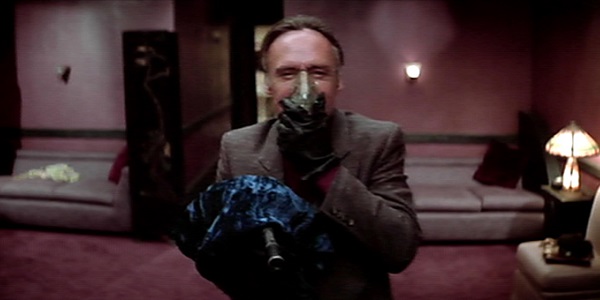
A hugely popular theory that has been applied to Blue Velvet so frequently that it has effectively become accepted as correct is that the whole film is an extended allegory of Freud's Oedipus Complex. When the evidence is highlighted, it becomes difficult to argue with this particular interpretation. In Freud's original psychoanalytic theory, he argues that every child suffers sexual attraction to the parent of the opposite sex. Essentially a part of growing up and maturing sexually, the argument is that a person's first experience of sexual feelings is towards (in the case of boys) their mothers and (in the case of girls) their fathers. Because this is a taboo in society, these feelings are pushed aside, and children make up for the fact that their feelings are unfulfilled by identifying strongly with the parent of the same sex. Make sense? It certainly caused some controversy when Freud first spouted this idea! Anyway, this has been applied often to the story of Blue Velvet. At the beginning, the father of lead character Jeffrey Beaumont suffers a heart-attack and ends up incapacitated in hospital. This father is associated with the picturesque world of Lumberton, with its white picket fences and technicolor images. With no father to identity with, Jeffrey sinks into the dirty underworld beneath Lumberton and seeks a father figure elsewhere.
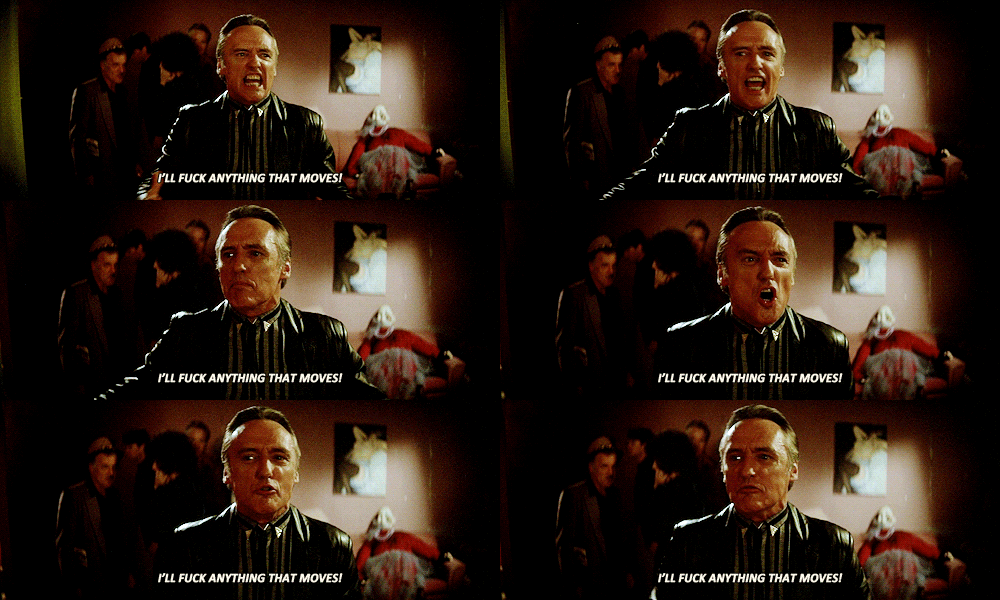
He finds that father figure in the aggressive, abusive and sexually-promiscuous Frank Booth (Dennis Hopper). In a scene that is so clearly influenced by Freud's ideas about childhood urges that Lynch doesn't even deny it in interviews, Jeffrey watches as his new father (Frank actually refers to himself as "Daddy" throughout the sequence) sado-masochistically rapes the woman (Dorothy Vallens, played by Isabella Rossellini) he desires. Jeffrey, wanting to identify with Frank, goes on to engage in multiple sexual exploits with Dorothy, becoming increasingly like his would-be father. This descent into sexual madness drives the narrative, with Frank constantly treating Jeffrey like his misbehaving son and punishing him for misdemeanours, until Jeffrey kills his new "Daddy" and his biological father is shown to be fully recovered from his heart-attack. Suddenly, the glowing beauty of Lumberton returns - and Jeffrey is integrated into a healthy, wholesome relationship with the oh-so-goodly Sandy (Laura Dern).

4. The Black Lodge Is The Afterlife
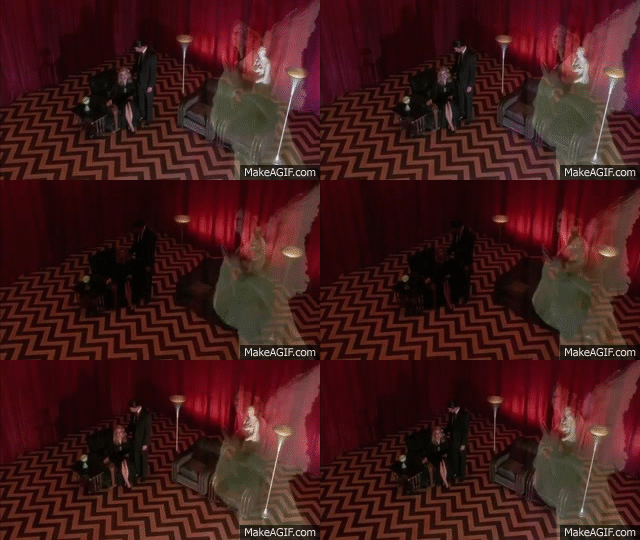
Twin Peaks is a show that is "filled with secrets", but its biggest enigma is The Black Lodge. First appearing in Cooper's famous dream in the first season, it eventually grows into the most critical plot point of both the second season and Fire Walk With Me. However, aside from the fact that many strange and apparently supernatural beings live there, including MIKE, BOB, The Giant and the Tremonds/Chalfonts, and that it seems to be situated "above a convenience store", the exact concept of The Black Lodge (and its sister-place, The White Lodge) is typically ambiguous. One element that does clarify things slightly in the beautiful ending of Fire Walk With Me, in which the murdered Laura Palmer (Sheryl Lee) appears full of the life and contentment that she has been notably devoid of throughout the film. She is in the ubiquitous Red Room that seemingly represents the Lodges, and is comforted by Dale Cooper who is known to be trapped there. Above her, glowing in Lynch's famous flashing lights, is the angel that she believed had deserted her.
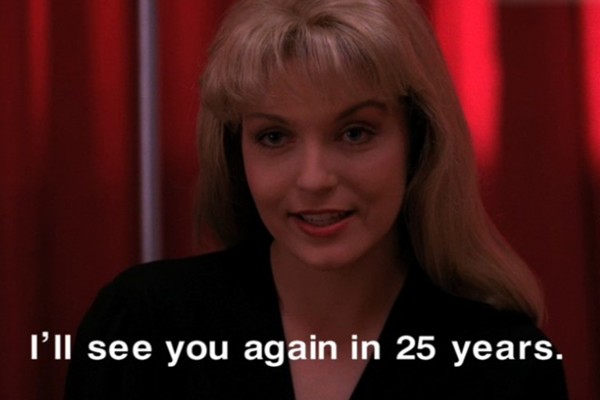
Now, of course, Lynch is suggesting that Laura is finally free of her lifelong torment, and that her personal sacrifice was an act of bravery that allowed her to be amongst the angels. This begs the question: is this The White Lodge, the site of all that is good with the world? Earlier, BOB and MIKE have been shown sharing their "garmonbozia" ("pain and sorrow") in a room identical to this one, but they are known to be dangerous, murderous figures. Are The Black Lodge and The White Lodge visually exactly the same? And, given that Laura has died, do they represent some symbol of Heaven and Hell? Cooper is told in Twin Peaks that, if he is shown to be pure of spirit, he may pass through into The White Lodge. If he falters, The Black Lodge will tear his soul to pieces. Given that Lynch has admitted that he is a spiritual man, could it be that this is his own reflection of the afterlife? One thing is certain. The Red Room (whatever it may be) is the place in which Laura told Cooper she'd see him again in 25 years. The returning Twin Peaks may finally solve some of the mysteries surrounding the room defined by those red drapes and that zig-zag floor pattern...

3. Many Of Lynch's Films Actually Take Place In The Black Lodge Itself

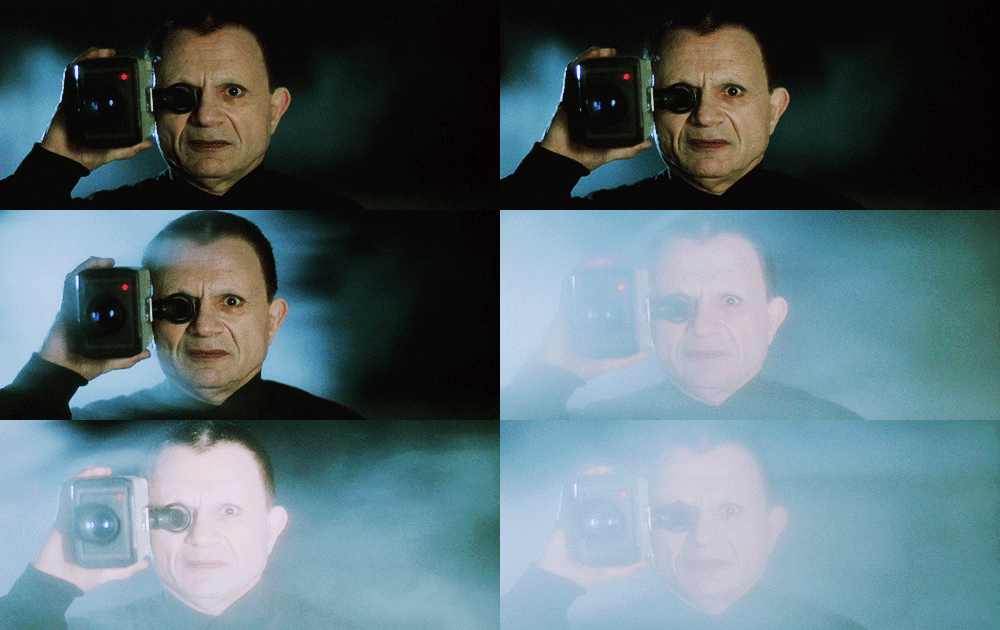
Whether or not fans know what The Black Lodge actually is, one theory that continues to dominate discussion of Lynch's films (particularly those that saw release after Twin Peaks) is that they take place in The Black Lodge in some way or another. This can be most strongly applied to the twisted narratives of Lost Highway, Mulholland Drive and Inland Empire. First, The Black Lodge is a space inhabited by otherworldly spirits, and Lynch fills these three films with characters that clearly share the same foresight and supernatural powers as those within The Black Lodge. There's The Mystery Man in Lost Highway, who shows up whenever and wherever he pleases. There's The Cowboy and The Bum in Mulholland Drive, who seem to control the narrative and whose motivations are never made clear to the audience. There's The Rabbits, The Whores and The Phantom in Inland Empire, all of whom possess deep insights into the film's events. These characters also speak in weird ways that evoke the backwards-speaking Black Lodge residents. Think about the sped-up voice of The Phantom as he hypnotises his victims, the coded mocking of The Cowboy and The Mystery Man, the slurred words of The Whores, and the puzzling dialogue of The Rabbits. They all also look out-of-place (like, say, a dwarf or a giant would). The Mystery Man, The Cowboy, The Bum and The Rabbits' images are all genuinely surreal, while The Phantom and The Whores are consistently drenched in overexposed lighting to make them appear supernatural.
Additionally, there are constant allusions to time working differently in these films - something that is is a key element of The Lodges. There's the shifts between reality and script in Inland Empire, the mixed-up narrative of Mulholland Drive, the vast empty spaces and Möbius strip story of Lost Highway... There's the presence of doppelgängers and ever-changing identities, which is explicitly linked to The Black Lodge in the finale of Twin Peaks season two. Each of these films feels like extended studies of The Black Lodge sequences of Twin Peaks, exploring the ways that different characters experience this otherworldly place. There's also a ton of references to doorways and openings: imagery that is a key element of Twin Peaks. See, for example, the picture that "would look nice" on Laura's wall in Fire Walk With Me - an image of a door to The Red Room. If it is assumed that these films are indeed connected to The Lodges in some way, one thing is very clear - it must be The Black Lodge, as the otherworldly characters of Lost Highway, Mulholland Drive and Inland Empire are absolutely not morally "good".

2. Mulholland Drive's Narrative Is A Dream
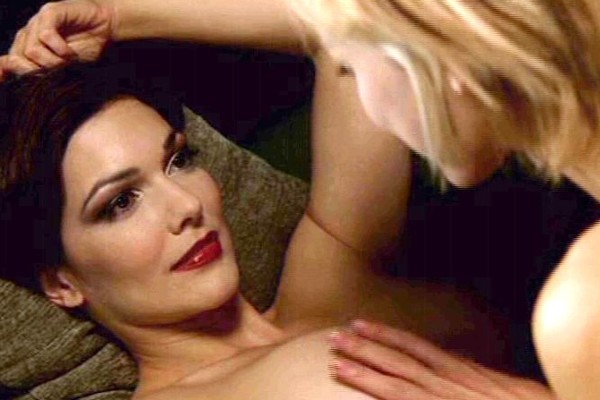
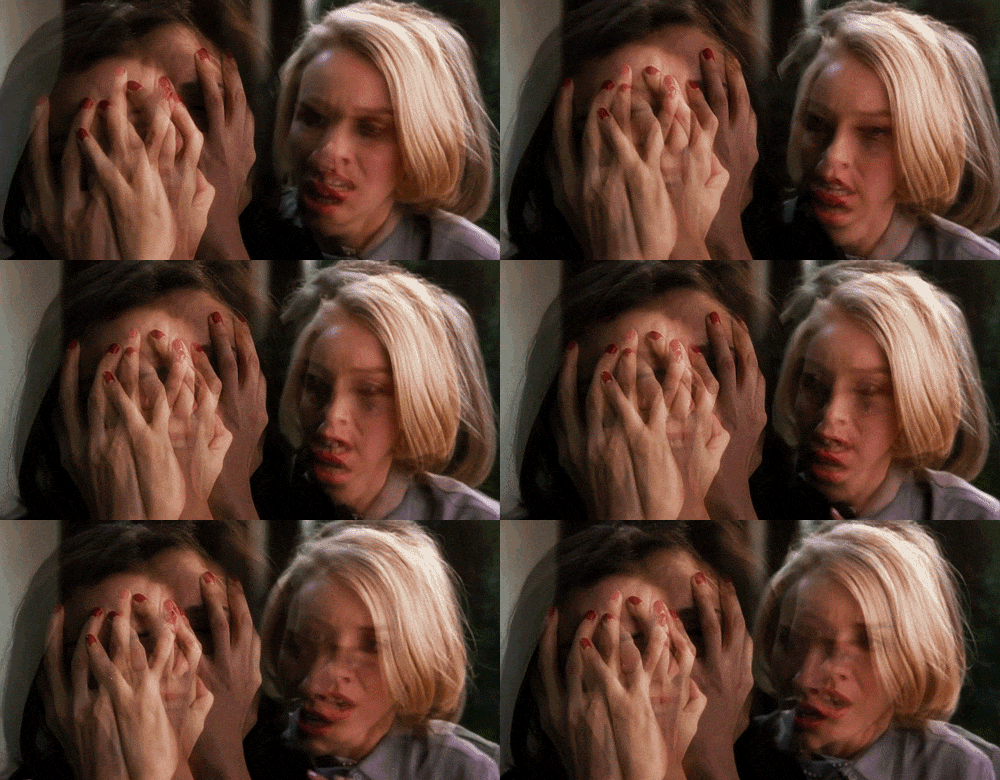
The David Lynch film that has seen the most readings and interpretations dedicated to it, without a shadow of a doubt, has been Mulholland Drive. This is primarily because its complex narrative - unlike the apparently "meaningless" structures of, say, Eraserhead, Lost Highway and Inland Empire - is teasingly set out in a way that seems to suggest there is hidden meaning there if one digs deeply enough. The most common readings of Mulholland Drive centre around the entire that it is a dream. This revolves around the idea that "Betty" (Naomi Watts) is the fantasy image of the person that Diane (also Naomi Watts) has always wanted to be, and that she has invented "Rita" (Laura Elena Harring), who loves her in the way that Camilla (also LEH) never has in reality. When she wakes from the dream and realises she has had Camilla killed, she goes crazy with guilt and commits suicide. Although there are many different readings - some unbelievably carefully thought-out and complex - most analyses are, in some way, a variation of this. There are several clues that point to this interpretation. There is the ridiculously stylised lighting and performance style that introduces Betty to the audience, evocative of the fake niceties of Lumberton in Blue Velvet. There is the fact that Betty refers to arriving in a "dream place". There are the parallels between characters in the "sleeping" section of the film and the "waking" section. There's the characters and image in the first part of the film that can be spotted in differing roles in the second part (The Cowboy or the diner, for example).
Betty is everything that Diane cannot be. She is a gifted actress (like Camilla in the "real" world). She is adored by the woman she wants. She even gets to live out her own film noir-inspired fantasy in which she is "looking after" her beloved as they try to solve the mystery of her existence. It is telling that Rita initiates their sexual relationship, as if Betty is the irresistible one, but that she does not respond to Betty's desperate declaration of love (by this stage, the dream is unraveling). The Club Silencio scene is revelatory for Betty. Bondar reminds the sleeping Diane that this is all "an illusion", shaking her entire world and causing both women to cry as their lives come to a close, and The Cowboy demands that she wakes up from the illusion immediately. When she does so, with the blue box that should offer answers proving nothing but an empty non-sequitur in her dream, she faces reality once again. Rita is in fact Diane, and is sleeping with the director that rejected her. Betty is really Diane, a down-and-out failed actress living alone and with no direction in life. The film concludes with her shooting herself, haunted by the apparitions of the "dream place" she longs to return to.

1. Absence Of Meaning

There is a faction of Lynch fans and critics that argue that attempts to locate genuine narrative meaning in several of his more experimental films is in fact missing the point. This is partially linked to Lynch's "cinema of attractions", and the idea that he is most interested in creating exciting sequences and bizarre images than actually generating a cohesive story. While it is clear that Lynch certainly doesn't reject all forms of narrative structure (even his most abstract films have some form of story), the argument is that he includes many scenes primarily for their emotional resonance rather than to achieve narrative closure - often, perhaps, deliberately to tease his audience and remind them that they are watching a film. There are, of course, the famous performance scenes littered throughout his films. The Club Silencio sequence in Mulholland Drive, Julee Cruise's songs in Twin Peaks, Sailor's Elvis impersonations in Wild At Heart, The Rabbits in their sitcom... Scenes that throb with genuine emotionality, beauty and darkness, but often seem to lack little narrative purpose. Even in the case of Club Silencio, which is a scene that has been interpreted narratively in numerous ways, the ambiguities and stunning power of the sequence appear far more important than what Lynch is actually trying to tell the audience.
The most crucial clue that drives this perspective that Lynch is deliberately avoiding meaning and teasing audience expectations is located in his frequent use of enigmatic shots that never reveal anything and inclusion of seemingly central characters and bizarre non-sequiturs that don't seem to add much to the central narrative. There is the infuriating blue box in Mulholland Drive, which seems set to provide the answers before its absolute emptiness is ultimately revealed. See also the ominous shots of roads that appear in each of his films, all of which look set to lead the viewer to the answers that they desire but ultimately go nowhere. There's the unexplained side stories and characters in Mulholland Drive and Inland Empire that never seem to lead anywhere. The mocking take on Sherlock-style detective stories found in Agent Cooper's deductive techniques in Twin Peaks. The looping narrative of Lost Highway, with its unexplainable "Dick Laurent is dead" paradox. The Bum in Mulholland Drive - the character supposedly in control of everything - whose narrative role effectively appears unresolved and meaningless. Lynch wants everyone to remember that film is not purely about mysteries and stories. It is also about experiencing images and sounds that cannot be experienced elsewhere. The audience's search for meaning in Lynch's films is constantly undermined, because - this theory goes - seeking meaning in his work misses the point. As he himself as stated, "A film should stand on its own... People have a yearning to make intellectual sense of cinema. And when they can't do that, it feels frustrating."

In this post: 
David Lynch
 
Posted On: 
Contributor
Contributor

Articles published under the WhatCulture name denote collective efforts of a number of our writers, both past and present.