10 Things You Didn't Know About The Shawshank Redemption

Get busy living or get busy dying, that's god damn right, punk.

Have you ever wondered how it was even remotely possible for Andy Dufresne to reattach his poster of Raquel Welch to the wall of his prison cell after escaping? How about the substances that The Shawshank Redemption's producers used as a substitute for excrement as Andy crawled through a sewage pipe full of rancid waste? There's so many little tidbits that you may have missed while you watched Shawshank, and while most have seen the film hundreds of times due to syndication, there's still so many fine details that you won't notice until you continuously watch or read up about one of the greatest prison dramas ever made. Below is a list of things you didn't already know about The Shawshank Redemption. From alternative casting choices to receiving complaints about animal cruelty, there's more than just a few secrets about the film that you've likely never heard of. Andy and Red's relationship in the film is by far and away one of the most convincing friendships ever shown on the silver screen, but what the film doesn't overtly tell you is just as equally rewarding as the thought-provoking dialogue that the film has. So, take a gander and see if there are any nuggets of information here that you've missed or not never heard of.

10. Clint Eastwood, Harrison Ford And Paul Newman Were Considered For The Role Of Red

Yes, you read that subheading correctly, Red was almost played by the same guys that played Harry Callahan, Han Solo and Butch Cassidy respectively. Of course, nobody can imagine anyone suiting the role of Andy's best friend more perfectly than Morgan Freeman eventually did, but suspend your disbelief for just a moment and consider just how different the film could have been with one of the above actors filling the role. All three actors are quite rightly legends of cinema but it's hard to picture them ever fitting the authoritative presence and demeanor that Mr. Freeman eventually brought to the role. The perfect fit is hardly surprising, the film's director, Frank Darabont always had Freeman in mind to play the role as Red precisely because of his attributes. That's not to say Clint Eastwood couldn't play a jaded, institutionalised inmate well, but it's hard to escape the above actors' previous work. After all, how much gravity would Red's scene in the boarding house have had if he'd said "Get busy living or get busy dying, that's god damn right, punk."

9. Red Was Originally An Irishman With Red Hair
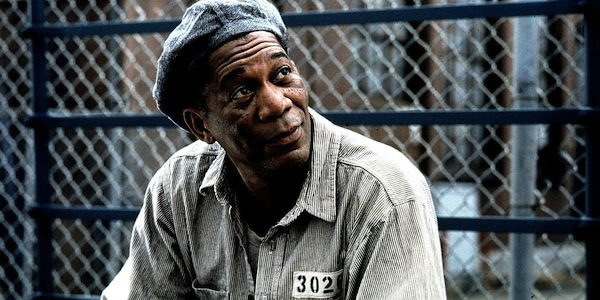
As celebrated as Morgan Freeman's performance in The Shawshank Redemption is, his character in the film, Red, was a far cry from the original appearance and background that Stephen King had written for him in his novella: Rita Hayworth and The Shawshank Redemption. In the novel, Red was described as a middle-aged Irishman with graying red hair, an appearance that Frank Darabont decided to take more than a few liberties with. Andy was obviously just as bemused as we were when he first met Red, eventually asking his fellow inmate why his associates referred to him as such. Without prior knowledge, the answer Red gives makes little sense, so when he states that "Maybe it's because I'm Irish", anyone who had never read the book was bound to be more than just a little confused as to what the obviously fake answer meant in the grand scheme of things. Knowing that his casting choice was wildly different to the character's original history, Darabont included the line in jest... Fortunately, it paid off.

8. Tom Cruise Almost Played The Role Of Andy Dufresne

If you thought the prospect of a different actor playing Red was strange, then you'll no doubt find this deeply unsettling: Tom Cruise was originally the front runner to play Andy Dufresne, but it wasn't a choice that Frank Darabont made. After Darabont secured the rights from Stephen King to adapt Shawshank into a feature film, Rob Reiner (of This Is Spinal Tap directorial fame) offered $2.5 million to direct Shawshank with Tom Cruise as Andy and Harrison Ford as Red. While Darabont was extremely interested in Reiner's vision for the film, he ultimately decided to direct the film himself, opting to pursue different actors for the roles of Andy and Red. Love him or loathe him, Cruise is a fantastic actor, and while he's known as more of an action star than one of drama by today's audiences, Cruise has been in his fair share of serious roles. A Few Good Men, Rain Man and Vanilla Sky have all had Cruise cast in roles that prove his versatility. Chemistry is what's important though, and it's hard to imagine Cruise having the same intimate (yet platonic) relationship with Harrison Ford as Tim Robbins did with Morgan Freeman. Bear in mind that Cruise would have been in his 30's at the time had he secured the role, and while Robbins is only a measly three years older than him, Tom simply would not have looked ragged enough to play the part.

7. Andy's Poster Of Raquel Welch Is A Giant Plot Hole

The poster that Andy uses in his prison cell to cover up the giant hole he's carved into it is just one big, giant paradox. After twenty years of scraping away at his cell wall with a piddly rock hammer, Andy finally manages to tunnel his way through through the solid wall and into the sewage pipes of the prison. While the possibility of that task is dubious in itself, it's the way in which Andy covers up his escape that simply makes no sense. When Warden Norton enters Andy's cell the morning following his escape, he finds everything but Andy waiting for him. Fair enough, we already know that Andy has escaped through a hole that he's concealed behind his Rita Hayworth poster, so that's hardly a miracle as the Warden sarcastically remarks. What is seemingly impossible on the other hand, is how Andy reattached the poster to the wall after he entered the tunnel. Before anyone says he simply reached around the sides of said poster and reattached the top half to the wall - remember that he entered head first, making that maneuver nothing short of impossible. We're putting our money on him paying off a guard to enter his cell and reattach the poster. It must be the answer, because there's just no way it was the result of a simple continuity error, no sir.

6. Mozart Is The Most Famous Star Of The Shawshank Redemption
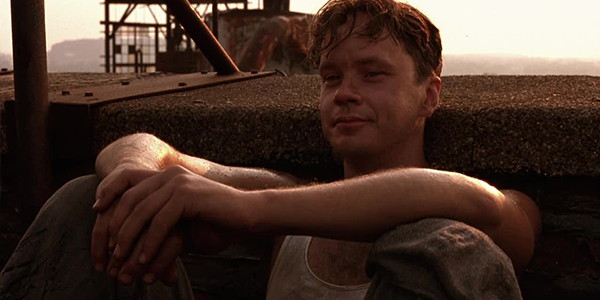
Shawshank Redemption has some majorly famous faces to its name, but aside from the obvious stars that Morgan Freeman, Tim Robbins and Clancy Brown (come on, he voices Mr. Krabs in Spongebob Squarepants) are, there's one hugely historic figure who's work features in Shawshank: that of Wolfgang Amadeus Mozart. The composer may have been dead for well over 200 years, but his classical music still lives on to this day, and it features in one of Shawshank's most memorable scenes. After constantly dogging Maine's national library service, Andy is granted a sizable donation from the library in an effort to placate his constant letters asking for aid. Among the dusty and worn books he's granted is a Mozart record: The Marriage of Figaro. Andy proceeds to play the record over the public address system before he's interrupted by the brutish Capt. Byron Hadley (played by Brown), beaten to a pulp and promptly thrown into solitary confinement. It was worth it for old Andy though, he was able to give his fellow inmates a taste of the same joy he found in the little things.

5. Morgan Freeman's Son Has Multiple Cameos In The Film
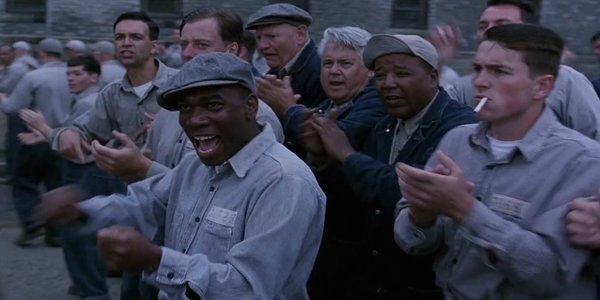
Who better to play your younger self than your own son? It's a thought process that Darabont obviously followed when filming Shawshank, because none other than Morgan Freeman's son appears on-screen to play not only a younger version of his dear father but also appears in a few shots as a regular inmate. The above is slightly deceptive though, while Alfonso Freeman does indeed appear on-screen as an inmate on several occasions (most notably when the prison staff are handing out mail to the crowd of inmates), his role of playing a younger version of his father was on paper only. In the scenes where Red attends his parole hearings and becomes increasingly frustrated with the system failing him, we're always privy to a shot of his parole papers portraying him as he would have been in 1926 - the year that he was arrested for murder. Yeah, you've obviously guessed it by now, but those documents actually featured Morgan's son Alfonso on them, so it was his mug that was subjected to the repeated stamps of 'parole denied' in bright red ink. It's a small detail, but one no less interesting; Frank Darabont obviously wanted everything to look and feel authentic.

4. Andy's Crawl To Freedom Would Have Smelled Rather Nice

If there's one scene in Shawshank that makes you green around the gills more than any other, it would have to be when Andy crawls the length of, as Red puts it "five football fields, or just shy of half a mile" in a sewage pipe full of excrement, urine and any other god awful substances that inmates would flush down a toilet in prison. Obviously, the films producers wouldn't have made Tim Robbins crawl through actual sewage, so what was it? Chocolate syrup. That's right, Shawshank's producers used chocolate as a substitute for excrement in the scene where Andy escapes prison - a much better alternative by anyone's standards. We're not sure if they just used plain old water for liquids, but if the use of confectionery is anything to by, we wouldn't be surprised if Frank Darabont decided to use some watered-down banana milkshake to simulate urine. That explains why offenders always try to escape prison then; they don't want to get away, they just want to satisfy their sweet tooth.

3. Andy's Escape From Prison Has Biblical Undertones
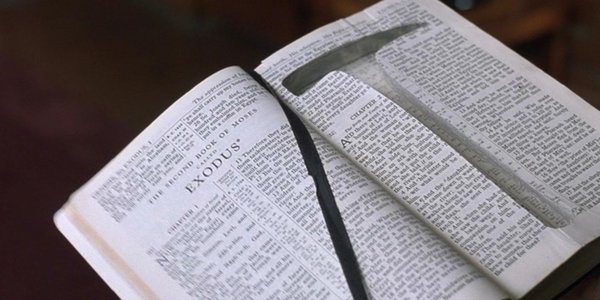
Everyone's happy to see Andy finally escape from prison towards the end of Shawshank, after all, he was put there for a crime that he never committed. In the twenty years it takes him to form an escape route, Andy becomes a first-time criminal only after going to prison. Sick of laundering money for his corrupt prison Warden, who also has the one person who could testify to his innocence executed, Andy decides to make a break for freedom at whatever the cost. In one final middle finger to the man who essentially owns his life though, Andy reveals Warden Norton's corruption to the press upon his escape. One of the most satisfying and intricately crafted scenes in Shawshank is when Norton discovers that Andy has stolen his bank records and replaced them with a bible featuring a neatly cut outline within that had hidden his rock hammer. Other than Norton's facial expression upon discovering that he's been had, the page in which Andy has had the hammer hidden all this time is at the beginning of the Book of Exodus. The chapter in question details how the Israelites escaped slavery under Egyptian rule and found freedom, casting off the shackles of confinement.

2. The ASPCA Were Concerned About Cruelty To Maggots
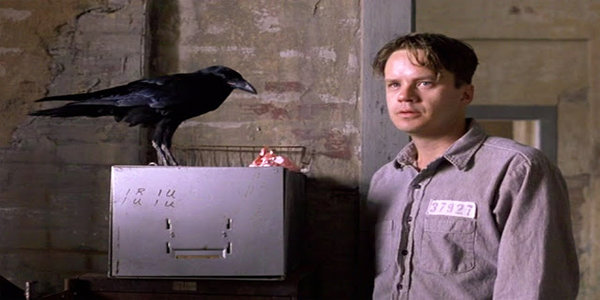
Poor Brooks. After being imprisoned for the better part of his entire life, the old sod was unable to accustom himself to the outside world, instead deciding to hang himself to escape his fear. As sad as it may be, Brooks had a family on the inside, and it's the only place that felt like home to him. It wasn't all doom and gloom though, Brooks had loads of friends on the inside, not least his pet crow that he found and nurtured to full health during the film's duration - feeding it maggots whenever he could get his hands on them. Clearly, whenever animals are involved, regulations need to be followed to ensure no unnecessary harm is brought to them, which in this case, the American Society for the Protection of Animals (or ASPCA for short) deemed there was enough cause for concern to ask for changes to be made. It wasn't Brook's beloved Crow that the ASPCA deemed to be treated badly though, it was the maggot that Brooks can be seen feeding to the Crow in one of the film's scenes. To satisfy the ASPCA, the film's producers were asked to use maggots that had died of natural causes rather than feeding the Crow live food. Unbelievable.

1. The Final 'Beach Scene' Never Appeared In Stephen King's Original Novella

Film adaptations of books rarely - if ever - follow the source material word by word. Examples can range from films only vaguely following source material, borrowing certain elements or just flat out ignoring any content a filmmaker so pleases. In this case, Frank Darabont was extremely reluctant to include the final scene of Shawshank (where Red finds Andy on the sandy beaches of Zihuatanejo) due to it not appearing in the book. King's short story ends with Red breaking his parole to try and keep his promise to Andy that he would come and find him, but the novel leaves the question of whether Red actually meets his friend again up in the air. However, after screening the film in advance to focus groups in an effort to gain feedback, Darabont decided to include the scene after responses to the final scene were positive. The ancient argument about the integrity of an original work will no doubt come in to play as it always does on examples such as this, but the film gains closure because of it. The Shawshank Redemption isn't a story that relies on what ifs and would have suffered without the final scene reuniting two friends that have suffered for their entire lives. But what does everyone else think? Are there other small details in The Shawshank Redemption that you think we've missed or are these all news to you? Let us know in the comments below.

Contributor
Contributor

Joe is a freelance games journalist who, while not spending every waking minute selling himself to websites around the world, spends his free time writing. Most of it makes no sense, but when it does, he treats each article as if it were his Magnum Opus - with varying results.