10 Things Marvel Wants You To Forget About The MCU
From glaring plot holes to ugly clashes with directors, the MCU is far from perfect.

In only 10 years, Marvel have created the biggest entertainment empire ever. In that small amount of time the studio has produced 19 movies (with many more in various stages of development), created almost as many TV shows and made more money than any franchise in the world.
However, although Kevin Feige and co. have pulled off the impossible (for evidence on how terribly the idea of a creating a shared universe could have been, just look to the failure of the DCEU or Dark Universe), not every second of the decade has been smooth sailing.
Building an empire isn't easy, yet alone one that has to bring together a ridiculous amount of stories, characters and, of course, filmmakers, and while Marvel have done their best, there are a few things they'd rather fans forget.
Whether that's issues with the mythology which've never been properly addressed or business decisions that blew up in their face, looking back into MCU's history reveals more than a few skeletons in its closet.
10. Trevor Slattery And The Mandarin Double Twist

Although Iron Man 3 is one of the most inventive and confident movies in the MCU, it took a lot of flack from fans for squandering one of the biggest villains in the hero's mythology. Teasing the introduction of the all-powerful Mandarin, a mid-movie twist revealed that the villain wasn't the big bad he'd been set up as but actually a patsy, a cockney actor playing the character of the Mandarin to obscure the real villain.
Though it's a genuinely well-handled twist, fans didn't appreciate that such a major villain was reduced to a joke. It caused such an uproar, in fact, that Marvel eventually released a one-shot which teased the appearance of the real Mandarin, who showed up to confront the imposter for taking on his mantle.
Unfortunately, that's all we've heard about the character since, and the one-shot essentially functioned as an embarrassing, wishy-washy apology to the fans that will never be capitalised on. At this point, Marvel have essentially forgotten about the villain entirely, and they'd rather audiences did too.
9. The Confusing Timeline Inconsistencies
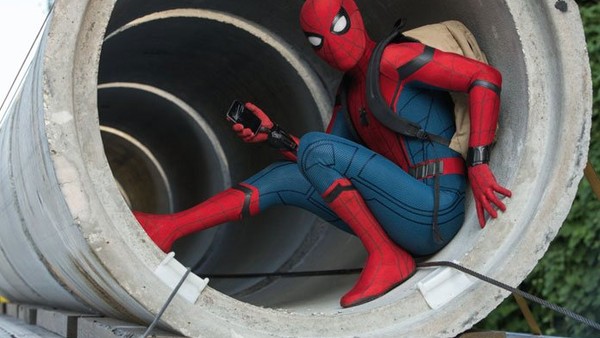
In the early days, the timeline of where each MCU movie took place was pretty easy to follow. Phase 1 essentially happened within the space of a few months, with an explosion of heroes all showing up at the same time. After The Avengers though, things got a bit convoluted.
For years there were conflicting reports on how much time had advanced since that first team up, but then Spider-Man: Homecoming seemingly tied up the issue once and for all. Beginning in the immediate aftermath of Loki's attack on New York, the film then cut to a title card that put the action of Homecoming eight years later, firmly rooting the modern MCU movies in the year 2020.
However, because this seemingly contradicted what was established during Civil War, the directors of that film and Infinity War decided to ignore Spidey's retcon, moving ahead with their own continuity that places the latest film in 2018.
It's been a confusing time for any fans trying to keep track over the years, but for now, the latest movies are taking place in the same year they release - at least, until Homecoming 2 comes around and smashes that idea once more.
8. Tony Wanting To Bang Black Widow
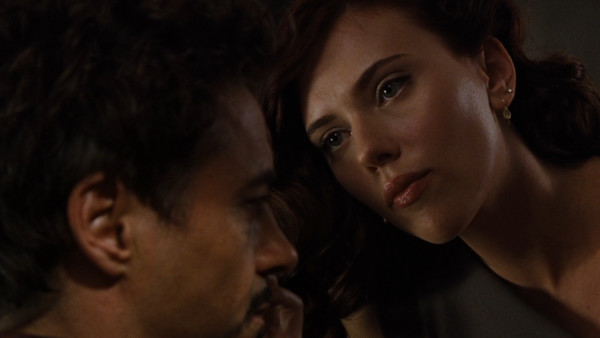
Despite a couple of high points here and there, Iron Man 2 is considered one of the most disappointing instalments in the MCU. It was still an important movie though, as it was the first flick to really focus on Tony Stark as part of an ensemble, ushering in a much larger role for S.H.I.E.L.D.
It's also notable for introducing Black Widow, who's characterisation... hasn't aged well. Although she's definitely playing a character and attempting to not draw attention to the fact that she's working for Nick Fury, it doesn't quite excuse how Scarlett Johansson is confined to playing a "sexy spy" trope.
That's not the real problem though (even if Marvel made great strides to move away from that representation in future movies), but more the fact that throughout the movie Tony Stark tries his best to get Black Widow into bed.
Admittedly, the character is a womaniser and he doesn't know she's actually spying on him, but, still, that doesn't make it any less sleazy when he's hitting on her while Pepper Potts is in the room.
Even worse, they establish that Pepper sort of resents Black Widow until she finds out who she truly is, hinting at a strange love triangle which does a disservice to both characters.
7. Actors Speaking Out About Their Terrible Villain Roles

Much has been said about Marvel's "villain problem", where the antagonists of the MCU are criminally underdeveloped and are essentially only there to give the heroes something to punch and/or blast.
However, the idea that the studio approached their villains the wrong way was truly cemented when the often A-list actors who were drafted in to play them started to speak out about how they were treated by Marvel.
Hugo Weaving was the first to really discuss publicly his dissatisfaction with the studio's approach, complaining about the extensive makeup process and how one-dimensional the MCU villain came across.
However, while Weaving's comments also mentioned the good times he had on set, Christopher Eccleston and Mickey Rourke were far more damning of Marvel's approach. Eccleston has gone on record multiple times saying the studio were "dishonest" about his part, explaining the experience made him want to "put a gun in his mouth".
Rourke was even more incendiary, angry his hard work was left on the cutting-room floor in favour of a more basic villain that made it to the screen.
Recently Marvel have had a better run with its actors, but the spectre of these disgruntled A-listers still hangs overhead.
6. Gamora Being The Last Survivor Of Her Planet
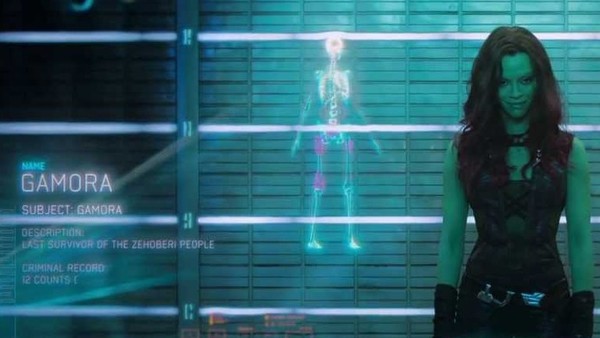
There are a lot of retcons when it comes to Thanos' story in the MCU, but some are certainly more egregious than others, especially when they impact the characterisation of other heroes. In the first Guardians of the Galaxy, Gamora is initially set up as a villain, the daughter of the Mad Titan who's hated by his enemies. Obviously, it's revealed that she actually hates her adopted father just as much as everyone else, as he destroyed her planet.
That fact is reiterated by her character profile when she's shipped off to jail, which describes her as the "last survivor of the Zehoberi people". It's a blink-and-you-miss-it detail, but it goes a long way in explaining her actions in that first film, along with why she bonds with Peter Quill, who's similarly the only of his kind exploring the cosmos (admittedly though, all humans aren't dead).
Infinity War ignores that character profile though, and clearly shows that Gamora is not the last of her kind. Thanos showed up to her planet and decimated it, yes, but he specifically made a point of only killing half of her people.
The new backstory did go a long way in producing a more compelling villain, but Marvel clearly needed you to forget the inconsistencies with the first Guardians to make it work.
5. The Interference Of The Marvel Creative Committee

Although Kevin Feige is the head creative honcho at Marvel, he still has people to answer to. While now he has more freedom than ever, for the first five years of the studio's life, every movie went through the Marvel Creative Committee, a team of creatives from TV, Film and Comics who would give notes and suggest changes to every project.
While this could have been great in theory - after all, it included veterans like Brian Michael Bendis and Joe Quesada - it allegedly made making these films even more creatively limiting.
Not only were the notes given by the MCC basic and often preoccupied with inconsequential details like the precise science of every fantastical item and weapon, but it took them an age to actually get around to dealing them out, adding needless roadblocks to the production.
The bullheaded changes the MCC would demand is part of why Edgar Wright was so frustrated developing Ant-Man, leaving the project just before filming after receiving last-minute notes.
They've since been taken off the movie side of Marvel, but still have control over their TV output, including the Netflix shows. If you ever wondered why the likes of Daredevil haven't yet appeared in a movie, it's because of this rift between the Marvel upper-echelons.
4. When The Hulk Was Teased As The Villain Of The Avengers

Though Marvel were seeding the idea of their movies being part of one shared universe from the beginning, the references and crossovers were initially all saved for post-credit sequences. You can see why they'd play it safe; this was an idea never before attempted, and the studio probably only had a a rough idea of what they'd actually do if they ever made it to the eventual team up of The Avengers.
That safety net paid off in dividends in hindsight, as it allowed them to completely ignore the fact that the post-credit scene in The Incredible Hulk actually set up the Hulk as the villain of the team-up movie. Showing Tony Stark meeting with General Ross on behalf of S.H.I.E.L.D., the scene ominously ends on the tease that Iron Man and his team could solve the General's Hulk problem.
The director of the movie even hinted toward the confrontation, saying at the time that if there wasn't a sequel, then the ambiguous final shot of Bruce Banner could mean he returns as a menace in The Avengers.
Obviously, Marvel went down a very different route after this film debuted, moving away from pretty much everything set up in the story. Consequently, not only does Marvel want you to forget this post-credit scene, but pretty much everything that happened in the early Phase 1 effort.
3. Vision's Power Being Nerfed
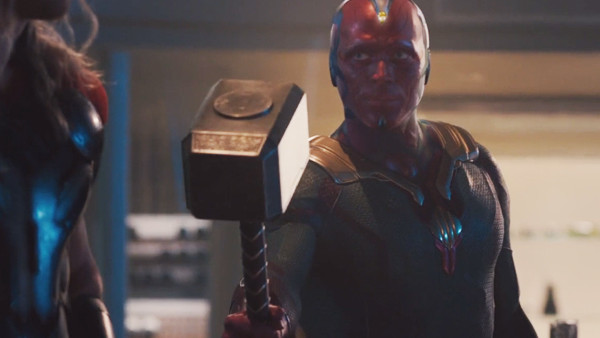
One of the big criticisms of the early Marvel movies was that the heroes didn't really have interesting powers. Vision's introduction in Age of Ultron was perhaps a way of the filmmakers over-compensating for that fact.
Powered by an actual Infinity Stone, Vision is ridiculously powerful in that second Avengers movie, to the point where he can phase through any attack, easily take out hundreds of androids and even lift Thor's hammer. With him in the team, there was seemingly no threat powerful enough to take the heroes down, something which the filmmakers must have realised once that movie hit theatres.
The next time he shows up is in Civil War, where he's not really involved in any of the fighting and has started wearing sweaters and using his powers to create sick dishes over the stove.
Even worse, in Infinity War his ability to phase through attacks is nullified, and he spends pretty much the entire movie injured or on an operating table.
That would be excusable if it was any other character, but Vision is powered by an Infinity Stone, so him suddenly being weaker contradicts just how powerful those artefacts are supposed to be.
2. Dropping Great Directors From Their Biggest Movies

Although I've already mentioned how Edgar Wright was forced off Ant-Man after developing it for nearly a decade, he's not the only big-name director to have a fall out with Marvel.
Over the years the studio has courted talent, even signing them to direct their tentpoles in some cases, only to give them the boot after clashing over differences in vision. They're not quite on the level as, say, Star Wars when it comes to clashing with auteurs, but their reputation isn't exactly stellar.
However the biggest mistake Marvel made in this department was losing Patty Jenkins as the original director of Thor: The Dark World. Once again citing "creative differences" over her departure, the film was handed off to Game of Thrones' Alan Taylor, with the editing process then being given to a completely different team.
It resulted in arguably the worst MCU instalment to date - an unmitigated disaster which Jenkins would no doubt be pleased to have avoided. It was Marvel's loss though, as the DCEU picked her to helm Wonder Woman, not only gaining attention for the movie's progressive slant but also for being a damn fine film in itself.
1. Asgard Having A Copy Of The Infinity Gauntlet (Before It Existed)
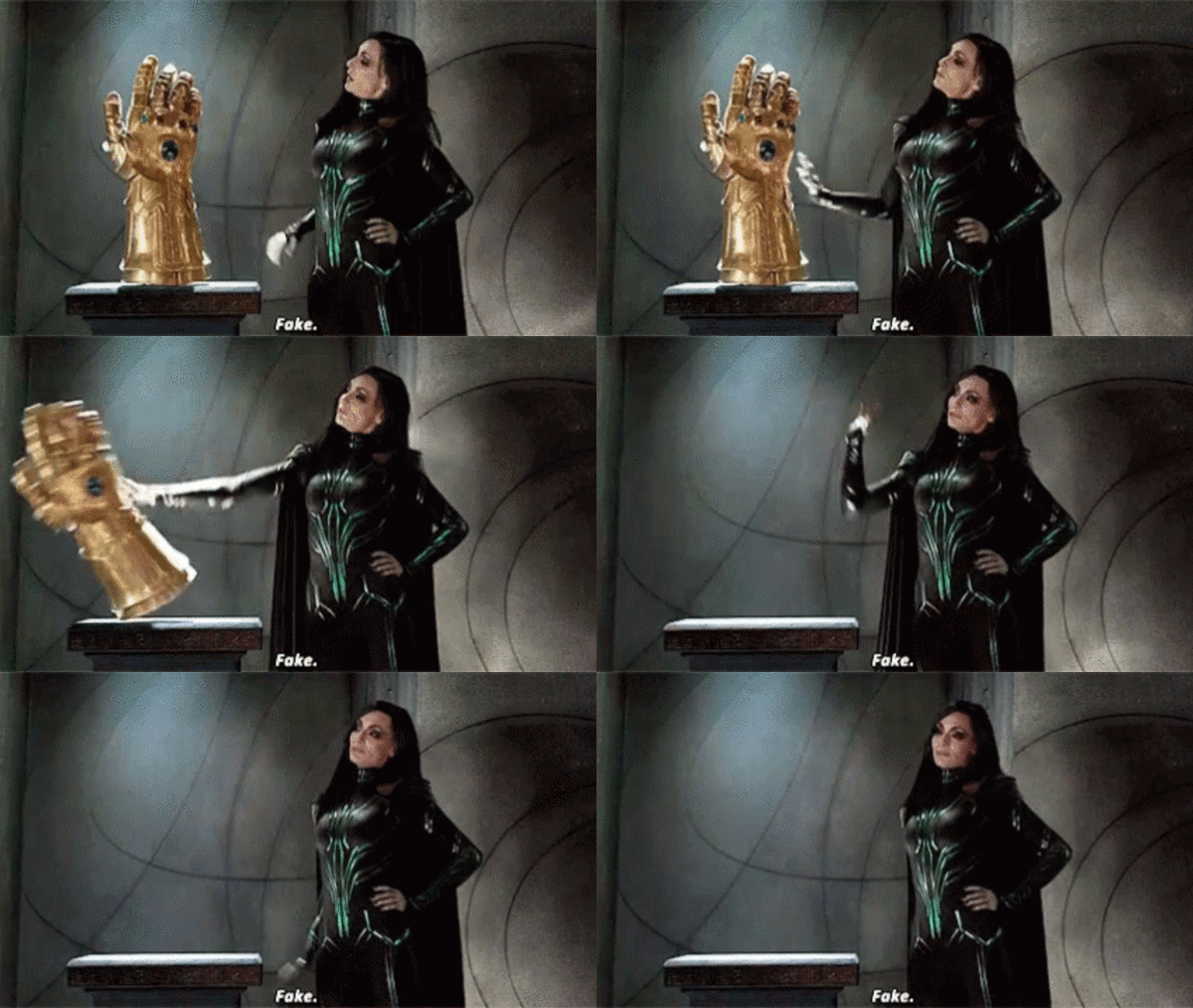
By far the biggest corner the filmmakers wrote themselves in during the MCU's early years was establishing that Thanos' Infinity Gauntlet was being kept in Odin's vault on Asgard.
At one point or another the plan may have been for the villain to storm the planet and take it for himself, but that clearly changed when he was shown already in possession of the weapon during the post-credit scene of Age of Ultron.
Ragnarok pointed out that the version in Odin's fault was indeed a fake, which seemingly resolved the inconsistency - until Infinity War came around, anyway. In that film it's established that Thanos acquired his gauntlet by travelling to Nidavellir and using the heart of a star to forge something which could contain the power of each Infinity Stone.
The thing is, because it's one of kind, there was no way that Odin could have had a copy of it in his vault, as it didn't even exist until recently. Infinity War obviously had to overlook quite a lot of inconsistencies to tell its own story, but this one is so egregious because by trying to fix it, Marvel actually made the problem even more obvious.