10 Things Movies Got Wrong About Science In 2015

Why Pixar characters should be dead and Mad Max should pack a scarf.
2015 has been a great year for movies and over the past 12 months it seems more and more of them are playing with science. Superhero movies are ten to a penny while other studios are exploring space or the natural world. It is, of course, very important when writing and producing movies that a film studio can deliver all the immersion, believability and enjoyment as is possible and there€™s no way to spoil this than churning out a load of flannelly science. It seems like almost every studio going has made some sort of science blunder this year. It could be something constructed to advance the story, perhaps it was used to pump up the intensity and sell more tickets or maybe, just maybe, some silly screenplay writer simply dispensed with the idea of consulting an expert and just blundered their way through a script using the odd pinch of pop science here and there, buckets of urban mythology and a huge serving of made up terminology to wash it all down. So let€™s look back on 2015€™s movies by exploring some of their biggest science fails of the year. It ought to wet the appetite for 2016 if nothing else.

10. The Good Dinosaur

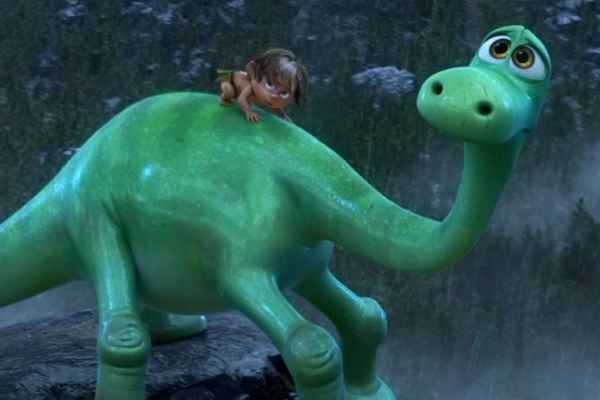
It seems a little harsh to criticise a children's animation for scientific inaccuracy so it's hard to justify sticking this anywhere but the top of the list. However, if Pixar had wanted pernickety writers like me to treat it as an entirely make-believe animation, they should probably have gone a little easier on their exposition. The mere fact that a conscious effort was made to explain how the film's alternate reality came into being (the dinosaur-killing asteroid missed Earth by a hair) makes it sort of okay for nit-pickers to do their thing. We'll be really kind and ignore what is perhaps the most jarring inaccuracy, which is the fact that mammals (and therefore humans) only ever evolved to a planet-dominating scale because of the mass extinction at the end of the Cretaceous period. Thus, even if the dinosaurs hadn't died out, they would never have met humans because we simply would never have evolved. But yeah, we're turning a blind eye to that whole debacle. What the more eagle-eyed dinosaur nerds may have spotted though, is that Apatosaurs like Arlo (pictured) weren't actually killed by the meteor strike in the first place. What the researchers at Pixar seem to have overlooked is the fact that a smaller mass extinction took place a few million years prior, at the end of the Jurassic period. Amongst other giant veg-eating sauropods, one of the unfortunate species to be killed off was Arlo and his Apatosaurus friends. It€™s not truly understood what caused so many species to die at the turn of the Cretaceous period but it€™s thought that climate change played a major role. Incidentally, it was this extinction event that also killed off the Stegosaurus. So, the fact of the matter is that whether or not Pixar managed to redirect an enormous lump of space rock to save the T-Rex and the Triceratops, Arlo was already long dead and would never have made it to witness the asteroid€™s flyby. I guess they better give the backstory a rewrite.

9. In The Heart Of The Sea

Ron Howard€™s latest movie concerns the true story of a group of whalers who sailed a ship called the Essex into uncharted waters in 1820, in order to catch enormous sperm whales. What they came across however, was even more enormous than they could have imagined. The boat was deliberately attacked by a monster sperm whale and the survivors€™ tale went on to inspire Herman Melville€™s Moby Dick. So what€™s the ratio of fact and fiction? Well, in all fairness to the production team, they did a reasonable job of staying true to the original accounts, as well as what we know about sperm whales today. The size of the whale is scientifically plausible (though it definitely clocks in as one of the biggest ever), which is respectable since it€™s the one aspect a movie maker would be tempted to play around with the most (see: Jaws). However, one fatal flaw will spoil the immersion of all sperm whale experts out there. You know who you are. A 2002 study into aggressive behaviour of sperm whales found that, whether attacking ships or rival males, a bull whale has a definite preferred weapon. Rather than swatting his tail all over the place like some sort of murderous sea-dwelling Labrador, a sperm whale will consistently headbutt his target into submission (or indeed submersion). It€™s all backed up with anatomical and anecdotal evidence, say the experts. So, while it makes for some rather spectacular cinematography, Ron Howard€™s shots of tail swipes are not at all what a marine biologist would have suggested.

8. The Martian

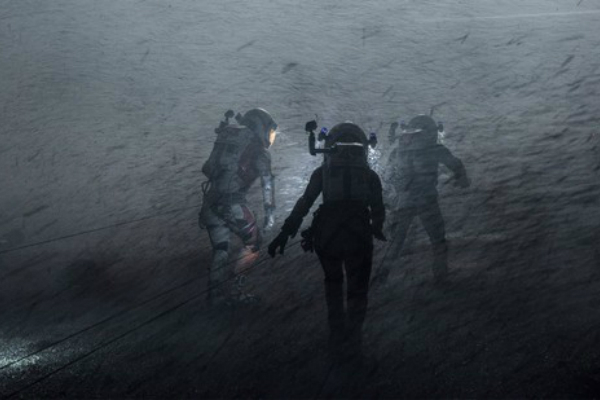
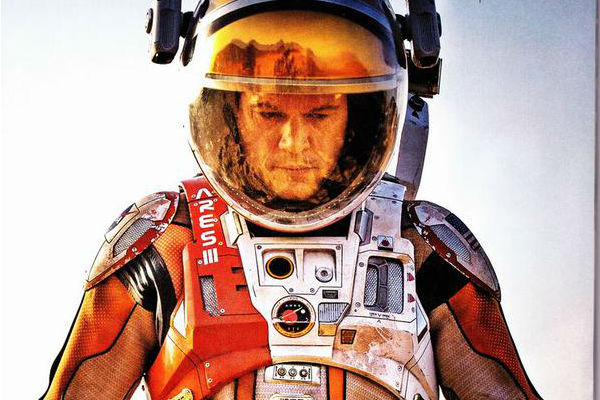
The science of The Martian was actually incredibly respectable on the whole. Reviews, interviews and other media coverage this year have collectively uncovered a myriad of little details that are amazingly accurate to real world space travel. The rotating ring on the spaceship would absolutely have simulated gravity. The Martian soil could very well have been used to grow food, especially with a sprinkling of Matt Damon€™s space sh*t. There was just one little occasion where they dropped the ball and, unfortunately, it€™s kind of integral to the whole movie. One of the major differences between Earth and Mars that will make it tricky for us to colonise it in future is in its atmosphere. The air largely consists of carbon dioxide and is only about 1% as dense as the air on Earth; 0.6 kilopascals to our 101, if that means anything to any of you. This has some pretty big implications regarding Martian weather. The long and short of it is that a Martian storm is markedly different to one taking place on Earth. Essentially, the wind could probably only blow around very fine sand and dust. There wouldn€™t be any large lumps of rock being hurled through the air and you certainly wouldn€™t see any humans flying across the sky like Miss Gultch inside the Kansas twister. NASA Engineer Rob Manning claimed in an interview with Science Vs. Cinema that the wind has to be approximately 10 times stronger on Mars to have the same effects of wind on Earth. That is to say, in order to carry a human being into the air, Martian wind would have to approach speeds of 1000mph. I€™m afraid to say that in the real world, everyone made it back to the ship alive and well and there was one less exciting American hero survival story to be told.

7. Mad Max: Fury Road

Fury Road was a beautiful movie. Whether or not you€™re the sort of person who would enjoy what is essentially a two hour car chase, it€™s hard to deny that the world that director and producer George Miller portrayed was captivating. Post-apocalyptic dystopias do have their ugly side of course but deserts are pretty and the whole tribal thing was super cool. However€ While a searing desert might be an excellent backdrop for a movie such as this, it€™s simply not the sort of landscape one would end up with after the nuclear war of Mad Max lore. In fact, it€™s literally the opposite. The detonations of multiple nuclear warheads around the globe would throw millions of tonnes of debris into the atmosphere and start immense fires that would spew out masses of smoke. In a very short time, the sky would go dark as the sun€™s light and heat would no longer reach the planet€™s surface. As a result, temperatures would plummet and we would find ourselves in that oh-so-horrible-sounding of things; a nuclear winter. Radioactive snowmen and so on. That said, it would probably spell the end for the human race and so there€™d be nobody around to drive cars and kill each other in one of the greatest movies of the year. On that basis, I€™m willing to let things slide.

6. Fantastic Four

Again, I€™m going to make a few allowances here before I even begin. I€™m not sure why; it€™s not like this movie deserves any leniency. Still, let€™s just all pretend that human biology really can be changed in four very different ways by touching the same green goo from across a new dimension. Sounds totally reasonable. The real science blunders come before and after that fateful trip though. For starters, what the hell were Fox and Marvel trying to feed us by depicting a high school kid creating such advanced technology so easily? Irrespective of the viewers€™ science background, there€™s only so much bull you can feed them before they lose all their immersion, and this movie leapt way over the line within the first few minutes. Even if we suspend all disbelief that some gifted kid was actually smart enough to work out the underlying physics, the notion that he then had the technology and energy at his fingertips to create and power such a device is ludicrous. Many top scientists in the field believe that even if we crack the theory of interdimensional travel, the power required to run such a device might be completely unattainable. And while we€™re on the subject of physics, it would have been really nice if Fantastic Four hadn€™t broken one of the most fundamental physical laws that exists. The principle of mass conservation states that whatever action occurs within a system, the total mass and energy within the system must remain constant. So, when springy Reed Richards somehow managed to stretch out his limbs without them getting significantly skinnier like normal elastic, there was only one possible explanation. It can only be assumed that his body density was decreasing; that is to say, the molecules within him simply moved apart in order to take up a larger volume. The issue here is that punching someone in the face with a significantly less dense arm might not result in superhero levels of success. Never mind the name Mr Fantastic; he€™d probably be better off being called Mr Mediocre.

5. Avengers: Age Of Ultron

Considering Ultron is a robotic genius, he really dropped some major mathematic clangers with his hair-brained scheme to recreate the mass extinction that wiped out the dinosaurs (except Arlo the Apatosaurus). The simple fact is that his intended impact wouldn€™t have come anywhere close to the strength of the Chicxulub impact of 65 million years ago. Avoiding writing reams of mathematical equations about this, I€™ll simply note a few key points. Firstly, the dinosaur-killing meteor of the late Cretaceous period was around 10km wide, while the section of town that Ultron fired into the sky with rockets was less than a single kilometre in diameter. So what? Maybe that€™s still enough? Well, no. On top of the fact that it was relatively tiny, he dropped his lump of rock from far too low. It€™s hard to know exactly how high it got before it began tumbling back to earth but it was certainly still within the atmosphere. Factoring everything in together, the city would probably have hit Earth with a force of around 50 megatons of TNT. This is equivalent to a hydrogen bomb detonation, which we know all too well is not enough to wipe out the human race. By comparison, that infamous prehistoric 10km space rock slammed into earth at 20km per second with a force of 240,000 gigatons of TNT (approximately 5 million times stronger than a hydrogen bomb), which is hilariously far off. So sure, Ultron would probably have ruined everyone€™s Sunday afternoon if he€™d managed to follow through with his plan but he ought to be ashamed of such a slapdash approach to his calculations. Mass human extinction would not have been the final result.

4. San Andreas

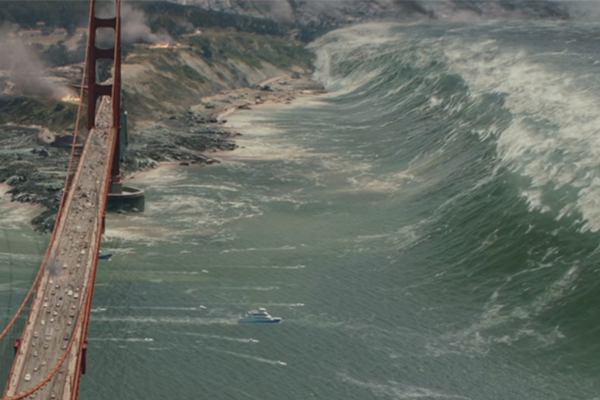
When Dwayne "The Rock" Johnson returned to our screens for San Andreas, it was more a case of how the film's creators would get the science wrong, rather than if. It's very difficult to find a modern CGI-heavy disaster movie that isn't littered with scientific errors and San Andreas is no different. Let€™s begin by saying that earthquakes can€™t be predicted at all. Fact. Despite hundreds of years of research, we really have little to no idea of when and where they're going to occur. The idea that there could suddenly be a method of predicting them is very difficult for seismologists to get on board with. It's just as simple fact that nothing tells us when to expect a quake, least of all €œmagnetic pulses€, whatever they are. Magnetism and plate tectonics are barely related at all. Obviously the Earth has a magnetic field but there's really not much of a link between that and the movement of the crust. Of course, when the magnetically predicted earthquake strikes with enormous force (impossibly strong, in fact), the special effects team really go to town and add all sorts of weird and wonderful shots, many of which were completely inaccurate. One shot that turned heads in the trailer campaign before the film€™s release was a clip of a shockwave rippling through the cityscape, causing buildings and streets to bob up and down. While such an effect does indeed occur during earthquakes, it is negligible to the naked eye. Even a quake of such ludicrous force as described in the movie would not produce such a visible shockwave. Similarly, the enormous crevasse that appears in the road, nearly swallowing up The Rock, is implausibly wide and deep. The last straw though is the tsunami. First and foremost, tsunamis do not tend to occur as a result of earthquakes with an epicentre on land. The quake must occur within the ocean for such an effect to take place. But further to that, even if the movie€™s earthquake had happened out in the ocean, the tsunami€™s depiction is totally inaccurate. Contrary to many fictional depictions, a tsunami is less of an enormous wave and more of an unprecedented steady influx of water, as though the tide begins to come in and then never stops. But would you honestly rather watch a more accurate movie where a few skyscrapers collapse and then everyone just starts rebuilding a few days later? Didn€™t think so.

3. Ex Machina

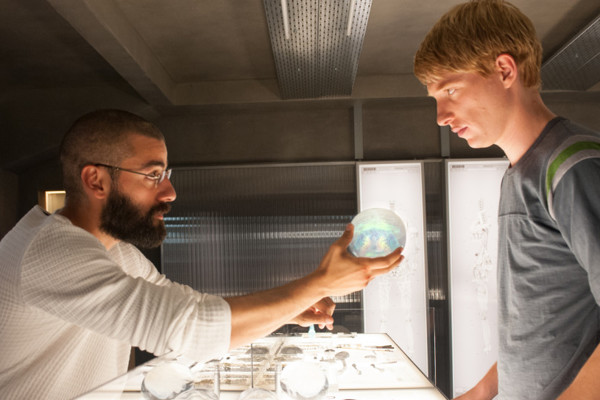
AI movies are a hot trend recently, what with Chappie and the new Terminator sequel. Ex Machina took things in its own direction though and looked more at the ethical and psychological issues relating to robotic persons. But how does the science stack up? Well, one interesting thing worth mentioning is the fact that Ava seems to have a sense of humour in the film. Such behaviour is surprisingly top-end stuff when it comes to AI, as being able to create or understand jokes requires some pretty abstract reasoning at times. Amazingly though, scientists are hard at work to at least quantify and operationalise the idea of humour in preparation for AI experiments. You might not believe me when I tell you that there€™s an academic paper all about €œthat€™s what she said€ jokes but there it is. So the concept of humour in AI is feasible. Well done, Alex Garland. Unfortunately, the way in which the whole thing is controlled is far less believable. The movie claims that Ava has a Wetware brain, which mimics human brain anatomy. Again, this is in fact a concept with real science behind it, so there€™s some level of believability there. However, the movie jumps so far into the future with the technology that it€™s like watching a medieval film in which one of the knights drives around on a Segway. The fact of the matter is, creating a robotic replica of the human brain is an absolutely absurd idea at present. We€™ve not even worked out exactly what all the brain areas actually do right now, nor how the thing really works, let alone developed the technology to build an artificial replica. We have over 100 trillion synapses (connections between neurons) in our brains and each one is malleable enough to form new connections when we learn new skills and information. Being able to create a device that can do such a thing is a complete pipedream for now and will likely remain that for decades to come.

2. Pixels

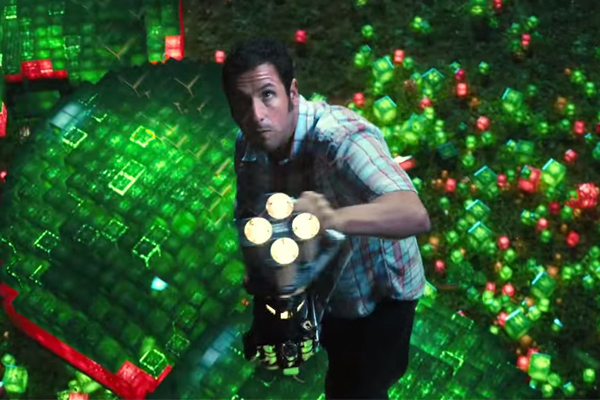
Oh dear. It€™s sad to see Adam Sandler so desperately treading water, not that I€™m a fan. Perhaps Pixels sounded good on paper but, if it did, that certainly didn€™t carry forward to film. In amongst the terrible script and dreadful acting was more unfounded science than you can wave a joystick at. Let€™s start at the beginning. A space capsule gets launched in 1982 and by 2015 it€™s been picked up by aliens from another planet. In truth, after 33 years, a capsule floating through space (travelling significantly less than light speed, remember) would get nowhere exciting at all. It takes an incredibly long time just to reach the end of our solar system. The New Horizons probe, for example, that has just arrived at Pluto was launched in 2006. In short, the Pixels capsule would not have reached any planet we don€™t already know about in 33 years. But okay, maybe the aliens have near-lightspeed travel and simply intercepted the capsule in the void of space one day. That works to an extent. What doesn€™t work, however, is the idea that we could develop weaponry that fires €œsupercharged light particles€. Those are just words. They mean nothing. A particle of light is a photon, which is simply a wave. A wave has no charge to begin with and certainly can€™t be charged, or indeed €œsupercharged€. However, the most unnatural thing by far in Pixels is almost too bizarre to write. It breaks just about every law of physics that there is. Goodness knows what the writers were thinking when they added in this abomination of a plot piece; Sean Bean doesn€™t die.

1. Jurassic World

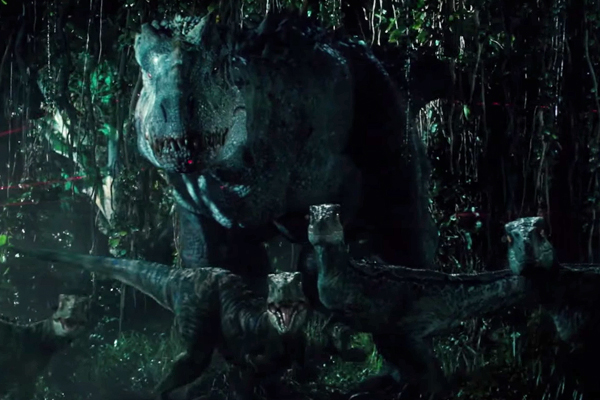
This one. This is a real doozy. I genuinely don€™t know what was going on in the writer€™s heads when they thought this plot piece was a good idea. For once, this isn€™t a disgruntled critic complaining about the inaccuracy of featherless dinosaurs and tall raptors. In fairness, they did a pretty good job of explaining away such traits in Jurassic World by claiming that the cloning process results in all kinds of alterations. I€™m even willing to look past claims that the Pterosaurs should have been completely incapable of lifting human beings when you look at their size and aerodynamics. That€™s all forgettable. No, what absolutely perplexed so many people with an ounce of common sense was the preposterous idea that the Indominus rex was somehow able to communicate with raptors simply because they shared a bit of DNA. That€™s not how DNA works at all. There are approximately 6500 spoken languages in the modern world and billions of humans are completely incapable of communicating verbally to each other, despite being infinitely more genetically similar than the I-Rex and raptors. What€™s more is all the waffle at the start of the movie where it€™s made clear that the Indominus killed its sibling and was raised in total isolation, learning no social skills whatsoever. Many sentient creatures have what is called a €œcritical period€ in which they require contact with a caregiver in order to model their social behaviours and learn how to communicate. Missing this critical period results in major communicative problems. But that doesn€™t stop the I-Rex because it can do anything, for no reason. That€™s just how science works at Jurassic World. In fact, if this list is anything to go by, that€™s just how science works in basically every 2015 movie. Want to write for What Culture Science? Click here to find out how you could get paid to write about what you love.Love all things science? Like us on Facebook or follow us on Twitter for your next fix.

Contributor

Peter Austin initially joined WhatCulture as an occasional contributor to our Film, Gaming and Science sections, but made the mistake of telling us that he'd been making videos in his bedroom for over a decade. Since then he's been a vital member of our YouTube team and routinely sets the standard for smart-casual wear in the office.