10 Things That Almost Changed 2015's Biggest Movies
"‘That sounds like the wrong idea." - J.J. Abrams on him directing Star Wars
During the development stages, movies are constantly changing and evolving; whatever you had at the very beginning of production is very unlikely to resemble whatever it is you end up with in theatres.
And so it is that the movies you sat down and enjoyed across the span of 2015 could have easily wound up being different movies entirely; movies with other plot threads, other heroes, other villains and other set-pieces...
Had a few alternate decisions been made during production, other actors cast in leading role, or alternate filmmakers been hired, last year's slew of motion picture ventures had the potential to be twisted versions of the films you paid to watch - for better and for worse. Here are the ten of the biggest ways 2015's biggest films were almost completely different.
10. Viggo Mortensen Almost Played A Lead Role In The Hateful Eight

Viggo Mortensen isn't the first actor who springs to mind when you think "Quentin Tarantino Film," but then again you could say the same for John Travolta (and look what happened there). That's not to say that Mortensen is anything other than a hugely talented actor, however, and one who would have certainly made sense in Tarantino's latest flick.
So much so, in fact, that Tarantino actually set out to cast Mortensen - best known for his role as Aragorn in The Lord Of The Rings films - in a leading role. Unfortunately, it was never meant to be, as Mortensen explained in an interview (and subsequently regrets):
"Yeah, we did meet... wanted to start shooting at the end of the year and do rehearsals before that, and I just couldn't do that schedule-wise. That's the only reason . I wish it would have worked out, but that's what I'm talking about - you either see these films through to the end or you don't."Having Viggo Mortensen in the movie would have changed the feel of The Hateful Eight completely, you imagine, though it wasn't clear whose part he might have nabbed had the deal eventually worked out. Kurt Russell's John Ruth, perhaps? Could've been great!
9. J.J. Abrams Originally Turned Down Star Wars: The Force Awakens
It is now on its way to becoming the highest-grossing movie of all-time, and has been met with an overwhelming amount of praise (considering the hype). It's hard to think of anyone else pulling off Episode VII in the way that J.J. Abrams did.
And, indeed, it was Steven Spielberg who told producer Kathleen Kennedy to hire him. A major compliment coming from one of the world's most respected filmmakers, that's true... but it didn't stop Abrams from turning down the initial offer. Really. When he was first asked to continue the saga, J.J. Abrams said no. In his own words:
"The reality is, I didnt want to be the guy who does sequels. When Kathy called, I did something I dont normally do, which is look at my career. I really did feel like, That sounds like the wrong idea. 'Ill be nearly 50 when this movie comes out. Is that what I want to spend those years working on?'"
Abrams eventually came around to the idea, presumably as a result of being a huge Star Wars fan and in glimpsing the potential for his future career prospects. Had he said no, though, we might have ended up with someone from the whole host of other directors who were also approached, from Brad Bird to David Fincher.
8. Jurassic World Almost Featured More Hybrid Dinosaurs
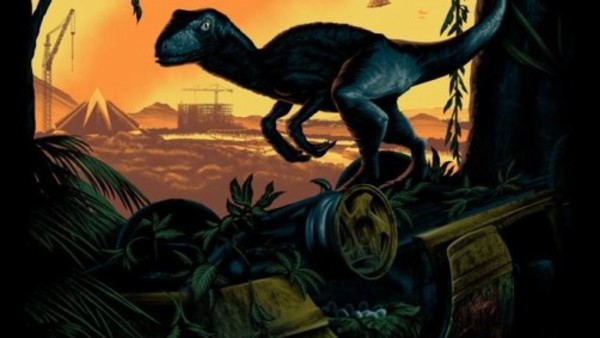
The plot of Jurassic World centres around the creation of a new dinosaur "hybrid," which the owners of the titular theme park decide to engineer as a means of drawing new visitors to the park. Unfortunately, said hybrid - the Indominus Rex, which is half-T-Rex, half velociraptor - escapes from its enclosure and proceeds to tear up the resort, causing mass panic and a series of brutal - and sometimes amusing - deaths.
But Jurassic World could have been a very different beast, had the original plans for the film to feature multiple hybrids made it through to the finished film.
That's right: the original idea was for Jurassic World to feature a whole number of other hybrid dinosaurs. This would have resulted in creatures like the "Stegoceratops" appearing in Colin Trevorrow's film alongside the Indominus Rex. Owen and Claire would have stumbled upon that particular dino mash-up during their escape, realising that Dr. Wu had actually been developing more hybrids in secret. Uh-oh.
Ultimately, one hybrid was deemed to be more dramatic than two or three, as they would have shifted the attention away from the Indominus Rex.
7. The Hulk Nearly Turned "Grey" During The Hulkbuster Sequence In Avengers: Age Of Ultron
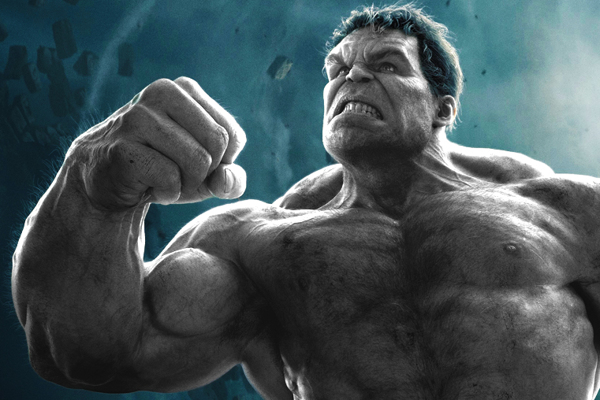
As if Avengers: Age Of Ultron wasn't already jammed packed to the brim with crazy ideas and plot threads, Joss Whedon reportedly had plans to throw in another curve ball: one that would have seen the arrival of a character called "Grey Hulk" (like in the comics).
In the "Hulkbuster" sequence, in which Tony Stark is forced to fight Bruce Banner after he's tricked into transforming by Scarlet Witch and goes on a rampage, the film was originally supposed to see the Hulk changing from green to grey, emphasising the mental manipulation over him.
This idea was eventually scrapped, though, as explained by VFX supervisor Christopher Townsend, who worked on the idea for a while:
"We tried a few shots in the film with that sort of much grayer version. And then were thinking, 'Will people confuse this with the gray Hulk from the comics? And is that a good thing or a bad thing?' Eventually, I think we backed off a little bit of that and made him greener so that... we didnt want to confuse people in creating a new character in that way."Would it have ultimately proved itself as a cool addition or would it have been a rather distracting element? It would've got a lot of people talking, to say the least.
6. Inside Out Was Almost A Film About A Girl Vying For The Part Of A Turkey In A Thanksgiving Pageant
Inside Out, last year's amazing animated offering from Pixar, has been regarded as one of the studio's best ever films; packed to the brim with bold and brilliant ideas about the nature of growing up, it's difficult to imagine that the movie - set primarily inside a young girl named Riley's head - could ever have been about anything else.
But it was, people. It very nearly was about something totally different.
Inside Out had been in development for a seriously long time, after all, and over the course of that development it went through numerous changes. One particularly notable version of Inside Out sounded totally insane, however, given that - at one stage - the film was almost rendered as one focusing on the story of a girl vying for the part of a turkey in a Thanksgiving Day pageant. Um, like, for real.
The plot would have still taken place primarily inside Riley's head - or a character similar to Riley, that is - but would have missed out on the whole "moving to a new town" narrative that makes Inside Out so beautiful. Thankfully Pete Docter realised that the Thanksgiving plot was - in his own words - "weird" and opted to dump it.
5. Andrew Scott Very Nearly Played The Main Villain (Over Christoph Waltz) In Spectre

Given how much time and energy the filmmakers spent on hyping up Christoph Waltz's villain in recent Bond outing Spectre, it doesn't seem plausible to consider that anyone else could have taken his place. And yet, despite that, there was a time during Spectre's development period in which Andrew Scott's secondary villain - "C" - outranked Blofeld.
According to Sam Mendes, the early drafts of the script flitted back and forth with the idea that Scott's character, a surveillance nut bent on bringing down MI6, was actually the overriding villain. Talking to Empire Magazine, Mendes revealed the following:
"There was a long period where it flipped and it turned out that he was the person who was running the show."This twist was ultimately abandoned, of course, with Waltz being placed front and centre as far as the film's villains go. Still, it would have been rather shocking had the studio opted for Scott as Villain No. 1 instead of the Oscar-winning A-lister, huh?
4. Emilia Clarke Could Have Been The Star Of Fifty Shades Of Grey

The lead role in the film version of Fifty Shades Of Grey ultimately went to actress Dakota Johnson, who did a fair job playing a character who doesn't deserve to be on the big screen in the first place. But before that casting Emilia Clarke, star of TV's beloved Game Of Thrones, who turned down an initial offer for the role on the basis that she didn't want to appear naked on screen.
"What?" you're thinking. "Didn't she get, like, nude in Game Of Thrones a whole bunch of times?" Right you are, Dear Reader, but - to be fair - she hasn't done that for a while now, and didn't want to become renowned for continually doing so in everything she did.
So whilst taking on the role of Anastasia Steele could very well have ensured Clarke a major career boost on the Hollywood front, she stuck to her guns and - as a result - found herself wholly absent from one of the worst films of the year.
Oh, wait, no: she still did Terminator Genisys. Which, coincidentally, brings us to...
3. Terminator Genisys Was Almost A 3D Animated Movie Called "Terminator 3000"
Yeah, so, uh, this almost happened. Sort of.
In the years leading up to Terminator Genisys being a thing, the legal rights for the Terminator franchise were up in arms after the company that owned them went bankrupt. In the midst of the chaos, a production company called Hannover House proposed their plans to create the next movie in the saga in the form of an animated 3D film called "Terminator 3000," which - you'll agree - sounds like the worst idea in cinema history.
Soon enough, Pacificor - the rights owners - had sent out a cease and desist letter in an attempt to stop the production in its tracks. Hannover House's plan, however, had been to entice the interest of Pacificor, hoping that they'd show them their finances, get into bed with their crazy concept, and inspire the companies to team up for Terminator 5. Of course, they didn't, because that's nuts, and which mentalist expected that plan to work?
What this project might have entailed, exactly... well, who knows? Had it somehow worked out between the two sides, though, Genisys could have very easily have ended up as Terminator 3000 instead, presumably with Arnie providing, like, a voice or something.
2. Ex Machina Originally Ended With A P.O.V. Shot From Ava's Perspective

Here's a very, very tiny moment that would have changed Alex Garland's mini-masterpiece Ex Machina, one of the year's best and most intriguing films, in a massive way.
The film originally ends with Ava, an A.I., escaping from the compound where she was built to pursue a new life, only to board a helicopter, tricking the pilot into thinking she's real. The film ends afterwards on the vague notion of Ava out there in the real world.
Originally, though, the film was going to go down a different route, as actress Alicia Vikander explained during an interview about the film. The moment was set to take place as the pilot gets out of the helicopter and begins to speak:
"You saw his face moving, but from her point of view, it was just like pulses and sounds coming out. Thats what she reads. So in that scene, what used to happen is youd see her talking, and you wouldnt hear, but all of a sudden it would cut to her point of view. And her point of view is completely alien to ours. Theres no actual sound; youd just see pulses and recognitions, and all sorts of crazy stuff. It was that moment where you think, Oh she was lying!'"This tiny moment would have altered the film dramatically, draining a lot of its inherent ambiguousness. It's a good thing, perhaps, that Garland ultimately opted to lose it.
1. Edgar Wright Almost Directed Ant-Man (After Working On It For Close To A Decade)
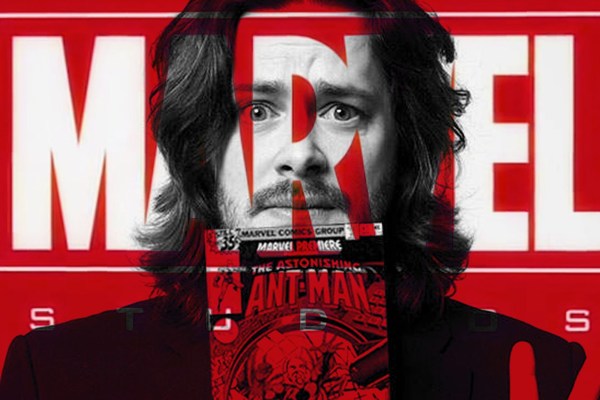
Perhaps the most interesting entry on this list with regards to a movie almost turning out entirely differently is the one pertaining to this year's Ant-Man, a Marvel blockbuster that was almost "An Edgar Wright Film".
The directorial credit eventually went to one Peyton Reed, who filled in for the British director at the last minute when he suddenly left the production due to "creative differences." Thing is, Edgar Wright worked on Ant-Man for close to a decade. He had been developing the project with Marvel as far back as 2003, when he wrote the initial script with his friend Joe Cornish.
Watching the finished film, you can still see traces of Wright's style scattered across the final movie; had he been able to work it out with the studio, though, chances are that fans would have wound up with a far more interesting Ant-Man film than the one they ultimately got. Not that it Reed's version was bad, exactly: it just felt safe and broad and factory-like, which Wright's work never, ever does. Oh, what could have been, hm?
Like this article? What do you make of these alternate versions of 2015's big movies? Let us know all your thoughts on the matter in the comments section below.