10 Things We Learned From Jon Ronson On Louis Theroux's Grounded Podcast
Theroux's fascinating podcast debut features a Ronson ghost story about Robbie Williams.

This pandemic had a lot of people thinking that they would finally get around to the creative project that they have had in mind for the longest time. Louis Theroux is one such person. A journalist famed for the high quality of his popular documentary work, Theroux is a gift to the world of podcasts. Using this time to speak to the people that he has always wanted to interview, if the first episode of Grounded is anything to go by, it's going to be an audio gem.
Theroux always produces work that has something to say. He's a master interviewer who hardly ever gets flustered and knows which questions to ask and when to ask them. As he admits in his chat with Jon Ronson, he has a talent for directing conversations and situations to inconspicuously go where he wants them to. Theroux won't be releasing episodes that ramble on for hours at a time. Each episode will be stripped of fat; a lean listening experience.
The aim of creating interesting content is greatly assisted by the equally brilliant Ronson, a journalist and documentarian who is a contemporary of Theroux's. They speak about their parallel careers and it makes for fascinating podcasting. They share their opinions on conspiracy theorists, nazis, and other nefarious characters. It's a unique type of interview about these subjects because both participants have spent time studying them closely.
We rank the ten things that we learned from Jon Ronson's appearance on Louis Theroux's Grounded podcast.
10. Theroux And Ronson Share A Friendly Rivalry

One of the first things that Louis Theroux and Jon Ronson get out of the way is the acknowledgement that they are so similar. While this interview isn't quite being in the same room at the same time, it's the closest thing we're going to get to confirmation that they are two different people. However, while they are different people, they are also professionals who share a huge intersection in the Theroux-Ronson Venn diagram.
Journalists who have enjoyed television and documentary success, they share parallel careers. Both came to prominence in the 90s and during that rise to fame, they were aware of each other. While there is now clearly an admiration and respect between the pair, their rivalry was less enjoyable when they were starting out. It felt as though they were fighting for the same territory, covering similarly weird subjects.
Ronson points out there is a distinction between having an enemy and having a nemesis. Animosity is felt towards an enemy, while a nemesis inspires you to greater heights. Theroux agrees with this assessment but also admits that there is a nastiness he feels which he wishes he could root out. However, he is comfortable enough with this feeling and believes it is important to be honest about it.
9. Ronson's First Skype Call Was With Robbie Williams About Haunted Houses
Ronson's Robbie Williams story is a doozy. He must have tons of stories like this about celebrities. Speaking about the sudden popularity of Zoom, Ronson revealed to Theroux that his ever video chat was with the pop star Robbie Williams. Fellow journalist Caitlin Moran had contacted Ronson to tell him that Williams wanted to speak to him about a project he had in mind. Suddenly feeling nervous about the impending phone call from Williams, Ronson turned off his phone. When he eventually turned it back on, he listened to a voice mail from Williams.
In the voice mail, Williams told Ronson that he wanted to spend a night in a haunted house and asked him to arrange this on his behalf. Thinking this was an interesting idea, Ronson got in touch with an array of manors said to be haunted by ghosts. To his surprise, every place he contacted got back to him saying that their manor was most definitely plagued by ghosts and that Williams would be welcome to stay whenever he liked.
After going through all this trouble, Ronson was told by Williams that he no longer wanted to follow through with the idea. This twist received an empathetic groan from Theroux. Ronson ends the anecdote with a brilliant quip: 'No wonder ghosts and Robbie Williams get on so well, they both only manifest themselves when it suits them.'
8. Twitter Trolls Are Finding Dastardly Ways To Beat Algorithm

Reputation is a subject that Ronson is fascinated by. His 2015 book So You've Been Publicly Shamed focuses on online shaming and the culture of humiliation that is prevalent among trolling communities of the internet.
In his chat with Theroux, Ronson brought up how trolls are getting around the algorithm of Twitter by altering their language when doling out abuse. Instead of using curse words that would flag the attention of those cleaning up the site, they use a word that isn't a swear word but it does destroy reputations: Paedophile.
It's common to see this word thrown around online without any justification for such a damning smear to be used. One high-profile example was when Tesla billionaire Elon Musk responded to criticism from Vernon Unsworth in June 2018. Unsworth, an experienced cave diver, criticised Musk for pledging to help the trapped Thai youth soccer team, dismissing his involvement as a PR stunt.
Musk decided to call him 'pedo guy' in response. A lawsuit followed, which Musk won. Unsworth would agree with Ronson that it's a word that causes damage to a reputation.
7. Donald Trump Isn't Allowed To Block People On Twitter

Donald Trump is, among other things, a headline-making machine. The US President has no filter when it comes to public speaking, often spewing nonsense off the top of his head. With that in mind, it's forgivable if you were unaware of a court ruling that went against him last year. It's the type of ruling that pub quizzes were made for. It decided that the ALL-CAPS-TWEETING septuagenarian could no longer block anyone on Twitter.
It was a decision that Theroux and Ronson discussed briefly. Ronson recently became an American citizen himself, taking his test right before the pandemic took place. Now he is entitled to the mad online ramblings of Trump too. Essentially, if Trump banned anyone on Twitter he would be infringing the first amendment rights of that citizen.
Not allowing them to avail of the public service broadcast of the president of the USA just couldn't fly. Trump tried to have this decision overturned later on in the summer of 2019 but failed in his attempt. Trump was quite fond of blocking people before this ruling. It was the protests of those who he blocked that led to this decision being made.
6. The Final Cut Replaces Reality In Theroux's Memory

An interesting thing that Theroux spoke about was how the finished product of whatever he's working on can sometimes replace the actual filming experience in his memory. He looks at rushes of the days spent filming and realises how markedly different it is from what appears on television. 'The finished version beds in (to your memory) but it almost replaces and drives out the real experience," said Theroux. "Scenes that you imagine happening more or less as they did in the finished film actually play out quite differently."
Theroux then gives an example of what he's talking about from a programme he made called Louis and the Nazis. In the version that aired, a man named Skip demands to know if Theroux is Jewish. Theroux had made a decision before filming to not say whether or not he was Jewish. This secrecy would create what Theroux called a 'helpful friction' for the programme. The scene he references sees Skip fixate on whether Theroux is Jewish. It appears to emerge organically but in reality, Theroux goaded Skip into that dialogue, a memory jogged by the rushes.
Laughing at Theroux's manipulative powers, Ronson asked him if he felt bad about it. To the contrary, Theroux felt pleased by this discovery. It confirmed to him that he had skill when it came to his job.
5. Ronson Once Drove Terrorist Omar Bakri To Office World
The anecdotes come thick and fast at the end of the episode. Like a sugary treat after the chewing of meaty topics that require serious discussion, these are swapped between Theroux and Ronson gleefully. One such anecdote is told by Ronson about a documentary he made in the 90s called Tottenham Ayatollah. It focused on an Islamic terrorist named Omar Bakri, a complicated character implicated in the wave of terror attacks on the west at the start of the 21st century. Ronson spent time with him for this documentary and it was at times bizarrely banal.
Theroux had just finished telling Ronson about the time that he agreed to deliver burlap sacks for a cross-burning. He was excited to be getting up close and personal with his subjects. Then, he had a rethink. He couldn't actively participate in a cross-burning, that would be crazy. The closest that Ronson came to facilitating criminal activity was when he drove Bakri to OfficeWorld, where he would print his terrorist rhetoric in pamphlet form. Bakri asked Ronson to do him this favour as OfficeWorld had a special price promise involving a money-back guarantee.
4. The Chimp Owners Weren't Happy With How Theroux Framed Them
Before Joe Exotic was the star of Netflix's Tiger King documentary, he starred in a 2011 Louis Theroux adventure called America's Most Dangerous Pets. It focused on the private zoo problem in the states and it can be found on Netflix. That episode of Theroux's storied career also featured pet owners who preferred primates to big cats. It was around the time that a lot of chimpanzee attacks were in the news so Theroux was understandably nervous.
The chimp owners who met him wanted to show the world that chimps were loving creatures who got a bad rep. As he tells Ronson, Theroux ticked off these people with the way that he framed their chimp's behaviour in his show. He nervously waited in the house when they let the chimp barrel around the garden, watching it through the window. The chimp spotted him, ran over to the window and banged on the glass, shattering it.
Theroux admits that it didn't necessarily seem like an act of aggression from the chimp, who frightened himself when he broke the glass. The scene ends with Theroux telling the couple he's got enough on camera and that he's happy to go. It's a funny moment. However, the couple didn't see the humour in it and scorned Theroux in a letter for overlooking the fact that he had the world's only swimming chimpanzee at his leisure.
3. KKK Leader Thom Robb Wrote A Recommendation Letter For Ronson
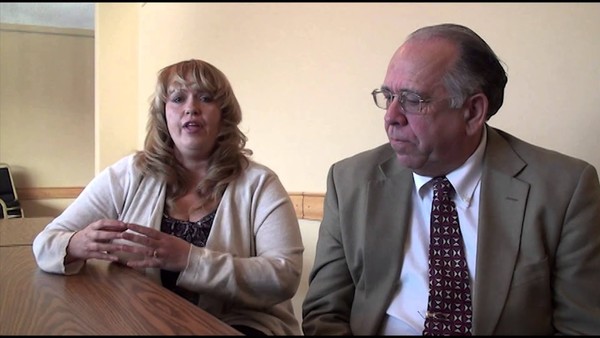
While Theroux's subjects aren't always happy with him, Ronson has received great feedback from the personalities he follows. One such glowing review came from Thomas Robb. For those of you who are unfamiliar with Robb, he is a far-right activist and the leader of the Ku Klux Klan. Ronson's time documenting Robb's organisation came during a time when the KKK was trying to repair its reputation. Robb was the organisation's first politically-correct leader.
The members of the KKK were at this time so out of the habit of burning crosses that they didn't exactly know how to do it. Did they soak the cross with kerosene then raise it or raise it then soak it? The answer wasn't obvious to the average Klansman, much to the embarrassment of Robb. Ronson saw the humour in the head of the KKK looking at him, a Jew, apologetically for the idiocy of his men. Clearly Robb had a soft spot for Ronson.
It would be fair to imagine that the general public didn't view the KKK positively after the documentary aired but this didn't matter to Robb. He wrote Ronson a letter of recommendation that encouraged everyone to allow Ronson to interview them. Ronson found this amusing but he doesn't expect to use it any time soon.
2. Ronson Thinks David Icke Legitimately Believes In Lizard People

David Icke has been in the news a lot lately. A prominent conspiracy theorist, Icke had his YouTube channel deleted by the video-sharing platform for spreading misinformation about Covid-19. Ronson has met him a number of times and although Icke's actions are harmful, Ronson doesn't believe his intentions are. Speaking about a previous experience with Icke, Ronson reminded Theroux and his listeners that Icke believes in a secret society of lizard people. He believes that they are the most powerful people in society and that they meet in secret clubs.
One such club that Icke believes they meet in is Bohemian Grove. A private gentlemen's club based in San Francisco, Bohemian Grove has featured members like Ronald Reagon and Richard Nixon. Ronson was given an opportunity to go to Bohemian Grove and offered Icke the chance to come with him. Icke refused, believing that getting too close to 'the truth' would be the end of him. He didn't want to disappear so he declined the invitation.
Although Ronson dismisses Icke as a conspiracy theorist, he doesn't believe that he's a liar. He also mentioned that the two are on good terms with Icke hugging Ronson when they ran into each other at the airport recently.
1. The Fascinating Origin Story Theory About Alex Jones
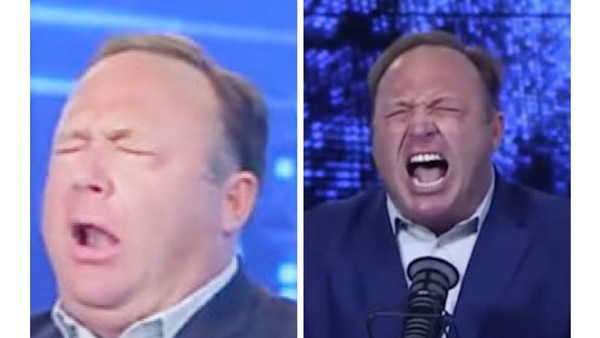
A good chunk of the interview is dedicated to a discussion about Alex Jones. A controversial American conspiracy theorist, Jones has crossed paths with Ronson on numerous occasions. He was de-platformed by YouTube and many other social media companies for breaching the terms of their service. Ronson is a believer in the effects of this punishment. It takes away a hatemonger's power and Jones had a large following that he commanded to find out 'the truth' about Sandy Hook. This meant harassing the parents of the slain children of that massacre.
A contemptible character from afar, Jones is no more pleasant up close as Ronson will attest. He told Theroux that he caught Jones in a lie 20 years ago and judged him to be a charlatan thereafter. However, a recent discussion with someone who worked closely with Jones for years gave Ronson cause for doubt. The source, Josh Owens, wanted to become a whistleblower on his time with Infowars and told him that Jones acts the same both on and off camera.
It was Owens who shared a theory with Ronson about why Jones became the person he is. Apparently, Jones was a massive bully at school and pushed all of his victims too far. In an act of revenge, they invited him to a party in a barn before ambushing him. They beat him to within an inch of his life, knocking out his teeth and leaving him with a limp that he has to this day. Being the victim of conspiracy is a compelling supervillain origin story if it's true.