10 Things You Didn't Know About Gene Wilder
There's a lot more to Wilder than Wonka.
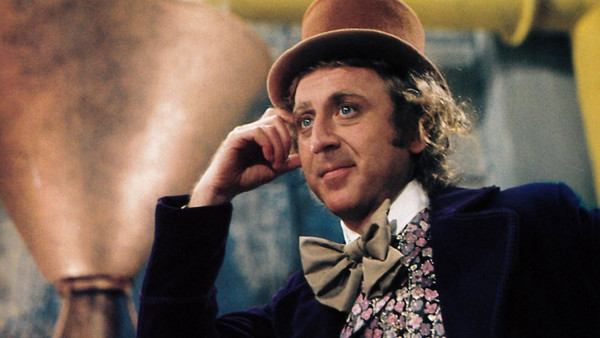
Gene Wilder was hilarious, there's just no other way to put it. Despite a fairly limited film career - thanks to early retirement and disenfranchisement, the genius writer and performer touched Hollywood with a magic that was almost tangible.
Few will ever touch his brilliantly eccentric and enigmatic performance as Willy Wonka in Charlie & The Chocolate Factory - a definitive character portrayal to say the least - or replicate the chemistry he had onscreen with Richard Pryor. Nor will there ever by another comedic partnership quite like the one between him and director Mel Brooks, which resulted in the unfathomable brilliance of Blazing Saddles and Young Frankenstein.
Even when he wasn't acting, Wilder was creating and performing, bouncing between stage work and writing and even dabbling in watercolour painting. He burned with an urge to create.
Though Wilder's death from Alzheimer's complications came as a shock to the world, what's important is celebrating his life, which was so much more than just a terrific career in film.
Here are ten things you probably didn't know about that beautiful life...
10. He Was Responsible For Willy Wonka's Iconic Entrance

One of the most memorable moments in 1971's Willy Wonka & The Chocolate Factory is the first appearance of the man himself. Wonka, seemingly frail and leaning on a cane, exits the factory to greet his visitors. After limping towards the crowd he drops his cane, stops and falls forward into a tumble, much to the delight of everyone watching.
It's a fantastic scene, one for which Wilder himself was actually responsible. Before accepting the role as the enigmatic titan of confectionery, Wilder told director Mel Stuart about his idea for the scene.
When questioned as to its relevance, Wilder replied that “Because from that time on, no one will know if I’m lying or telling the truth.” It's a comparatively brief moment in the film, but it absolutely lends the character of Wonka a strange sense of mystery, something Wilder clearly realised was important.
9. He Hated Tim Burton's Wonka Remake

For most people's money, the Tim Burton adaptation of Roald Dahl's Charlie And The Chocolate Factory is infinitely inferior to the Mel Stuart version. It might be closer to the source material, but there's something sterile and charmless about it, lacking the wonderful strangeness of the 1971 version.
Wilder himself agreed, stating his distaste for the adaptation in a 2013 interview. Specifically, he said: “I think it’s an insult...Johnny Depp, I think, is a good actor, but I don’t care for that director. He’s a talented man, but I don’t care for him doing stuff like he did.”
Even before the film released, Wilder referred to the movie as nothing but a studio cash grab. Which is interesting, because Roald Dahl famously hated Mel Stuart's attempt.
8. He Retired From Acting Because He Thought Films Had Become Too Senseless

It's tough to believe it, but Gene Wilder's last cinematic role came almost twenty-five years before his death in 2016. Despite a string of appearances in TV series and TV movies, Wilder's last big on-screen role was in the comedy crime drama Another You in 1991, directed by Maurice Phillips.
But there's a reason why Wilder's work slowed down in his later years. Over time the actor believed that he was receiving fewer and fewer decent scripts, claiming "not too many came along".
Wilder's specific problems with most of the material he received was its senselessness. He had no interest in 3D, and he criticised mindless action, saying "I didn't want to do ones where it's just bombing and swearing"..."can't they just stop and talk, just talk, instead of swearing?"
7. His Real Name Was Jerome Silberman

Though he was known as Gene Wilder for the vast majority of his career, Wilder was actually born Jerome Silberman in 1933, son of Jeanne and William Silberman.
It wasn't until the age of twenty-six, when he began pursuing a career in acting, that Jerome decided to adopt the professional name Gene Wilder.
The name was chosen because of Jerome's fondness for the Thomas Wolfe character Eugene Gant in the 1929 novel Look Homeward, Angel. This, combined with his admiration of the playwright Thornton Wilder, prompted him to merge "Eugene" and "Wilder" in order to create his new name.
6. When He Was A Teenager, His Mother Sent Him To A Military Institute

As early as aged eight Wilder became interested in performance. It started when his mother was diagnosed with rheumatic fever and the doctor asked Gene to try and make her laugh. Enjoying the challenge and her positive reaction, Wilder soon became enamoured with comedy.
Unfortunately for Wilder, his mother Jeanne didn't see his early potential, convinced he was wasting his time. This prompted her to send him to Black-Foxe, a military institute in Hollywood meant to teach discipline and practical skills.
Wilder's time at Black-Foxe was absolutely miserable. He later claimed that he was bullied and sexually assaulted for being the only Jewish pupil. Thankfully, Wilder didn't stay there for long and when he finally returned home his determination to act had only increased.
5. He Was A Published Novelist

Though most know Wilder as an accomplished film and television actor, he was a man of many skills and talents. Uninterested in a lazy retirement, Wilder used his free time to pen three novels and a collection of short stories.
Wilder's first novel released in 2007, a comedic spy romance titled My French Whore. My French Whore tells the story of a young railway worker named Paul Peachy, who enlists in the army after becoming disillusioned with life.
His second novel The Woman Who Wouldn't was released just a year later, followed by a short story collection titled What Is This Thing Called Love? Wilder's last novel, Something To Remember You By: A Perilous Romance, was published in 2013.
4. He Was A Prominent Cancer Activist

Wilder met his second wife actress Gilda Radner in 1981, while filming the Sidney Poitier film Hanky Panky. During shooting, Radner and Wilder became extremely close friends, their relationship slowly developing into a romance.
After several years together the couple married in 1984, but after a number of failed attempts to conceive and a string of false diagnoses, Radner was confirmed to have ovarian cancer in 1986.Though she initially responded positively to treatment, Radner sadly died three years later.
This loss prompted Gene to become a prominent cancer activist. He founded the Gilda Radner Ovarian Cancer Detection Center in California as well as Gilda's Club, an organisation for people living with cancer. In 2009 Gilda's Club merged with The Wellness Community, continuing support patients and their families more than fifteen years later.
3. He Enjoyed The Sport Of Fencing

Back in his early twenties, while studying at the Bristol Old Vic Theatre School, Wilder spent a substantial amount of time studying fencing, the sport in which two competitors fight using harmless, rapier-style swords.
In fact, Wilder was so good at the sport that he actually became the first ever freshman to the win the school's fencing championship, a feat which shocked staff and pupils alike.
Though he was encouraged to continue pursuing the sport, Wilder eventually returned to the U.S. to further his study of acting, but remained fond of the sport throughout his life.
2. His Life Philosophy Was The "Golden Rule"

Despite being raised as Jewish, Wilder admitted in his personal memoir Kiss Me Like A Stranger: My Search For Love And Art that although he appreciated his Jewish heritage, he didn't identity as a practising Jew.
In fact, Wilder was an atheist, stating that he didn't believe in god or any of the specifics of the Jewish religion.
Instead, Wilder's life philosophy was the "Golden Rule", the principle of treating others the same way you'd like to be treated yourself. In his memoir, Wilder details the importance of this way of thinking, explaining how it governed many of his life decisions.
1. Mel Brooks Plied Him With Coffee And Chocolate During The Producers

At the height of his acting career, Gene Wilder was known for his hilarious collaborations with writer and director Mel Brooks. Arguably the most famous was Wilder's performance as Leo Bloom in Brooks' The Producers, which contained the iconic (and hilarious) "blue blanket" scene,
In the scene, Bloom becomes incredibly agitated by the character Max Bialystock (Zero Mostel) who takes away his blanket which he uses to comfort himself when annoyed or frustrated. Biaystock's reaction is absolutely hilarious; it's a breakdown so manic and exaggerated that it's impossible not to laugh.
Recently, Brooks revealed the story behind the scene, and how Wilder managed to come across so frantic.
The scene was shot at the close of a day of filming. When Brooks asked Wilder what would give him the energy to continue, Wilder requested chocolate with no nuts, but Brooks convinced him to drink a cup of black coffee - which Wilder disliked - along with eating seventeen or eighteen chocolate bars. The result, in the words of Brooks, was "insanity".