10 Things You Didn't Know About Audrey Hepburn

Think you know Audrey? Think again.
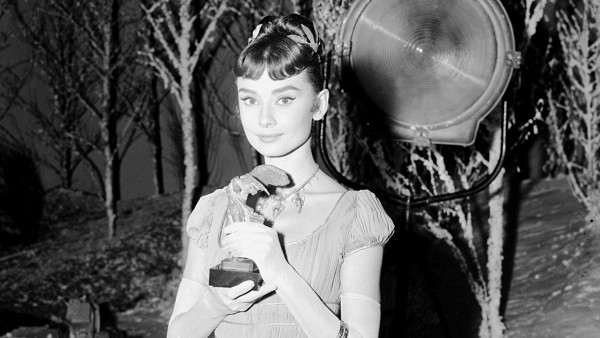
Every now and then, Hollywood is graced with a truly standout individual who, for whatever mixture of reasons, stands head and shoulders above the rest. They are the enduring icons, and the ones who remains classics of the silver screen even decades after their departure. No other actress fits the role more definitively than Audrey Hepburn. Despite her diminutive stature, she made an enormous impact on the film industry from the outset, receiving equal billing alongside already established star Gregory Peck in her first starring role in Roman Holiday. For an actress who wasn't even first choice for the role, it was a hell of an entrance to make. But even though she may be renowned for genre-defining roles like socialite call-girl Holly Golightly and Cockney flower seller Eliza Doolittle, there remains far more to her character than what is seen on screen. A humanitarian, artist and dancer, she in fact had a fascinating backstory that remains largely untouched upon. Jennifer Love Hewitt may have made a valiant attempt to bring Hepburn's story to the screen in 2000's TV biopic, but here are the things that may not have come to light before. Think you know Audrey? Think again.

10. She Was Frequently A Second Choice

It's difficult to imagine a filmmaker ever having said 'no' to Audrey Hepburn being the star in their movie, but she has actually been an unpopular choice for a good few of her roles. For 1961's film adaptation of Breakfast At Tiffany's, author Truman Capote's first choice was Marilyn Monroe. The Holly Golightly character in his book was significantly different to Hepburn's performance, and despite the part being arguably her most iconic role, readers of the book will find it easy to understand why she was not the first choice. Audrey Hepburn as a West Texas vagrant turned New York call girl? Admittedly an odd casting. She very nearly didn't get her first starring role in Roman Holiday either, as producers initially wanted Elizabeth Taylor for the role. Fortunately, director William Wyler was so enchanted by her screen test that he immediately declared "that's the girl!"

9. She Was Nearly A Ballerina

At the early age of 5, Hepburn was already taking ballet lessons. Her slight frame as a youngster gave her the effortless grace that she would later become renowned for, and she held ambitions to dance professionally. By the late 1940s, she had become an extremely proficient dancer, having trained with a number of different significant figures on the ballet scene. After three years under the tuition of leading Dutch dancer Sonia Gaskell, she moved home in order to study at the Ballet Rambert, supporting herself by working part-time as a model. Her dreams were dashed, however, when she requested an assessment of her prospects as a dancer. Hepburn was told that, despite being undeniably talented, her considerable height and weak constitution would prevent her from ever achieving the status of prima ballerina. She was unfazed however, instead deciding to concentrate on her acting career, making use of her dancing abilities in films like Funny Face alongside Fred Astaire.

8. She Was Bilingual

Although a British citizen, Hepburn had a rich and diverse multi-cultural heritage. Her father, Joseph, was a British subject born in Bohemia, and her mother, Ella, was a Dutch aristocrat. Audrey herself was born in Belgium, meaning that much of her childhood was spent divided between a host of different countries. Because of their background, the family travelled often between Britain, Belgium and the Netherlands. Hepburn was fluent in both English and Dutch, and following years of travel, also became proficient in Spanish, Italian and French. Her accent, thought by many to be one of her most endearing traits, remains oddly unique. As an aside, Joseph left the family abruptly in the late 1930s after being caught in bed with the children's nanny by Ella. He and Audrey lost contact for many years, but were reunited by The Red Cross years later. He remained emotionally distant, but his daughter's kindness shone through once more as she continued to support him financially until his death.

7. She Helped The Dutch Resistance

Though living in Britain at the outbreak of war in 1939, Audrey and her mother relocated back to Arnhem in the hope that the Netherlands would remain neutral throughout the conflict as they had done in the previous war. However, the country was invaded by the German military soon after, prompting her to adopt the pseudonym Edda van Heemstra in order to avoid attracting attention with her British-sounding name. During the occupation, Hepburn provided assistance to the Dutch Resistance, raising funds by secretly dancing for money. Thanks to her inconspicuousness, she would also act as a courier, delivering parcels and messages to other resistance members. Her actions were remarkable for a girl of such young age, given the consequences had she been found out by the Germans. Times were hard though, and Hepburn suffered from severe malnutrition and illness. As food become increasingly scarcer, she would resort to making flour from tulip bulbs to bake cakes and biscuits.

6. She Was Extremely Superstitious

That scream in Roman Holiday as Gregory Peck pulls his severed hand out of the Mouth of Truth is real. Not only was she not expecting Peck to have hidden his hand up his sleeve, but Hepburn was notoriously superstitious. Ever the quirky individual, she repeatedly requested that her dressing room be numbered 55, the number she had been assigned in Roman Holiday, Breakfast At Tiffany's, and Paris When It Sizzles. She claimed it was her lucky number, though it can't have been all that lucky given the critical failure of the latter film. When she was nominated for an Academy Award following the release of Roman Holiday, she also requested that a dress she had worn in the film be adapted as her Oscar gown, dubbing it her 'lucky dress'. Perhaps she was right that time, as she won the award for Best Actress.

5. She Had A Pet Deer

1958's Green Mansions saw Audrey playing the part of Rima, a girl living in the Venezuelan jungle, totally at one with nature. Her co-star, stealing the spotlight at every possible opportunity, was a three-foot high European fawn called 'Pippin'. Despite already having a much-loved Yorkshire Terrier named Famous, Hepburn fell in love with the deer on set, allowing it to live with her for months so that it would naturally follow her on screen. She nicknamed her Ip, and took to feeding it milk out of a baby bottle. The two became inseparable, even pictured asleep together on a settee in LIFE magazine. Unlike some of her past co-stars, Ip was also noted to only ever need as many as two takes during shooting. It's unclear what happened to their friendship after filming ended, but it is suggested that the two were reunited a short while later by her first husband Mel Ferrer, who brought Ip home again to comfort Hepburn after she had suffered a miscarriage.

4. She Had Her Own Gardening Programme

Having always been a keen gardener, a television series documenting some of the most interesting gardens worldwide was perhaps a fine project to end her career on. In the show, Hepburn travels to seven different countries in what would turn out to be her final on-screen performance. It was filmed in 1990, but wasn't actually aired until January 21st 1993, one day after her death. She was posthumously awarded an Emmy for Outstanding Individual Achievement. As her health was failing in the early '90s, she was fond of taking walks through her garden at her home in Switzerland whenever her health would allow, something which became increasingly difficult for her before long.

3. She Supported UNICEF For 38 Years

Her experiences during the war had left Hepburn with a strong desire to help others. She had witnessed prolonged suffering, death, and the effects of being without even basic nutrition. Beginning in 1954, she was a strong supporter and contributor to humanitarian organisation UNICEF, using her image and celebrity to raise awareness and support for developing countries. On a number of occasions, she made trips to such locations, and was shocked by what she saw first-hand, claiming that some scenes were "apocalyptic". In 1988 she was appointed a Goodwill Ambassador, a role in which she remained until her death in 1993. Fittingly, Hepburn was once quoted as saying "I was born with an enormous need for affection, and a terrible need to give it."

2. That's Not Her Singing In My Fair Lady

When Holly Golightly sang Moon River, sitting on the fire escape in Breakfast At Tiffany's, that's really Hepburn singing. The song had been composed with her limited vocal range in mind, though there had been some debate over whether or not her performance should be overdubbed by singer Marni Nixon. Fortunately, director Blake Edwards decided that Audrey's plain, slightly imperfect rendition was exactly as it should have been, and it was kept. However, in 1964's My Fair Lady, Hepburn's vocals were not considered quite so appropriate. Despite the actress having trained extensively for her vocal roles in the film, Nixon was this time called in to overdub all of the singing. When she discovered what had happened, Hepburn was furious and stormed out, only to return the next day to apologise for her "wicked behaviour". As it happens, Hepburn had believed all along that she was not perfect for the part, and had in fact recommended it be offered to Julie Andrews, who had played the role on stage. She later said that if she had known her vocals would be removed, she would never have done the film.

1. She Was Very Self-Conscious

Even today, Hepburn is consistently ranked among the most iconic, beautiful, and stylish actresses in Hollywood history. Still standing the test of time, her image has become iconic. It is surprising to think, then, that such a woman was in fact extremely self-conscious about her appearance. She frequently complained of her "big nose", size 10 feet, small bust, and her angular shoulders. In fact, these "imperfections" were what so many people found so endearing, and perhaps are the reason she remains so iconic. As she once noted herself, what made her so accessible was that she - like any other woman - could be beautiful in spite of flaws. But regardless, she never quite understood why she had become so revered as a style icon. Despite her long list of Hollywood accolades, she was quoted as saying, €œI never thought I€™d land in pictures with a face like mine.€ Know any more surprising facts about Audrey Hepburn? Want to share your favourite of her movies? Leave a comment below.

Contributor
Contributor

Lover of Audrey Hepburn, Clint Eastwood and Steve McQueen. Also writes things. Went to university. Learned lots.