10 Things You Didn't Know About Candyman
Those bees Tony Todd ate? They were real - and he got paid $1000 for every one.

Candyman. Candyman. Candyman. CA-
Yknow? Better safe than sorry.
Later than the Terror Triumvirate of Michael, Jason and Freddy, Candyman might have vanished in the endless parade of slashalikes in the late '80s and early '90s. Thankfully, Chicago’s spectral master murderer garnered a cult all his own, with several imperfect but fun follow-ups and a sequel-cum-reboot slated for summer 2021.
Candyman fans – Candyfans? – hold high hopes for the new flick, scribed by rising horror master Jordan Peele and starring Yahya Abdul-Mateen II, fresh off the stellar Watchmen and Trial of the Chicago Seven.
Better still, the new film has the wisdom to retain the inestimable Tony Todd. Todd made Candyman, his inspired loquacity contrasting with the ugly and very real horrors of racism, violence and poverty that define the rest of the film. Todd strikes the perfect balance, turning a flowery sentence with style while keeping several secrets under his immaculate fur-collared coat.
What secrets, you ask?
Read on.
10. Candyman Is Not Dean Corll
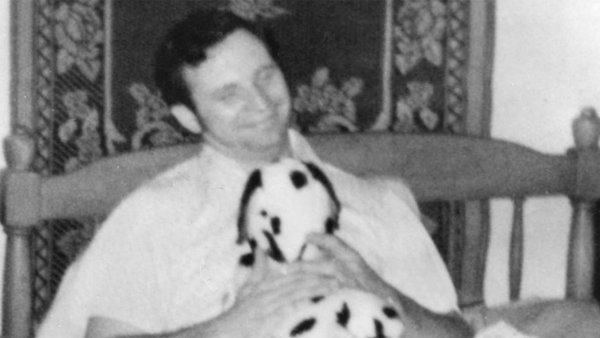
We start with something that’s less an entry than a disclaimer. Yes, Dean Corll was a real serial killer and, yes, the press occasionally called him The Candy Man. He even did what he did in the '70s, giving 1992’s Candyman plenty of time to trade on his evil acts.
Thing is, it didn’t. Candyman rose above such cheap and nasty thrills. The Clive Barker story the film is based on didn’t have a damn thing to do with the contemptible Corll, and the film followed a Black urban legend through working-class Chicago, not a predatory white pedophile through the suburbs of Houston. Corll’s family just happened to own a candy factory, which he used to lure boys and young men to his home to be abused and murdered.
Full disclosure: Corll did what he did about five hours from this author’s home. Any connection between one of film’s finest monsters and that broken, hateful man is far better than he deserves. On with the show.
9. Clive Barker’s His Daddy

As with masterpieces like Hellraiser and Nightbreed (also not-masterpieces like Rawhead Rex; seriously, read the story instead), the soul of Candyman comes from Clive Barker. “The Forbidden” was Candyman’s inspiration, a short story from Barker’s phenomenally produced collection Books of Blood. Seriously, Book of Blood (2007), Books of Blood (2020), Candyman, Dread, Hellraiser, Lord of Illusions, Midnight Meat Train, Quicksilver Highway and the execrable Rawhead Rex (we’re telling y’all, don’t do it to yourselves, just read the story) come from just that collection. Barker is good at this.
“The Forbidden” differs in several core respects from Candyman: the setting is a Liverpool council estate, not a Chicago housing project, and much of Candyman’s exploration of class and race is explicitly American. That said, the story lays out the bones of Candyman’s character, striking his core theme of a Bloody Mary-like urban legend as a metaphor for the artistic quest for immortality and the ugly, stupid side of society that so often cuts that quest short.
8. He’s About Graffiti
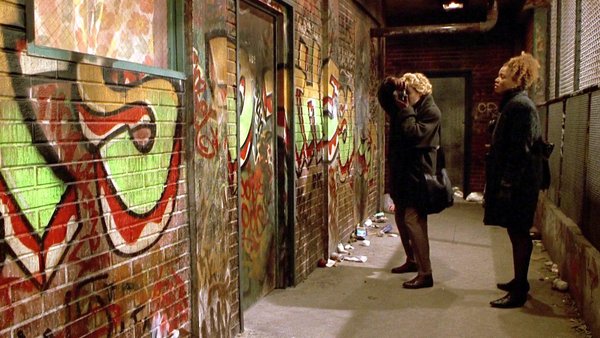
One of the themes Candyman retains from Barker’s original story is that the academic protagonist is studying graffiti. The plot hook (heh) is clear – on the one hand, graffiti is by nature art for the disaffected and marginalized, a way for people to reclaim the place where they live and work from its nominal owners; on the other, the protagonist is a privileged academic who intends to ride her observations of other people’s art straight to the top of her ivory tower. It’s not like she’s cutting anybody a check.
That starting conflict sets the tone for Candyman and Helen Lyle’s fraught romance. She may be the reincarnation of his love, but she’s also appropriating his culture. In a sense, Candyman is claiming Lyle the way graffiti artists claim Cabrini-Green, incorporating her into his story rather than meekly remaining a background character in hers.
7. He Got Real With The Bees

For a slasher movie, Candyman is surprisingly real. He occupies a real place and time, his story deals with real, entirely natural horrors, and his mouth is absolutely full of real bees.
Wait. What?
Lil bit, y’all. Long before Nic Cage flipped the Hell out with a basket of bees on his head – real talk, we would also flip out with a basket of bees on our head – Tony Todd actually grabbed a mouthful of stingers just to make a scene work. If you take nothing else from this article, take this: Tony Todd is a badass.
So was his agent, by the way. Todd had a special clause in his contract: one thousand dollars per bee sting.
He made $23,000.
There’s your Would You Rather? for the day, constant reader: would you take $23,000 for 23 bee stings on the inside of your mouth and throat?
Seriously. Bad. Ass.
6. He Really Is From Cabrini-Green
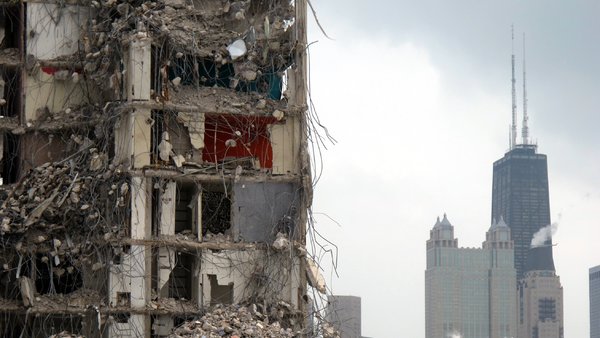
In the US, the Cabrini-Green Homes on the north side of Chicago are axiomatic for public housing at its worst. Construction was shoddy, upkeep nonexistent, and almost no effort was made to stem crime and violence in the area, which rapidly became endemic. Residents were mostly Black, often forced there for sheer lack of options due to Chicago’s infamous redlining of residential districts based on race.
Kaci Simmons, who portrayed Bernie Walsh, noted that Candyman was built to be a ghost of that time and place. The film was shot at Cabrini-Green, where several residents took understandable exception to their homes being treated as a backdrop for horror. That tension informed the whole film, but it pervaded Todd’s masterful performance. His jaw-dropping entrance through an apartment medicine cabinet, for instance, wasn’t just imaginative blocking. A *real person* had done the same some years previous, robbing several apartments by breaking through that comparatively flimsy portion of wall.
5. He Almost Had A Very Different Cast

Candyman was a career maker for several of the artists involved, notably Tony Todd and Virginia Madsen. It’s hard to imagine different performers playing modern horror’s most indelible monster/final girl couple. It’s dang near impossible to imagine the first choices for each role.
Eddie Murphy and Sandra Bullock.
Swear to God.
In fairness, Murphy has shown phenomenal range when given the chance. If you haven’t seen Dolemite is My Name, hit Netflix the moment you’re done with this article; it’s pure joy. Given room to run, Sandra Bullock has also turned in superb work at odds with her America’s Sweetheart rep. Remember Gravity?
Still, though. Really? We think we got the good timeline on this one.
4. He Knows His Shakespeare
Every great horror icon has their thing. Michael Myers hunts his family. Jason punishes teenage shenanigans with exceedingly elaborate kills. Freddy does wisecracks and surrealism.
Candyman? Candyman has class.
Honestly, the film would be almost forgettable without Tony Todd’s 1890s diction. For all that he makes a towering, frightening physical presence, it’s the near poetry of his dialogue that makes the masterpiece.
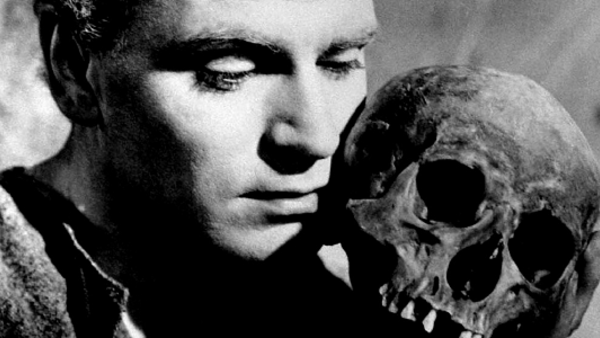
In fact, some of the time there ain’t no “nearly” about his poetry. The leitmotif of “sweets to the sweet” comes from Billy Shakes his own bad self. Better, it comes from Hamlet’s tragic Ophelia, mad with grief, strewing the ground with flowers in memory of her murdered father. The reference evokes Daniel Robitaille’s own besetting loss, reminding the well-read audience that before Candyman was ever a monster, he was a bereaved lover who watched his life go up in flames.
Also, if you didn’t get the Shakespeare reference the first time through, no shame. What do you think we’re for? We nerd so you don’t have to.
3. He’s The Phantom Of The Opera

On the subject of classic literature and its influence on Candyman, Tony Todd linked his character to another archetype of proto-horror: Erik, the Phantom of the Opera. From Candyman’s perspective, after all, the film is a tale of dark romance. He pursues his incarnate love through the maze of a haunted structure that obeys his commands, seeing in her a chance at immortality.
The actual Candyman character parallels the Gaston Leroux original just as closely. Tony Todd’s Candyman has a shattered body, but a beautiful voice and a mind torn between love, creative inspiration and homicidal need. Todd committed to his flowery dialogue specifically to play up this connection, giving Candyman a more explicit, and more tragic, goal than the Freddies and Jasons of cinema.
2. He Was A Hypnotist (And So Was His Director)

Premiering in 1992, Candyman was a relative latecomer among slasher royalty and had the privilege of learning from other films’ mistakes. One key element both Tony Todd and director Bernard Rose wanted to avoid was excessive screaming. Both considered it overdone and too easy to laugh at, as anyone who has viewed the most famous 30 seconds of Troll 2 can decidedly confirm.
Instead, actors agreed to be hypnotized for certain scenes. Madsen spent whole scenes hypnotized, adding an otherworldly quality to Helen’s interactions with the Candyman. Todd noted being “tranced out” helped him deal with minor stressors like the aforementioned MOUTHFUL OF FRIGGIN’ BEES, and sought to add the rhythms of hypnosis to his speech and movement, conveying Candyman’s power to seduce as well as destroy.
1. In A Film Called Out For Racism, He Broke Ground For Black Monsters

Candyman inspired serious dialogue about the role of race in horror fiction on its release in 1992. Many critics accused the film of, in the words of Devil in a Blue Dress director Carl Franklin, “play[ing] on white middle-class fears of black people.” In response, Candyman director Bernard Rose took time away from shooting to meet with the NAACP. He characterized their view as liberating, saying “Why shouldn't a black actor be a ghost? Why shouldn't a black actor play Freddy Krueger or Hannibal Lecter? If you're saying that they can't be, it's really perverse.”
The greater discussion to be had is embodied in the Candyman character. Tony Todd’s indelible performance ranks with the greatest in horror history – and for years, it was the only one of its kind. Even the most transgressive horrors shied away from the real nightmares that Candyman embodied: a free black man murdered by a lynch mob for loving a white woman, now set free to wreak well-earned vengeance. You can still count the number of black slashers on one hand, and it took almost 30 years (1992 was 28 years ago, yes, we hate it too) for films like Get Out and Antebellum to pick up Candyman’s ball and run. Before that, Daniel Robitaille stood alone in America’s shadow, sole reckoning for the country’s original sin. Beat that for a monster.