10 Things You Didn't Know About Gladiator

He will have his vengeance, in this life or the next.
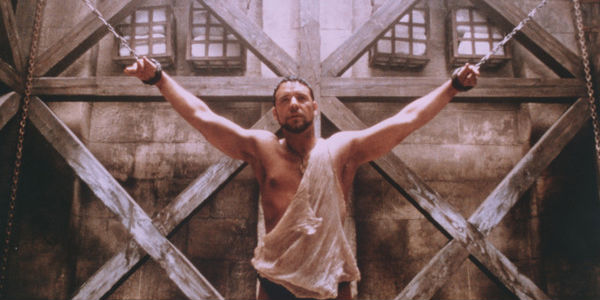
During the 1950s and 60s the historical epic was something of a staple of Hollywood's output - from Ben-Hur to The Fall of the Roman Empire, sword and sandals tales on a huge scale were incredibly popular, guaranteed to draw huge crowds into the cinemas. By the late 1990s, however, this was long a thing of the past. Studios were reluctant to pour the required millions into such lavish productions for fear that the public no longer wanted to see such movies, and for the most part they were right. Then Ridley Scott came along - collaborating with writers and producers David Franzoni and Douglas Wick, they pitched the idea of Gladiator to Universal Pictures who gave the movie the green light even before a script had been completed. It was a bold move, especially considering that the script would be under constant rewrites throughout the lengthy production. The result was better than anyone involved could have hoped for - the epic sword and sandals blockbuster had been reborn, and Gladiator performed exceptionally well, both at the box office and the Academy Awards. The production of the film is a story unto itself, and the team faced a number of problems they had to overcome. There are plenty of interesting asides worthy of note which cropped up as well, and the following list covers ten of the most quirky and interesting facts about Gladiator you most likely didn't know. Strength and honour!

10. Maximus Decimus Meridius' Scars Come From Russell Crowe's On Location Accidents
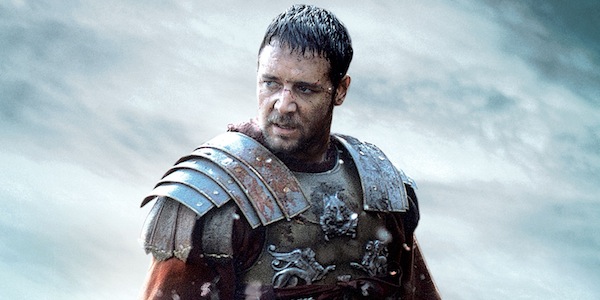
Gladiator opens with an impressive battle between the Roman army and the marauding Germans which ranks amongst the best battle scenes in the history of cinema. Blood and mud fly in every direction, and Scott's impressive camerawork gets right in on the action, detailing every blow and cut with gory precision. Maximus Meridius (Russell Crowe) isn't a general who likes to sit back on the sidelines and watch his troops do all the dirty work - he's more than happy to get in on the action himself and fight for Rome, and he has the scars to prove it. The make up department needn't have bothered applying them to Russell Crowe - he'd already earned them himself performing his own stunts. One particular stunt saw him fall back on his horse and into a tree, where a branch pierced his face, leaving the prominent scar you can see in the film. Whatever your thoughts are about Crowe (and he does have a reputation among stuntmen for not pulling his punches) he isn't afraid to get hurt - throughout the production of Gladiator he'd come a cropper on a number of occasions, breaking the odd bone or two.

9. Ridley Scott Tried To Sell An Enormous Set To The Maltese Authorities

The attention to period detail is certainly something which stands out when you watch Gladiator, from the costume design to the weapons and armour. The sets, too, are some of the most impressive ever constructed for a film, and the segment of the Colosseum built in Malta is reported to have cost in the region of $1 million. During production, Ridley Scott actually approached the Maltese authorities to see if they would be interested in buying the set off him after the film was completed, suggesting they could use it as a tourist attraction. He offered to make it a permanent structure, putting in proper footings and making it durable throughout the seasons. When they declined the set was built using plywood and plaster - needless to say, the Maltese authorities soon changed their minds when they saw the finished product. Their indecision cost them a potentially lucrative tourist attraction - the set was unlikely to last through the inclement winter weather.

8. The Two Horses On Maximus' Armour Are Named Silver And Scout After The Horses In The Lone Ranger

Throughout the course of Gladiator we see Maximus go from Roman general to slave, then from gladiator to saviour of Rome - the costume department inevitably had a field day dressing him up in appropriate garb throughout, adorning his gladiatorial armour with a variety of emblems. In one scene with the young boy Lucius, son of Lucilla and nephew to the evil Commodus, Maximus gestures to the two horses on his breast and names them Argento and Scarto - Latin for Silver and Scout. In the extended edition DVD commentary Russell Crowe jokes about these names and how they make reference to the two horses owned by the Lone Ranger and Tonto. The jokes in Gladiator are few and far between, but the occasional in-joke never goes amiss.

7. Ridley Scott Wanted Russell Crowe To Fight A Rhino
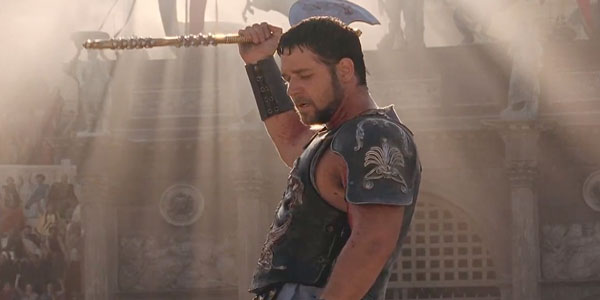
At one point in the production it seems that Ridley Scott thought that having Maximus fight another wave of combatants in the gladiatorial arena wasn't impressive enough to satisfy audiences. What could he bring on to up the ante considerably more? While in the end as we've all seen he settled for Bengal tigers, at one point he seriously considered pitting the hero against a full grown rhinoceros. Having looked into the practicalities of using a real rhino for some shots, then weighed up the options of using animatronics for the close ups of the head and mixing this with computer graphics, Scott realised that the costs of such a set-piece were prohibitive and dropped the idea completely. Would it have worked? Maybe, maybe not - as heroic and skilled a warrior as Maximus is, something tells us that the sight of him taking out an armoured beast like a rhino might have stretched plausibility beyond breaking point.

6. Oliver Reed Christened His Costumes

The casting of Oliver Reed as Proximo was something of a masterstroke for Gladiator - the legendary British actor, as well known for his prodigious drinking appetite as he was for his acting ability, is arguably one of the best aspects of the film. There are a number of stories about Reed's appearance in Gladiator which have done the rounds, not least the occasion in which he is alleged to have offered Russell Crowe out for a fight. A more sedate tale comes from costume designer Janty Yates - who won an Oscar for her efforts - who tells of Reed's habit of christening his garments on location. His breeches he called Bambi, while his robe was called Wendy. It's another wonderful indication of his eccentric nature - who else has ever given their items of clothing names?

5. No CGI Tigers Were Used In Gladiator
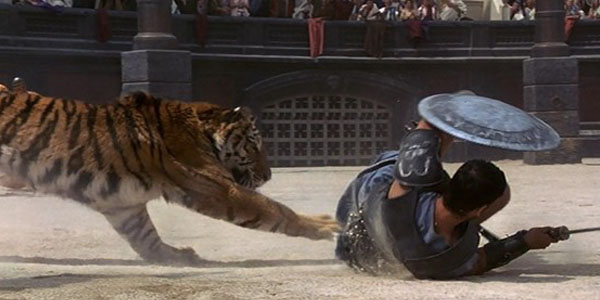
Having given up on the idea of putting Maximus in the arena with a rhinoceros, Ridley Scott and his crew opted for the slightly less dangerous scene in which Bengal tigers emerge from trapdoors in the floor and pounce on the unsuspecting combatants. It certainly added a great deal to the tension and excitement, as the huge beasts leaped up and took swipes at the fighters. A common misconception about the production of Gladiator is that in some of the shots the tigers were computer generated images - while this myth persists, the truth is that no CGI animals were used in these scenes. Instead, some of the closer calls were achieved through a combination of live action footage and green screens, while the tiger which jumps onto Maximus's back was actually a real tiger jumping onto the back of a handler who was holding a treat which he fed to the animal before shrugging it off. They say you should never work with animals and children in movies - another interesting aside is that the crew were instructed to keep any of their kids on set out of the sight of the tigers as their bite-sized offspring tended to get the animals excited at the prospect of a fresh snack.

4. Oliver Reed's Character Proximo Was Supposed To Survive Until The End

One of the saddest things about Gladiator is that, just as it seemed to signal a return from the wilderness for Oliver Reed, who hadn't made a film in some time, it was also to be his last. Of course, after the grief had passed, the next point of order for the production team was how were they supposed to finish the film without him? Some clever use of footage from previous takes, the use of body doubles and some judicious CGI allowed them to change the plot and include the scene in which he gives Maximus the keys and is subsequently murdered by the Praetorian guards, but originally he was supposed to survive until the very end, burying the figures in the sand after Maximus dies in the arena. Fortunately the character of Juba, played by Djimon Hounsou, had been padded out by this point, so the honour of delivering the film's final lines went to him instead.

3. Ridley Scott Got Permission From The Royal Forestry Commission To Burn A Forest To The Ground
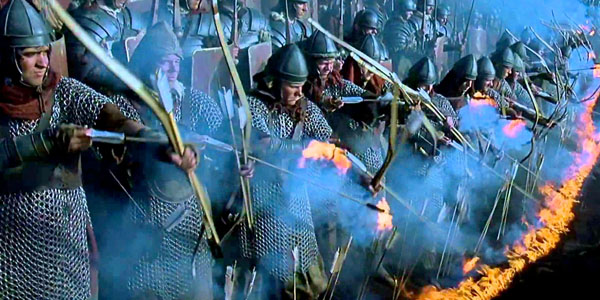
The opening battle sequence to Gladiator takes place on the edge of a forest - the German barbarians emerge from the tree line and before them lies a vast swathe of mud where trees once stood. At the time of production Ridley Scott was accused by some British newspapers of destroying countryside, an accusation which was completely ill-founded. Filmed in Bourne Wood in Surrey, a short distance from London, Scott actually had the full permission of the Royal Forestry Commission to clear a portion of the woods which was scheduled for deforestation anyway. The idea that a film crew - even one as large and prestigious as that working on Gladiator - would go ahead and chop down trees without permission is one only sensationalist tabloids would entertain. The woods are perhaps the most famous in movie history - Children of Men, Harry Potter, War Horse and Avengers: Age of Ultron are just some of the films in the last decade to have used the location.

2. Maximus' Haircut Was Based On A George Michael Album Cover

With his grizzled expression and natural athleticism, Russell Crowe cuts an impressive figure as Maximus Decimus Meridius. His ability to wield a sword coupled with his horse riding skills makes him one of the more convincing screen heroes of the time, willing to get his hands dirty for his craft. Another little gem of information from the extended edition DVD commentary has Russell Crowe revealing the inspiration for his haircut in Gladiator - none other than George Michael. If the thought of this makes you laugh more than a little, don't worry - it was something of an in-joke for the actor himself, who giggles away on the commentary as he tries to remember which album cover it comes from. George Michael Jesus To A Child The New Single Display Pos Material 61412 One unanswered question remains - did they have to pay George Michael royalties for copying his likeness? It's highly unlikely, and perhaps the singer was flattered - that's if he wasn't too busy getting arrested, of course.

1. Joaquin Phoenix Got Cold Feet And Wanted To Go Home
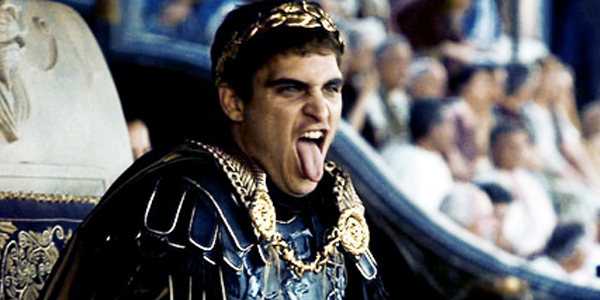
Joaquin Phoenix has by now established himself as an actor far better known than simply the brother of deceased Hollywood icon River Phoenix - following on from his Oscar-winning performance in Walk the Line his legacy as a fine performer is already secure. But it was Gladiator which kick started his career as a hot star to watch. It might never have happened - discussing the opening battle sequence on the DVD commentary, Ridley Scott and Russell Crowe recount how the upcoming star arrived on location and almost immediately thought that he'd made a huge mistake. He offered to reimburse the production team the costs of his flight and accommodation if he could get the next flight back to the States - evidently the cold, wet climes of England were too much for the Florida-born actor to tolerate. Fortunately they convinced him to stay, and we should be thankful they did - Phoenix's performance is one of the stand out features of Gladiator, and it's impossible to think how it might have turned out without him. Are there any other interesting facts about the production of Gladiator you know of? Why not let us know in the comments below?

In this post: 
gladiator
 
First Posted On: 
Contributor
Contributor

Andrew Dilks hasn't written a bio just yet, but if they had... it would appear here.