10 Things You Didn’t Know About Tim Burton’s Batman

Ever danced with the trivia in the pale moonlight?
Hollywood owes a huge debt of gratitude to Tim Burton€™;s 1989 Batman movie. Prior to this, the only mainstream cinematic superhero most audiences had seen was Christopher Reeve€™s' brightly coloured Superman. If Burton hadn'€™t blazed a trail with this darker and more adult vision, would film studios today have the guts to make superhero movies into dark and socially relevant cinematic treats like The Dark Knight and Captain America: The Winter Soldier?

As Burton'€™s Batman has earned such a legendary status in the decades since its release, it\€™s easy to imagine that the movie's production period was a happy time where everyone got on and everything went swimmingly. However, the true story behind the Batman movie of 1989 is completely different to what you might expect.

There were fallings-out, ideas that never came to fruition, and some very negative reactions to the film. Here are ten surprising facts about the film that you might not know€

10. The Film€™s Production Seriously Peeved Robin Williams
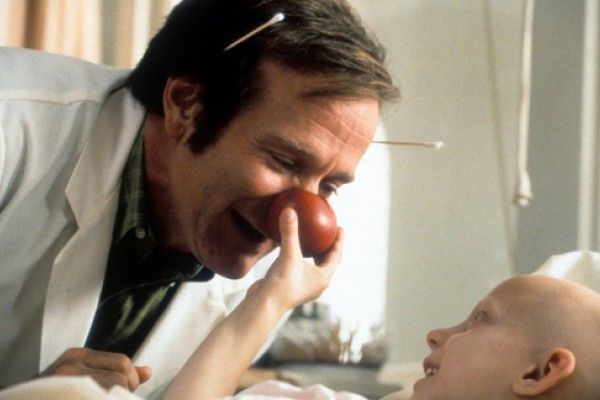
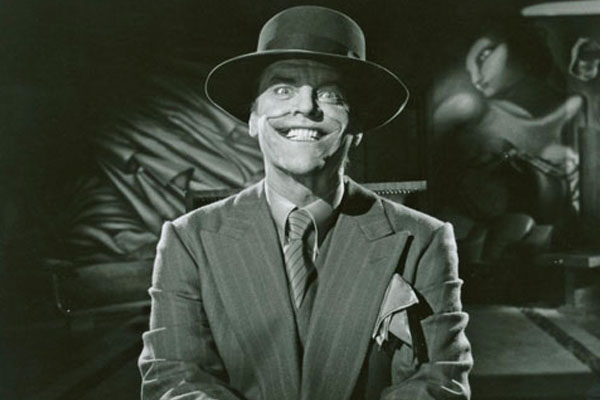
The role of the Joker wasn€™t always Jack Nicholson€™s. Before he had joined the film, Willem Dafoe had already been considered for the part and the executives at Warner Bros strongly felt like the future-Green Goblin actor was a perfect fit for the role. Tim Curry and David Bowie were also considered for the part. When Nicholson was eventually offered the part, he was hesitant to accept it (justifiably, as a darker superhero film like this was completely new ground at the time). Warner Bros reached out to Robin Williams, who accepted the part without delay, but what happened next really p*ssed off the late, great Good Will Hunting star. Rather than pressing ahead with Williams as agreed, Warners told Nicholson that they had another actor lined up and that this was his last chance to accept the role. Nicholson snapped out of his doubts and accepted the role, even though Williams already thought he€™d nabbed it. Inevitably, Williams was infuriated at having been used as bait in this way. Williams refused to work with Warner Bros for quite some time afterwards, until the studio officially apologise for mistreating him in this way. When he was later offered the role of the Riddler in Batman Forever, he turned it down.

9. Michael Keaton Was Nothing Like The Casting Call
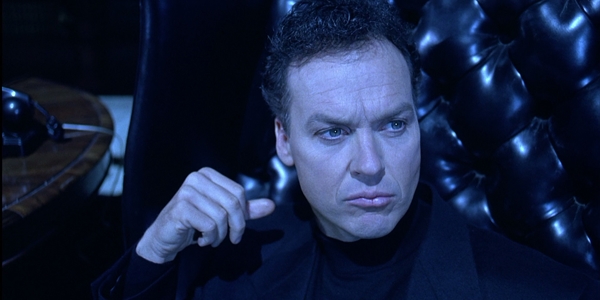
Casting Bruce Wayne/Batman was just as difficult as the Joker, for Warner Bros. The original draft of Sam Hamm and Warren Skaaren€™s screenplay called for described Bruce€™s physiology to resemble €˜muscles on top of muscles', with scars 'from nightly combat€™. With this in mind, Warners€™ first choice for the role was Mel Gibson, who€™d already proven himself as a tough nut action hero in three Mad Max films and the first Lethal Weapon. They even considered Arnold Schwarzenegger for the part at one stage. But Tim Burton ended up casting the svelte and skinny Michael Keaton who he€™d already worked with in Beetlejuice €“ an actor far more used to comedy than combat. Batman comic book fans reacted negatively (with a 50,000-strong petition to un-cast him sent to Warner Bros), but this off-the-wall casting ended up being one the film€™s uniquely interesting selling points. Keaton later revealed that his background in comedy actually came in handy when trying to flesh out the character and the heightened reality that he inhabits. It was Keaton€™s idea to show Bruce hanging upside-down like a Bat at one stage, and to have him fail to recognise a room in his own house at another. Keaton said: "It makes all the other stuff even weirder and darker, because you're thinking, 'This guy's off.'"

8. Robin Was Meant To Be In It, And Possibly Black

Bruce Wayne€™s physique wasn€™t the only thing that changed after the initial script draft. That original screenplay €“ which had a more comedic edge and was set to be directed by Ivan Reitman, before Burton came on board - had also called for Batman€™s sidekick Robin to appear in the movie, which threw up another casting quandary for the executives behind the film. Back To The Future star Michael J. Fox was considered for the part, as was Eddie Murphy before the role was officially offered to a then-19-year-old Kiefer Sutherland. The future 24 star turned it down, not fancying the prospect of seeing himself in yellow tights on the big screen. Dick Grayson and his family would have first been introduced in the scene where the Joker cause havoc at a parade. The idea was that the Clown Prince Of Crime would shoot and kill Dick€™s parents, forcing him into life as an orphan and his eventual alliance with Batman. But the part was eventually cut down to a name-dropping cameo, before being excised from the movie altogether. This decision was quite possibly Tim Burton€™s: at the time, he€™d only read the first year of Batman€™s comic book adventures, prior to the introduction of the Boy Wonder. It€™s hard to imagine Robin fitting into his film in an effective way, so it seems that Burton made the right call.

7. It Was A Huge Payday For Jack Nicholson

In the contract that Jack Nicholson eventually signed €“ after Robin Williams had been and gone €“ Warner Bros agreed to give Nicholson a cut of the film€™s profits, on top of his baseline $6 million fee. Due to the huge success of the movie (it was the biggest film of the year, financially), Nicholson ended up taking home a whopping $60 million. At the time, this was the most money an actor had ever been paid from a single performance. Even though there was a huge amount of money at stake, Nicholson wasn€™t particularly well behaved on set. Prior to accepting the part, he had stipulated that he wouldn€™t have to do any early starts. This allowed him to party until 3am, get a few hours€™ sleep, rock up on set at 10am and fall asleep in his makeup chair for two hours (which apparently became a daily occurrence). Michael Keaton, on the other hand, would get all the early shoots and wasn€™t paid as much as Nicholson (his exact fee is unknown). Warner Bros obviously saw his worth, though, and offered Keaton an extra $10 million to come back for Batman Returns. Later, they even offered him $14 million to do Batman Forever, which Keaton turned down because he didn€™t agree with the lighter direction the franchise was moving towards at that stage.

6. Batman Royalty Drew That Sketch, But Couldn€™t Cameo

Long before the phrase €˜Stan Lee cameo€™ became a common utterance, Tim Burton€™s Batman was set to feature a brief guest appearance from one of the comic book creators of DC Comics€™ Caped Crusader. Artist Bob Kane was due to film a short scene, but unfortunately fell ill and his shoot was never rescheduled (he did eventually pop up in Batman Forever, but that exactly a fair swap). He still has a presence in the first film, though: that drawing which Knox is handed within the newsroom €“ of a man-sized Bat in a pinstripe suit €“ was drawn and signed by Kane himself. The cape, in particular, is very reminiscent of his comic book work. And you couldn€™t miss his iconic square signature. Kane also served as a consultant on the movie, and had a bit of a mixed relationship with the production. He disagreed with the casting of Keaton, but approved the changes to the Joker€™s backstory (giving him a firm identity as gangster Jack Napier) and Vicki Vale€™s hair colour (she was a redhead, not a blonde, in the books). Kane was particularly happy to see Vale become blonde, in fact, as this had been his original intention until a printing error had made her ginger.

5. The Batsuit Made Keaton Totally Deaf

Although Michael Keaton€™s Batsuit had those iconic pointy ears atop its cowl, there weren€™t any actual ear holes for the actor to hear through. As a result, and because the cowl was fairly air-tight around his head, Keaton was unable to hear anything while in costume as Batman. This may sound like a nightmare, but apparently it actually helped Keaton get into character. "It made me go inward€, he later said of the hearing-impairing costume, €œand that's how I wanted the character to be anyway, to be withdrawn". He channelled the claustrophobic experience of not being able to hear properly or really talk to anyone right back into the character, and used it to create that enigmatic-but-somewhat-unhinged Batman persona that made him a star. Oddly enough, this isn€™t the only hearing-based problem that the Batman production faced. Actor Jack Palance (now sadly deceased), who played Gotham crime lord Carl Grissom, was genuinely hard of hearing. When the young Burton walked on set to find out why Palance hadn€™t been responding to his direction, the actor angrily asked "I've made more than a hundred films, how many have you made?" Burton later described the experience of being confronted by this veteran actor as an unforgettable €˜whiteout€™ moment.

4. Billy Dee Williams Was Allegedly Paid Not To Reprise His Role

Harvey Dent €“ despite not becoming Two-Face in this film €“ plays a fairly important part in Tim Burton€™s Batman, as the district attorney of Gotham City. Although Billy Dee Williams eventually nabbed the role, he wasn€™t the first choice. Warner Bros had previously offered the part to Ray Liotta, who opted to turn it down in favour of making Goodfellas. Upon landing the part, Williams took it very seriously. He put in the legwork, research-wise, and decided to model his version of Harvey Dent on Adam Clayton Powell, a famous pastor and politician who had represented Harlem, New York in the US House Of Representatives from 1963 to 1971. Despite all the effort that Williams had put in, Warner Bros decided to recast the character when it came time for Harvey to become Two-Face in Batman Forever, with Tommy Lee Jones eventually playing the part instead. Internet legend posits that Warners had to pay Williams not to be in the movie (due to a clause in his contract that reserved the Two-Face role for him), although Williams has tried to deny those claims publicly. Some think he€™s just being polite by refuting it, though.

3. Sly Stallone Wasn€™t Best Pleased At The Film€™s Legacy

Sylvester Stallone is one of the few people that wasn€™t best pleased when this movie came out. The Rocky and Rambo star revealed later that he saw Tim Burton€™s Batman as the beginning of the end for the sort of muscular action heroes that he€™d been making a very good living embodying. "It was the beginning of a new era€, Sly said, before elaborating in saying that €œthe visuals took over. The special effects became more important than the single person.€ Although Stallone himself still gets steady work, he does have a point there. The ratio of comic book heroes to massively muscly bodybuilders on our screens has continued steadily down this trajectory €“ away from weights, towards capes - in the years hence. €œI wish I had thought of Velcro muscles myself€, he admitted, as well as lamenting that he €œdidn't have to go to the gym all those years, all those hours wedded to the iron game,€ because he could have simply got special effects to buff him up instead. Once you€™ve seen this quote, it€™s hard to see Sly€™s 1995 Judge Dredd film as anything other than his attempt to jump on this comic book bandwagon that he spotted.

2. Nicholson Made Up/Stole His Dance Moves

There are loads of interesting facts about Jack Nicholson€™s Joker. One of the funniest is that the weird dance move he does in Vicki Vale€™s apartment (when throws his arms in the air, blows a raspberry and runs off) is a movement called the €œbird dance€ that Nicholson stole from a friend of his, the late actor Clegg Hoyt. Nicholson improvised this baffling and brilliant moment of pure Joker nonsense on set, proving just how perfect a fit he is for the role, even though he wasn€™t Warner Bros€™ first choice. Apparently, the unpredictability of the character allowed Nicholson free rein to improvise, making this one of his favourite roles from his career. Joker€™s impression of the mob leader Grisson was another improvisation that made the final cut. Here€™s another fun Joker fact: an earlier version of the script included an interesting revelation about the iconic parade scene, wherein the Joker memorably throws away loads of money into a surprised crowd. That cash is actually counterfeit, a longer version of the scene reveals, and has the Joker€™s image on it. This was intended as a humorous pay-off to the Joker€™s earlier line about wanting his face on the dollar bill. This scripted gag didn€™t make the finished film, but the bird dance did. Go figure.

1. €œI€™m Batman€ Was An On-The-Spot Improvisation

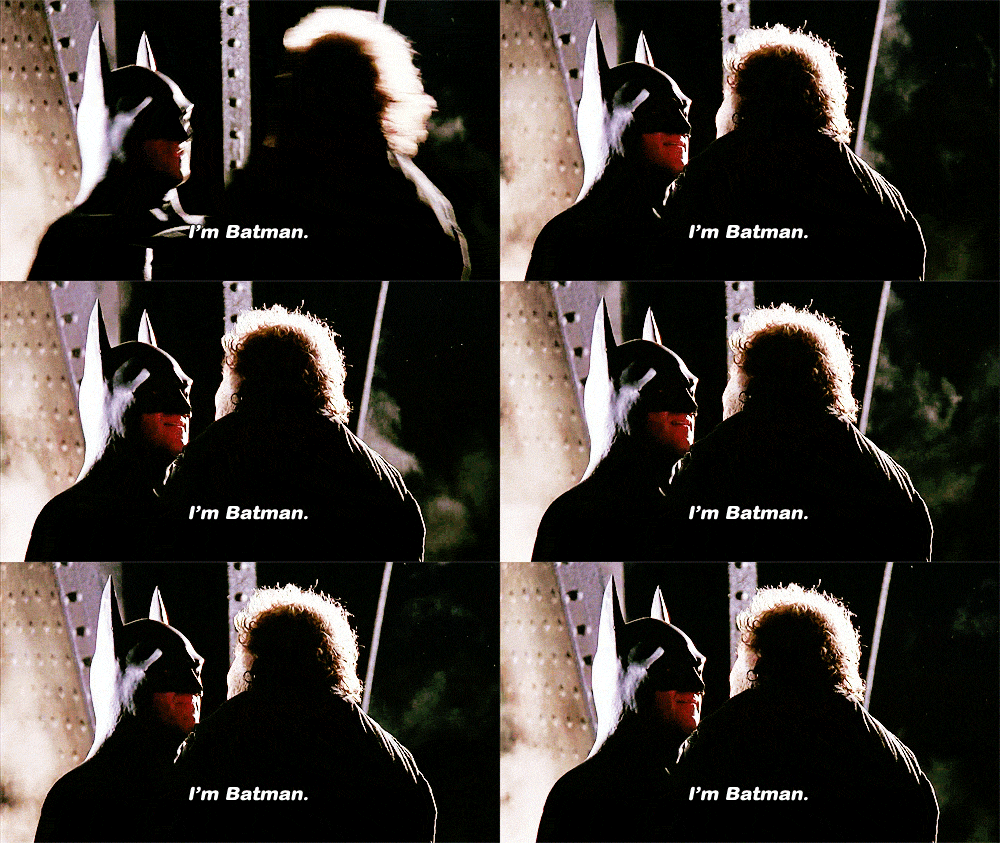
Proving that he€™s just as capable of making up his own material as Jack Nicholson, Michael Keaton improvised what went on to become the most quotable line of the movie: €œI€™m Batman€, from the early scene where Gotham€™s Dark Knight dangles a criminal off the roof and encourages him to tell his friends about him. The scripted line was the more complicated €œI am the night€, which was intended to have the double meaning of night-time and Knighthood. Ignoring that potentially confusing line completely, Keaton dished out an intimidating-but-simple €œI€™m Batman€ instead, and thereby cemented his position as one of the finest screen superhero performers of all time. He wasn€™t Warner Bros' first choice, he looked nothing like the initial character description, and he couldn€™t hear anything while performing, but in this confident moment Michael Keaton became Batman. To some, he€™s still the Batman that new inheritors of the cowl are forced to measure up against and rarely surpass. That€™s not bad going for a guy that 50,000 comic book fans didn€™t want in the role, is it? What€™s your favourite fact about Burton€™s Batman? Let us know in the comments€

Contributor
Contributor

Film & TV journo. Quite tall.