10 Times Actors Had Personal Reasons For Taking Film Roles
Nicolas Cage just really, really wanted to be a knight.
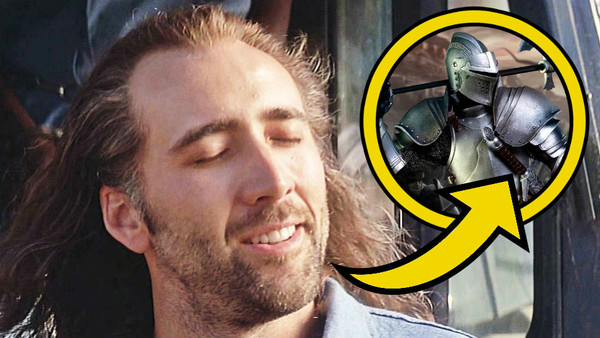
A lot goes into an actor weighing the pros and cons of taking a role - chiefly among them money. But there's plenty at stake including reputation, adoration for the dialogue or character and being Nicolas Cage.
When Dennis Hopper was asked by his son why he took the part of King Koopa in Super Mario Bros., he explained he did it so he could have shoes. His son dryly replied, "I don't need shoes that badly."
However, on occasion, a script will come by an actor's desk that they have a more personal identification with; an autobiographical connection to the role that will allow the artist within to work through a personal, existential crisis or simply identify aspects of their own personality they'd be interested in exploring. Acting, like all art forms, is a therapeutic, often cathartic, way of tackling issues head-on - be them personal or political, and the very best exploit that to maximum effect.
Here are just some actors who took roles to make a statement, or at least exorcise some demons along the way.
10. Gregory Peck Did The Omen To Cope With His Son's Suicide

When one hears the name Gregory Peck, their mind typically drifts to the human embodiment of morality: Atticus Finch. Peck's portrayal of the Southern lawyer and nurturing father figure is so memorable he's still seen as a fictional civil rights icon.
Few people leap straight to his starring turn in Richard Donner's 1976 film The Omen, as Peck was not typically associated with the horror genre. At that point, the closest he'd come was playing a defense attorney mercilessly harassed by former client Robert Mitchum in Cape Fea
The Omen was released in the mid-70s religious horror niche-era post The Exorcist, and many have claimed the set itself was cursed, with both Peck and screenwriter David Seltzer's separate planes struck by lightning, Rottweilers attacking their trainers, and Donner's hotel suffering an IRA bombing, among other incidents.
But Peck's involvement is perhaps the saddest and most tragic chapter. Taking on the role of a tortured father who may well be raising the Devil's spawn drew him in due to his own guilt over being absent when his own child, Johnathon, took his own life in 1975.
9. George Clooney Often Takes Roles For Political Reasons

It's hard to deny that George Clooney wears his political beliefs on his sleeve. It'd be downright dishonest, particularly when he's married to a human rights lawyer at the United Nations. And he's made no secret behind the camera, directing, writing and acting in films that directly tackle timely political issues such as The Ides of March and Good Night and Good Luck - films that are becoming more relevant by the day.ven
But when even when he's strictly taking an acting job, unless it's just an excuse to hang out with friends or the Coen Bros., his political leanings play a major role in his decision-making.
Take, for example, his role in Stephen Gaghan's ensemble directorial debut Syriana,, a loose adaptation of CIA operative Bob Baer's examination of petroleum politics and the hideous implications of the powerful oil industry lobby.
Clooney is Robert Barnes, a veteran CIA agent who realizes too late that a U.S.-backed assassination on a Middle Eastern Prince. He becomes the loudest voice in the room, resulting in his blackballing and ultimately scapegoating for the incident.
And Clooney was certainly dedicated to the role, gaining weight for the role and sustaining an injury that left him bedridden with an IV drip for a month.
8. Orson Welles Played And Made Citizen Kane To Piss Off William Randolph Hearst

Straight out of the gate, Orson Welles set out to be an agitator. Even before entering Hollywood, he was staging an all-African American cast of what he called Voodoo Macbeth, changing the setting to a mythical island in Haiti.
From there came the infamous War of the Worlds broadcast, rumoured to be timed to sound like a real newscast as listeners switched around after Charlie MacCarthy on The Chase and Sandborne hour.
But his ultimate prank, one that some still say worked against his stardom in Hollywood despite delivering solid work up until his death, came from his dealings with media mogul William Randolph Hearst. Along with Herman J. Mankewitcz, Welles constructed what could generously be described as a thinly-veiled, mean-spirited attack on the millionaire, including a final word rumoured to be Hearst's pet name for his wife's reproductive organ.
There were plenty of shady rumours surrounding Hearst, most significantly the suspicious death of actor Thomas Ince onboard the newsman's yacht. Legal battles ensued, Hearst unleashed an army of critics and studio heads to block the film from ever being viewed, but ultimately it still has its place on every Top Ten list of all time.
7. Charlize Theron Just Really Wanted To Work With John Frankenheimer
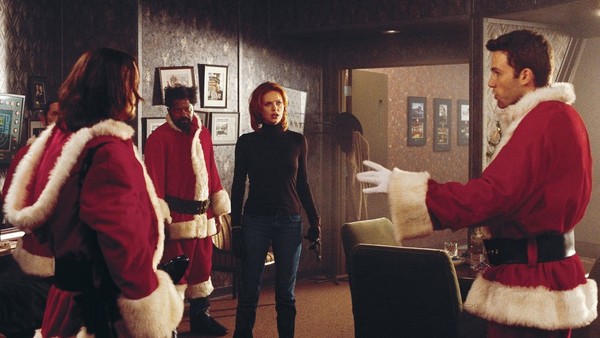
Charlize Theron has become one of the most respected, versatile and objectively beautiful actresses of this generation, but she didn't have it easy. Abused by an alcoholic father in her native South Africa, her mother later gunned him down in front of her in self-defense.
But she slowly worked her way from a non-speaking role in a Children of the Corn sequel to a Rosemary's Baby-esque hysterical wife in The Devil's Advocate all the way to an Academy Award for Monster. She refuses to be typecast, firing agents that offer sexed-up roles in movies like Species. And, as proven in last year's Long Shot, she can admirably balance the all-too-common overworked businesswoman role with broad comedy and empathy.
So she can be forgiven for taking an early role in what turned out to be legendary director John Frankenheimer's last film, Reindeer Games. In fact, most of the cast can, as they all just wanted a chance to be alongside the man behind The Manchurian Candidate.
And Reindeer Games was a far cry from The Manchurian Candidate. It's a contrived, unbelievable mess of a film, with plot twists that are more irritating than shocking,
In a 2007 interview with Esquire, Theron tried to make amends: "Reindeer Games was not a good movie, but I did it because I loved John Frankenheimer."
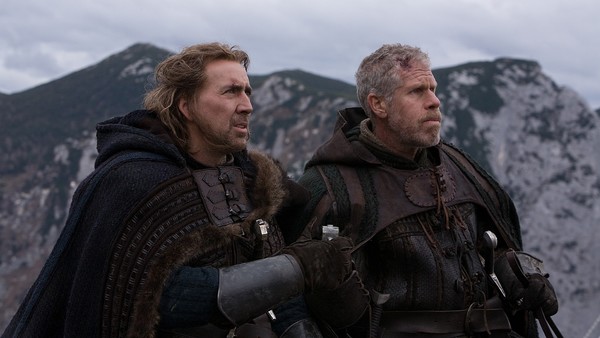
6. Nicolas Cage Wanted To Be A Knight
These days, Nicolas Cage's name above the title of a movie means he has more debts to pay off. When he was insanely wealthy, the Oscar winner wasn't exactly careful with his finances, purchasing a black market Tyrannosaurus Rex skull, a castle and a pet shark, among other things. Those direct-to-DVD releases were paycheques. We can mock him all we want for his performance in The Wicker Man, there's a part of the actor that knew how ridiculous the role was.
Every now and then, Cage can still invest in a role whole-heartedly and, for better or worse, the result is always interesting. He's seemingly out of the red now, taking more daring roles in films like Mandy and The Colour Out of Space. He's also allowed himself the creative freedom to succumb to any whim he pleases.
The man who will "die in the name of honour", as he was heard ranting outside a bar one night took on the role of Behmen Von Bleibruck (not a typo) in 2011's much-derided Season of the Witch exactly on such a whim. To hear Cage tell it, "I always wanted to play a knight." It was that simple.
5. Bill Murray Would Do Anything If You Let Him Explore Transcendental Meditation
After Chevy Chase's departure from SNL for bigger roles after one season, Lorne Michaels quickly swapped him for Bill Murray, a completely different talent. While Chase was the king of a dry, improved one-liner or pratfall, Murray was more refined, though occasionally bombastic. He also had aspirations beyond being a comic actor that weren't truly realized until Wes Anderson made use of him.
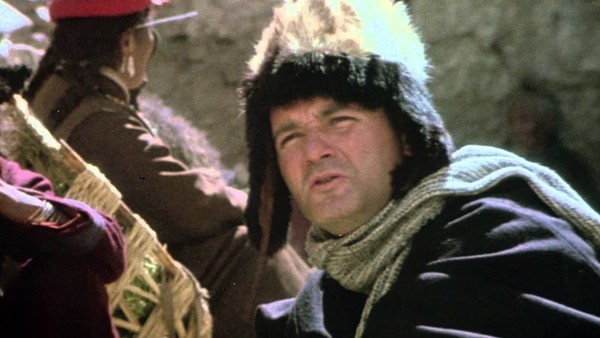
That didn't stop him from trying to stretch out early, however. He agreed to star in Ghostbusters on the condition that the studio fund his passion project, an adaptation of W. Somerset Maugham's novel The Razor's Edge - a contemplative work of an aimless WWI veteran who travels the world and ultimately discovers himself through transcendental meditation and Buddhist philosophy, swearing off his entitled social class.
Murray still brings with his performance a bit of levity, and though the film was a flop, it was an earnest attempt by the actor to branch out. It's also a fairly solid performance, particularly when he is forced to eulogize his unlikable, hard-ass supperior officer (brother Bryan Doyle) after a battle. He is clearly exorcising a lot of demons about Belushi's death in his speech. In the end, Murray's gamble failed, but it was not without nobility.
4. Tim Robbins Takes Roles To Fund A Theatre Troupe
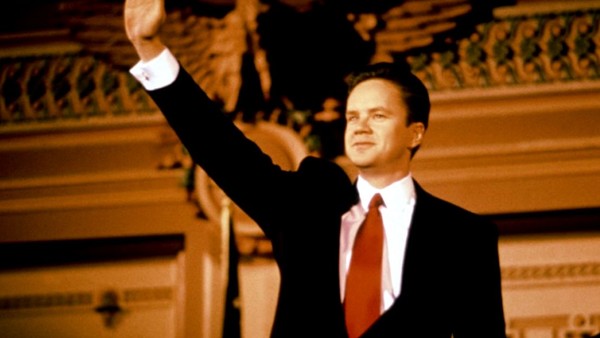
Like Clooney, Tim Robbins is the actor right-wingers point their fingers toward when they need a living embodiment of the liberal Hollywood elite. He's often outspoken, particularly during the lead up to the 2003 invasion of Iraq. His work behind the camera for Bob Roberts was a cynical mockumentary of a right-wing Senatorial candidate in the mold of Andy Griffith's Lonesome Rhodes in A Face in the Crowd.
But Robbins passion for politics is rivaled by his love of acting. What he doesn't donate to candidates he supports and personal funds, he uses to fund his own acting troupe in Los Angeles, The Actor's Gang. He's been with the troupe since 1981 and avidly encourages involvement.
His ensemble has found future stars in John Cusack, John C. Reilly, Jeremy Piven, Helen Hunt and character actor Ned Bellamy. With his band of young players, he has produced, starred or directed over 200 productions across the country.
3. John Cusack Was Desperate To Prove Himself After Say Anything...

John Cusack got his start in light-hearted teen comedies before becoming the awkward schoolgirl crush in Cameron Crowe's Say Anything... His nervous, anxious, earnest performance was unlike any in an 80s high school comedy, and he brought a sometimes misguided maturity to role that any other actor would have played with confidence.
But the fear of typecasting was clearly there. It's a shame Cusack has ended up in Cage's position, taking minor roles in tax-write offs, but he can still bring energy to dreck - such as the constantly vaping hitman in the Australian actioner Drive Hard. He's just off-kilter enough to make the by-the-numbers film a little bit of fun.
Even before Say Anything..., Cusack wanted to be taken seriously. A fan of author Jim Thompson's noir novel The Grifters, he tried to option the rights to the work when he was still in high school. What began as a Martin Scorsese project changed hands to Stephen Frears, with Cusack in the lead as a hotshot con man with Oedipal issues alongside Angelica Huston.
It may be credited to Frears and writer Donald E. Westlake, but the project was Cusack's first of many attempts to break rank.
2. Kirk Cameron Just Wants To Save You From The Rapture S

In the 1980s, Kirk Cameron was known as a teen heartthrob as Mike Seaver on ABC's Growing Pains. He had a successful run of film roles at the time, having the privilege of working with the late, great Dudley more in the body-switch comedy Like Father, Like Son. But he broke many a heart when he married his TV show girlfriend Chelsea Noble.
After Growing Pains ended, it appeared that Cameron had settled down, retiring from mainstream work and living the good life with his family and all that Growing Pains cash.
By "The good life", we unfortunately learned we aren't referring to a peaceful house in the suburbs. Cameron had partnered with Evangelist Ray Comfort, founding The Way of the Master - a TV show he co-hosts of the Religious Broadcasting Network. He's a proponent of creationism, linking Darwin to Nazi ideas and handing out free copies of the scientist's book with large portions removed - namely all the science.
But he's still an actor, after all, only pushing a different agenda than most - and hard. He starred in the low-budget Left trilogy as a cynical atheist who must contend with the anti-Christ after the Rapture. Since, he's been in other films primarily screened in Church basements after Bingo.
1. Raul Julia Must Have Really Loved His Children
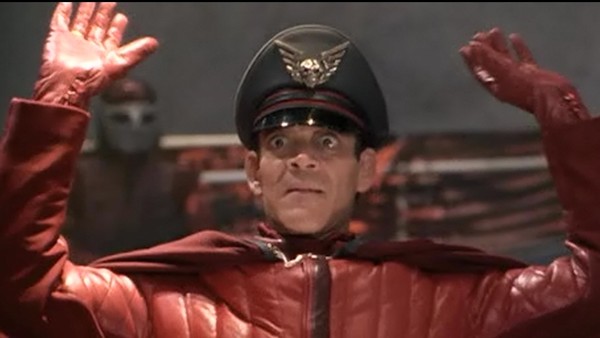
The late, award-winning Puerto Rican actor Raul Julia is probably fondly remembered by children for his eccentric turn in Barry Levinson's Adams Family films. As the paternal Gomez Adams, he was both over-the-top and brimming with the charisma that led initially led him to critical acclaim.
Tragically, Julia passed away in 1994 due to a mix of stomach cancer, contaminated sushi and a stroke. His health was in decline, throughout his last year, suffering significant weight loss. It's equally tragic that his last major release, a live-action adaptation of the video game Street Fighter, contains a dedication to him.
There's no question he's the best part of the modest box success, and critics were rightfully respectfully to his cartoonish portrayal of villain M. Bison. And ultimately, his reason for taking the role at all is a testament to just how sweet the man was: His children were enormous fans of the game and he was eager to play the character to impress them.
Many an actor has taken a role just to show off their range or their capability or even to dangle it in front of the academy, but there's a special kind of person who will do potential career-derailing crap just to make their kids happy.