10 Times Changing The Tone Saved Movie Franchises
The exact moment Harry Potter matured.

Hollywood loves a bankable franchise, doesn't it? By hook or by crook, every moderately successful intellectual property seems to get milked for everything that it's worth. Be it with an endless onslaught of sequels, or by repeated attempts to resuscitate a franchise via remakes and reboots, studios love finding lazy ways to keep their properties alive.
But, you may argue, as long as audiences want to see them, what's the problem? Well, there's only so much you can do until the inevitable franchise fatigue creeps up on you. With X-Men and Men In Black the latest in a long list of franchises to fizzle out, it appears it's only a matter of sequels until audiences get bored of seeing the same story play out on screen time and time again.
It doesn't always go this way though. Sometimes, in a moment of uncharacteristic inspiration, studios decide to give franchises on life support to filmmakers whose creativity is only matched by their talent. In these cases, many changes are made to "flip the script", where perhaps the most fundamental of which is shifting the tone and feel into something refreshingly different. Here are the ones that managed it with remarkable success.
10. Rocky Is No Longer About Rocky (Creed)

Ok, so this is a different kind of saving here. Rather than being knocked down from critical bashings and public infamy, the Rocky franchise was on the ropes (pun intended) due to the narrative corner the story got backed into.
Rocky Balboa put a full stop on the series, with Rocky's story being tied up perfectly. So where do you go from there now Rocky's journey has come to the end?
The answer was shifting the focus to a new protagonist. The introduction of Michael B. Jordan in front of the camera and Ryan Coogler behind it injected fresh new life. Contrasting the light-hearted enjoyable romps of its predecessors, Creed brought grit and realism that put you right in the middle of the Philadelphia streets. The new urban feel made the city feel like it's a character if its own, allowing Adonis' journey to mirror Rocky's in an emotionally satisfying way that was still fresh.
The best thing about the major changes from Rocky Balboa to Creed is that it facilitated so much of the great elements the film brought to the table including some jaw-dropping fights and an impeccable performance from Stallone that even the Academy had to acknowledge.
9. Mission: Impossible Goes Back To Suspense (Mission: Impossible 3)

Mission: Impossible 2 was divisive, to say the least. Very much a product of its time, the film was a strange hybrid of a lacklustre Bond entry and an East-Asian Martial Arts flick while trying too hard to emulate The Matrix. Clearly, they hadn't sussed out the right formula for a Mission: Impossible film yet; typified with Tom Cruise's Ethan Hunt shoehorned in an awkward love triangle, with all the forced romance, clunky dialogue and slow pace that brings.
When JJ Abrams got to make his directorial debut for Mission: Impossible 3, he was laser-focused on what the franchise needed. As though a film may only be as good as its villain, a series is only as good as its protagonist. So it's no surprise that fixing Ethan Hunt's character worked wonders, turning him back into the efficient spy ready to sacrifice everything for the mission.
Abrams made an injection of adrenaline and suspense that went a million miles an hour, showcasing relentless action scenes with more personal stakes. It's a far cry from the series' best, but M:I3 provided a template for its sequels to go on and produce some of the best contributions to the spy genre in recent memory.
8. Chucky Becomes A Romantic (Bride Of Chucky)

The Child's Play franchise wasn't the first to suffer from a rushed sequel in the name of "striking while the iron's hot". But suffer it definitely did, with the release date for the third instalment being set a mere 9 months after the second, leaving creator Don Mancini little time to scramble a decent story together.
In fairness, Child's Play 3 could've been a lot worse, yet it couldn't resist falling back into the familiar tropes of its predecessors, coming off as tired and stale. At this point, having Chucky once again seeking a younger host to use his voodoo on was stretching it way too far.
A well-needed shake-up did eventually come with the introduction of Jennifer Tilly, playing Chucky's love interest Tiffany in both human and doll form. Her energetic, needy and bonkers portrayal bounced off perfectly with Chucky's larger-than-life personality, giving the series new comedic angle.
Bride Of Chucky's reliance on horror-comedy over outright scares allowed the delivery of the franchise's trademark kills and general gore but refreshingly taking away the mystery in favour of bigger laughs. What followed may not have been the series' best, but it certainly helped establish Chucky's place in the horror hall of fame.
7. Apes Franchise Turns Into A Tragedy (Rise Of The Planet Of The Apes)

While not necessarily as bad as its reputation will lead you to believe, Tim Burton's Planet Of The Apes certainly left a lot to be desired. A weirdly generic action blockbuster, its use of heavy-handed social commentary was only matched by the reliance on twists and callbacks just for the sake of it.
A full decade after that car crash, it was clear that the series needed to go in a vastly different direction to be relevant amongst film audiences once again. That direction proved to be backwards, which was exactly what the Apes franchise needed. Funnily enough, going down the prequel route elevated the dramatic tension significantly, as now you know what the world will ultimately turn into. That sense of dread lingers throughout, allowing director Rupert Wyatt to tell a slower, more dramatic story.
The reduced pace and heavier tone allow Wyatt to focus on the tragedy behind his protagonist, making the stakes deeply personal, which culminate perfectly in the unforgettable showdown at the Golden Gate Bridge. Impressively, the big shift not only made for a thrilling instalment but also produced one of cinema's most memorable characters in recent memory in Andy Serkis' Ceasar, locking in audiences in once again.
6. Fast & Furious Becomes All About The Heist (Fast Five)

There are only so many films you could do about street racing before the series starts to run out of gas (pun intended). Yes, the first 3 films in the franchise are enjoyable, but it was only a matter of time until the laid back, small-scale approach came up empty.
So by the time the fourth one came around, the powers that be decided to dip their toe in the action-heavy water, featuring some more elaborate set-pieces while still keeping it in the pocket as, primarily, a racing film. When this appeared the work, the studio took this up a few gears by essentially making a heist film with increasingly ridiculous action scenes, complete with characters going through walls and a massive safe being used as a weapon.
It might have seemed a big ask for audiences to suspend their disbelief to that scale, but they were more than willing to take that leap. The introduction of The Rock's Hobbs factored in that massively, because as corny as it now was, it also had charm and charisma in spades. It's like everyone involved just focussed on making the most fun film possible, setting a standard for its successors to surpass.
5. Batman Begins The Dark And Gritty Trend (Batman Begins)

There's a reason 'Nolanising' a franchise became a thing. Believe it or not, under two decades ago Batman was practically a cinematic punchline. Batman & Robin drove the series to the ground emphatically, with Joel Schumacher prioritising making the film merchandisable and accessible to kids over a coherent story, producing an effort that remains a laughing stock to this day.
At that point, the franchise needed something remarkably special to restore Batman's reputation in the eyes of the public. And Christopher Nolan provided just that. The 'dark and gritty' take on the Batman character has been well-documented, displaying the hero as a symbol rather than just a vigilante, while giving the man behind the mask a depth and complexity that was unparalleled at the time.
Exceptionally, Nolan's change of direction not only met the daunting task at hand but surpassed it with flying colours. Yes, the film is dark and gritty, but the most impactful change from Nolan was the realism in which he crafted the world of this film. Throughout, you feel like something like this could happen in the real world. And all this aside from the fact that it provided the groundwork for one of the most influential films in recent memory.
4. Clouseau's Comedy Takes Centre Stage (A Shot In The Dark)

There was a time when the Pink Panther was nothing more than a diamond McGuffin that many characters were after, with Inspector Jacques Clouseau just another part of the ensemble. Weirdly, looking back, the original tried to play it straight. At least in the scenes excluding Peter Sellers' Clouseau, the story strays much closer to a classic caper rather than a comedy. It's not that The Pink Panther was a bad film, far from it. But it's hard to see the series have longevity with that status quo.
Thankfully, the seeds of success were there in the form of Sellers' scene-stealing performance. The production recognised Clouseau's potential and wanted to lean into his comedic character going forward. So they immediately re-worked a play based on a French farce to be a vessel for Inspector Clouseau's first venture into the spotlight.
Putting it together made them so confident in A Shot In The Dark that they released it only 3 months after the original. And with good reason, as it not only introduced the likes of Kato and Dreyfus, who are now mainstays for Pink Pather, but also created a foundation for Clouseau that audiences came back to see time and time again.
3. Harry Potter Matures With Its Audience (Harry Potter And The Prisoner Of Azkaban)

Well, Harry had to grow up at some point. It felt more natural at the time, but the shift in maturity from Harry's second to his third year at Hogwarts was sharper than you might remember. The first two Potter films had a fun, family atmosphere that gave them a timeless quality, partly due to their success in building such a vibrant (and dare I say it), magical world.
The only example on this list where a change in tone was imposed upon them, the books felt the need to tell darker stories as the characters grew up. So the films followed their lead, bringing in director Alfonso Cuarón to herald in the more mature themes, who met that challenge and then some.
Though they were assisted by those story elements - like having no conventional antagonist and isolating Harry with nobody to help - Cuarón implemented big cinematic changes. Keeping characters mostly consistent, he managed to incorporate horror elements, featuring incredible imagery that juxtaposes the protagonists' childhood innocence with the danger of the world they inhabit. That, in addition to shifts in the score and even colour grade, helped set a blueprint that was followed till the end of Harry's story.
2. James Bond Goes Full Bourne (Casino Royale)
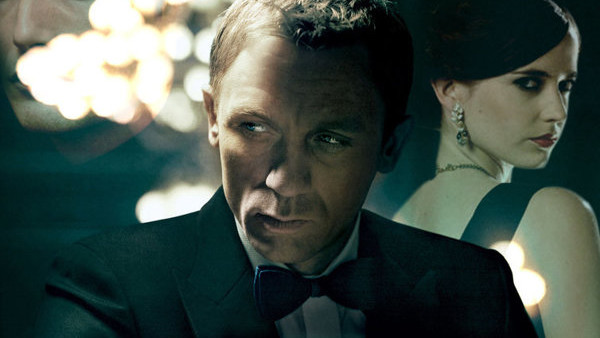
The Bond series operates in cycles. A serious film grounded in Ian Fleming's work gets more ridiculous with each sequel until it gets way too much that a whole re-imagining is warranted, changing Bond's portrayer in the process. Though of all of Bond's resets, the most pivotal has to be the debut of Daniel Craig's Bond in Casino Royale.
To introduce this Bond era, they decided took a leaf out of the book of one of its competitors, namely Jason Bourne. It kicks off with an action rollercoaster before going into the psychological one-upping of the poker game followed by a tragic love story. They all work together brilliantly to humanise Bond and provide a great villain, doing away with most of the cheesy tropes and turning the ones that stayed on their head, presenting them as organic by-products of the story.
Even the action was different, with breathtaking, relentless scenes and more personal stakes, it was more akin to Bourne than anything previously seen in Bond. Best of all, Casino Royale re-establishes Bond as a cold assassin who doesn't let his womaniser tendencies get in the way of the job, which is what audiences signed up for in the first place.
1. Thor Ragnarok Lightens The Mood

If the infallible Marvel Cinematic Universe had a chink in its armour, it'd be Thor: The Dark World. Not that it's bad, really, but it could've been so much more. Leaning into fantastical elements but refusing to fully commit to them, the result just comes across as confused. A series of forced, misplaced jokes ended up clashing heavily with the story's more serious nature, which is already trying to sell arguably MCU's weakest villain to audiences (and that's saying something).
Kevin Feige already likes to shake things up once the third film comes around, and no MCU sub-series needed it as much as Thor. So fans weren't surprised that Taika Waititi was drafted in for Thor: Ragnarok to essentially make a comedy, losing the Shakespearian influences of its predecessors in favour of a silly, cosmic adventure.
Star Chris Hemsworth shines with this new material, making full use of his unbridled charisma and previously untapped comedic potential yet still manages to have a wholly satisfying arc that made audiences fall in love with the character once again. Yes, Ragnarok may have sacrificed some dramatic beats, but there's a reason Waititi's follow-up to this is one of MCU's most anticipated films in Phase 4.