10 Times Horror Directors Admitted They Went Too Far
It's great to see film directors pushing boundaries... but there's a limit.
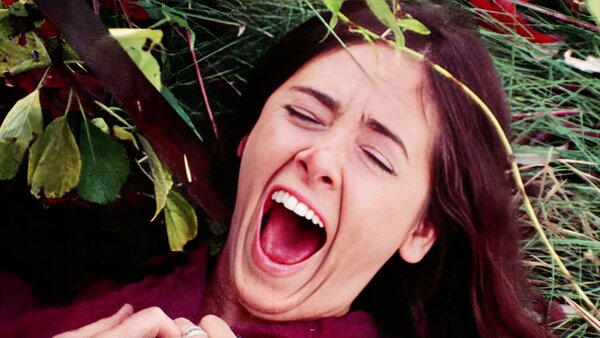
As is often the case in horror, directors aren't just trying to tell a story, but they're also trying to push boundaries as far as they can. The easiest way to do this is by inserting something in a movie that's so extreme, gory, or disturbing that it's guaranteed to have a palpable response.
Since the days of Psycho and The Exorcist, there have been tales of auteurs fighting tooth and nail to maintain their vision, even though the powers-that-be were eager to tone things down. With that in mind, it's reassuring when these films are released uncensored.
With that said, there have been times when directors took a second look at their work and realised that they may have gone too far. Though they had no qualms initially, these filmmakers changed their tune while shooting or during post-production. On the other hand, they could've changed their mind after seeing how deeply the picture in question has upset the public in the long run.
Although it's great to watch slashers and supernatural thrillers push the envelope, there have been occasions where the creators admitted they may have gone a little overboard.
10. Renfield
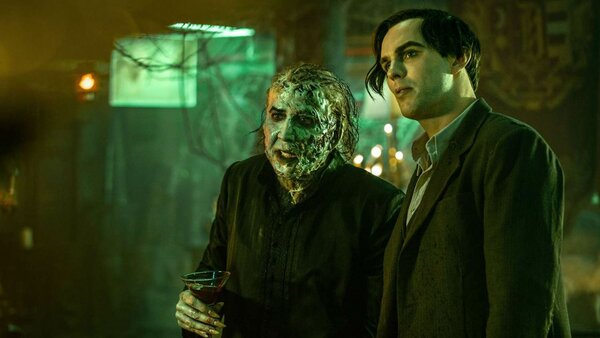
Chris McKay's horror-comedy Renfield serves as a Dracula adaptation from the POV of Drac's minion, Robert Montague Renfield. Recognising that he's trapped in a toxic partnership with his malevolent master, Renfield tries to break away and start his life anew.
It may have bombed spectacularly at the box office, but Renfield was praised for its performances, especially from Nicholas Hoult and Nicolas Cage, and it also explored codependency in a way that was surprisingly informative and touching. The film was likewise commended for its creative violence, which, despite being bloody, came across as bombastic rather than scary.
However, Universal didn't feel the same way. In one interview, McKay said the studio raised concerns about how “disgusting” some of the bloodshed was, especially in a scene where Dracula is heavily injured after being exposed to sunlight. Though McKay didn't want to compromise the project, he admitted some of the violence was too extreme, encouraging him to dial back the brutality in certain places.
Despite those concerns, the studio gave McKay quite a lot of leeway, letting him push the gore and practical effects, then adjusted them if needed.
9. The Last House On The Left

Long before The Hills Have Eyes or Scream, Wes Craven was just another up-and-coming filmmaker, eager to make a name for himself. In the wake of Night of the Living Dead, Craven felt his work needed to break the mould to leave a lasting impression.
Thus, this was the mentality while putting together his first full-length feature, The Last House on the Left, which centres around two teenage girls who are sexually assaulted and murdered by a gang of psychopaths.
Craven's intention was to expose audiences to violence in a way that didn't sanitise it, unlike mainstream Hollywood films at the time. However, the depiction of torture, murder, and revenge was so graphic, The Last House on the Left was regularly perceived as exploitative.
Rather than getting defensive about it, Craven admitted he depicted the violence sensationally rather than artistically. In interviews, he's mentioned the assault scene is "not pleasant to watch", calling it "repulsive" and "hard to take".
Although controversial movies can be tame by modern standards, The Last House on the Left has maintained its contention for decades, considering it took 36 years for it to be released in theatres uncut.
8. John Dies At The End
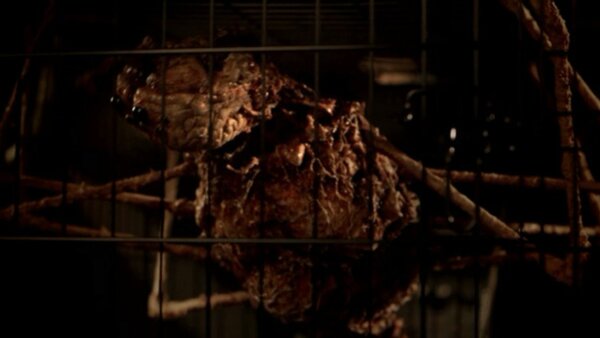
Adapted from David Wong's novel of the same name, Lovecraftian horror John Dies at the End constantly shifts between timelines, hallucinations, and alternate realities. The protagonist, David, recounts events to a journalist, but his story keeps changing, so it’s hard to tell what's true. One moment, David is describing a strange drug called Soy Sauce, and the next, he’s battling a sausage monster.
Although there are times when the story is intentionally comprehensible, director and writer Don Coscarelli had to be wary of where to draw the line. Coupled with the otherworldly imagery and WTF gore, Coscarelli knew it would be daunting to do the project justice.
During an interview with Bloody Disgusting, Don explained his dilemma during production.
"If you slip a little too far over the edge, you tumble into camp and parody. There was a year of editing and deleting things that I thought were maybe too far out there, then deciding that maybe they weren't far out there and putting them back in."
It must've been a nightmare for Coscarelli to decide what stays in the movie and what's discarded, but it seemed to work out, since John Dies at the End has since developed a cult-following.
7. High Tension

Although High Tension is filled to the brim with staggering violence, that's not the issue director Alexandra Aja had with the project. Instead, he believed the twist was too over-the-top.
In this New Extremity slasher, college friends Marie and Alex travel to Alex’s family home in the countryside, only to be confronted by a serial killer. In the end, it's revealed that this sociopath is a figment of Marie's imagination, who unknowingly murdered Alex's family after suffering a psychotic breakdown.
However, this twist is deeply illogical, since there are moments where Marie is in one location while her other personality is committing murder somewhere else. Based on Marie's small frame, it doesn't seem feasible for her to overpower her victims the way she does. (She tears off a person's head with brute strength at one point.)
Aja wasn't a fan of the ending either, which is why he wanted to shoot High Tension in a way that it's evident that everything we saw until the last few minutes is Marie's distorted interpretation of events. But when a producer discarded this idea, Aja was forced to devise a non-sensical climax, against his better judgement.
6. The Terminator

Although The Terminator is violent, it's not on the same level as other films of the decade. And to be fair, some of the gory moments aren't particularly convincing.
Still, that hasn't stopped James Cameron from having misgivings about his tech-noir masterpiece. Despite the fact that Cameron is one of the pioneers in depicting badass gun violence, the Oscar-winning director believes he should've toned it down in The Terminator.
In an interview with Esquire, he said.
"I look back on some films that I’ve made, and I don’t know if I would want to make that film now. I don’t know if I would want to fetishise the gun, like I did on a couple of Terminator movies 30+ years ago, in our current world. What’s happening with guns in our society turns my stomach."
James Cameron has taken this self-directed criticism so seriously that he deliberately removed ten minutes of gun violence from Avatar: The Way of Water.
Although The Terminator doesn't live in infamy like other entries on this list, you'd think it did based on the way the creator looks back on it with remorse.
5. The Thing (2011)

Despite failing critically and financially upon its release, John Carpenter's The Thing went on to become one of the most celebrated horror films of all time.
Though it was applauded for its performances and atmosphere, the iconic body horror is best known for its frighteningly realistic special effects. So, when Matthijs Van Heijningen Jr. agreed to helm a prequel, there was skepticism that the project wouldn't live up to its predecessor.
Sadly, these concerns were justified. 2011's The Thing was a huge disappointment, primarily because the practical effects were substituted for unconvincing CGI.
What's worse is that the director did use cable-operated animatronics and prosthetics during production, hoping to capture the spirit of Carpenter's version. Van Heijningen wanted to maintain old-school visual effects as often as possible, believing it helped the actors with their performances. But in post-production, Universal Studios digitally altered or completely replaced many effects with CGI, thinking it'd appeal to modern audiences.
Spoiler alert: it didn't.
After seeing the negative reception the film received, Van Heijningen said he should've stuck to his guns, believing the practical effects looked far scarier and more believable than what we got.
4. Annabelle: Creation

Although Annabelle came across as a lazy Conjuring spin-off, the follow-up was a vast improvement. Annabelle: Creation received a lot of praise for its performances, chilling score and sound design, and how it expands on the lore.
Having said that, there's an unintentionally funny moment that director David F. Sandberg believes borders on parody territory. During one scene, Janice is confronted by Annabelle, who is possessed by the demon Malthus. When Janice asks what Annabelle needs, she turns around and yells "Your Soul!" in a distorted voice, while her face takes on demonic features.
Despite being set up as a major jump scare, Annabelle's digital face and theatrical line jar with the rest of the film's subtler tone. If the sequence was seen out of context, you'd swear it was out of a spoof like Scary Movie rather than a legitimate horror.
Upon speaking to CinemaBlend, Sandberg said the line gives off "I'll swallow your soul" vibes from Evil Dead II, making it come across as campy rather than sincerely scary. Because of this, he believes the line should've been whispered or removed entirely.
3. Halloween II

After the success of John Carpenter's Halloween, producer Moustapha Akkad pushed hard for a sequel. Carpenter and Halloween co-writer Debra Hill disagreed, believing the story was complete. But with Carpenter in need of money, he agreed to produce and co-write Halloween II, with first-time director Rick Rosenthal helming the project.
However, John Carpenter found the rough cut scareless, incentivising him to intervene. As mentioned in the 2006 documentary, Halloween: 25 Years of Terror, the Horror Master said:
“I didn’t think it was scary, so I went in and put in a couple of things to goose it — and they turned out to be some of the goriest scenes in the movie. I regret that because it made it look like we were just going along with what everybody else was doing."
It doesn't stop there, as Carpenter also showed regret about his decision to retcon Michael Myers as Laurie Strode's brother. Time and time again, he's confessed it was "a terrible, stupid idea" that was only used to give Halloween II a narrative hook.
When John Carpenter was brought back as a producer and co-writer for 2018's Halloween, it wasn't a shock to learn the sibling subplot was decanonized.
2. Martyrs

It isn't surprising in the slightest to learn Martyrs director Pascal Laugier was battling depression while writing the script. In his own words, he was driven to "make a movie about pain."
In this unnerving French horror, a young woman, Lucie, vows to hunt down the people who tortured her as a child and exact her revenge. When Lucie tracks her tormentors down, it's revealed their evil actions were spurred by something far more complicated and disturbing than anyone could've anticipated.
Though the director has dealt with similar themes of child abuse in his other work, such as The Tall Man and Ghostland, Martyrs took it to a whole other level, according to many, including Laugier himself.
Unlike other entries on this list, Laugier didn't apologise about Martyrs' extreme violence and subject matter in a random interview. Instead, he had an apology video packaged with the DVD, explaining that he's pre-emptively sorry if the film impacts viewers in a negative way (which it most certainly will).
Although Laugier's decision is considerate, the fact that he was compelled to include this video in the DVD reenforces just how messed up Martyrs is.
1. The Evil Dead

Despite its legacy and influence on the horror-comedy genre, The Evil Dead was notorious for its unsettling visuals, which resulted in it being banned or heavily censored in several countries.
Now, some directors would accept these criticisms and wear them like a badge of honour, since it proves they didn't compromise their work, but writer-director Sam Raimi has admitted The Evil Dead overstepped its boundaries. In most of Raimi's horrors, he implements a tongue-in-cheek tone so that the gore comes across as goofy rather than scary, which has inspired similar zomedies, like Braindead and Shaun of the Dead.
However, the horror elements are played more straight in The Evil Dead, which is probably why Raimi's directorial debut generated so much controversy. Though the film depicts all sorts of ghastly dismemberments and decapitations, the most infamous moment is when Cheryl is attacked and penetrated by a demonic tree.
While speaking to San Diego Reader, Raimi flat-out admitted he shouldn't have put the scene in, calling it "unnecessarily gratuitous and a little too brutal". Though a similar scene was included in the 2013 reboot, it was heavily toned down.