10 Times The MCU FRUSTRATINGLY Held Back
In Marvel movies, anything important is retconned in the sequel.

There's an argument to be made that the MCU hasn't produced any outright terrible movies. Sure, there have been a few disappointments (Age of Ultron, Iron Man 2) and a couple that were plain ol' boring (Ant-Man and Thor: The Dark World), but even those low-tier releases were still worth seeing.
However, one of the major drawbacks associated with pretty much every movie in the MCU is the lack of long-term consequences. You can see why they'd be difficult to pull off, as every flick is connected to each other either in some way, and taking into account every little plot detail would lead to standalone stories suffocating under 10 years of lore.
But it's still a problem, and it's hampered the enjoyment of some flicks more than others, as there have been times where Marvel could have gone all in on a plot development only to pull their punches instead in a later release. These moments could have been major game-changers that transformed the MCU, but instead they were swept under the rug or repealed entirely almost immediately after they were introduced.
10. Killing Off Coulson (Kinda)

The unsung hero of Marvel's Phase 1 was Agent Phil Coulson. Nick Fury's stand-in as the public face of S.H.I.E.L.D., before different heroes started showing up in other franchises whenever they pleased, Coulson acted as the underlying connective tissue between those original movies, being an integral force not only in bringing the Avengers together, but also in reminding audiences that, yes, the team up would eventually happen.
However, it was only in death that he fulfilled his role in bringing each superhero together to form a cohesive unit. After being killed by Loki, Phil's death is essentially the "Uncle Ben moment" for Tony Stark and co., who rally behind their fallen comrade, put their differences behind them and fully embrace being The Avengers.
Coulson's death was one of the most gut-wrenching in the MCU, but because he was such a beloved character, Marvel felt the need to bring him back - to headline his own TV show, no less. Sure, the characters in the movies don't know he's alive, but with his face being splashed on adverts for years, every fan knows that Coulson didn't stay dead.
It's a classic case of Marvel's desire to have their cake and eat it too; they still get the dramatic punch of his demise in The Avengers by not having the heroes know he's still alive, while still using him as a draw by isolating him to the world of TV. Even then though, it robs the death of its weight.
9. Thor Getting A New Eye (And Hammer)
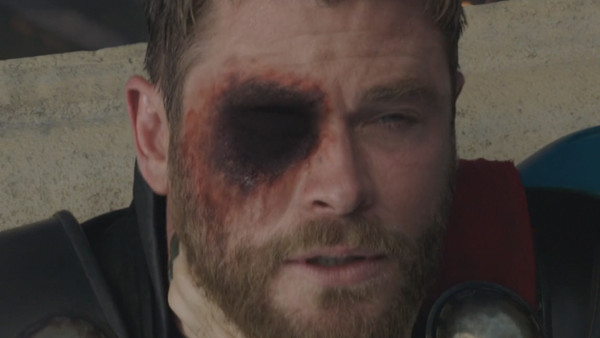
Although Thor: Ragnarok was essentially the first pure comedy in the MCU, it still pushed forward with some pretty substantial story moments. From Asgard being destroyed to Thor losing both Mjolnir and his eye battling Hela, s**t went down in the film's final third.
It was the latter development that seemed more important to the God of Thunder as a character though. In Ragnarok the Asgardian finally embraced his role as king, which was perfectly reflected by him visually becoming more like his father, Odin.
The character sports his new wound for the majority of his next movie, Infinity War, but the whole thing is undone when he's given a replacement eye by Rocket Raccoon. Other than him "needing both eyes to take on Thanos", there's no reason why his injury had to be fixed.
There's a more compelling in-narrative reason for Thor getting another weapon (even though him realising the power was always in him, rather than in any hammer, was a great way to expand the character in Ragnarok), in that he needs it to kill Thanos, but taken together it seems as though Marvel were just keen on repositioning the character back to where he was previously.
And yeah, you could argue Thor getting his eye isn't that important in the grand scheme of things, but that's partly why it's so egregious. If Marvel can't let something as small as this stick, then how can you trust them to deliver wide-reaching consequences to bigger plot developments?
8. HYDRA's Influence In S.H.I.E.L.D

The Winter Soldier's winding conspiracy plot ended with the entire world finding out that the Nazi-aligning HYDRA had infiltrated the upper-echelons of S.H.I.E.L.D. after WW2, slowly concocting a plan to take over the world from the inside.
It led to the complete destruction of the world's largest security organisation, but it also posed so many possibilities: How would the Avengers operate now they're on their own? Which former allies will turn out to have been double agents this whole time? What other plans did HYDRA have up their sleeve?
Unfortunately, future films weren't really concerned with answering any of those questions, and barely even touched upon the consequences of HYDRA's takeover at all. The next time we hear about them, The Avengers had already mostly mopped them up, fixing the problem offscreen and at the start of Age of Ultron.
It's once again an issue rooted in Marvel's presentation: the reveal is depicted as being this huge, paradigm-shifting discovery, but because future movies fail to properly delve into its consequences on the world both in the present and throughout history, it lacks any real weight. The movie tells you it's a big deal, but doesn't bother showing you why.
7. The New Avengers Lineup In Age Of Ultron

In a rather surprising turn of events, Age of Ultron ended with the bulk of the original Avengers retiring and Steve Rogers ushering in a new generation of superheroes to join the team.
With Tony Stark and Hawkeye hanging up their boots and the likes of Hulk and Thor leaving Earth, the new lineup of Avengers was made up of Cap, Scarlett Witch, Black Widow, Falcon, War Machine and Vision. While those new drafts did become key players in future movies though, they were in no way the new Avengers team, as old staples like Iron Man, and eventually Thor and Hulk, returned to maintain the classic lineup.
In part, the teasing of a new group at the end of Age of Ultron was a necessity, potentially even a failsafe, as at the time it was unclear whether Marvel were willing to shell out big paydays for the likes of Robert Downey Jr. in future movies. When they secured the actors though, the team reverted back to its original incarnation, with the extra members returning to their supporting roles.
6. The Red Skull's Relationship With Nazis
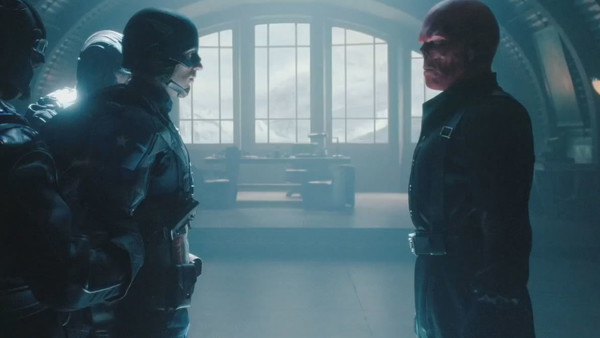
Though in the original comics HYDRA - and especially Red Skull - were deeply associated with Nazis and Adolf Hitler himself, Marvel made great strides to move away from that relationship in both the movies and TV.
Though the organisation does have ties with Nazis in The First Avenger, the Red Skull eventually denounces his former leaders and plans to attack them with his Infinity Stone-powered weapons. Consequently, instead of spending the war bringing down Hitler, Cap is mostly preoccupied with a force who takes neither side in the conflict, perhaps diluting the true horrors that occurred during the 1940s.
Also, despite leaning on iconography like the double-fisted salute, as well as sharing similar ideological goals, the relationship between HYDRA and Nazism has only been further erased in future releases.
Captain America sequels rarely brought up their role in the war - and definitely not in the same breath as the Axis forces - while an alternate-history episode of Agents of S.H.I.E.L.D., the writers made a big deal of pointing out how the two groups aren't one and the same, attempting to put an end to people conflating the them once and for all.
It's bit of a strange choice though, as Cap famously made his debut punching Hitler in the face and his role in the war defining his character for decades, and to separate him from that strips him of some real-world significance.
5. Nicky Fury's "Death" In The Winter Soldier

Until Infinity War came around, the second Captain America film was the only MCU flick to constantly pull the rug out from its audience. It subverts expectations from the get-go, immediately showing the always-lovable Nick Fury being attacked by the Winter Soldier in a ridiculously intense shootout. Fury escapes and makes it to Cap's apartment, seemingly safe, only to be sniped and apparently killed when Bucky gets the drop on them.
To hammer home the fact that Fury really is dead they even show his lifeless corpse in the morgue, with both Black Widow and Steve Rogers mourning their mentor. Of course, late on there's another twist that reveals Fury actually had one of the doctors inject him with a serum that would make him appear medically deceased so he could slip off the grid.
It's kind of a cool reveal in the film, but bringing him back doesn't really add anything to the story. Even worse, Marvel have barely used the character since, and seemingly wouldn't have lost much by actually killing him.
Along with HYDRA infiltrating S.H.I.E.L.D., Samuel L. Jackson's departure would have done a great deal to sell the sequel as a true game-changer, but his reappearance just reaffirmed how Marvel like to keep their plots neat and tidy.
4. Captain America And Iron Man's Irrevocable Differences
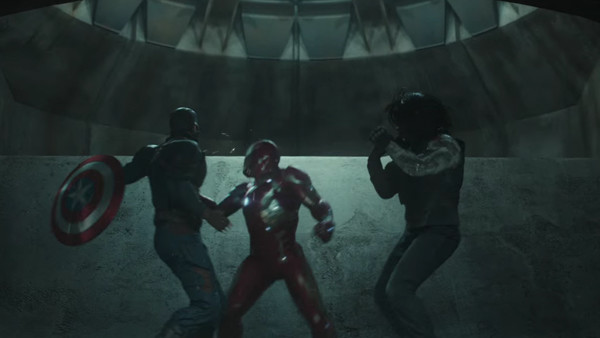
Civil War is easily the most emotionally-charged and personal MCU movie yet. Rather than just being an excuse for your favourite superheroes to duke it out, the film's premise of the Sokovia Accords ripping apart the Avengers is mere window dressing, as it's actually the reveal that Bucky killed Iron Man's parents - and the fact Captain America didn't tell him - which really destroys the bond between the two friends.
Unfortunately though, while at the end of the movie - after having bashed the holy hell out of each other - the differences between the two seem completely irrevocable, a final stinger indicates otherwise. After Cap and his team go on the run, he sends a letter to Tony informing him that while they still have their problems, he'll always be there if needs be.
The appearance of this note sort of undoes a lot of the tension between the two characters though, as it makes it ridiculously easy for the two to reunite for the next Avengers. One of the biggest implications of there being no united Avengers isn't just how they'll get back together, but what that means for Earth. With the team halved, how could the likes of Thanos capitalise on an undefended planet?
It's a tantalising prospect, but Civil War's finale removes that sense of dread from the equation entirely.
3. Iron Man Destroying All His Suits

Tony Stark has always been at the heart of the MCU, in part because the character feels so human. Unlike other members of the Avengers, Stark constantly f***s up in spite of his best intentions, and the drama comes from how he slowly becomes a responsible, accountable team player.
Iron Man 3 is probably the most insight we get into the inner workings of Tony though, showing him dealing poorly after the events of The Avengers. Paranoid and suffering through a wicked case of PTSD, Tony becomes consumed by his work, constructing an army of automated Iron Man suits to protect the world.
It takes Pepper Potts to snap him out of it and talk him down from his unhealthy crusade, with Tony's acceptance of something resembling a normal life brilliantly conveyed by him blowing up all his Iron Man suits at the end of the film.
However, that gesture is made redundant immediately in Age of Ultron, where he's shown back in the suit and helping out the Avengers without an explanation as to why.
It's not until Civil War where Tony details why he went back on his word, and even then it's more of a throwaway thread to explain away a plot hole, rather than a true dive into what it means for his character.
2. Crippling War Machine

No matter how intense Civil War got, it was always clear that not much was at stake, as there was no way that Marvel was going to have their biggest heroes killing each other. Smartly, the filmmakers got around the inherent lack of stakes by showing that, yes, while nobody is in danger of dying, people can still be harmed by the superhero squabble.
The most notable casualty was War Machine, who was shot out the air by a rogue blast from Vision. Though not dead, Rhodey suffers an injury so great that he actually loses the ability to walk, ending the flick going through an advanced form of physical therapy in order to get him back on his feet.
While that injury does admittedly follow through to Infinity War, the impact it has on Rhodey's character isn't really explored. There's one scene where he's talking about what the Sokovia Accords "cost" him, but he doesn't actually seem to be all that impacted by the events of the previous movie.
Not only is he straight away back in the War Machine suit when the film starts, but he's not shown to be any less skilled while piloting it. Similar to Thor's eye, Rhodey's injury being brushed over isn't a huge deal in theory, but it's another example of how supposedly major moments have their impact retroactively reduced in later movies.
1. Loki Killing Odin And Overthrowing Asgard

Look, it's pretty safe to assume at this point that Marvel had NO idea what to do with Thor in Phase 1 and 2. From the wasted Ragnarok set up in Age of Ultron to conveniently going back on destroying the bifrost in the original movie, there were plenty of set ups that weren't followed through on. However, none were as egregious as the tease The Dark World ended on.
After faking his own death, Loki is shown to have adopted the guise of Odin and taken over Asgard without anybody realising, presumably killing his father in the process. His rise to once again becoming a major villain and a final showdown with Thor was teased here, and fans waited years and multiple movies for the plot point to come up again.
When it did resurface though, it wasn't what many people expected. Ragnarok essentially brushed the set up aside, paying it off in a comedic way and refocusing Thor and Loki's relationship to be far more brotherly and redemptive. It made for a good scene, but it's hard to ignore how incongruous it was when compared to the events of the second movie.
Consequently, it's just another example of how much of a mess The Dark World is, and how Marvel completely broke away from the mythology entirely with Ragnarok and Infinity War.