10 Tragic Drug-Related Hollywood Deaths

After the news of Philip Seymour Hoffman's tragic passing, we look at other Hollywood leading lights who were taken from us much too soon.
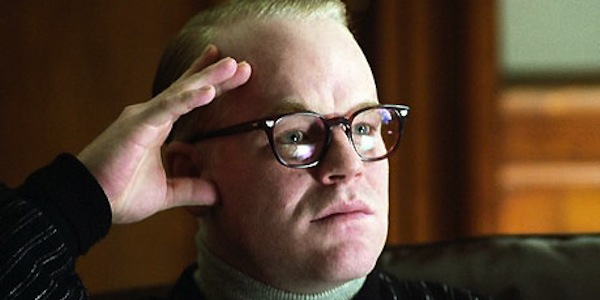
The recent death of Philip Seymour Hoffman at the age of 46 from a heroin overdose has left the film industry and fans of cinema mourning the passing of one of the finest actors of his generation. Born in 1964 in Rochester, New York, Seymour Hoffman was the second of four children. His father worked for Xerox, but it was his mother, who worked as a lawyer, who introduced him to the world of the theatre. It was the play All My Sons which kindled his interest in acting. "When I saw All My Sons, I was changed €“ permanently changed €“ by that experience," he told the New York Times. "It was like a miracle to me." In his early years as a student at New York University's Tisch School he had wrestled with drug and alcohol abuse, telling 60 Minutes in an interview in 2006 that he had taken "anything I could get my hands on." His excessive drug-taking eventually became so all-consuming he went into rehab. "You get panicked ... And I got panicked for my life," he said in an interview shortly before picking up his Oscar for Best Actor for his role in Capote. With drugs no longer a part of his life, Seymour Hoffman began an illustrious career on stage and screen, delivering consistently excellent performances ranging from Hollywood blockbusters to smaller independent projects. His filmography stands as a testament to his old school character acting gravitas and chameleon-like versatility, often portraying characters who seemed to mirror his own inner emotional turmoil; conflicted entities full of doubts, regrets and flaws which they struggled to overcome. Rarely has an actor deserved the high level of praise as has been expressed in the tributes and obituaries since his death. In May 2013 he relapsed after being clean for 20 years and checked into a rehabilitation clinic to detox from heroin and prescription drugs. Struggling with drugs once again Seymour Hoffman withdrew from the public sphere , unable to fulfill his press commitments as his life began to crumble around him. He split up with his long-term girlfriend costume designer Mimi O'Donnell, and moved out of the home they had shared with their three children to live alone in an apartment in Greenwich Village. It was here that his good friend, the playwright David Bar Katz, found him prone on the bathroom floor. Philip Seymour Hoffman's tragic death highlights a problem all too familiar in Hollywood, reminding us that actors are every bit as fallible and human as the characters they portray. Somewhat prophetically, he had said in his final interview, "You realise that some choices you made along the way, you have to shift or change, or else you just stay in the dark." The following sobering list is a tribute to some of the brightest stars in Hollywood whose lights were tragically extinguished by drugs.

10. Judy Garland

When MGM were unable to borrow Shirley Temple from Twentieth Century Fox to play the lead in their production of The Wizard of Oz, they turned to Judy Garland. It was a role which was to define the young star's career. A string of hugely successful musicals followed, teaming up with the likes of Gene Kelly and Fred Astaire and peaking again with a show-stopping performance in 1954's A Star Is Born, for which she was nominated an Oscar. But off screen Garland's life was one of constant rebellion against both the tight control of the movie studios and her mother, whom she often described as "the real-life Wicked Witch of the West." She soon fell into a cycle of substance abuse: pills to get through the day and downers to sleep at night were combined with alcohol, and in 1950 she attempted to commit suicide by slitting her throat with a piece of glass. In her later years she continued to work infrequently, returning to the stage whenever she started to run out of money. But the raw emotion and vulnerability which made her presence on screen so memorable was sadly apparent in her personal life, and the addiction which had arisen from her insecurities ultimately led to her death in 1969.

9. Montgomery Clift

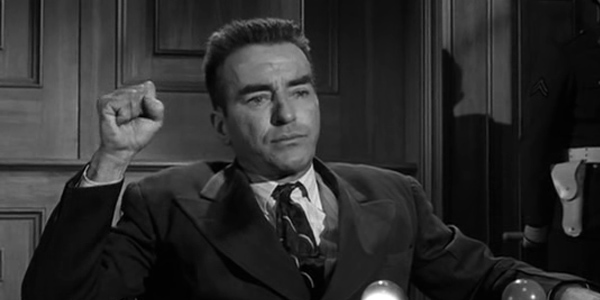
Judy Garland's co-star in Judgement at Nuremberg followed a similar path to self-destruction fuelled by debilitating vices. Montgomery Clift, the charismatic star of A Place in the Sun and From Here to Eternity, was branded as "unconventional" and responded by saying, "I'm trying to be an actor. Not a movie star, just an actor." Yet although he was nominated for the Best Actor Oscar on several occasions, he was increasingly filled with self-doubt, conflicted feelings about his homosexuality and his increasing estrangement from his demanding mother. Addiction to an assortment of drugs and drink led to increasingly erratic behaviour. As the years passed and his addiction worsened, Clift found it harder to land suitable roles and his disruptive behaviour on set led to a lawsuit being filed against him. After crashing his car while under the influence of a cocktail of drink and drugs, the effect of reconstructive surgery on his looks battered his already fragile ego. His last notable performance was in 1961s The Misfits, the last film for his co-stars Clarke Gable and Marilyn Monroe, who once said of Clift, "He's the only person I know who is in worse shape than I am." As his professional reputation fell apart, his health followed suit and he died in 1966 of a drug-related heart attack.

8. Errol Flynn

It didn't take long for Errol Flynn to establish a reputation as a swashbuckling leading man after becoming an overnight sensation in the 1935 film Captain Blood. A series of similar films followed, and Flynn established himself as one of the best action stars of his generation, combining a flair for impressively choreographed sword fights with a winning charm which made him hugely popular with female audiences. Off screen, his reputation as a ladies' man and his prodigious hard drinking soon became the stuff of legend. It didn't take long for his womanising to mar his reputation, and in 1942 two under-age girls accused him of statutory rape. Although he was acquitted in a trial in 1943, the accusations left a dark stain on his image and by 1950, after a series of flops and vanity projects, his Hollywood career effectively came to an end. His hard-drinking lifestyle caught up with him in 1959, with the autopsy revealing that years of drinking had led to degeneration and cirrhosis of the liver and heart disease. Even after death controversies surrounded Flynn, with further accusations of sexual relationships with under-age girls and even a biography which claimed he was a fascist sympathiser, claims which have been rejected as fabrications. Today, the expression "In like Flynn" stands as a legacy of his hedonistic lifestyle and status as one of Hollywood's most notable ladies' man.

7. W. C. Fields

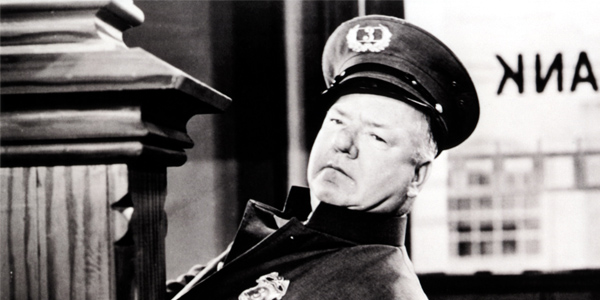
It has been said that great comedians display characteristics of psychosis, and comedy legend W. C. Fields is perhaps no exception €“ on the one hand he was a masterful performer with a perfect sense of timing a sharp-tongued wit, yet he also had a reputation for being a misanthropic miser suspicious of everyone. Echoing the life of Charlie Chaplin, Fields began performing in vaudeville shows as a "tramp juggler" before launching a career in Hollywood which straddled the silent and talkie eras. He is perhaps most famous for his 1940 movie The Bank Dick, his drunken security guard role seen by many as a classic example of his on-screen persona embodying many of the qualities he exhibited in real life. His fondness for alcohol was unsurpassed even by the standards of his booze-drinking Hollywood friends. Cases of liquor were stacked in the attic of his Los Angeles home €“ when Fields showed them to his fellow comedian Harpo Marx, Marx asked, "Bill, what's with all the booze?" to which he quipped, "Never can be sure Prohibition won't come back, my boy." As was the case with Errol Flynn, however, this dependency soon led to cirrhosis of the liver which eventually caused his death in 1946. When asked what he would change about his life if he could live it all over, W. C. Fields had replied, "You know, I'd like to see how I would have made it without liquor."

6. Marilyn Monroe

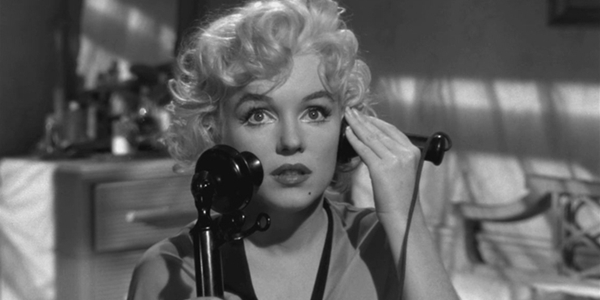
The tragic "probable suicide" of Marilyn Monroe in 1962 at the age of 36 rocked the world. A household name around the globe, few stars have achieved the same level of international stardom as this iconic sex symbol, an image which endures to this day. Following a hugely successful career in modelling, Monroe's meteoric rise to movie stardom began in earnest in the 1950s. The list of directors she worked with alone reads as a Who's Who? of Hollywood greats €“ Howard Hawks, Fritz Lang, Otto Preminger, John Huston and Billy Wilder all hired her for their movies, producing some of the classics of the Golden Age of Hollywood cinema, including The Seven Year Itch, Gentlemen Prefer Blondes and Some Like It Hot. Her personal life proved to be every bit as dramatic and alluring as her on-screen personas, with her romantic engagements the topic of constant gossip in the media. Rumours of her love affair with President John F. Kennedy are well known to this day, and she through her life she was linked to a number of other high-profile men, from Kennedy's brother Robert to Marlon Brando. The constant media attention and fame took its toll, leading to a prolonged engagement with psychoanalysis. In 1962 she was found dead in her home, the cause of death recorded as "acute barbiturate poisoning" deemed most likely a suicide. Few Hollywood deaths have caused so much controversy and sparked as many conspiracy theories as the death of Marilyn Monroe. The Kennedy family, the Mafia and the CIA have all been suggested as being involved in her death, while even wilder theories exist in which Marilyn Monroe is described as a mind-control victim of a secretive government program. Shrouded in a cloud of mystery and enigmas, in death Marilyn Monroe remains as much in the public eye as she did on the silver screen.

5. John Belushi

The pressure of stardom and fame can all too often leads to insecurity and self-destructive substance abuse, but few Hollywood deaths left as strong an impact on the industry as that of comedian John Belushi, who died at just 33 years old. After becoming famous for his repertoire of hilarious characters on Saturday Night Live he appeared in the box office smash National Lampoon's Animal House, delivering a performance which seemed to presage his own predilection for excessive partying. Belushi's determination to break away from the boorish image which had made him so popular was less than successful, and most of his hits were comedies he made with Dan Ackroyd, with The Blues Brothers proving to be perhaps his most enduring film, widely considered a comedy classic. Typecast by Paramount Pictures in 1982, who rejected the script he had written to prove his versatility in favour of another raucous comedy, Belushi partied with friends, drinking continuously and snorting cocaine. After returning to his hotel bungalow he was joined by his friend Cathy Evelyn Smith who tried to help him with his depression by injecting him with the combination of heroin and cocaine known as a 'speedball.' It proved to be a lethal dose, and later Smith was found guilty of involuntary manslaughter. John Belushi's death was something of a wake-up call for Hollywood; a scandal which rocked the industry and led a number of high profile actors to clean up their act. His real legacy, however, is his contribution to comedy, sadly cut short but not forgotten over 30 years later.

4. Chris Farley

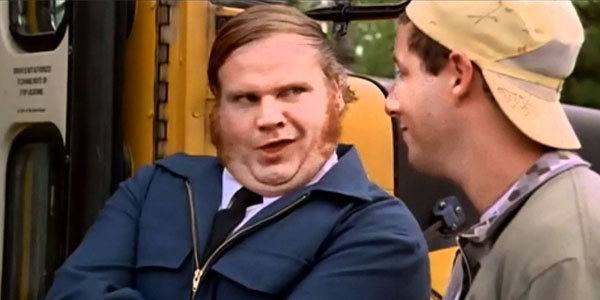
Chris Farley often cited John Belushi as a major hero, so it is perhaps unsurprising that he followed a similar path. His life story shares many familiarities with Belushi's, from battling with the problem of obesity (which he seemed to inherit from his father, who at one point weighed over 600 pounds) to struggling with an ever-increasing addiction to drugs and alcohol. Like Belushi, Farley's image was of an out-of-control funny man who lived life to excess, and like Belushi the lifestyle caught up with him when he was just 33. Farley was another Saturday Night Live alumni who ended up quitting the show to break into Hollywood. Following on from the success of Tommy Boy in 1995 his career was on the up, peaking with Black Sheep (1996) and Beverley Hills Ninja (1997) by which time he was earning $6 million a film. Yet despite all his successes the epic drug and alcohol binges continued €“ one night, after partying relentlessly on a mixture of alcohol, heroin and cocaine, Farley passed out and never woke up again. In the aftermath of his death his family created the Chris Farley Foundation, educating children about the dangers of drugs and alcohol.

3. River Phoenix

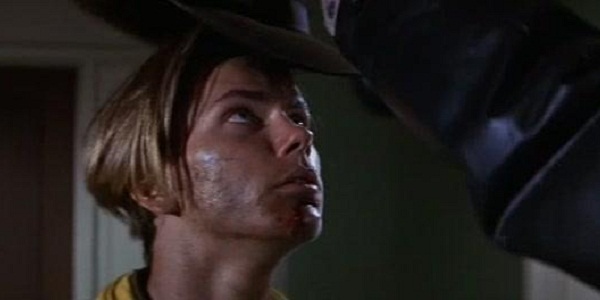
River Phoenix is best remembered by many for his performance as a young version of Indiana Jones in Indiana Jones and the Last Crusade, and the hat tilt transition from Phoenix to Harrison Ford hinted at the huge potential for Hollywood stardom. Yet his filmography suggests that he was something more than just a potential new action hero, with performances demonstrating a nuance and diversity, from the son on the run in 1988's Running on Empty, for which he was nominated for a Best Supporting Actor Oscar, to the gay hustler in Gus Van Sant's My Own Private Idaho in 1991. Phoenix had once said, "I don't see any point or any good in drugs that are as disruptive as cocaine. I never tried heroin. I tried alcohol and most of the others when I was 15, and got it out of the way €“ finished with the stuff." Yet by the early 1990s all of that had radically changed. Was this turnaround a product of cynicism, caught up in the tough and competitive world of filmmaking? Or was it a rebellion against his unusual upbringing in the controversial Children of God Christian missionaries in Venezuela? Speculation aside, River Phoenix continued to use drugs as he drifted away from acting to concentrate on music and environmental activism, until the fateful night in Los Angeles's Viper Room club in 1993. After partying with his siblings Rain and Joaquin and his girlfriend Samantha Mathis he began to vomit after a severe reaction to an exotic form of heroin. As he was taken outside, he reportedly said to the doorman, "I'm gonna die, dude." At 1.51 A.M. on Halloween morning he was pronounced dead, just 23 years old.

2. Brittany Murphy

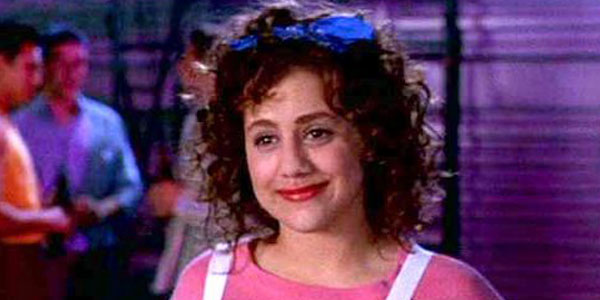
Brittany Murphy first came to widespread attention after appearing in Amy Heckerling's Clueless in 1995, but she soon demonstrated that she wasn't going to be typecast in chick flick roles. Appearances in movies such as the dark comedy Spun and Robert Rodriguez's ultra-stylish adaptation of the Frank Miller comic Sin City followed, hinting at a range that would propel her away from the type of roles for which she had earned Teen Choice Awards nominations. In 2009, the Los Angeles Fire Department were called to her home after she collapsed in the bathroom, and despite their best efforts to resuscitate her she was pronounced dead on arrival at Cedars-Sinai Medical Center. While rumours had been circulating concerning her use of cocaine prior to her death, she herself had denied ever taking illegal drugs, saying, "I have a glass of champagne now and then. I'm generally the person dancing at a party who everyone thinks is the intoxicated one, but really I'm not." Controversy arose in the news last year when her father, Angelo Bertolotti, claimed that there was a possibility she had been deliberately poisoned by heavy metals. While this was rejected by her mother as little more than 'a smear,' the coroner's report highlighted the increasing problem faced by Hollywood stars with the use and abuse of prescription drugs, with a cocktail of over-the-counter medications found in her system.

1. Heath Ledger

Few screen villains have left such an indelible mark on the imagination of cinema-goers as Heath Ledger's performance as The Joker in Christopher Nolan's The Dark Knight. For many, Ledger embodied the iconic Batman arch-nemesis better than anyone could have hoped, delivering a committed performance which easily outstripped the wildly over-the-top rendition by Jack Nicholson decades before. In many ways it was a role which defined 2008 €“ not least because by the time The Dark Knight was released, Ledger had already been dead for six months. The actor was all too aware of the iconic stature of The Joker and went to great lengths to prepare for the role, locking himself in a hotel room where he wrote a diary and experimented with voices for the part. Ledger said of the process, "I ended up in the realm of the psychopath €“ someone with very little to no conscience towards his acts." His intense portrayal and posthumous Oscar award for Best Supporting Actor often overshadows a track record of outstanding, critically acclaimed performances, including the award-winning role as gay ranch hand Ennis Del Mar opposite Jake Gyllenhaal in Ang Lee's Brokeback Mountain and one of six portrayals of Bob Dylan in Todd Hayne's I'm Not There. Heath Ledger was just 28 when he was found unresponsive in his New York home in January 2008. Many people, including his father Kim Ledger, believe that while the official cause of death was an accidental overdose of prescription medication, his dedication to the darker aspects of The Joker was so intense that ultimately it cost his life. With the recent death of Philip Seymour Hoffman, Heath Ledger has once again hit the headlines, with his father attacking reports that Seymour Hoffman had counselled his son over drug abuse, describing the reports as "a complete and disrespectful fabrication of circumstances surrounding any relationship Heath and Philip Seymour Hoffman may have had." Perhaps one thing that will never die is salacious tabloid gossip surrounding the deaths of Hollywood actors, something which appears to be as old as the industry itself. But while rumours, hoaxes and gossip eventually fade away, the performances remain, forever ingrained in movie history and the memories of millions of fans.

Contributor
Contributor

Andrew Dilks hasn't written a bio just yet, but if they had... it would appear here.