10 True Stories Behind Famous Horror Movies
Horror movies are so much scarier when they are based on a true story.

It’s been a practice in horror movies for a long time to slap the phrase “Based On A True Story” on the poster or in the trailer in the hopes it will generate extra buzz for a release because, after all, what’s scarier than something that actually happened?
Admittedly, some films use the phrase rather loosely, with some taking only a single element to include in their movie. A classic example of this is The Texas Chain Saw Massacre claiming to be based on a true story, although the film only takes one facet from its inspiration - Ed Gein, the Butcher of Plainfield having inspired certain elements of Tobe Hooper's iconic 1974 picture.
On the other side of this, there are other movies that found their inspiration in real world events but aren’t as keen on portraying that fact. Even so, there’s still an undeniable aura to movies which can claim to be based in true events.
In this article, we’ll explore ten true stories that have served as the inspiration behind popular horror movies - from spooky haunts, to real world criminals whose insanity is beyond belief.
There’s a spoiler warning for the films below as well as a content warning for some of these entries. You have been warned.
10. The Amityville Horror

You know this story, and it is the quintessential haunted house tale.
A family move into a house that’s beyond their affordability, they got a cheap deal because the house has a dark past. In this case, the murder of an entire family by eldest son Ronnie DeFeo Jr.
That’s pretty much exactly what happened to George and Kathy Lutz, as well as Kathy’s children, when they moved into 112 Ocean Avenue, a house that would become infamous around the world.
The Lutz family lasted 28 days in their dream house, during which they heard strange bangs and scrapings, found it impossible to heat the house, and felt besieged by something strange. A catholic priest came to bless the house but fled in terror, claiming to have heard a demonic voice telling him to get out. George became irritable, short-tempered and even downright nasty – all apparently out of character for him. George and Kathy refused to ever tell the story of what happened on their last night in the house, but heavy speculation has it that George was driven to hurt the family in some way. Whatever happened, the family chose to flee, leaving behind all of their possessions and never returning for them.
The story exploded into nationwide attention following the publication of The Amityville Horror. Shortly afterwards, the movie of the same name was released.
Over the years, the story has altered slightly - many believe that the whole thing was a hoax, whilst others swallow it whole-heartedly - and, in the later years of their lives, George and Kathy were more open and, whilst they always maintained that the haunting did happen, they felt the media had exaggerated the events for entertainment purposes.
9. The Exorcism of Emily Rose

Released in 2005 and directed by future-Doctor Strange director Scott Derrickson, The Exorcism of Emily Rose is a fairly unique take on the by-then hackneyed exorcism movie formula. The film is actually framed as a court room drama, taking place after the events of the actual exorcism and centring on the dilemma faced by Erin Bruner as to whether to defend Father Moore or not.
The movie is loosely based on the case of a young German woman, Anneliese Michel, who, at the age of 16, suffered a seizure. She was diagnosed with temporal lobe epilepsy and psychosis caused by this. She also suffered depression. She was treated at a psychiatric hospital for several years and, by the time she was 20 years old, was claiming to hear voices and had become completely intolerant of religious objects, refusing to enter churches or drink holy water.
After several years trying various different treatments to no effect, Anneliese’s parents became convinced that she was suffering demonic possession. Her condition worsened, she began to become incredibly aggressive, and she would eat insects and drink her own urine. When one priest came to see her he proclaimed that she didn’t look epileptic to him and that they should pursue exorcism. In September 1975, a catholic bishop granted permission for the exorcism to proceed.
Over the course of ten months, 67 exorcisms were performed, each lasting roughly four hours. Anneliese began to speak increasingly of dying and, towards the end, gave up eating and drinking. On 1st July 1976, Anneliese died. She weighed just 68 pounds due to starvation.
The priests who performed the exorcism and her parents were taken to court and found guilty of dangerous negligence. The bishop who granted permission for the exorcism later claimed not to have been aware of her health conditions at the time he granted permission.
8. Backcountry

Unlike some dubious entries on this list, Backcountry takes its inspiration for a very real tragedy that could easily happen again to unprepared hikers.
Alex and Jen are a young couple hiking in the wilderness. At the beginning of the movie Alex is warned that the trail they want to take is off limits. So then he listens to the rules and the pair go home and live happily every after, right? Of course not! They head up to the trail anyway without a map! You probably see where this is going. The pair get lost and, whilst trying to find their way back out of the woods, find themselves being stalked by a large and very hungry black bear.
Backcountry is loosely based on the true story of Mark Jordan and Jacqueline Perry, who were attacked by a bear when hiking around Missinaibi Lake in Canada in 2005. The vicious bear attacked Jacqueline, mauling her badly. Her partner Mark stabbed the bear repeatedly with a Swiss army knife to prevent the beast from carrying her away. Mark then loaded his injured wife into a kayak and paddled to safety. Unfortunately, his efforts weren’t enough to save her and Jacqueline unfortunately died from her injuries.
It's a sad story no doubt, and the movie is just one in a long line of movies about city-folk being stranded in the wilderness. Maybe the lesson here is that we all need to learn to respect nature, because nature will downright kill you.
7. The Quiet Ones

The Quiet Ones is a good example of a movie claiming to be based on a true story when really it’s more of an inspiration than an actual adaptation. As actor Jared Harris described it, “The original circumstances inspired the writer’s imagination”.
The Philip Experiment was conducted in 1972 in Toronto, Canada. Dr Alan Robert George Owen designed the experiment to see if a fictional spirit could be conjured directly from the imagination of a group of participants. It is an interesting concept, although the experiment has been criticised often for lacking proper control measures.
The group created a character named Philip Ayelsford and drew up a fictional biography for him. “Philip” was born in 1624 in England. He had a military career whilst young and was made a knight at age 16. He had been involved in the English Civil War and had been a personal friend and spy for Charles II. Philip was unhappily married and later fell for a Romani girl only for her to be burned as a witch. They ended the biography stating that, broken-hearted, Philip had killed himself in 1654.
Initially, their attempts yielded nothing. However, when their environment was redesigned to mimic a more traditional séance, for example darkening the lights, the participants began to report feeling a “presence.” Over the next few sessions they reported vibrations in the table, unexplainable echoes and knocks on the table that matched up to the questions they were asking the “spirit.” At one point, the table reportedly lifted up onto just one leg and moved across the room without anybody touching it.
6. Zodiac

For reasons many psychologists and criminal experts have theorised about, America saw a shocking rise in serial killers from the late 1960s and through to the 1980s. This is the time when you get your Bundys, Dahmers and Gacys. Why are those names more well-known than the Zodiac? Well, aside from how gruesome their crimes were, that’s largely a result of the fact that Zodiac outlasted all of them. In fact, to this day, we have no idea who the Zodiac Killer was.
Operating from the late '60s to the early '70s, Zodiac has five confirmed victims to his name but claimed to have killed a total of 37. The Zodiac also varies his MO; shooting some victims whilst stabbing others. He had a tendency to murder young couples, although not all of his victims were couples. For example, he claims to have been behind the killing of a lone cab driver.
Most notably, the killer sent a series of boastful letters to the press in the local area, often threatening to kill more if they didn’t run the letters in the papers. He also sent a series of cryptographic ciphers, only one of which has ever actually been definitively solved.
The movie version was directed by David Fincher and tells the story from the point of view of the press who received the letters. The film helped bring more attention to the crime but, after all this time, the likelihood is that the Zodiac Killer will never be caught.
5. The Fourth Kind

The Fourth Kind is a mockumentary-style horror movie starring Milla Jovovich as a psychologist attempting to study reports of several disappearances in the wintery town of Nome, Alaska. She interviews several patients who have had the same nightmare of a white owl watching them through their windows. Through the use of hypnosis, she enables her patients to recount their experiences and it soon becomes clear they are victims of classical alien abductions. It’s a fairly effective movie that does contain some genuinely haunting moments.
Unfortunately, the real-life residents of Nome, Alaska were not very happy about the The Fourth Kind, particularly its claim to be based on a true story. Whilst it is true that Nome has an unusually large amount of mysterious disappearances and deaths for a town of its size, all investigations point to this being due to a mixture of alcohol and the harsh climate. That didn’t stop The Fourth Kind marketing itself as based on a true story, however.
The film certainly takes its abduction scenarios from several real-life accounts given by abductees. Just google “alien abductions” and you will find cases such as that of Betty and Barney Hill, which has become the standard template for abduction stories. Missing time, tall creatures who don’t vocalise yet can be understood telepathically, right down to the “tests” and surgical procedures. It’s all here.
How true all of these stories are? Well, you’ll just have to discern that for yourself.
4. The Mothman Prophecies

This story occurs in the humble town of Point Pleasant, West Virginia in 1966 and 1967. On 15th November 1966, two young couples were driving just outside of town near an old World War II munitions factory. They claim to have spotted some sort of creature, which they described as a “flying man with ten foot wings”.
The creature was spotted multiple times over the next few days by various residents of the town, including two volunteer firemen who described the now infamous glowing red eyes of the creature. This all seemed to reach a head in 1967 with the tragic collapse of the Silver Bridge, which resulted in the deaths of 46 people. The story was popularised by author John A. Keel in his book “The Mothman Prophecies” which linked the creature to things like mysterious Men in Black and precognition.
The creature has seemingly resurfaced several time in the ensuing years since the 2002 movie took the story to a mainstream audience, though no hard evidence of the Mothman has ever been found. The town of Point Pleasant ultimately embraced their legacy though - erecting a large metallic statue of the creature and holding an annual Mothman Festival!
3. Hounds of Love
This Australian horror-thriller Hounds of Love is based on the Moorhouse Murders committed in Perth, Australia in 1986. David John Birnie and Catherine Margaret Birnie murdered four women at their home on Moorehouse Street.
David Birnie was raised in a difficult and strange family. People who knew the family described their house as unkempt and filthy. When his parents were planning to marry, they were advised by a priest that “no good” could come of their union. David was the eldest of their five children and was on a dark path even at age 15 when he took a job as an apprentice jockey at a racecourse. He would hurt the horses intentionally and even attempted to rape an elderly lady with whom he was boarding.
Catherine left her husband in 1985 to move in with David and the two began to feed one another’s dark and sadistic appetites. Over a five-week period they began acting on their fantasies. The duo kidnapped, raped and murdered four women. When asked about it, Catherine stated that she “didn’t feel a thing”. Their intended fifth victim was able to escape when one of them forgot to tie her up properly. She was able to bring the police and the evil couple were arrested.
Unfortunately, the tragedy still affects people to this day. David killed himself in prison in 2005, but Catherine still remains locked up. She has had her parole permanently rejected. Her youngest son has openly called for her to be executed, explaining that his relationship to her has ruined his own life, even causing him to be physically assaulted.
2. The Texas Chain Saw Massacre, Psycho & Silence Of The Lambs
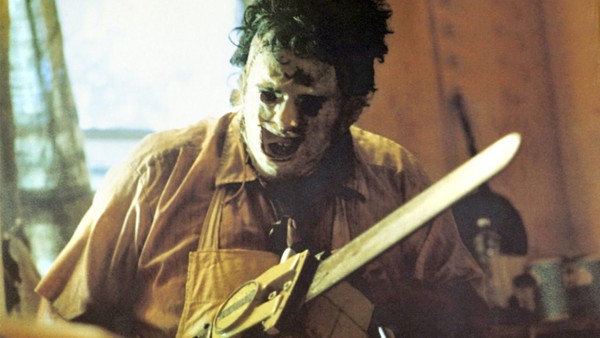
Three seemingly different movies, all made at different times. Yet, each of these movies took inspiration from one very real, very sick and very haunting real world crime.
Ed Gein was a simple man living in Plainfield, Wisconsin. Ed’s life was totally controlled by his domineering, highly religious mother. She ran Ed’s life, constantly criticising any friends he tried to make or girls he might try to date. Augusta Gein ensured she was the most important person in Ed’s life and it worked incredibly well. Augusta was unquestionable in Ed’s life, essentially a god to him. When she died, Ed couldn’t handle it. He began to rob the graves of women who bore a resemblance to his mother and would butcher their carcasses to retrieve different parts.
Without going into all of the nasty details here, Ed Gein eventually murdered two women and desecrated countless graves. When the police entered Ed’s home, they found furniture made from human bone and chairs upholstered in human skin. Ed had stitched together skin to make a “woman suit” for himself that he would wear. They found human skulls turned into soup bowls, a belt made of human nipples and even the removed private parts of several females.
Different elements would be taken from this depraved case to serve as inspiration in several legendary movie monsters - Norman Bates of Psycho, Buffalo Bill of The Silence of the Lambs, and Leatherface of The Texas Chain Saw Massacre - yet none of them can live up to the unmatched affinity for the macabre displayed by Ed Gein.
1. A Nightmare On Elm Street

The central concept of the Elm Street franchise is that Freddy Krueger is able to invade the dreams of teens, getting off on tormenting them night after night. Eventually, when he tires of playing with them, Freddy murders the children and, in this world, if you die in your dreams you die for real.
Wes Craven first got the seed of this idea after reading a series of articles in the L.A. Times revolving around a family from Cambodia. The teenage son of the family had begun to experience night terrors; waking up in the middle of the night drenched in sweat, heart racing and scared out of his mind. The young man became obsessed with the idea that something evil was trying to get to him through his dreams. He told his parents repeatedly that he was afraid that the next time he fell asleep he would not wake up again.
Much like Nancy in the movie, the young man began drinking pots of coffee in a desperate attempt to stay awake. Unfortunately, the young man eventually fell asleep. Then, in the middle of the night, his parents were awoken by him screaming. They rushed to his room, but it was too late. The young man had died in his sleep. Wes Craven went on to say in an interview many years later that he took not only the idea of dying in dreams from the story but also the opposition relationship between haunted teenager and disbelieving parents.