10 Truly Chilling Documentary Films
Be warned, you can't unsee them...

10. The Bridge
 Director Eric Steel sat with his camera crew for an entire year during 2004, simply watching the Golden Gate Bridge. During that time, he captured over a thousand hours of footage of the magnificent structure, but Steel had a hidden motive for filming the great San Francisco landmark other than to record its grandeur. True, Steel's finished project which he eventually entitled The Bridge does portray the mysterious beauty of Golden Gate, but this is a secondary theme to the film's real topic of suicide. Among the thousand hours of film shot were 24 suicides caught live on camera, as a variety of men and women crossed onto the gigantic structure and jumped to their deaths from two-hundred-and-twenty feet. Much of the footage in The Bridge is taken from afar, with the extreme close-up shots unable to hear the pleas of passers-by for potential jumpers to climb back over the ledge. Some are persuaded. Others are not. Some bodies fall so fast that not even the camera can catch them as they hit the water. The Bridge naturally caused vicious stirs upon its release. Steel was criticised for misleading bridge officials about his reasons for shooting, and the film itself was slated for its open willingness to show human beings tumbling to their deaths. But whatever your opinion on The Bridge, it is an undeniably eerie watch. The images of one man named Gene Sprague - pacing up and down the bridge as if considering something, before swiftly hopping onto the railing and falling backwards into the water below will never, ever leave you.
9. Cropsey
 The dark legend of the Boogeyman remains one of America's most infamous nightmare tales. The appearance of this mythical being has taken countless forms over the years which vary between societies. Sometimes he has a hook for a hand. Sometimes he is 12ft tall. In certain New York urban legends, this monster takes the form of a crazed child-snatcher named Cropsey. And in their investigation of this haunting myth, directors Joshua Zeman and Barbara Brancaccio discover more than they bargained for: exposing the chilling reality of this character that was formerly considered as nothing more than an urban myth. After peeling back several disturbing layers, Zeman and Brancaccio unearth the demented, drooling figure of Andre Rand: a psychotic kidnapper who roamed the daunting remains of the mental institution facility of Willow Brook. What follows is a series of terrifying revelations, accounts, and images that provide a former old wives' tale with a sickeningly fresh sense of authenticity. Cropsey is truly chilling for the most part, and the stuff of nightmares for the rest. This is one of the most frightening horror films ever made. And what's more - it's absolutely real.
8. Land Without Bread
 Land Without Bread or "Las Hurdes" is one of the most haunting pieces of documentary work ever beamed up onto the big screen, but for reasons a little different than most. With legendary avant-garde filmmaker Luis Bunuel pulling the strings, Land Without Bread is surreal, controversial, and at times downright unsettling. Venturing into the mountainous area of Las Hurdes, Bunuel's camera exposes this region of Spain as one of abhorrent decay and poverty. He films images of toothless women, dying children and rotting animals, yet provides a narrative voiceover that appears almost cruelly disconnected from the images of depravity on screen. Immediately banned upon release in Spain, Bunuel's work from 1933 was considered as a film that portrayed the country in unnecessarily repugnant taste and light. Whether Bunuel faked the entire documentary remains a matter of debate to this day. Ever the provocateur, Bunuel will be resting happy for having created such a creepy work that still refuses to be categorized in any concrete way. Is it a travelogue? A surrealist film? An outright documentary? Who knows. But it's sure as hell unnerving.
7. Triumph Of The Will
 Perhaps the most chilling aspect of Triumph of the Will - aside from its unabashed Nazi propaganda - is how spectacularly well it is made. Ideas this despicable do not deserve such adept presentation, but director Leni Riefenstahl's astonishing technical prowess makes Hitler's Germany appear as a proud, patriotic wonderland in this infamous documentary. Released in 1935 as part of the campaign to encourage loyalty to the Third Reich, Riefenstahl's film uses some of the most innovative camerawork and shot-selection seen in worldwide cinema during this period, and is often begrudgingly regarded as one of the greatest documentaries ever made. Fueled by images of fierce nationalism from the 1934 Nuremberg rally, Triumph of the Will features several speeches from key Nazi leaders - including Adolf Hitler himself. Riefenstahl gloriously pans across the outstretched arms and shouts of colossal Nazi crowds, ensuring to soak up every drop of patriotic sweat. The image of the Fuhrer smirking alongside Rudolph Hess whilst thousands of young Germans perform the Nazi salute was a joyous sight for many patriotic Germans at the time. That's a scary thought. In hindsight, the film is nothing more than a celebration of evil, and to watch it is an absolutely chilling experience.
6. The Imposter
 There's something not quite right about Frederic Bourdin. His eyes sparkle with deception. His jaw is too tight. When he speaks, he's disturbing and repellent, yet somehow strangely hypnotic. This man acts as the subject for the compelling documentary by Bart Layton entitled The Imposter, a bizarre tale of stolen identity and bone-chilling mystery. Bourdin is a self-confessed confidence trickster, who back in 1997 assumed the identity of missing American boy Nicolas Barclay. Despite Bourdin evidently looking and sounding different to Nicolas, the Barclay family openly accepted him as being their long-lost son. Although public feeling was initially euphoric at the result of a missing child resurfacing, something didn't quite add up, and it wasn't long before people began to ask questions. The Imposter audaciously leaves countless threads hanging which is enough to drive you nuts; but it is in its refusal to give definite answers that the film succeeds. It zeroes in on one of life's most unsettling facets: uncertainty. Nobody knows the real story of what happened to Nicolas Barclay, and The Imposter refuses to give us the answer, instead exposing the unsettling nature of an incredible turn of events to allow for an engrossing, puzzling, and positively chilling documentary.
5. Waltz With Bashir
 For as long as you're watching movies, you'll never see anything quite like Waltz with Bashir. Set as an exploration into the haunted memories of those involved in the 1982 Lebanon War, the film is a documentary like no other: gloriously animated, magnificently brave, and utterly, utterly chilling from start to finish. Perhaps the most incredible aspect of Waltz with Bashir is the way which the film's creator sits at its centre. Throughout the movie, director Ali Folman conducts a brutally honest self-examination about his time served as a soldier in the Israel Defence Forces during the Lebanon War. Folman lost significant chunks of his memory during this time, and uses this film as an opportunity to attempt to find out how and why he is unable to remember certain wartime events. The discoveries Folman makes are enough to shake each viewer to their very core, and Waltz with Bashir is a film that is pioneering not only in terms of its glossy animation, but in its sincere confrontation of notions of guilt, violence, and humanity.
4. Jesus Camp
 Filmmakers Heidi Ewing and Richard Grady wade deep into the world of Christian indoctrination in Jesus Camp: an examination of the way in which young children engage in fiercely intense spiritual practices whilst residing at a Christian summer camp near North Dakota. The film focuses specifically on the experiences of three children attending one of these bases, and reveals how they are exposed to pastor preaching that vociferously condemns homosexuality and abortion. Camp leaders ask the children if they are willing to die for God if their time comes. The children think that they are. Jesus Camp features an abundance of unsettling scenes, including the sequence where child pastor Becky Fischer yells to her audience of youngsters: "Had it been in the Old Testament, Harry Potter would have been put to death. You don't make heroes out of warlocks". The camp children cry, scream, and are apparently so overcome with spiritual faith that they suffer palpitations and speak in tongues. Ewing and Grady observe all this with a neutral eye, but it's difficult not to be disturbed by the maddeningly intense practices that occur in Jesus Camp.
3. The Act Of Killing
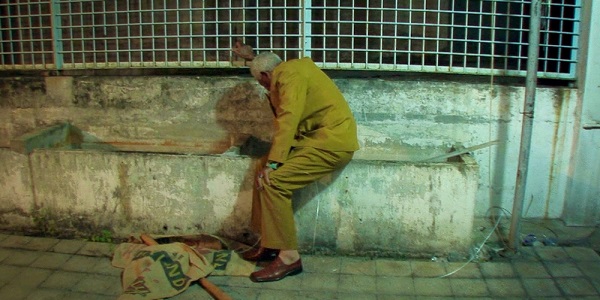 The bad guys don't always lose. Anwar Congo and Adi Zulkadry are living proof. The Act of Killing unflinchingly rubs eyeballs with two Indonesian criminals responsible for the massacre of thousands; provoking them into discussion of how and why they snatched away so many innocent human lives. Joshua Oppenheimer's confrontational documentary camera gradually reaches under the skin of the gangsters that led death squads throughout Indonesia in the 1960's. During interviews, the director slowly dares to break down the psyches of these leaders of genocide by placing them in their victims' positions. The killers reenact their execution methods on one another, along with recounting tales of the days where they nonchalantly disposed of any human beings who caused them problems. The result is essential cinema that you can barely bring yourself to watch. Over the course of the film, Anwar is provided with enlightenment to the atrocities of his own heinous acts. Whilst Zulkadry and others attempt to appear unmoved, we see Anwar's basic humanity - which he has suppressed all these years - coming back to the surface in an ugly fit of realization in the film's conclusion. The Act of Killing is disturbing on so many levels, but remains simply unmissable.
2. Grizzly Man
 Everything about Werner Herzog's Grizzly Man is spine-chilling, from its deeply disturbed male subject of Timothy Treadwell, to his ultimate grizzly outcome. Animated, childlike, and just a little off-centre, Timothy Treadwell is one of the most intriguing characters you're ever likely to see in a documentary. Here is a man who genuinely believed that bears were his friends, and that he alone was responsible for saving them from the monstrous instincts of humanity. Every summer for thirteen years, Treadwell lived among these ferocious creatures, only to be eventually torn apart by one of the very bears that he loved so much in 2003. By taking Treadwell's own footage of his time spent among nature and interspersing it with his own, Herzog creates a kind of meta-documentary that takes the viewer deep inside the world of a troubled individual who regarded himself as intimately connected to grizzly bears and as an opponent of human society. Treadwell films himself feeding, petting, and even swimming with these wild animals, allowing for an unbearable (no pun intended) tension that pulsates throughout the film. Treadwell's sickening fate was caught on camera, but with the lens still covered so that only audio was captured. This leaves more to the imagination, which Herzog accentuates by purposely excluding the footage, and instead showing the viewer his own personal reaction to it. The image of his ghostly face and trembling demeanor as he listens to the recording through a set of headphones is enough to make your blood run cold. "You must never listen to this" Herzog tells Tim's friend. "Destroy it". Shudder.
1. Shoah
 You'll never be quite the same after seeing Shoah. Claude Lanzmann's nine-and-a-half-hour epic is a brutally unflinching trip down the darkest corners of memory lane, revisiting the atrocities of the Holocaust and leaving no stone un-turned: no matter how ugly. Using hidden cameras, Lanzmann confronts a variety of individuals across Poland and discovers the roles they played during the Nazi's Jewish purge. Some of the interviews are sickening. Many are gut-wrenching. And every single one of them is hideously chilling. So many people refuse to dwell on the subject of the Holocaust, but Shoah does exactly that. Lanzmann's camera sits on the sites of Polish extermination camps and intermingles this footage with the interviews, amounting to such a richly-drawn account of Nazism in Poland that it is often difficult to watch. One interviewee - an elderly barber who was forced to cut the hair of Jews before they entered the gas chambers - is tentatively pressed by Lanzmann to reveal what he saw in the death camps. He reaches a point where he cannot go on, and pleads with Lanzmann to stop: "Don't make me go on, please". Landsmann responds calmly but firmly: "Please. We must go on". It is one of the most haunting scenes in one of the scariest documentary films that you will ever see.