10 Types Of Cinematic Apocalypse
 When you can tell where a movie is going, it's always tempting to skip to the end. The same it seems can be said of humanity as a whole. Given the recent preponderance of cinematic doomsdays - from This Is The End to The World's End to World War Z to Oblivion to After Earth - I find myself, like Buffy, needing to know the plural of "apocalypse" (it's just "apocalypses", go figure). Still, with so many world-ending catastrophes cluttering up the silver screen and video shelves, now might a good time to run through the 10 stock scenarios most likely to put pay to the filmic human race. If you're the type of film fan who likes their destruction on a vast scale and their popcorn marinaded in the blood of billions, you might recognize a few, such as:
10. The Zombie Apocalypse
Could have it have been any other? Ravenous hordes of the undead and the end of the world go together as well as The Walking Dead's Carl Grimes and bad life choices. Perhaps the most personally agonising of all the apocalypses, this doomsday scenario forces you to watch as your loved ones are reduced to mindless flesh-hungry ghouls. The concept of the zombie may stem from voodoo, but it was George Romero who popularized it in 1968's Night of the Living Dead. Since then the eponymous living dead have undergone a number of evolutions - from slow and shambling to terrifyingly fast in Danny Boyle's 28 ... Later series and as a swarming hive in the recently released World War Z adaptation - but the basic rules have remained the same: to put 'em down you've got to shoot them in the head and if you get bit you turn. Some films have chosen to place the responsibility for the infection on mankind, while others have presented it as a natural occurrence; many leave the cause ambiguous. But, one thing for certain, no matter what you aspiring zombie slayers out there might think, if it ever happens in real life, we're all pretty much done for.9. The Alien Apocalypse
 With slightly more variance than the zombie apocalypse, the ET kind usually features marauders from beyond the stars. They might be here for our water (Battle: Los Angeles), our family and friends (Invasion of the Body Snatchers), or just for the hell of it (Mars Attacks!), but one thing doesn't change: it's always bad news for homo sapiens. With their heat rays, death rays, and other advanced technology, they can subjugate us to their will pretty much at whim. Sometimes they're here for our good (The Day The Earth Stood Still) and sometimes they're cute and cuddly (E.T.), but, more often than not, they're here to wipe us out (War of the Worlds) or, at the very least, set up shop (The World's End). Alien apocalypse films tend to be about humanity uniting against a common threat, setting up acts of noble sacrifice from unexpected parties and inspiring speeches from more outwardly heroic figures (Bill Pullman's in Independence Day pretty much set the benchmark) - if zombies are all about the loss of identity, humanity being reduced to a homogenous mass (it's been used as a metaphor for both Communism and rampant capitalism), then alien invasions are about us asserting that identity, defending ourselves from The Other. We might not be able to take them on shot for shot, pound for pound, but their lack of resistance to our germs/yodeling/computer viruses will inevitably allow us to prevail. There a few, if any, post-alien apocalypse films, unlike with the next contender...
8. The Viral Apocalypse
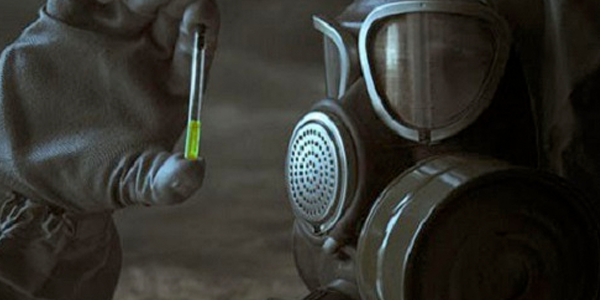 What did for the Martians can do for us too. More generalized than the zombie virus but arguably more deadly, this bad boy - be it the black death or the common cold - can go airborne and there's more or less no way to fight it. Unlike with the zombie threat, you can't just cave its head in and by the time the eggheads are able to synthesize a vaccine it's almost always too late. Of all the triggers for an end of days, the viral apocalypse is often used as a generic set up for a post apocalypse: by the time the events of the film take place, the infection is over but the effects remain (Twelve Monkeys). The virus can take many forms, manifest in many way: it can kill you (Contagion), turn you into a vampire or mutant (I Am Legend/The Last Man on Earth), or you can just flat out go nuts (The Crazies). The virus kills indiscriminately, maybe with a few exceptions, and there's nothing you can do. You can't run, you can't hide. Like nature itself, this one is implacable. More often than not it's something we've cooked up in a lab that is set loose to wreak terrible destruction on mankind for its hubris, sometimes it comes from outer space (The Andromeda Strain). In any case, viral apocalypse movies tend to comment on the fragility of civilization, of the human condition - that for all our advancements, we can still be wiped out by a microbe.
7. The Natural Disaster Apocalypse
 Speaking of getting wiped out, sometimes nature itself takes exception to mankind's shenanigans. In these types of situations, there's nothing we can do except ride out the storm or get the hell off of Planet Earth! In The Day After Tomorrow and 2012, both by whizz-bang auteur Roland Emmerich, this is due to natural changes in the environment - an encroaching ice age or solar flares -, or perhaps a comet or asteroid from deep space (Armageddon, Deep Impact); like the dinosaurs before us, humanity is likely to be next on the long list of casualties. While a plucky team of misfits can usually prevent the hunk of alien rock from smashing into terra firma, as with the viral apocalypse we are, for the most part, helpless. Sure, you can probably save a few of your friends and family, take up refuge in a mine, but chances are grandma's still going to end up taking a dip in the acid lake... https://www.youtube.com/watch?v=UPglegvitJo Most natural disaster apocalypse films are just destruction porn, an excuse to what man-made monuments swept away by flood tides or roaring tornadoes - because mankind didn't cause it and can't stop it, it's pretty much chaos for chaos' sake. If you like you cinematic apocalypses with a little more overt meaning, however...
6. The Biblical Apocalypse
 You don't get much more significant than the Biblically-ordained end of days. Biblical apocalypse films are usually based around the birth of the Anti-Christ, which tends to involve a whole lot of omens. As a result, the Biblical apocalypse genre tends to be overly portentous and cheesy as hell. There's always a morally righteous individual, who, willingly or otherwise, gets caught up in Lucifer's return; ironically, the incarnation of the Devil, twisted, charming and amoral, is almost always the best part of the film (End of Days, Constantine, The Prophecy). This would be ironic if such films had much of a sense of irony, but, unfortunately, every one I can think of (from Legion to The 9th Gate) is played depressingly straight. That's not to say they're not fun, but, unlike for instance the natural disaster apocalypse, they have a habit of taking themselves too seriously. It's for this reason, if no other, that This Is The End, the Seth Rogen-James Franco-too many other celebrities to count comedy, is a breath of fresh (if somewhat sulfurous) air. The Biblical apocalypse is defined by clearly delineated good and evil - it has The Devil as an antagonist so things tend to be pretty unambiguous on that front -, so it's nice to have protagonists for once who's not so much "tormented but fundamentally good" as, well, just assholes. There's also a giant swinging demon cock. Dignity be damned, it's funny.
5. The Monster Apocalypse
A sleepy town in Maine. Mist rolls down from the mountains, swathing the streets in minutes. A small group of survivors take refuge in a supermarket. And then the monsters come. Big ones, small ones, winged ones, crawling ones, and every one out of a nightmare. Frank Darabonts The Mist (based on the book by Stephen King) is, for me, the ultimate monster movie, the ultimate monster apocalypse.
Its not about an enormous mutant lizard or slathering alien rampaging through an urban center (Gojira, Cloverfield) or goliaths from the deep waging war against humanity (Pacific Rim) it cuts to the heart of what makes monsters scary: their attention on us. Monsters come in all shapes and sizes (the zombie apocalypse gets its own entry merely because of its prevalence), but theyre at their most terrifying when theyre a personal threat. Sure, King Kong tossing airplanes from the top of the Empire State Building is a pretty grave threat if youre on the ground, but youre more likely to become collateral damage than actually get any face time with the beast.
Monsters are a childhood fear and in our childhood theyre always in the closet, under the bed, up close and personal. Theyre not necessarily out to cause carnage, what they want to do is eat you. Put that on a large enough scale and you have a monster apocalypse. Its why I Am Legend fundamentally didnt work because the monsters werent monstrous enough but nor were they human (enough so, at least, to make Nevilles wholesale massacre of them more morally dubious ala Richard Mathesons book). Zombies work because theyre our loved ones made monstrous; monsters work because they are not us and they are hungry.
4. The Technological Apocalypse

Okay, we done fucked up: we gave birth to AI we wanted it to coordinate our military/missile defense/laundry cycles and now its decided to kill us. This scenario is the most common amidst all technological apocalypses (The Terminator series, The Matrix), though it tends towards the post-apocalyptic. Its rare we actually get to see the bombs falling; usually films in this genre deal with the fallout, literal and otherwise, with mankinds struggle to survive. There may or may not be genocidal robots striding the landscape of a devastated L.A., we may or may not be serving as giant human batteries. It can mean a chance to rebuild, bigger, better, somewhat organically deficient (Blade Runner), but mostly it ends with a lone wanderer strolling through the wasteland (Mad Max 2, The Postman, Six-String Samurai, Equilibrium).
The subtext here is Luddite, the idea that wed all be better without our laptops, iPhones, ready brew, and maybe they have a point. Then again, if it werent for the Internet you wouldnt be able to read insightful little gems like this article here and is that really a world worth living in? It might end in us being overtaken by monkeys (Planet of the Apes), but at least well be able to Tweet about it.
3. The Human Apocalypse
 This one's sort of like the technological apocalypse - it probably involves us all getting blown up -, except in these films we do it to ourselves without mechanical intervention. Goodie. Well, almost without mechanical intervention: in Stanley Kubrick's Dr. Strangelove or: How I Learned to Stop Worrying and Love the Bomb), it's an automated doomsday device that wipes mankind off the face of the planet (except for the lucky, soon-to-be inbred few hiding in mines), then again we did build the damn thing! In the Ambassadors defense, it was supposed to be a surprise. Mankind are probably the biggest contributors overall to the cause of cinematic apocalypses: we make the viruses, we bring the natural disasters on ourselves, sometimes we even make the zombies ourselves (Resident Evil). What's specific about the human apocalypse is that it's our finger on the button: we knowingly blow ourselves to hell. And it's not all crazy, bodily fluid-obsessed Generals: sometimes we eat ourselves to the point of extinction (Wall-E), sometimes it's overpopulation (Logan's Run), sometimes we just like nicking stuff (Escape From New York). Human apocalypse films challenge the viewpoint of the alien/monster ones in that here it's all our fault: at best we're a mess, at worst outright monsters. We're certainly a lot more innately scary than the next bunch...
2. The Plant Apocalypse
 This one's pushing it a bit, I know, but there is a precedent. Sure, that precedent is none other than M. Night Shyamalan's The Happening, but it's still, you know, a thing. What separates this from the natural disaster apocalypse genre is its unnaturalness: solar spots may be unusual but it's not "plants release a neurotoxin that causes humans to commit suicide" unusual. It even sounds like it could have the potential to be cool, but it mostly boils down to Mark Wahlberg and Co. running away... from the wind. The Happening isn't the first film to feature apocalyptic greenery: Day of the Triffids and The Little Shop of Horrors both address the pressing issue of blood-thirsty foliage. These aren't your standard monsters in that King Kong never contained chlorophyll. As opposed to your usual monster apocalypse, in fact, the plant apocalypse is all about making the mundane a real threat. A NASA satellite survey a few years back suggests there are somewhere in the region of 400 billion trees in the world, more than 50 for every man, woman and child on the planet. If they ever decide to uproot and come after us, it could make a zombie apocalypse look like a walk in the park.
1. The Non-Specific Apocalypse The non-specific apocalypse may initially feel like a bit of a cop out. These films, by their nature, pick up after the world has ended and documentary a society living in the shadow of whatever tragedy has come to pass. We may know its symptoms - blindness (Blindness), infertility (Children of Men) -, but we never discover the cause. Of all the types of apocalypse movies, this is the most existential, less concerned with how and why than what it means for humanity. John Hillcoat's The Road (based on the book by Cormac McCarthy) is about a man and his son traveling through a hostile, almost deserted world after some unknown cataclysm. What is responsible what this state of being is besides the point; The Road focuses on the journey, on man's inhumanity to man, and what they experience along the way. Other films, from War of the Worlds to the Andromeda Strain, are about spectacle: they're blockbusters in which the ramifications of what they're showing you is secondary of what you're being shown. The non-specific apocalypse is primarily existential. Two films this year, After Earth and Oblivion, have dealt with the notion of an Earth abandoned by humanity, but rather than explore this concept they obfuscate with action sequences. With the alien/monster apocalypse card to hide behind, neither film feels obliged to say anything. The non-specific apocalypse is, as such, perhaps the purest apocalypse of all: without genre tropes to hide behind, they're forced to deal with the biggest question of them all - us. So, that about does it for the cinematic apocalypse, but what do you think? Are there any key types I've missed, any particular movies you think I should have mentioned? Does my failure to specifically differentiate between apocalypse and post-apocalypse annoy you (as well it might)? 'Cause when we're all living in a post-apocalyptic wasteland after all the lights go out or during the apocalypse when the ficus start eating us, what you'll really regret is not commenting on the Top 10 Types of Cinematic Apocalypse. In all seriousness, though, feedback = much appreciated.