10 Underrated Movies Everyone Loved At First (But Now Dislikes)
What's wrong with Return Of The Jedi?
A Certified Fresh rating on RottenTomatoes, a respectful box office haul and maybe a couple of Oscar noms to slap on the Blu-Ray case; that's what's needed to make a modern classic, right?
You'd think success in all conventional forms guarantees you, well, success, but audiences are fickle. Opinions aren't some resolute objective fact that remains constant over time. Just as movies somewhat overlooked upon release become regarded as seminal works, so too can a movie lauded upon release become regarded a more than a little trite.
Sometimes it's fair enough - we all got a little caught up in the hype and missed glaring flaws of some wrongly-lauded mess - but just as often it's a case of forgetfulness and anti-hype clouding serious assessment, meaning that movies beloved upon release actually become, if anything, underrated.
Honourable Mention - Avatar
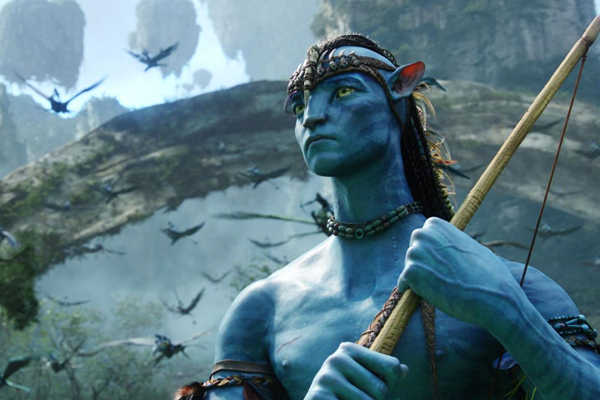
Avatar needs to at the very least be acknowledged when talking about movies where public opinion has flipped - for a brief, three month period there it was the greatest thing since ju ju bees, garnering nine Oscar nominations (it won three) and earning so much money even Star Wars couldn't come close to matching it (in fact, The Force Awakens made only 75% of its total haul). But then, when removing 3D glasses meant you could see the wood from the stereoscopic trees, everything changed.
The movie is now regarded with something approaching derision, its only marked impact on cinema being the proliferation of 3D (yay?). Part of this will be due to people feeling resentment for getting so swept up in the hype, but it (like the reason it doesn't make the list proper) mainly comes down to it being a pretty average film; great to look at and boasting some fine action, but really rather simplistic.
10. The Departed
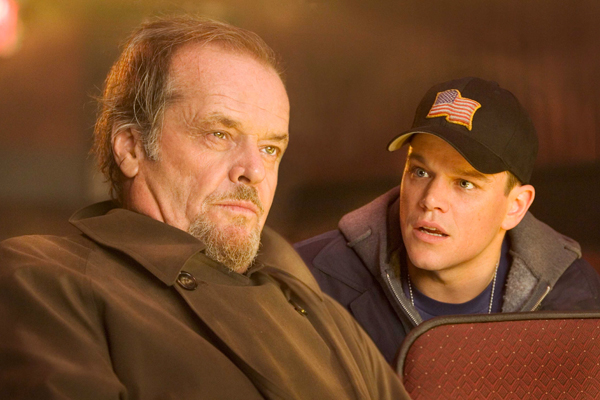
The Awesome Movie: Mean Streets was released in 1973. That's 43 years ago. Someone born that year is now 43, just to put that in oblique perspective. It is nothing short of jaw-dropping that he's still working at the same rate today, turning out films that are just as relevant as his early work.
Take The Departed, one of many gangster pictures in his oeuvre that can sit alongside the likes of Mean Streets and not feel like a lesser film. Released in 2006, it showed the master still had the same awareness, insight and violence, to the point where he could rival anyone else working today (to the tune of four Oscars).
What Happened? The Departed is not Goodfellas. That sounds like an obvious, somewhat-perfunctory statement, but that is exactly why The Departed gets the short shrift. Scorsese won his Oscar for a sprawling gangster epic, but one that wasn't Goodfellas. That injustice (and, make no mistake, him not trouncing Kevin Costner and Dances With Wolves is a travesty) has meant the otherwise brilliant film is glossed over; it's a legacy win, nothing more.
But come on. Yes, part of The Departed's win was a legacy offering, but it's not like it's a cack film handed an award in an honorary capacity (that's what Honorary Academy Awards are for). It's still a multi-faceted epic from one of the greatest filmmakers ever. If you want every movie to be quite as great as Goodfellas you're in for a rubbish time.
The Simpsons haven't helped, with Ralph's "the rat symbolises obviousness" the ultimate put-down of the film. Although if we're being honest, Goodfellas makes a similar point about rats at the end too.
9. Chronicle
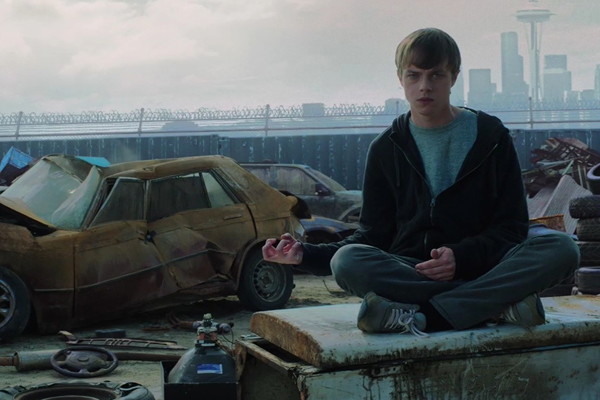
The Awesome Movie: If there's one genre people are more ready to call spent than superheroes, it's found footage. But then along came Chronicle, which managed to give a shot in the arm to both. Josh Trank's modern update of comic book cliches, with a cool guy, a class president and a loner (whose documenting of everything makes character-based sense) each gifted telekinesis and reacting exactly as a cool guy, a class president and a loner would (i.e. jokey-cum-destructive) was an engrossing, astutely-written movie.
Making $120 million on a $12 million budget, the film was a bona fide hit, promising big things ahead for its key creatives.
What Happened? Whoops. Chronicle's impressive accounting led to Fox offering Trank the Fantastic Four reboot, and we all know how that turned out.
Who exactly is to blame for Fant4stic's complete and utter failure (c'mon Jon Schnepp, we need a documentary on this) is still up in the air; Fox certainly meddled, but it certainly looks like Trank had already steered the ship aground. And so people now look back on Chronicle with a more critical eye, looking for clues to the director's distruptive future and in the process relegating it to a footnote alongside a bigger movie, if not being simply loathe to check it out because of the quality of what followed.
Here's hoping Trank's alleged meltdown and getting kicked off his Star Wars spin-off doesn't stall his career; Chronicle showed some real talent (and that movie's stars, Michael B. Jordan and Dane DeHaan, have already bounced back from their own superhero misfires).
8. Frozen
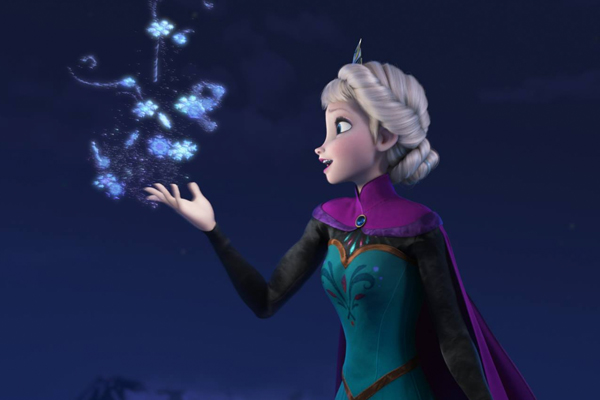
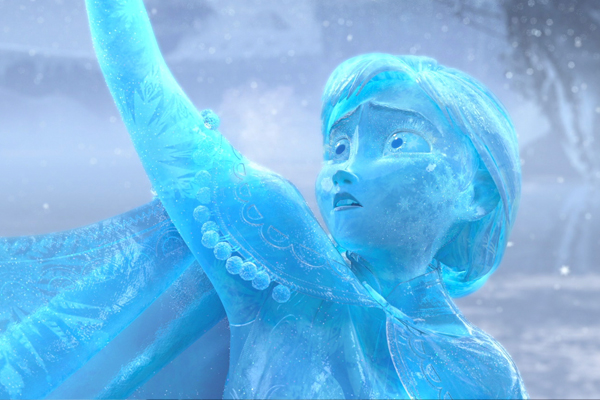
The Awesome Movie: The Ice Queen, only with the villain a misunderstood victim, the men all bumbling idiots or sneering villains and an ultimate message about sisterly love, Frozen is quintessential Disney, taking a lauded fairytale and presenting it with a contemporary twist. The animation was gorgeous - that now-well-established 3D version of their classic style - the characterisation thoughtful and the songs obscenely good.
For the first time in forever Disney had a monster hit; Tangled had respect and Wreck-It-Ralph heart-felt nostalgic appeal, but this was the first time since The Lion King (they even admitted as much in the trailer) the Mouse House has been on top.
What Happened? If there's ever been a movie the victim of its own popularity, it's Frozen. The film arrived in late 2013 and was an instant hit, becoming the highest grossing animated film of all time under a wave of audience love. Everyone enjoyed this movie, from kids to their parents to twenty-something cynics to even teenagers.
But, unlike most movies, which fade into the background after that first few months, Frozen only grew; it was at complete market dominance by the time we were in summer 2014, becoming the must have toy line of that year and is still residually relevant now. Couldn't people just... let it go?
And that may just be the root of it; Idina Menzel's Oscar-winning song was played on a loop for a year after release and began to wear down all but the biggest advocate of the film. But, aside from teaching the total opposite message to the wider film (like Hakuna Matata), there's really nothing wrong with it outside of overexposure, like the film itself.
7. Mission: Impossible
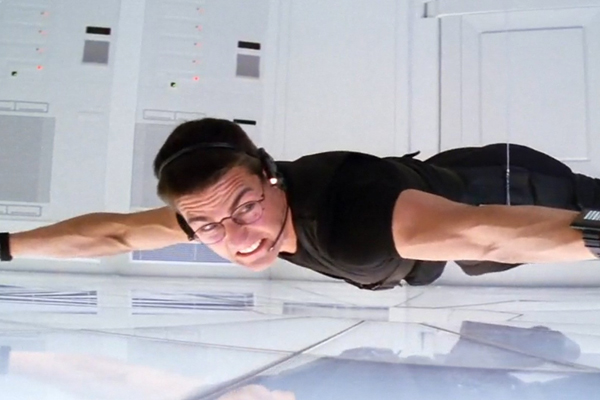
The Awesome Movie: To appreciate just how long the Mission: Impossible series has been running, consider that when Brian De Palma's first entry in the movie franchise was released audiences were sceptical of Tom Cruise as an action hero and its main selling point was being based on a beloved TV show. Now Cruise is Mr. Run And Jump and the original series is a glorified trivia nugget.
That total change in perception has been solidified by subsequent movies, but much of it is rooted in the original; manically plotted to the point of near nonsensical and boasting action sequences that contrive as more tension from situations you ever thought possible, it's a movie that pushes without ever being pushing. A thrill.
What Happened? One of the biggest reasons Mission: Impossible manages to still exist as a strong Hollywood force two decades later is how each movie conspired to shake up the status quo; each new director brought their own distinct style to the series (II is John Woo movie, III has J.J.'s distinct visual quirks, Ghost Protocol has Brad Bird's cartoonish sensibility, Rogue Nation has Christopher McQuarrie's Oscar-winning narrative competence).
But that's also meant the older entries fare less well in public opinion; each movie is very much of its time and so there's always a more modern version to compare it to. Add to that the first one is, on both an aesthetic and structural level, incredibly nineties - meaning iffy CGI and period tics - and people seem to miss its standalone brilliance.
6. Titanic
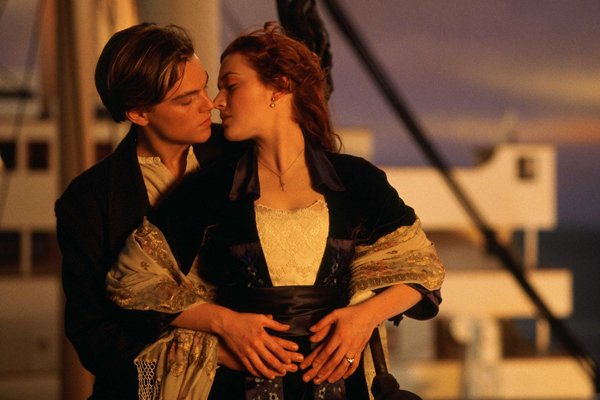
The Awesome Movie: James Cameron's passion project (he really likes the sea) is big moviemaking; he built a near-scale replica of the doomed liner and used all manner of ground-breaking tech to realise its cold, watery demise. And it pays off; the sinking of the Titanic is astounding, an enthralling action sequence imbued with the emotion of over 2000 lives in the balance. Cries of innauracy dog the film, but the presentation of the backdrop event is impeccable.
That made-up love story isn't all cack either - it's generic, but game acting and great soundtrack accentuation means it still packs a punch.
What Happened? 11 Oscars and almost $2 billion in box office (it eventually passed that amount on rerelease), that's what happened. It was fine to love James Cameron's historical romance when it was a blockbuster maestro at the top of his game, but when it became a hit amongst pensioners and (gasp) teenage girls there was something decidedly uncool about Titanic. So yeah, it's long and it's naff and the story's silly and there's not enough Terminators.
Then there's that bloody door, which remains a key point of contention to this day (DiCaprio added fuel to the fire during his Oscar campaign this year), despite being answered in the movie itself - they both try and fit on the makeshift raft and it doesn't have enough ballast to hold them. And that may be the biggest knock against Titanic; people haven't watched it in years.
You catch bits on TV or hear Celine Dion singing, but otherwise opinions are shaped by the claims of inaccuracy and "king of the world" memes. Actually sit down and view the film and you'll see something special
5. The Bourne Identity
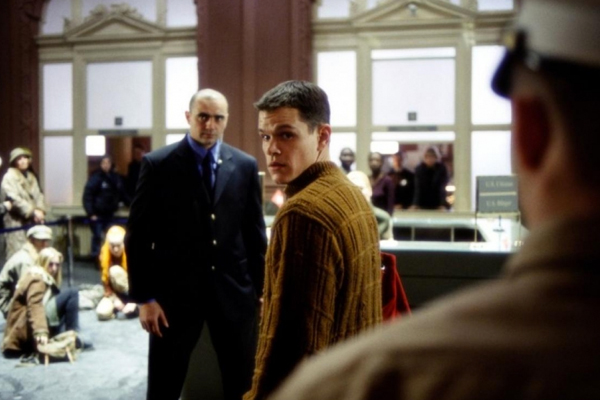
The Awesome Movie: Paul Greengrass' return to Bourne this year with the oddly titled Jason Bourne is being treated as a return to the series' status quo after the tangential Legacy, although that misses that it was the British English maestro who kicked the whole thing off.
No, it began with Doug Liman, whose The Bourne Identity sold Matt Damon as a capable action star and Robert Ludlum's amnesiac secret agent as a viable competition for Bond. It remains a great film, with a well-thought out conspiracy plot and rounded characterisation; he may have remembered more as the series went on (in increasingly contrived ways), but the essence of David Webb is all here.
What Happened? Greengrass took over the franchise for the sequels and it was his meticulous shaky-cam that the series has become known for - it was so successful that even Bond tried to ape it for a time. Despite having only directed half of the current entries it's viewed as his series. Fair play his directing style perfectly fits this down-and-dirty spy thriller and he executes it better than anyone else (and there have been a lot of emulators), but to define the franchise by that alone discredits much of the thrill of the original.
Doug Liman is now a powerful name, having directed the beloved (somewhat inexplicably if you ask me) Edge Of Tomorrow and set to helm Gambit (if that ever happens), so hopefully his contribution to the Bourne legacy will be reconsidered in the coming years.
4. The Sixth Sense
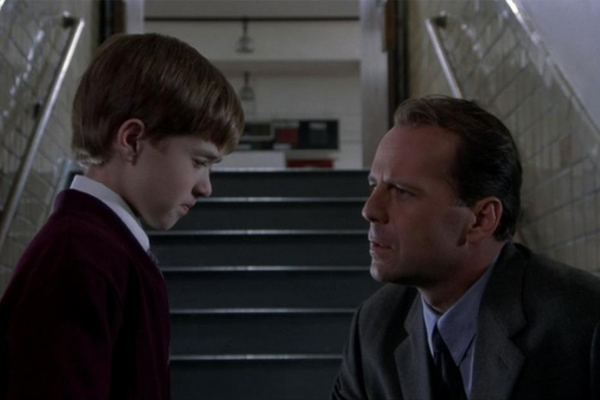
The Awesome Movie: A tight, atmospheric chiller so popular on release it was the closest we got to a movie toppling the box office juggernaut of Star Wars Episode I: The Phantom Menace (disappointment it may be remembered as, but people still flocked to see it), The Sixth Sense had an enticing hook - Bruce Willis teams up with a kid who can see ghosts - that slowly expands into a story of redemption and acceptance. M. Night Shyamalan is the mastermind, and his trademark style - long, sweeping takes and pseudo-heavy dialogue - grounds the film.
Oh, and at the end you find out that Bruce Willis was a ghost all along. Which is great on so many levels.
What Happened? Bruce Willis is a ghost. One of the most commonly accepted spoilers of all time, everybody paraphrased The Sixth Sense down to this one beat, rendering the previous 100 minutes almost moot. It wasn't just the audience who did that though - the director himself seemed to take this one aspect as the centre of his genius.
And that's the big thing that happened; M. Night Shyamalan went on to have a spiralling car-crash of a career, built around the idea that he was a narrative genius who could turn anything he touched to gold. His movies boasted alternatively obvious or ridiculous twists that bogged down everything he subsequently produced; he's not made an out-and-out great film since Unbreakable (although The Visit was a major step up). As such, his reputation is no longer of being "The Next Spielberg", and all of his movies, even his assuredly great ones, have been tarred.
3. The Hunger Games
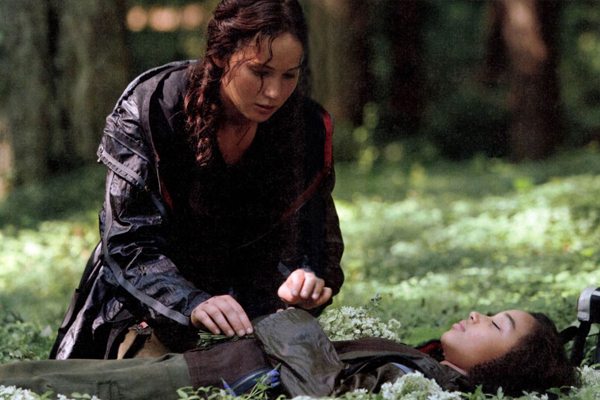
The Awesome Movie: The Hunger Games isn't the best movie in the franchise (that honour goes to Catching Fire), but it's certainly the most unique. Contrary to what you'd have expected from a big YA adaptation, Gary Ross went with an oppressive, shaky-cam shooting style and a stark visual design that made it more of a distinct genre picture than piggy-backers Divergent and The Maze Runner. This meant that, despite facing criticism for the unoriginality of its idea, the film made a mark.
More traditional YA elements are there - a cast of young rising stars in a love triangle mentored by bona fide greats - but the unorthodox visuals and a more unflinching, teen-oriented approach to violence (rather than making something overtly family friendly) made for a movie that didn't skimp on its dark backdrop.
What Happened? Ross didn't return for the sequels, replaced by Francis Lawrence, who went for a much more standardised approach, with wide CGI shots and a brighter sheen. The series maturity certainly remained, but the dirt under its nails was scrubbed. Not neceassrily a bad thing (as I said, Catching Fire is superior to the first film), it retroactively turned the final film into the franchise's odd-one-out and thus something that gets considered as an experimental piece.
The irony of all this is that the more polished approach to the later movies actually hurt them, with Mockingjay - Part 2 severely lacking what made the series start so competently in the first place.
2. Return Of The Jedi
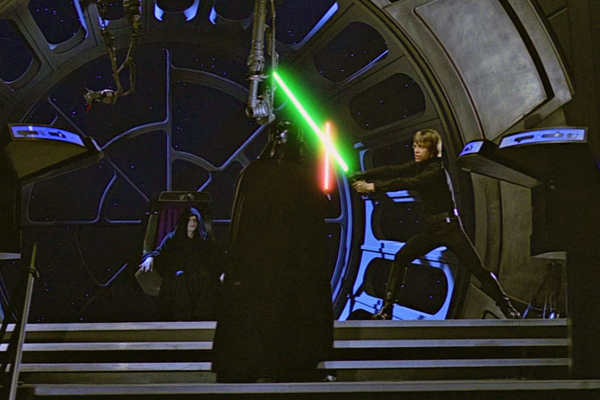
The Awesome Movie: It's Star Wars. And really good Star Wars. The opening sequence is an excellent honouring of the saga's Flash Gordon origins with stellar creature design to boot, while the multi-layered final conflict between the Rebel Alliance and the Empire, with constant twists and battles of varying levels of intensity playing out concurrently, is a tour de force. Culminating in the end of Darth Vader's surprisingly-effecting redemption arc, Return Of The Jedi is a great trilogy ender and a great movie.
Is it the best Star Wars movie? No, but when you're stacking up against giants of cinema that isn't a slight. In fact, in comparison to the previous movies, Episode VI actually had a pretty positive reaction, its outside financial success not cheapening the accolades. Return Of The Jedi is Star Wars. And really good Star Wars at that.
What Happened? I really don't know here, but in the three decades since release, while love for The Empire Strikes Back has only increased, the second sequel has deeply fallen in estimation. When The Force Awakens hit, some overzealous fans even placed Episode VII well above Jedi, as if it had at some point been decided the movie Randall Graves declared was "Blasphemy" to not call the best sequel was actually a bad movie.
You can lay some of the blame at the stubby feet of the ewoks, and it must be said that Episode VI is the most commercially minded of the original trilogy, but the teddy bears and what they represent in the transformation of George Lucas from desperate auteur to shrewd business tyrant is hardly ruinous to the film; the ewoks make up a slight part of the runtime and do, in isolation, provide an expansion of the galaxy. There, I said it.
1. American Beauty
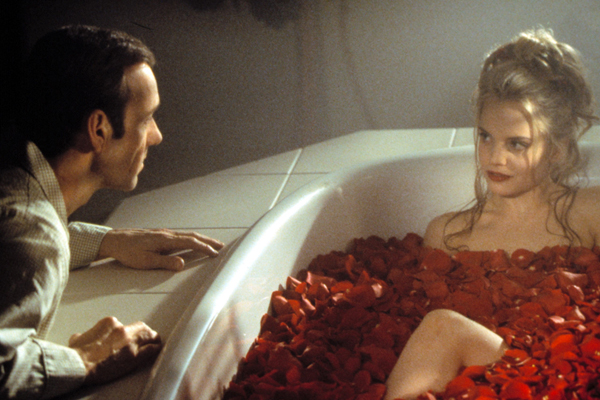
The Awesome Movie: American Beauty is one of the greatest directorial debuts of all time, up there with Citizen Kane and Reservoir Dogs as fully-fleshed out, mature first attempts that marked the arrival of a great talent to cinemas. Sam Mendes had considerable theatre experience, and wasn't as young as Welles or Tarantino, but that he made something so astoundingly cinematic and tightly focused is still amazing.
Both a character piece and ensemble drama, the plain dissection of the American Dream through the breakdown (and coincidental final days) of Lester Burnham still feels incredibly on point watching it today, and that's down to how expertly realised a piece of filmmaking it is.
What Happened? American Beauty is flat-out sneered in some circles today. Part of that will be that the film was a massive Oscar smash, winning Picture, Director, Actor, Original Screenplay and Cinematography, meaning a backlash of some sort was all-but guaranteed, although there's more to this than there was with Titanic or The Departed. Looking at the pointed complaints, it has little to do with the objective quality of the film - Sam Mendes remains a lauded industry name and you'd have to fight to not love Kevin Spacey - but rather what it's about.
One way to distill American Beauty is simply as the story of a white, middle-class man having a mid-life crisis in suburbia. In a culture that is increasingly finding itself at odds with being dominated by stories of white, middle-class men and suburbia, the film is at best antiquated and at worst vastly out of touch. And fair enough, if every movie was about Kevin Spacey having the hots for his daughter's best friend and Chris Cooper being in the closet, then it'd be a bit wearisome, but to chastise an expertly made film just because of what it is is ridiculous.
And stop taking the p*ss out of the plastic bag scene. It does its job. End of.
Which other great movies have actually become underrated over time? Share your picks down in the comments.