10 Unfilmable Properties That Should've Stayed That Way

All these movies fail to do justice to the source material.

Cosmopolis With movie budgets increasingly going through the roof these days, it's perhaps little wonder that the studios increasingly turn to "known quantities". Remakes, reboots and adaptations have become their bread and butter, all of which provide a much better guarantee of a return on their investments when compared to risky original ideas. Some adaptations are hugely effective, making the transition from their source - be it books, comics or even video games - to the screen without losing too much of the essence in translation. Others, however, are not so successful, particularly those properties which are rightly or wrongly labeled as "unfilmable". Here are ten adaptations which fit into that category, films which - while not necessarily bad in their own right (although some sure are) - fail to do justice to the source material.

10. Watchmen
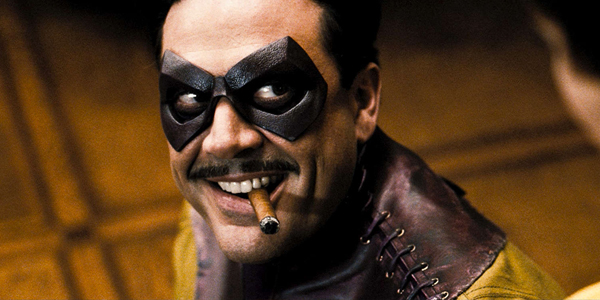
Alan Moore is a writer who insists on remaining completely detached from the movie adaptations of his works. Often concerned with exploring esoteric and subversive material, his stories are deeply symbolic ventures told with a distinct approach to art. Given Zak Snyder's track record for making impressive looking but incredibly superficial movies completely lacking in depth, it's somewhat remarkable how far away from a complete disaster his movie adaptation of Moore's seminal comic Watchmen actually is. Snyder approximates the visual patterns and motifs admirably well, capturing the tone of the source in all its strikingly iconic glory. Unfortunately, as with all Moore adaptations, Snyder's Watchmen is lacking in both the subtlety and maturity of the original, over-emphasising the violence for cheap thrills and of course scandalously tampering with the ending. Still, as we'll see later, it's far from being the worst Moore adaptation to hit cinemas...

9. Cloud Atlas

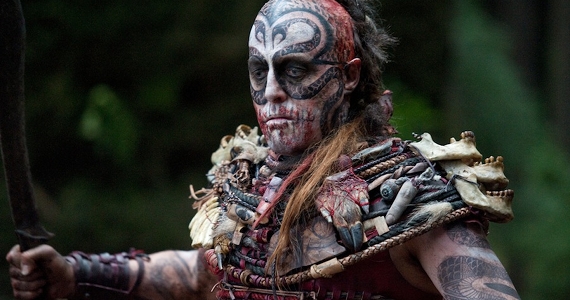
Few other movie adaptations have so polarized movie critics as Cloud Atlas. Adapted from the novel by David Mitchell and directed by the Andy and Lana Wachowski along with Tom Tykwer, opinions range from "daring and visionary" to "unique and totally unparalleled disaster." The truth perhaps lies somewhere in between - the directors have undoubtedly delivered a visual spectacle, with each of the six timelines over which the movie is set looking ravishing, production designed to the n-th degree. The trouble lies in the splicing of the individual narratives and the heavy-handed manner in which this outlines the unity between the various characters and storylines - something of this substance would clearly have worked much better as a six part TV series (perhaps with a hefty dose of HBO-style budgeting to ensure a slick look), rather than being scattered around the screen via the editing room. Still, it was another opportunity for the Wachowskis to demonstrate their pretentious leanings - in an interview they likened their mission to Charles Dickens, Victor Hugo and Herman Melville, comparisons which are both lofty and unwarranted.

8. On The Road

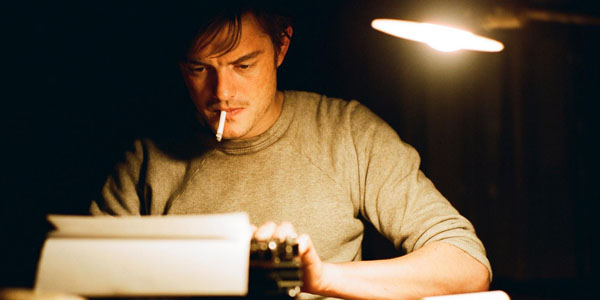
Walter Salles has a reasonable track record as a director comfortable adapting various sources to cinema screen - from the travelogues of Che Guevara in The Motorcycle Diaries to an interesting remake of Hideo Nakata's Dark Water, his filmography should've put him in good stead for delivering an effective adaptation of Jack Kerouac's On the Road. While it would be tempting to blame Kristen Stewart and the other members of the cast - all of whom are unconvincing playing such iconic characters of the Beat Generation - the performances alone are not to blame. For such an exuberant, life-lusting novel to be adapted to the screen with such lacklustre appeal is a crying shame, and the film lacks both emotional punch and a sense of the spirit of the times. On the Road is a movie that languished in development hell for several years, with Gus van Sant and Francis Ford Copolla both attached to the project at one time or another.. At least we can all be grateful that the planned Joel Schumacher version never saw the light of day.

7. Cosmopolis

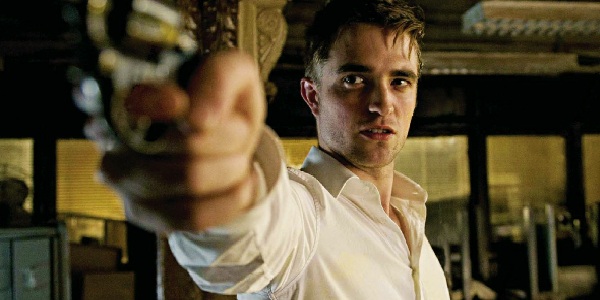
David Cronenberg's movies reflect the director's preoccupation with degradation, be it personal or societal, biological or mechanical. His films show us the seeping cesspit of humanity at its most base and destructive, vying for control, domination and, frequently, perversion. As a choice of director for the adaptation of Don DeLillo's novel Cosmopolis, Cronenberg is certainly apt - here, he takes nothing less than the collapse of the global financial system as his topic, condensed into the microcosm of Eric Packer (Robert Pattison, proving himself to be an accomplished actor once away from the Twilight franchise), a billionaire who loses his fortune over the course of a day's travelling around in his limousine. While not a terrible film in its own right, Cosmopolis suffers from a confused approach to the literary aspects of its source material - the ideas and themes seem to get lost in the stagey, episodic structure, leading the audience to feel somewhat detached from ideas which feel as if the director is struggling to articulate them. A noble failure, but perhaps one which should have been avoided.

6. Bloom

Few filmmakers have been brave - or rather, foolish - enough to attempt to bring James Joyce's sprawling, intricate stream of consciousness masterpiece Ulysses to the big screen. Few other books come quite so close as to truly warrant the label "unfilmable". Yet a few have tried, and predictably none have really succeeded. A recent example is the 2003 movie Bloom written and directed by Sean Walsh and starring Stephen Rea as Leopold Bloom. Despite an admirable effort to reproduce the exhausting (in its book form) soliloquy from the end of the book (a sequence which Joyce wrote as one long continual uninterrupted, unpunctuated sentence which runs for approximately 50 pages), Bloom fails to scratch the surface of the novel's many rich and fascinating complexities. It's unlikely that this is the fault of Walsh, who appears to have opted for delivering a pleasantly shot, accessible abridgement of the novel. But with a book so wildly different from anything remotely "cinematic", firmly rooted in the literary realm, it all seems like a pointless endeavour in the first place.

5. Catch-22

One of the greatest satirical anti-war novels of all time, Joseph Heller's Catch-22 has gone down in history not least on account of its title, which has long since entered into modern parlance as a term for any paradoxical situation which arises from contradictory rules. Adapted to the screen by Mike Nichols in 1970, mediocre at best is perhaps the best way to sum up the movie version - Nichols is a competent director but he seems to have been overwhelmed by the complex ins and outs of the source material, unable to find an anchor to ground the film. Consequently uneven and disjointed, it was overshadowed at the time of its release by a far more successful war-themed black comedy, Robert Altman's M.A.S.H. A minor cult movie today, the adaptation of Catch-22 is yet another movie which resides in the realms of the "noble failure", worth seeing if you're a fan of the novel as a curiosity piece and little more.

4. Dune

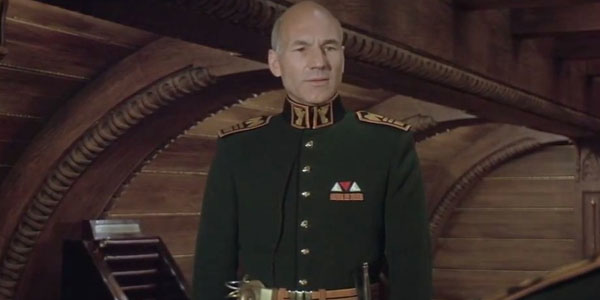
It's incredible that the movie version of Frank Herbert's 1965 sci-fi novel Dune made it to the screen at all. A sprawling epic, it is as full of ideas as it is enigmatic, confusing and bewildering. Little wonder that it wallowed around in development hell for as long as it did before David Lynch picked up the directorial reins. It was a move the director has made clear since he wished he'd never made. Constantly finding himself squaring up against endless studio interference, Lynch ended up disowning the final product. Having been denied final cut, what emerged after months of chopping up in the editing suite is a mess of a movie; tonally imbalanced, incomprehensible in its narrative and far less spectacular looking than people had hoped for. Whether or not the book is at all filmable remains to be seen, although movie buffs have long wondered what Lynch's final cut might have been like, or indeed how it might have turned out if the master of cinematic alchemy, Alejandro Jodorowsky had managed to film his own adaptation.

3. Swann In Love

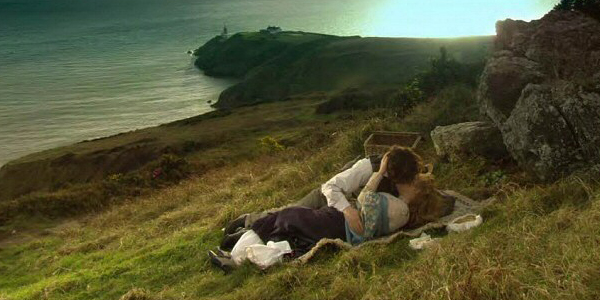
Swann In Love If any avid readers out there really want to challenge themselves to a novel of marathon proportions, if they haven't already they should invest the time in reading In Search of Lost Time, Marcel Proust's beautiful, elegant and marvelously eloquent exploration of love and memory amidst high society in fin-de-siècle France. While the novel cannot be recommended enough to fans of literature - there are frequent streams of lengthy prose which will have your head spinning with imagery and s- the same can't be said for Swann in Love, the movie adaptation of the the first volume of the novel, Swann's Way. It's nicely shot and Jeremy Irons's performance in the central role is above functional, but the fleeting and intangible mood which permeates much of the novel isn't captured. A far better attempt at bringing Proust to the screen can be found in Raul Ruiz's Time Regained, a considerably maturer take on the novel - this time taking its cue from the final volume - its arresting cinematography and imaginative staging make it the best on-screen version released so far.

2. Don Quixote

Miguel de Cervantes's mammoth novel Don Quixote is more than just a parody of the "books of chivalry" of the time - what can be argued as one of the precursors to the modern novel, it delves into the contradictions of human nature and presents the reader with a view of society at every level. If any director had the intelligence and cinematic flair to bring it to the screen that director was Orson Welles. At least, it should have been. Welles worked on the project on and off for many years and filmed substantial portions of it over a period covering more than a decade starting in 1957, and Welles was still working on it up to his death in 1985. Unfortunately this labour of love never saw the light of day during his lifetime, and in 1992 an admirer bought the rights to the footage and hatchet jobbed it onto the silver screen. The result was nothing short of a travesty, desecrating Welles's vision not least in the incredibly poor quality film transfer (as is evidenced in the screen shot above). Terry Gilliam also wrestled with the same adaptation for many years for his movie The Man Who Killed Don Quixote before finally giving up - his trials and tribulations are charted in the wonderful documentary Lost in La Mancha. From constant airplane background noises to flash floods, it's a cautionary tale for any overly ambitious filmmaker, of which Gilliam frequently is himself.

1. From Hell

If Zack Snyder's Watchmen fell short of delivering the Alan Moore goods but was nevertheless a noble effort, the adaptation of From Hell by the Hughes brothers is an outright catastrophe, utterly failing to capture either the mood or the look of the source material. Gone for good is Eddie Campbell's murky, detailed black and white imagery which evoked a London of contrasting squalor and architectural splendour - instead, the Hughes brothers opt for bright and garish colours, oversaturated and artificial, enhanced by out of place costumes and sets. Moore was predictably displeased with the narrative elements, the broader existential themes and esoteric content all but removed in favour of a simplistic murder mystery. The movie adaptation of From Hell is certainly the most wasted opportunity of any Alan Moore source material, and perhaps one of the most pointless movie adaptations of all time. Little wonder that Moore distances himself from any movie project linked to his work - all too often the filmmakers seem to have no idea what it is they're dealing with. Agree or disagree with the choices on this list? Which other unfilmable properties do you think should've stayed that way? Why not post a comment below and let us know?

Contributor
Contributor

Andrew Dilks hasn't written a bio just yet, but if they had... it would appear here.